


Alphabet Capex 2026: What AI Founders Should Learn
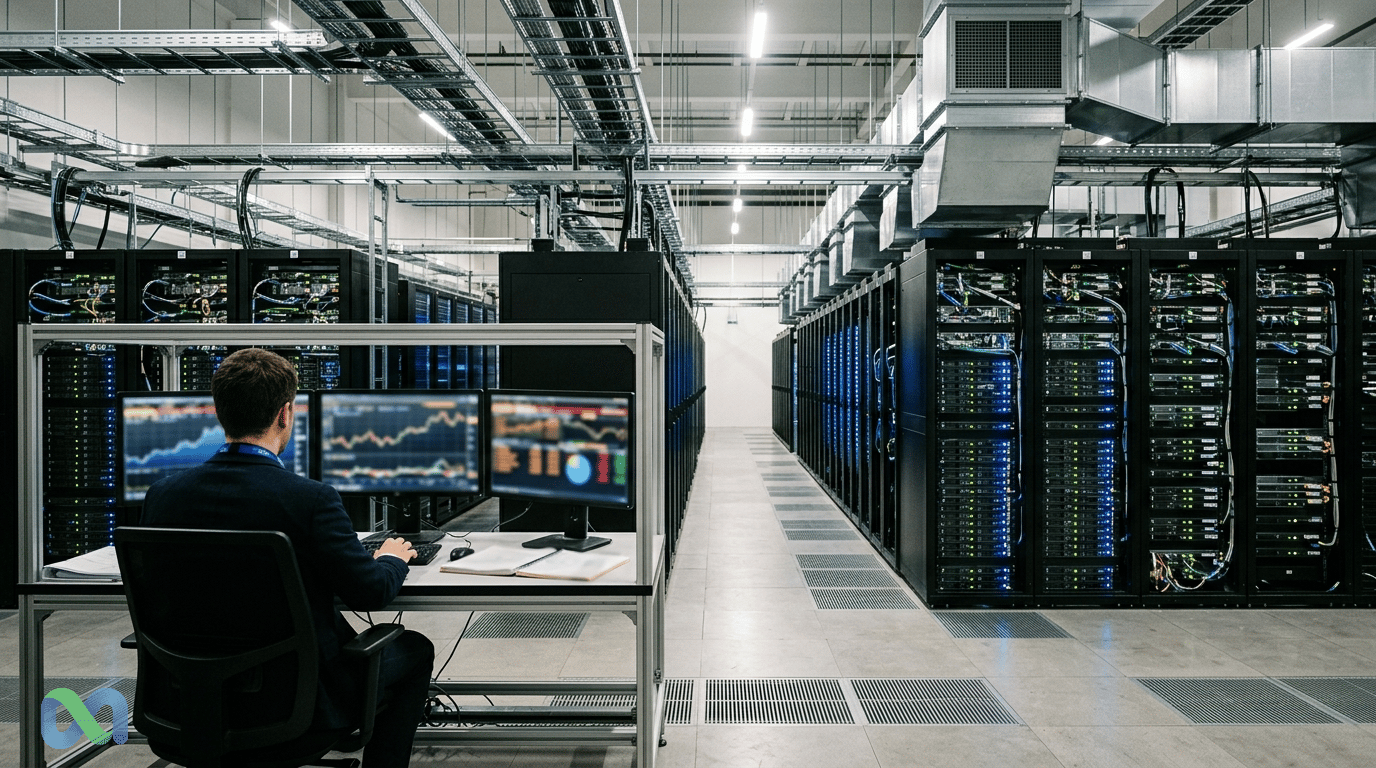
Alphabet capex 2026 is now one of the cleanest stress tests for the AI cycle. The company can show strong revenue demand and still face pressure if investors cannot see the payback on infrastructure.
That is the sharp lesson from the latest Alphabet numbers. The research brief points to a $5.9 billion free-cash-flow burn in Q1 and quarterly capex near $44.9 billion. It also points to a 2026 capex guide around $195 billion to $205 billion. Business Insider also reported that Alphabet beat revenue expectations, yet the stock fell as investors focused on the higher capex path.
This is not a simple bearish story about AI. It is a story about timing, confidence, and cash conversion. AI infrastructure spending can become a moat when it creates durable revenue, high utilization, and lower unit costs. It can also become a margin risk when the revenue curve stays vague.
For AI founders, the message is direct. Do not copy Big Tech's spending scale. Copy the discipline behind the decision. Every compute commitment should have a clear link to usage, revenue density, retention, or strategic control.
The Alphabet Capex Shock in One Chart
The key chart is not only revenue. It is revenue against capex, free cash flow, and investor expectations. Alphabet's core business remains huge, and Google Cloud has AI momentum. Yet markets care about what happens after the income statement.
Free cash flow can turn negative when capital spending is paid upfront. Data centers, chips, power contracts, networking, and cooling systems require cash before the related revenue arrives. That creates a gap between demand today and cash generation later.
Alphabet can absorb that gap better than almost any startup. It has a massive advertising base, a large cloud business, and deep access to capital. Still, public-market investors pushed back when the capex trajectory rose faster than their confidence in the AI payback period.
That reaction matters. It shows that even a dominant platform does not get unlimited credit for AI spending. Revenue beats help, but they do not close the question. Investors also want proof that each extra dollar of infrastructure will produce durable margins.
A few signals capture the tension:
- Revenue beat: AI demand is real, but growth may not offset capex fast enough.
- Cloud AI growth: infrastructure has customers, but utilization and margin still need proof.
- Higher capex guide: Alphabet may be building a moat, but cash flow becomes harder to forecast.
- Stock selloff: the market is disciplined, and investors doubt the payback timeline.
This is why Alphabet capex 2026 matters beyond one earnings cycle. Alphabet capex 2026 gives founders a public test case for infrastructure discipline. It gives founders and traders a public scorecard for the AI infrastructure buildout.
Why Free Cash Flow Turned Negative
Free cash flow is the money left after operating cash flow and capital spending. It matters because it shows how much cash a company can generate after funding the assets needed to grow.
AI infrastructure changes that equation. A company may need to buy chips, lease land, secure power, and build data centers long before customers fully monetize the capacity. The spending appears now. The revenue may arrive over several years.
That timing gap explains why a $5.9 billion free-cash-flow burn can appear beside strong AI demand. It does not mean demand is fake. It means the business is moving through a capital-heavy phase.
The same logic applies to startups, but with less room for error. Alphabet capex 2026 shows the extreme version of that pressure. A founder who signs large GPU commitments before product-market fit is making a balance-sheet bet. If usage grows, the commitment can look smart. If usage stalls, the same contract becomes a cash drain.
The founder version of free cash flow is runway. If compute costs shorten runway faster than revenue extends it, the company is not scaling. It is renting time at a high price.
AI Infrastructure Is a Balance-Sheet Bet
AI infrastructure capex is different from normal software spending. Software teams can usually scale costs in smaller steps. Data-center and compute commitments often arrive in larger blocks.
That makes the decision probabilistic. Alphabet is betting that AI usage across search, ads, cloud, enterprise tools, and consumer products will justify the buildout. The company is also betting that control over infrastructure will lower long-term unit costs.
Those bets may be correct. Alphabet has a distribution advantage, a cloud platform, and its own AI models. It can spread infrastructure across many workloads. That gives it more ways to earn back the spend.
Startups rarely have that range. Most AI companies depend on one product line, one buyer segment, or one model category. They also rent infrastructure from cloud providers, which limits control over long-term economics.
This is why founders should think in balance-sheet terms. Compute is not only a cost of goods sold. It is also a financing decision, a product decision, and a strategy decision.
Before scaling infrastructure, founders should answer four questions. Alphabet capex 2026 makes each one harder to ignore:
- What customer behavior proves this capacity will be used?
- What revenue metric improves when we add more compute?
- How long is the payback period for each workload?
- What happens to runway if demand arrives six months late?
If the answers are vague, more compute is not a moat. It is a liability with a technical label.
Cloud Growth Is Necessary but Not Sufficient
Google Cloud AI revenue is important because it shows that customers are buying AI capacity and services. Cloud growth can validate the investment case. It can also hide margin questions if capex rises faster than cash generation.
The market usually rewards growth when the operating model is clear. In AI infrastructure, the operating model still has open questions. Data-center utilization must remain high. Chip depreciation must match real demand. Power costs must stay manageable. Software must improve enough to lower the cost per useful output.
That is why investors cared more about capex than a revenue beat. They were not ignoring demand. They were asking how much capital the company must spend to capture that demand.
For founders, the equivalent mistake is celebrating top-line usage without measuring compute efficiency. More users are not enough if each user consumes more infrastructure than they pay for. More enterprise pilots are not enough if workloads fail to convert into recurring contracts.
A useful metric is revenue density per compute dollar. It asks a simple question: how much durable revenue does each dollar of compute support?
Founders can track this by customer, model, feature, and workload. The goal is not perfect accounting. The goal is to know which usage creates value and which usage only creates server bills.
What Founders Should Copy
Founders should copy Alphabet's strategic clarity. Alphabet is spending because AI touches its core products, cloud business, and competitive position. The company is not buying infrastructure for a demo day headline.
That clarity matters. A startup should only scale compute when it supports a defined wedge. The wedge might be enterprise automation, vertical search, code generation, fraud analysis, or clinical documentation. The common factor is measurable customer value.
Founders should also copy Alphabet's long-term view. AI products may need time before they show mature margins. A company that understands the payback path can invest through short-term pressure.
However, long-term thinking is not an excuse for loose spending. It requires better measurement, not less measurement. The stronger the thesis, the easier it should be to define the proof points.
The best founder discipline is simple:
- Start with rented capacity.
- Measure demand by workload.
- Track gross margin after inference costs.
- Commit longer only when retention is visible.
- Keep flexibility until unit economics are stable.
This does not make a startup timid. It makes the company harder to kill.
What Founders Should Avoid
Founders should avoid copying Alphabet's scale. Big Tech capex numbers belong to companies with global distribution, profitable core businesses, and deep capital access. A startup does not have the same buffer.
The first trap is buying capacity to look serious. AI markets reward ambition, but infrastructure commitments are not branding assets. They are obligations. If usage misses, the bill still arrives.
The second trap is treating model quality as the only variable. A better model can help, but customers pay for outcomes. If a feature needs expensive inference and saves little time, the economics will break.
The third trap is ignoring procurement risk. Long cloud commitments can reduce unit costs, but they can also reduce optionality. Model prices, chips, and architecture can change quickly. A startup that locks in too early may miss cheaper options later.
The fourth trap is hiding compute costs inside growth metrics. User growth, API calls, and token volume can look strong while margins weaken. Founders should force those metrics to sit beside cost per task, revenue per task, and payback period.
The hard truth is that AI usage is not always good usage. Some usage proves willingness to pay. Some usage proves only that free or subsidized compute is attractive.
When AI Capex Becomes Credible
AI capex becomes credible when the market can connect spending to durable cash flow. For Alphabet, that means several signals must improve together.
The first signal is sustained cloud growth. Cloud revenue should keep rising without a major margin collapse. If AI workloads bring enterprise customers into longer contracts, the Alphabet capex 2026 story becomes easier to defend.
The second signal is high utilization. Data centers create value when they are used efficiently. Idle capacity is expensive. Overloaded capacity creates poor service. The best outcome is steady demand across training, inference, ads, search, and enterprise workloads.
The third signal is product monetization. AI features inside search, Workspace, YouTube, and cloud services must support pricing power or retention. If AI only raises costs without raising revenue quality, investors will stay cautious.
The fourth signal is clear depreciation management. Chips lose economic value as newer generations arrive. Alphabet must show that the assets it buys today can support profitable workloads before they become obsolete.
The fifth signal is margin resilience. Investors do not need every quarter to look perfect. They do need evidence that operating margins can survive the buildout.
Prediction-market traders can turn each of these into event questions. Will Alphabet raise 2026 capex again? Will Google Cloud margins hold? Will AI revenue disclosures become more specific? Will free cash flow recover after the investment wave?
Those are measurable questions, not abstract narratives.
What Would Confirm the Bear Case
The bear case is not simply that Alphabet spends too much. The bear case is that AI infrastructure becomes a race with falling returns.
That could happen if model efficiency reduces the need for massive new capacity. It could also happen if many companies build the same infrastructure at once, pushing down cloud pricing. A third risk is that AI products become popular but not profitable enough to cover their compute intensity.
For Alphabet, the warning signs would be clear. Capex would keep rising, but cloud margins would weaken. AI disclosures would stay broad. Free cash flow would remain under pressure. Management would ask investors for patience without giving better payback evidence.
Founders should watch those signals because the same pattern can hit them faster. A startup may raise capital on AI growth, spend heavily on compute, and then discover that enterprise customers need longer sales cycles. By the time revenue catches up, the runway may be gone.
The practical rule is this: never let infrastructure commitments outrun proof. Alphabet capex 2026 is a useful warning because the proof burden rises with every spending step. Ambition can be large. Contracts should scale with evidence.
Implications for LATAM AI Startups
LATAM AI startups face a tougher capital environment than Alphabet. Capital is scarcer, dollar costs matter, and enterprise budgets can move slowly. That makes compute discipline more important, not less.
A founder in Brazil, Mexico, Colombia, or Argentina cannot assume that future funding will arrive on Big Tech terms. Dollar-denominated cloud bills can also create currency risk. If local revenue is in reais or pesos and infrastructure is priced in dollars, gross margin can move against the company quickly.
That does not mean LATAM founders should avoid AI infrastructure. It means they should choose narrower wedges. Enterprise automation, compliance, customer support, financial workflows, and local-language tools can justify compute when they solve costly problems.
The strongest LATAM AI companies will likely look pragmatic. They will use rented cloud capacity first. They will fine-tune only when needed. They will prefer smaller models when they produce the same customer outcome. They will sell into workflows where the buyer can calculate savings.
Enterprise revenue can justify infrastructure faster than consumer experimentation. A paying bank, retailer, insurer, or logistics company gives a founder clearer workload data. That data can support better capacity planning.
The Alphabet capex 2026 lesson is therefore not anti-AI. It is anti-vague-spending. In capital-constrained markets, that distinction matters.
Alphabet Capex 2026 and the Market Signal for AI Founders
The market is not saying that AI infrastructure has no value. It is saying that value must be priced through evidence. Alphabet capex 2026 is a live example of that discipline. Market coverage from sources such as Wired keeps returning to the same question: how much future cash flow will this infrastructure create?
Founders should build their own scorecard before investors demand one. The scorecard should include gross margin after compute, revenue density per workload, retention by AI feature, inference cost per task, and payback period for each infrastructure commitment.
The scorecard should also include downside cases. What if customer growth slows? What if cloud prices rise? What if a smaller model performs well enough? What if a competitor subsidizes usage? Good infrastructure strategy survives those questions.
For market analysts, the Alphabet capex 2026 case is useful because it separates demand from economics. AI demand can be real while equity value remains uncertain. Infrastructure can be strategic while free cash flow remains under pressure. A revenue beat can coexist with a selloff.
That is exactly why prediction markets are valuable. They force broad AI narratives into specific probabilities. Instead of asking whether AI is a bubble, traders can ask whether capex rises again, whether margins hold, or whether cloud growth offsets depreciation.
Bottom Line
Alphabet's capex surge is not a warning to stop investing in AI. It is a warning to connect AI spending to cash flow before the market does it for you.
Alphabet has enough scale to make a multi-year infrastructure bet. Most founders do not. That is why the founder lesson is discipline, not imitation.
Use rented capacity before owned capacity. Prove revenue density before long commitments. Track payback by workload. Keep optionality until customer behavior is clear.
If Alphabet can turn AI infrastructure into durable cloud revenue, investors may re-rate the spend. Stronger product margins and better free cash flow would support that shift. If not, the same capex that looks strategic today will look like margin pressure tomorrow.
For AI founders, that is the Alphabet capex 2026 lesson. Compute is not strategy by itself. Compute becomes strategy only when it compounds into customers, margins, and cash flow.
