


Brazil Central Bank Interest Rates: Selic, Debt and Rentier Income
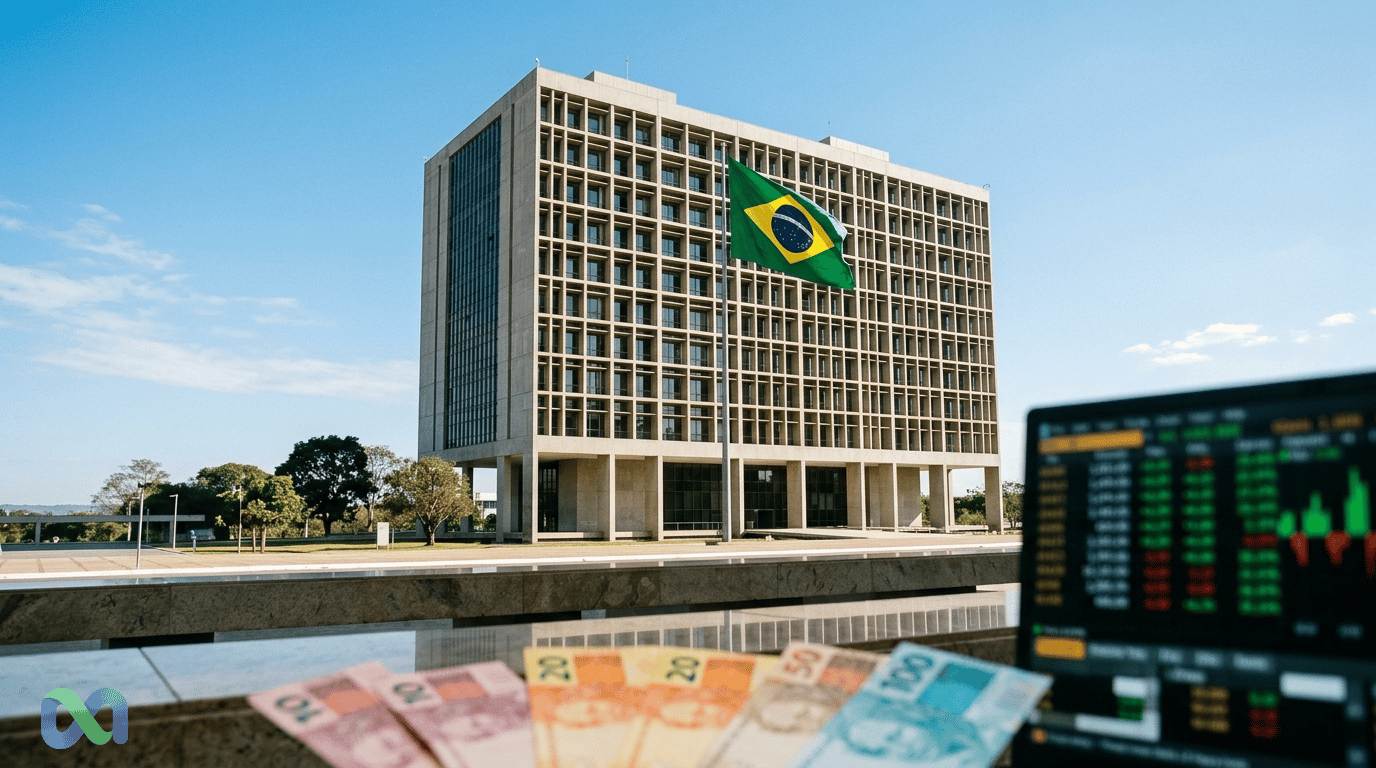
Brazil Central Bank interest rates become a public argument whenever one large number enters the debate. R$ 952 billion in interest costs sounds like an enormous bill. It also sounds like an accusation: the Central Bank serves markets and rentiers, not Brazil and Brazilians.
That line has political force. But serious analysis needs more than force. Before saying that the Central Bank pays a bill to the market, readers need to know what the number measures. They also need the period, the source, and the link with the Selic rate.
This article separates the fiscal number, the monetary mechanism, and the political reading. The point is simple. Brazil Central Bank interest rates are not only a slogan. They are a fiscal signal shaped by inflation, debt, confidence, and COPOM decisions.
They are also a market question. If the Selic falls, what happens to inflation? If it does not fall, what happens to debt? That tension can be measured through probabilities around monetary policy, not only through speeches.
What R$ 952 Billion in Interest Means
R$ 952 billion is a large-scale fiscal number. It may describe the public sector's interest cost over a specific period. It may come from a 12-month fiscal series. It may also be used on social media without a clear definition or cutoff date.
That is why validation comes first. The figure needs a source, a date, and a definition. Nominal interest, cash payments, debt refinancing costs, and the public sector's nominal result are not the same thing.
In Brazil, the interest debate usually crosses the Central Bank, the Treasury, and public debt data. The Banco Central do Brasil publishes fiscal series, monetary policy statements, COPOM minutes, and monetary data. It is the basic source for checking Selic, debt, expectations, and monetary policy.
The number still matters even when it needs care. A bill of that size shows that high rates weigh on the state. It also shows that monetary policy does not live outside the budget. When financial costs rise, there is less room for other priorities.
Nominal Interest, Public Debt and the Budget
Nominal interest is the financial cost recorded on debt and other liabilities. It includes the real rate and inflation. That is why it can grow fast in a country with high debt, high rates, and meaningful inflation.
The primary budget is different. It pays for health care, education, security, public works, wages, and transfers. The interest bill does not build a bridge or open a school. It remunerates debt that has already been issued.
Still, the two accounts touch. If interest costs rise, debt can grow. If debt grows, investors can demand a higher premium. If the premium rises, the state pays more to roll over debt. That loop sits at the center of the debate.
The critique of rentier income starts here. Those who hold bonds and financial assets receive income. Those who borrow pay more. The state sees its fiscal margin shrink. In an unequal economy, that distribution matters.
Why the Number Needs a Source and a Period
A fiscal number without a period can mislead. R$ 952 billion in one 12-month window does not mean the same thing in another window. It also does not mean the same thing if it measures accrued interest instead of cash paid.
The reader should ask four questions.
- Does the figure cover 12 months, a calendar year, or another period?
- Is the source the Central Bank, the Treasury, IBGE, or a political note?
- Does the figure measure nominal interest, the nominal result, or cash payments?
- What was the average Selic during the same period?
These questions do not make the number less serious. They make the criticism stronger. A well-measured complaint is harder to ignore than a loose figure.
Selic, COPOM and the Mechanism That Raises Debt Costs
The Selic is Brazil's benchmark interest rate. COPOM, inside the Central Bank, sets its target. That rate affects credit, public debt, the exchange rate, inflation, and returns on conservative assets.
When the Selic rises, borrowing becomes more expensive. Companies invest less. Families consume less. Fixed-income savings become more attractive. Demand tends to cool. With less demand pressure, inflation can lose force.
That is the classic channel. But the same channel raises the cost of debt. Part of public debt reacts quickly to the Selic. Another part reacts to what investors expect for future rates.
That is why Brazil Central Bank interest rates are not just a keyword. They are the bridge between the monetary decision and the fiscal bill. A high Selic can help control prices. It can also increase the state's interest bill.
How COPOM Decides
COPOM does not look at one number. It looks at inflation, expectations, activity, credit, the exchange rate, energy prices, fiscal policy, and the global backdrop. It also checks whether prices are rising because of temporary shocks or wider pressure.
If inflation expectations rise, the Central Bank tends to sound tough. The reason is direct. High expectations can become price and wage adjustments. If that happens, cutting rates too early can be costly later.
But toughness also has a cost. Expensive credit slows companies. Families refinance debt at higher rates. The Treasury pays more. The economy can grow less.
The right decision depends on data. If inflation falls and expectations improve, rate cuts gain room. If fiscal risk worsens and the exchange rate pushes prices higher, that room shrinks.
Why Brazil Lives With High Real Rates
Brazil has a memory of high inflation. It also has large debt, contested fiscal rules, and intense politics. That mix raises the premium investors demand to finance the state.
The real rate is the rate above expected inflation. When that real rate stays high for a long time, debt becomes heavier. Fixed income gains space against productive investment. That is the ground where the rentier debate grows.
There is no single cause. There is inflation history, fiscal risk, weak confidence, banking structure, and external shocks. There are also monetary policy decisions. So the answer does not fit in one slogan.
A country may need high rates for a time. But if it always needs high rates, there is a deeper problem. It may be fiscal credibility. It may be productivity. It may be institutional design. It may be all three.
A Central Bank for Markets or Against Inflation
The accusation that the Central Bank serves markets has a clear social base. High rates benefit those who already have money invested. They punish those who rely on credit. That divide is visible to families, companies, and government.
The defense of the Central Bank also has a base. High inflation is an informal tax. It hits hardest those without indexed assets. When prices rise quickly, wages buy less. Controlling inflation is also a social policy.
The real debate is between two costs. One cost is paying high interest and concentrating financial income. The other cost is allowing high inflation and destroying purchasing power. The dispute is not whether there is a cost. The dispute is which cost Brazil should reduce first.
The Rentier Argument
Rentier income means earning income by holding an asset, not by producing more goods or services. It can come from land, debt, shares, patents, or financial capital. In Brazil, the term often points to income received by public debt holders.
The rentier argument says three things. First, high Selic transfers income toward those who already own assets. Second, expensive credit slows production and consumption. Third, interest spending limits the budget.
The critique becomes stronger when tax policy enters the discussion. If dividends and large financial income are lightly taxed, the bill looks even more unequal. Workers pay taxes on consumption and wages. Asset holders receive high returns with a lower relative burden.
That critique does not prove that every high rate is unfair. But it proves that monetary policy has distributional effects. A COPOM decision is not neutral across social groups.
The Monetary Credibility Argument
The defense of a high Selic starts somewhere else. Without credibility, inflation can rise. If inflation rises, poorer households lose first. They have less protection, cannot reprice assets, and do not usually own inflation hedges.
In this reading, the Central Bank is not rewarding rentiers. It is protecting the currency. If the government wants lower rates in a lasting way, it needs to improve expectations, fiscal credibility, and confidence.
That argument also has limits. Credibility cannot become dogma. If the data allow cuts, keeping rates high by inertia also causes damage. A serious Central Bank must explain which data are still missing before the cycle changes.
The best reading combines both sides. Low inflation matters. Excessive real rates also matter. The way out is not to deny one cost. It is to measure both.
What Prediction Markets Would Watch
Prediction markets turn questions into probabilities. Instead of asking only whether the Central Bank has been captured, a market can ask whether COPOM will cut the Selic at the next meeting. It can also ask whether the Selic will end the year below a specific level.
That format forces precision. The question needs a date, a resolution rule, and a source. That reduces noise. It also lets traders show how their views change when new data arrive.
At Macro Markets, Brazil Central Bank interest rates can become events around monetary policy. The market does not decide the truth. It shows aggregated expectations in real time.
Last reviewed: July 26, 2026. Main sources: Banco Central do Brasil for Selic, COPOM, debt, and monetary series; IBGE for IPCA. Macro Markets reviewed this article as informational analysis, not financial advice.
Source: Banco Central do Brasil for monetary policy, COPOM, and fiscal series. Source: IBGE for IPCA and inflation. Review date: 2026-07-26.
Our experience is that this topic becomes clearer when readers separate three layers: the fiscal number, the COPOM decision, and the market price. We find that the figure gains meaning only when compared with Selic, IPCA, and debt. Our analysis compares the political reading with the market reading.
We also see one common mistake. Readers treat Brazil Central Bank interest rates as one moral number. The more useful reading looks at period, series, real rate, debt, inflation, and resolution rule. Compared with an isolated accusation, that method gives the debate a stronger base.
The broader frame connects this case with probability, forecasting, and collective intelligence. It also crosses political markets, global policy markets, election markets, and prediction market regulation. Those themes show how a macro question can become a clear rule, a date, a source, and an observable price.
Variables That Can Move Probabilities
An analyst should watch simple variables.
- IPCA and core inflation.
- Inflation expectations.
- COPOM minutes and statements.
- Exchange rate and commodity prices.
- Primary fiscal result.
- Gross debt.
- Activity, employment, and credit.
- Political noise around Central Bank autonomy.
Each data point can move probabilities. A lower IPCA can raise the chance of a cut. A weaker currency can reduce that chance. A worse fiscal picture can make investors demand more premium.
The advantage of a prediction market is that it records the change. If the probability of a cut rises after an inflation report, the market is showing a new reading. If it falls after a tough COPOM message, the market is also saying something.
How to Read Gaps Between Political Speech and Pricing
Sometimes political speech demands a fast cut. The market may not buy it. That can mean traders see inflation, the exchange rate, or fiscal risk as obstacles.
The reverse can also happen. Public language may remain tough while the market starts to price a cut. In that case, traders may be reading improvement before it becomes consensus.
No market is always right. Probabilities change and can be wrong. But the method helps. In loaded topics like Brazil Central Bank interest rates, measuring expectations is better than arguing only through adjectives.
Brazil Central Bank Interest Rates: How to Evaluate the Number
The R$ 952 billion figure should open an investigation. It should not close the debate. A simple method helps.
First, confirm the source. Look for the Central Bank, the Treasury, or IBGE. Do not rely only on social media.
Second, check the period. A 12-month bill should be read as 12 months. A government-term total should be read as a government-term total.
Third, separate nominal and real rates. Nominal interest includes inflation. The real rate shows the premium above expected inflation.
Fourth, compare scenarios. If the Selic falls, what happens to inflation and the exchange rate? If it does not fall, what happens to debt and credit?
Fifth, look at distribution. Who receives financial income? Who pays expensive credit? Who loses purchasing power when inflation rises? The answer shows the social cost of each path.
This method is not politically empty. But it is disciplined. It allows criticism of rentier income without abandoning evidence. It also allows a defense of stability without ignoring inequality.
Brazil Central Bank Interest Rates in a Quick Reading
This section summarizes the case in short lines. It helps readers follow the issue without noise.
The number is high. The rate matters. Debt grows if the cost rises. The country pays more if investors demand more premium. The Selic is central to that bill.
If the Selic rises, credit becomes expensive. If credit becomes expensive, consumption falls. If consumption falls, inflation can ease. That is the Central Bank's plan.
But there is a cost. The Treasury pays more. Debt gains weight. Fixed income receives a higher premium. Capital already in bonds earns more income. That is what angers critics of rentier income.
The question is not whether there is a cost. There is. The question is which cost weighs more. High interest hurts credit and debt. High inflation hurts wages and purchasing power. Brazil lives between those two bills.
That is why Brazil Central Bank interest rates need a calm reading. It is not enough to say that markets win. It is not enough to say that inflation demands high rates. The data have to be checked.
Watch Selic. Watch IPCA. Watch debt. Watch the exchange rate. Watch COPOM minutes. Watch fiscal policy. Watch whether the inflation target gains or loses credibility.
If inflation falls and debt stabilizes, the case for cuts strengthens. If inflation resists and fiscal risk worsens, the case weakens. The market changes price when those data points change.
IBGE helps readers understand inflation through IPCA. The Central Bank helps readers understand Selic, COPOM, and debt. The Treasury helps readers understand cash flow, debt, and fiscal results. Together, those pieces give a better map.
There is also a justice layer. A high rate does not affect everyone in the same way. Those with fixed-income savings can gain. Those who owe money to banks can lose. Those living on wages can suffer from inflation. Taxpayers can see less public spending.
That is why the rentier line lands. It touches a real wound. Brazil has deep inequality. It also has a memory of inflation. The country cannot pretend that only one of those facts exists.
A good rule is this: treat every hard phrase as a hypothesis. "The Central Bank serves markets" is a hypothesis. "A high Selic is necessary" is also a hypothesis. Both must pass through data.
In prediction markets, the hypothesis must become an event. Will the Selic fall? When? To what level? According to which official source? That way of asking forces clarity.
That is why the issue matters for traders and analysts. Brazil Central Bank interest rates are not only politics. They are inflation, debt, rates, credit, and risk. Each new data point can change the price of a scenario.
A Simple Guide to Reading the Interest Bill
Use this map as a field guide. Each point should be clear before taking a position.
- Data: check where the number comes from.
- Date: check the month and year.
- Source: use Central Bank, Treasury, or official data.
- Rate: check whether the rate is rising or falling.
- Debt: check whether debt is growing or falling.
- Price: check whether IPCA is easing.
- Currency: check whether the real is gaining or losing.
- Risk: check whether Brazil pays a higher premium.
- Term: check whether the bond is short or long.
- Rule: check whether the fiscal target is being met.
The Selic is one rate. It is not the whole economy. But it touches almost everything. It touches credit. It touches debt. It touches the exchange rate. It touches fixed income. It touches the state's cost.
If the rate rises, debt can become heavier. If the rate falls without confidence, the real can weaken. If the real weakens, prices can rise. If prices rise, the Central Bank can stop cutting.
This cycle is not linear. Sometimes a good inflation number matters more than tough language. Sometimes tough language matters more than a soft number. That is why the market watches the whole set.
Brazil Central Bank interest rates should be seen as part of that set. They are not one photo. They are a data series, month by month.
Mini Glossary Without Noise
Selic: Brazil's benchmark rate. It guides credit and debt.
COPOM: the Central Bank committee that sets the Selic target.
IPCA: the consumer price index. It is Brazil's key inflation measure.
Gross debt: total public sector debt relative to GDP.
Primary result: the fiscal account before interest.
Nominal result: the fiscal account after interest.
Real rate: nominal rate minus expected inflation.
Fiscal premium: the extra return investors demand for debt risk.
Rentier: someone who receives income by holding an asset.
Fixed income: an asset that pays a rate, such as a public or private bond.
Expectation: what economic agents believe may happen.
Credibility: belief that the target will be met.
Inflation target: the range that guides the Central Bank.
Rate cut: a COPOM decision to lower the Selic.
Pause: a decision to keep the rate unchanged.
Hike: a decision to raise the rate.
Minutes: the text explaining COPOM's decision.
Statement: the short note released after the meeting.
Yield curve: the market price of rates across different maturities.
Exchange rate: the price of the real against the dollar.
How Not to Misread the Debate
Do not read only the figure. Read the series.
Do not read only the speech. Read the data.
Do not read only the rate. Read inflation.
Do not read only debt. Read the maturity.
Do not read only the fiscal result. Read confidence.
Do not read only the bank. Read the rule.
Do not read only the market. Read who pays.
Do not read only the rentier. Read who loses from inflation.
Do not read only the short term. Read the cycle.
Do not read only one voice. Read several sources.
That method looks simple. It helps a lot. It reduces noise. It avoids easy sentences. It shows when a critique has a base. It also shows when a defense is weak.
Brazil Central Bank interest rates require that care. The number is large. The rate weighs on debt. Inflation hurts. The country needs a path that lowers the cost without breaking confidence in the currency.
Practical Signals Before the Next COPOM
Before a COPOM meeting, check the latest IPCA. Check whether core inflation is falling. Check whether services remain expensive. Check whether food is easing. Check whether energy is adding pressure.
Then check the exchange rate. A stronger real helps. A weaker real can lift prices. The Central Bank watches that channel.
Next, check fiscal policy. If the government meets its target, the market may demand less premium. If the target breaks, the premium may rise.
Also check the Central Bank's message. Tough words reduce the chance of a cut. Softer words can open room.
Finally, check market pricing. If the curve already expects cuts, the data must confirm the path. If the curve does not expect cuts, the data must be strong enough to change the picture.
This is the practical use of prediction markets. The trader does not need to shout. The trader measures. The trader changes the price when the data changes.
Brazil Central Bank interest rates become a probability topic. What is the chance of a cut? What is the chance of a pause? What is the chance of inflation above target? What is the chance of higher debt?
Each question can have a rule, a date, and a source. That is the advantage. The discussion stops being only moral. It becomes moral and measurable.
A Rule of Thumb for Readers
If the rate rises, ask why.
If the rate falls, ask whether the data supports it.
If debt rises, check the term structure.
If the real weakens, check the dollar.
If IPCA eases, check whether it is really easing.
If COPOM pauses, read the minutes.
If the market moves, check which data came out.
If a politician attacks the Central Bank, ask for the source.
If a bank defends high rates, ask about the social cost.
If a trader sees value, ask for a clear rule.
This topic is not solved with one sentence. It is solved with a chain of data. Data point by data point. Month by month. Meeting by meeting.
Brazil Central Bank interest rates are one signal in that chain. Do not say everything is one person's fault. Do not say nothing can be done. Check the rate. Check spending. Check risk. Check wages. Check prices.
The final question is sober. What falls first: inflation, Selic, or confidence? If inflation falls, the rate can fall. If confidence falls, the rate may stay high. If the Selic falls without a base, the cost can return through another channel.
That is the reason to watch markets. A market does not give certainty. It gives a probability. That probability can rise or fall. The useful part is the change. The change shows which data point mattered.
Brazil Central Bank Interest Rates: Three Final Questions
Brazil Central Bank interest rates leave three questions.
The first is fiscal. How much does the country pay, and why?
The second is social. Who gains, and who loses?
The third is market-based. Which data point changes the next rate decision?
With those three questions, the debate improves. The number no longer floats by itself. The data gains a frame. The critique gains evidence. The defense gains a test.
If the answer is "high rates forever," there is a problem. If the answer is "cut now, without data," there is also a problem. Brazil needs lower cost and more confidence. It needs lower inflation and a lower risk premium. It needs a clear rule.
That is why Brazil Central Bank interest rates should not be read as a meme. They should be read as a map. In that map, Selic, debt, IPCA, COPOM, the exchange rate, and fiscal policy are parts of the same macro game.
A Short Note to Close the Method
The number alone does not decide. The rate alone does not decide. Debt alone does not decide. The market price alone does not decide.
Everything moves together. Month, data, rate, debt, real, dollar, IPCA, target, minutes, and vote. That list sounds dry. But it is useful. It removes noise.
If you read Brazil Central Bank interest rates, use that list. If one piece is missing, wait. If two pieces change, review the case. If many pieces change, the market price should move.
Final Point
Clear data. Clear rate. Clear rule. Without that, there is no good judgment. With that, the debate gains light. Brazil Central Bank interest rates should be read with patience, with sources, and with market pricing.
Brazil Central Bank Interest Rates: Frequently Asked Questions
What is rentier income?
Rentier income is income earned by owning an asset. The asset can be debt, land, shares, a patent, or financial capital. In Brazil, the term often criticizes gains linked to high interest rates and public debt.
Who controls interest rates in Brazil?
COPOM sets the Selic target. COPOM is part of Banco Central do Brasil. But inflation, expectations, fiscal policy, the exchange rate, and activity all influence the decision.
Why does Selic affect public spending?
Selic affects public spending because part of public debt responds to interest rates. If the Selic rises, the cost of rolling debt can rise. That pressure appears in the nominal fiscal result.
Do high interest rates always favor banks?
Not always in a direct way. Banks can gain from some assets and spreads. But debt is also held by funds, insurers, pension funds, foreign investors, and household savings.
Would cutting the Selic solve the problem?
Not by itself. A lower Selic can reduce debt costs. But if the cut damages confidence, the exchange rate and inflation can rise. Sustainable relief requires better data and fiscal confidence.
Conclusion: The Dispute Is Political, but Also Measurable
Brazil Central Bank interest rates are more than a viral figure. They are a way to see Brazil's central tension. The country wants lower interest, more investment, and less financial income concentration. It also needs low inflation and a credible currency.
The critique of rentier income is strong when it shows fiscal cost, income concentration, and expensive credit. The defense of the Central Bank is strong when it shows inflation risk and lost purchasing power. Neither side should escape the data.
That is why the useful question is concrete. What information would change the next COPOM decision? What inflation level would allow a cut? What fiscal result would reduce the risk premium? What probability does the market assign to each scenario?
In short, Brazil Central Bank interest rates should be read with sources, period, and price. Prediction markets do not replace official sources. They are not financial advice. But they help turn the debate over Selic, debt, and interest costs into observable probabilities. In a discussion this loaded, that discipline is an advantage.
Disclaimer: this article is for informational purposes. It should not be used as investment advice or as a personalized recommendation. It is not financial, tax, or trading advice. Any reading of Brazil Central Bank interest rates should be checked against official sources. Every market involves risk, and every decision should consider official data, time horizon, and individual risk tolerance.
