Menu
Search
Chat
Positions
+29 Blogs |
+3 Markets |
Updated daily
The Bayes theorem formula updates a probability when new evidence arrives. Its formula is P(H | E) = P(E | H) × P(H) / P(E) , provided P(E) > 0. You combine...
The expected value formula multiplies each possible outcome by its probability, then adds the results. For a discrete random variable, write it as E(X) = Σ...
Last updated: May 2026. The standard artificial intelligence definition used in textbooks and policy drafts is this: artificial intelligence (AI) is...
Artificial intelligence meaning starts with a simple idea: machines can perform tasks that normally require human intelligence. In practice, artificial...
Prediction markets borrow heavily from derivatives trading, portfolio risk, and performance analytics. That overlap creates a problem for newer readers....
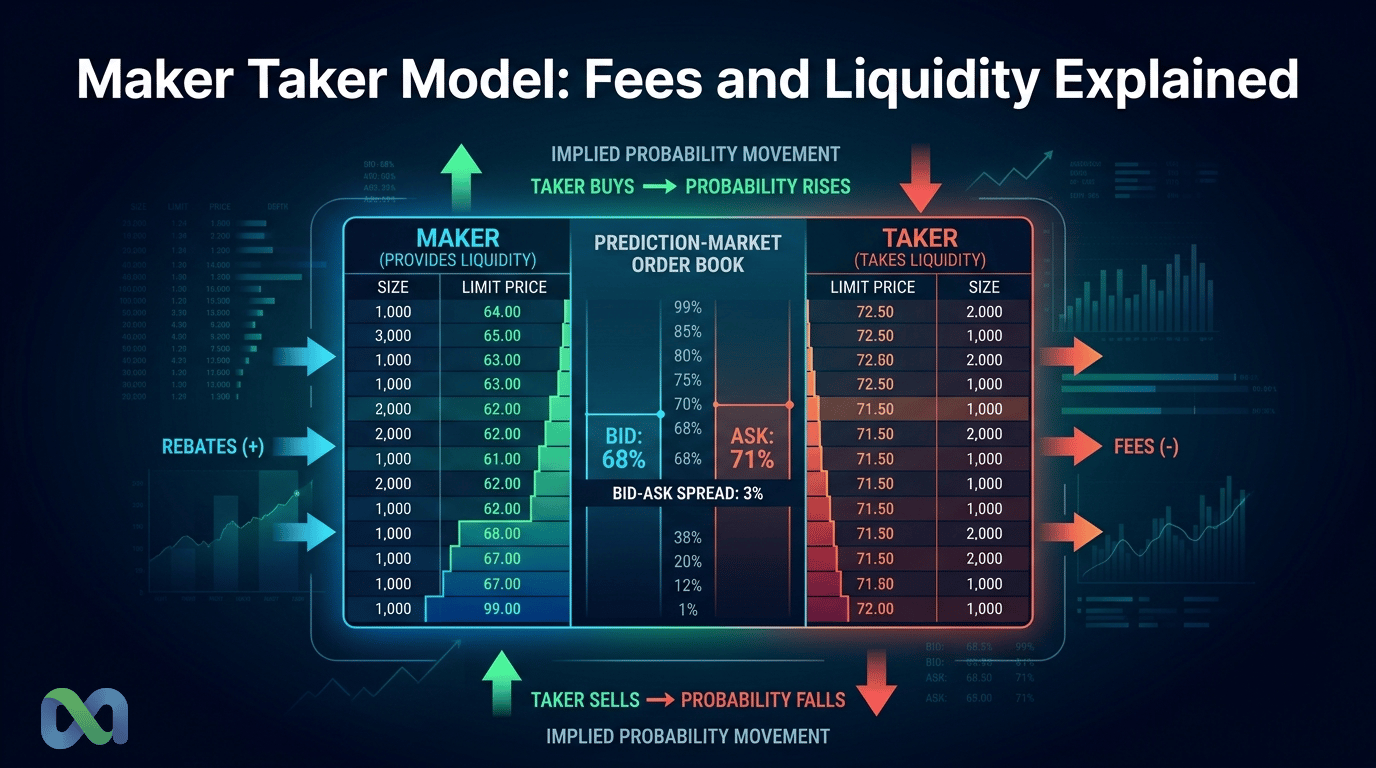
Updated on May 9, 2026. The maker taker model is a way to organize costs and incentives in an order book. The maker adds liquidity with an order that...
Order flow is the sequence of buys, sells, limit orders, cancellations, and executions that reaches a market over time. In prediction markets , that flow...
Price discovery is the process through which orders and trades form a market price. In a prediction market, that price is often interpreted as a probability...
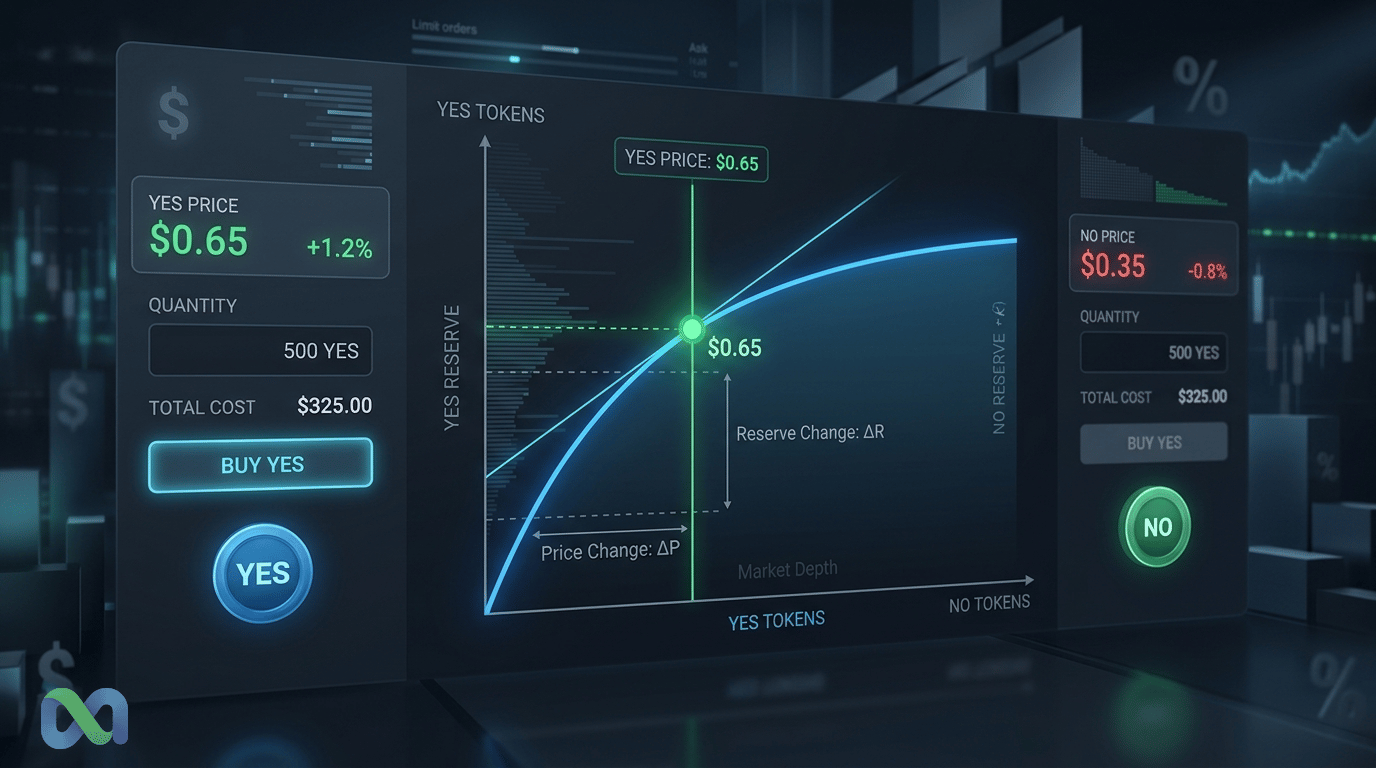
A Constant Function Market Maker (CFMM) is a type of Automated Market Maker (AMM) that uses a constant mathematical function to turn liquidity reserves into...
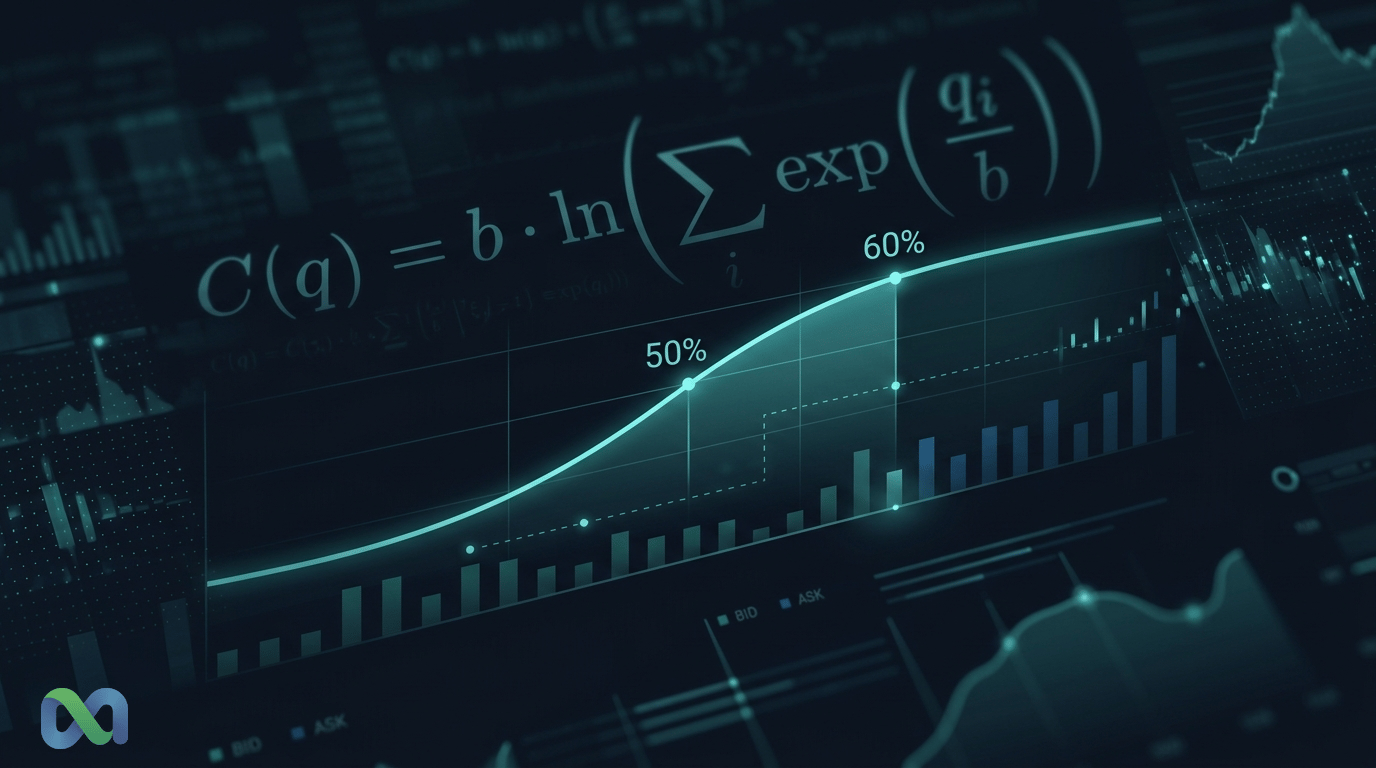
A cost function in an automated prediction market calculates the payment required to move from one market state to another. In a cost-based market maker,...


 Glossary







 Glossary