


Judge Bars Arizona From Targeting Kalshi, for Now
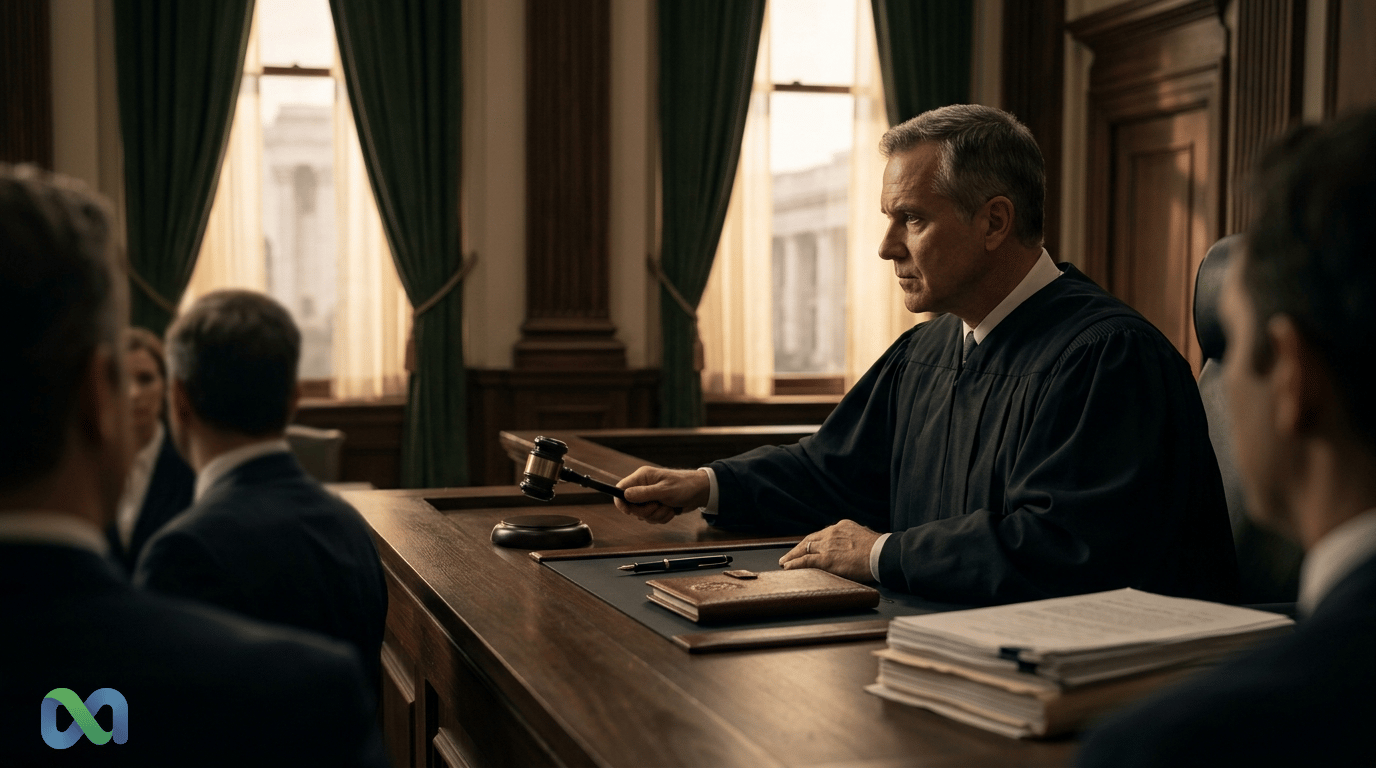
A federal judge has temporarily blocked Arizona from using state gambling law to go after Kalshi, the CFTC-regulated prediction market operator. The ruling does not settle the broader fight over prediction markets. However, it does draw a sharper line between federally supervised event contracts and state-level gambling enforcement.
That distinction matters well beyond one company. If prediction market operators can show their contracts fall under federal commodities oversight, states may have less room to treat the same activity as illegal wagering. For traders, founders, and regulators, the Arizona case is an early signal in a much larger jurisdiction battle.
For readers tracking how legal risk affects market structure, the case also connects to the broader rise of prediction markets as information tools. The core question is not whether all event contracts are suddenly safe everywhere. It is whether a federally regulated venue can be prosecuted by a state for offering products the federal government already permits.
Why Did the Judge Block Arizona From Targeting Kalshi?
The court's immediate concern was conflict between two regulatory systems. Kalshi operates under oversight from the Commodity Futures Trading Commission, which regulates designated contract markets in the United States. Arizona, by contrast, argued that the company's contracts amounted to unlawful gambling under state law.
In practical terms, the judge decided Arizona could not keep pressing that theory while the federal questions remained unresolved. That is why the ruling paused the state's enforcement effort and the related prosecution path, at least for now. It was not a final declaration that every prediction market product is lawful. It was a recognition that federal supervision may preempt at least some state action in this context.
This is the key takeaway in plain English:
- Kalshi is federally regulated, not an unlicensed offshore venue.
- Arizona tried to apply state gambling law anyway.
- The judge said the state must stand down while the core legal dispute is sorted out.
- The ruling is temporary, so appeals and further litigation remain possible.
That last point is critical. Courts often grant interim relief when one side shows a credible legal argument and a real risk of harm. It does not mean the final merits have been decided.
What Makes This Different From Ordinary Gambling Cases?
Most state gambling cases turn on whether a platform is taking bets on uncertain outcomes without the right local authorization. Prediction markets raise a different issue because some operators claim their contracts are financial instruments subject to federal commodities law, not ordinary wagers.
Kalshi's central argument is that its listed contracts sit inside a federal framework designed for event-based derivatives. If that view holds, states cannot simply re-label those contracts as gambling every time they dislike the subject matter. That is the legal tension running through this dispute.
The distinction matters because federal derivatives markets have their own compliance stack. They answer to a designated regulator, follow formal listing processes, and operate under surveillance, reporting, and rulebook obligations. That is very different from the typical picture of a sportsbook or casino-style betting product. For anyone new to the mechanics, it helps to understand how market-implied probabilities work in practice.
Arizona's theory appears to rest on substance over label. In other words, if people are effectively staking money on an event, the state says it should be able to police that activity as gambling. Kalshi's position is the reverse. If the contract is lawfully listed on a federally regulated market, the state cannot override that federal status with its own definition.
What the Ruling Means for Prediction Markets
The immediate effect is narrow, but the implications are wider. Prediction market operators now have a more concrete example of a court taking federal preemption arguments seriously when states attempt enforcement. That does not create nationwide immunity. It does, however, strengthen the view that regulated event contracts belong in a different legal bucket from standard wagering products.
Here is what changes now, and what does not:
| Issue | What Changes After the Ruling | What Remains Unresolved |
|---|---|---|
| Arizona enforcement | The state is temporarily blocked from acting against Kalshi on this theory | The underlying case can continue and may be appealed |
| Kalshi operations | The company avoids immediate disruption from Arizona action | Future court decisions could narrow or reverse the protection |
| Industry precedent | Operators gain a useful legal signal | No final nationwide precedent has been set |
| Federal vs state authority | Courts may scrutinize state efforts more closely | The exact boundary is still being litigated |
For market participants, the biggest message is that legal structure matters. Not all prediction platforms face the same risk profile. A CFTC-regulated venue occupies a very different position from an offshore operator or an unlicensed site serving US users. That difference becomes even more important as legal pressure rises around election, sports, and macroeconomic event contracts.
Why Arizona's Challenge Matters Beyond One State
State-level challenges can shape the economics of the whole sector. If one state succeeds in treating federally listed contracts as illegal gambling, others may try the same playbook. That would raise compliance costs, create fragmented market access, and reduce confidence in the regulatory perimeter.
The opposite is also true. If courts keep siding with federal primacy in cases like this one, regulated prediction markets may gain a clearer path to scale. That would not eliminate politics or litigation risk. However, it would make the business model more legible to traders, market makers, and institutional observers.
This is especially relevant because prediction markets keep expanding beyond novelty topics. They increasingly touch elections, economic data, central bank decisions, and headline legal battles. Those are precisely the areas where regulators care most about market integrity and public perception. As AP's report on the ruling makes clear, the Arizona dispute sits at the intersection of financial regulation and state criminal enforcement.
Federal Oversight vs State Gambling Law
At the center of the case is a familiar US constitutional problem. When federal and state regimes overlap, which one controls? The answer often depends on preemption. Courts ask whether Congress created a federal framework strong enough to displace conflicting state rules.
In Kalshi's case, the argument is not that states lose all power over all event-related activity. It is that a state may not criminalize conduct taking place on a federally regulated exchange when that conduct has already been authorized within the federal commodities system. That is a narrower, but still powerful, claim.
A simple comparison helps:
| CFTC-Regulated Event Contracts | State Gambling Enforcement Model |
|---|---|
| Operate under federal commodities law | Operates under state criminal or gaming law |
| Listed on regulated exchanges | Often targets unauthorized local wagering activity |
| Subject to surveillance and rulebooks | Focuses on prohibiting bets without state approval |
| Framed as financial contracts | Framed as gambling transactions |
That divide is why the case will be watched closely by lawyers, policymakers, and rival platforms. If a court says federal authorization really means something in practice, the regulatory map for prediction markets changes. If not, the sector stays vulnerable to fifty different state theories.
What Traders and Operators Should Watch Next
The next phase is less about headlines and more about legal detail. Traders should watch whether Arizona appeals, whether other states test similar arguments, and whether federal regulators clarify their own posture on event contracts tied to politically sensitive outcomes.
Operators should pay even closer attention to product design and licensing status. The Arizona ruling helps federally regulated venues most. It does little for platforms that cannot point to a comparable legal framework. In that sense, the case may widen the gap between licensed operators and everyone else.
There is also a market structure angle. Legal clarity tends to deepen participation because traders are more willing to hold positions when venue risk is lower. That does not guarantee more liquidity overnight. Yet over time, lower enforcement uncertainty can improve pricing quality and encourage more serious users to engage. For anyone comparing venue models, it is useful to track how World Cup odds articles translate market prices into probabilities because the same pricing logic depends on stable, trusted market infrastructure.
A Temporary Win, Not a Final Settlement
Kalshi won an important interim fight in Arizona, but the broader legal war over US prediction markets is far from over. The ruling suggests courts may be reluctant to let states bulldoze federally supervised event-contract venues. At the same time, it stops short of granting a permanent shield to the whole industry.
That is the right way to read the moment. It is a meaningful pro-industry signal, not a clean final victory. For now, the most durable lesson is simple: the future of prediction markets in the United States will depend as much on jurisdiction and regulatory design as on product demand.
If more cases follow, this Arizona dispute may end up looking like an early marker in the long contest over whether prediction markets are treated as financial infrastructure, gambling products, or something in between.
This article is for informational purposes only and does not constitute legal advice. Regulatory outcomes can change quickly as courts and agencies continue to weigh prediction market oversight.
