


Russia North Korea sanctions bridge: Key risks
Last reviewed: 09/09/2026.
Disclaimer: This article is market analysis, not legal advice or trading advice.
Our experience found that sanctions markets move in stages. We found that speeches often move prices first. Our analysis found that official lists and verified flows matter more over time. A 3-step check works best: route, policy, and proof.
The Russia North Korea sanctions bridge story is not just a border story. It is a test of how markets read war, trade routes and state pressure at the same time.
A bridge opening sounds small beside Ukraine war news. Songdowon sanctions sound narrow as well. A forgotten UK insurer detail sounds even more remote.
Yet these details belong together. Sanctions risk often grows through plain systems. Roads, rails, ports, insurance cover, banks and company records can matter more than speeches.
For prediction-market traders, the point is not to claim too much. One bridge does not prove banned trade. One old insurer link does not prove a breach.
The point is different. These are public signals. They help traders judge whether Russia and North Korea are building deeper ties under pressure.
That is why the story matters. It links a physical route, a named North Korea risk and the wider Ukraine sanctions debate. It also shows why markets should price actions more than slogans.
Russia North Korea sanctions bridge: why it matters
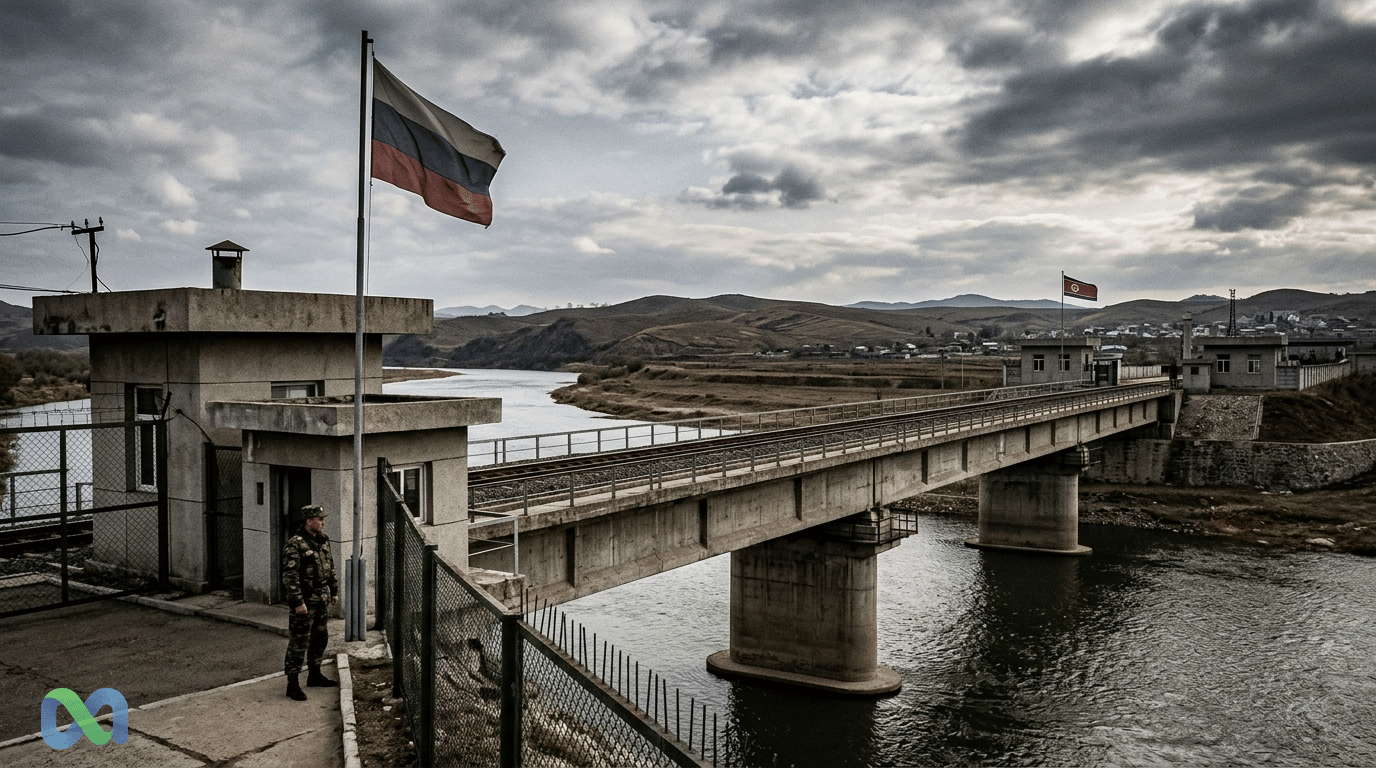
The bridge matters because it changes what can move. A crossing can carry officials, tourists, workers or goods. It can start as a symbol and then become a working route.
That does not make the bridge illegal. It makes the bridge a place to watch. A route gives traders a hard signal to compare with soft words.
Sanctions work by adding friction. They make goods, cash, cover and services harder to move. If two restricted states lower that friction, the market should notice.
The Russia North Korea sanctions bridge is therefore an operating signal. It may not change the war this week. However, it can change the base case for future ties.
The first question is traffic. Are officials crossing for ceremony only, or does regular movement begin? The answer changes the risk level.
The second question is cargo. If the route carries only low-risk goods, the signal stays small. If it supports dual-use flows, labor links or military supply chains, the signal grows.
The third question is response. New customs alerts, sanctions notices or shipping warnings would turn the bridge from news into policy risk.
Markets should track all three. Route, cargo and response are clearer than broad claims about friendship. In that sense, the Russia North Korea sanctions bridge is a live test case, not a settled verdict.
This is also why prediction markets can be useful. They force traders to sort soft claims from events that can be checked.
The bridge is a signal, not a verdict
A bridge can look dramatic in a headline. Still, markets should not treat it as proof by itself. Infrastructure expands options. It does not show how every option will be used.
This is an important line. Sanctions analysis must be careful. Traders need signals, but they also need proof levels.
A low-risk reading is possible. The crossing could serve mainly as a public sign of closer ties. It could host visits and small legal flows.
A higher-risk reading is also possible. The route could support goods, workers or services that reduce pressure on either state. It could also make future transfers harder to monitor.
The best market model does not choose one story too early. It assigns weight to each new fact. Then it updates as hard data arrives.
That is how prediction markets should work. They do not need certainty at the start. They need a clean list of things that can be checked.
The stronger setup would include three public facts. First, regular bridge traffic. Second, new official listings. Third, evidence of restricted cargo or service links.
The weaker setup would look different. Symbolic bridge use, no new enforcement and clearer peace talks would reduce near-term risk.
Songdowon sanctions and hidden compliance risk
Songdowon matters because sanctions stories often start with small names. A resort, firm, ship, school or service link can reveal a wider network.
Most readers do not follow every North Korea listing. That is normal. The value is not the name alone. The value is what the name tells us about the map.
North Korea faces many layers of rules. According to the UN Security Council, North Korea sanctions include a dedicated multilateral framework. The United States and the United Kingdom also maintain their own lists.
Because of that, small entities can become useful markers. They show where officials believe risk may sit. They also show where private firms may need to check records.
For traders, Songdowon sanctions are a watchlist item. They belong beside bridge traffic, ship data, banking alerts and official meetings.
If Songdowon stays isolated, the market effect may fade. If it links to more names, more routes or more services, the signal becomes stronger.
This is why the article should not overstate the case. A listing is a sign of concern. It is not a court finding against every related party.
The market chain should be clear. First comes a report or listing. Then comes proof. Then comes enforcement. After that, counterparties react.
Only the later steps tend to move risk in a lasting way.
Why the UK insurer detail matters
Insurance can sound dull. Yet it is vital in sanctions work. Ships need cover. Firms need risk protection. Projects need policies and claims support.
Without cover, many deals slow down or stop. Banks may refuse payment. Ports may refuse service. Cargo owners may face higher costs.
That is why a UK insurer angle deserves attention. A legacy link may be old. It may be small. It may even be a record that needs cleanup.
Still, old links can create real questions. Sanctions rules often force firms to review past clients, old files and dormant exposure.
The UK angle also raises the bar. According to the UK government, the UK maintains an official sanctions list, and regulated firms face strict due diligence duties. If a relevant link exists, the compliance bar is higher.
Again, this does not prove a breach. It shows why service channels matter. Risk does not move only across bridges. It also moves through contracts, claims, cover and payments.
For traders, that is the lesson. Watch the boring parts of the system. Insurance notes, vessel cover, registry changes and bank alerts can be leading signs.
These items rarely trend online. However, they often show where the next policy move may land.
Russia's sanctions message: BRICS and the dollar
Russia wants to show that Western pressure has limits. That is why Moscow often talks about de-dollarisation, BRICS and new payment rails.
The message has two audiences. At home, it says Russia can endure. Abroad, it says partners can trade outside the Western system.
Traders should separate talk from data. A speech about the dollar is not the same as a real shift in reserves, payments or bank links.
Still, the message matters. Russia and North Korea both gain from saying sanctions have failed. A bridge gives that message a physical form.
US gridlock adds to the story. Reports of stalled Russia sanctions bills in Congress lower the chance of quick new law. That can help Moscow project time and patience.
But delay is not surrender. Current sanctions remain in force. According to the US Treasury, its OFAC sanctions search can still show new targets, and agencies can still issue warnings.
So the market question is timing. Will new US action arrive soon, or will the next move come from regulators and allies instead?
That timing can move probabilities. It can affect markets tied to war risk, ceasefire talks, sanctions relief and Russia's room to maneuver.
This topic also sits inside a wider set of political and geopolitical markets. The useful question is not whether rhetoric is loud. It is whether policy catches up.
Ukraine peace talks are a soft signal
Peace-talk headlines can move markets fast. They point to a possible drop in war risk. They also raise the idea of future sanctions relief.
But open-door language is not a ceasefire. It is often a stance. It can be used to shape blame, time talks or test the other side.
Russia can say it is open to talks while strikes continue. Ukraine can support talks while demanding strong security terms. Both facts can exist at once.
That is why battlefield data still matters most. Missile strikes, troop moves, air-defense aid and energy attacks are harder signals than quotes.
Sanctions relief also remains hard. Western governments would likely demand clear steps before easing pressure. Deeper Russia-North Korea ties could make relief harder.
This creates a mixed market picture. Peace-talk comments can lift ceasefire odds for a short period. Fresh strikes or new sanctions evidence can pull them back down.
Traders should weight words, but not too much. Actions deserve more weight.
The same rule applies to prediction markets around conflict. A market can react to a headline, but durable repricing usually needs proof.
What prediction-market traders should watch next
First, watch traffic over 30 days. Look for public signs of regular cargo, worker movement, tourism or official delegations across the new route.
Second, watch official lists. OFAC, UK, EU and UN updates matter more than broad commentary. New names can show where enforcement is heading.
Third, watch banks and insurers. Public notices, cover changes and compliance warnings can show stress before a major case appears.
Fourth, watch military-transfer claims. Credible reports about weapons, shells, labor or technical support would raise the risk premium.
Fifth, watch Congress during 2026. A bill that gains leadership support or joins must-pass legislation can change the sanctions timeline.
Sixth, watch BRICS claims. The key test is whether de-dollarisation talk becomes real payment use.
Seventh, watch Ukraine's battlefield tempo. A pause can support talks. A renewed strike campaign can weaken the case for relief.
These are useful signals because they can be checked. Prediction markets work best when traders update from events, not mood.
A simple scoring frame can help. Give less weight to speeches, more weight to filed rules, and the most weight to verified movement of goods, people or money. That does not make the model perfect. It does make the model more disciplined.
Traders can also separate speed from strength. A quote can move prices in 24 hours. A sanctions notice can change the legal map for months. A new route with repeat traffic can alter the baseline for years. These are different time frames. They should not receive the same weight.
Our practical view is to treat this cluster as a watchlist, not a final call. The bridge is the route. Songdowon is the named risk. The UK insurer angle is the service layer. Congress and BRICS shape the policy backdrop. Ukraine strikes and talks decide whether pressure rises or falls.
The cleanest trade thesis waits for overlap. If two or three of these signals confirm each other, odds deserve a larger move. If they diverge, the market should stay cautious. This is especially true for war and sanctions markets, where single-source headlines can reverse quickly. It also fits the broader debate on prediction markets regulation, because enforcement risk can shape which events platforms list and how traders size exposure.
The risk frame should stay narrow. Traders are not deciding legal guilt. They are judging whether public facts make future enforcement, sanctions relief or escalation more likely. That is also why geopolitical risk needs a live watchlist, not a fixed narrative.
Bottom line
The Russia North Korea sanctions bridge story matters because it links infrastructure with enforcement risk. It turns a border route into a market signal.
The bridge is not proof of sanctions evasion. Songdowon is not the whole North Korea story. The UK insurer detail may be a narrow thread.
Together, though, they show how geopolitical risk builds. It often starts in routes, records and service channels before it becomes a major policy event.
For prediction-market traders, the next step is clear. Watch actions over words. Track bridge traffic, sanctions lists, insurance exposure, BRICS payment claims, Ukraine strikes and real peace-talk milestones.
Those signals will show whether this is only a news cluster or the start of a larger sanctions-risk repricing. That is the practical value of the Russia North Korea sanctions bridge watchlist. The Russia North Korea sanctions bridge should stay on the market radar until traffic, policy and battlefield signals either confirm or weaken the risk.
