


Why Putin fears Yabloko anti-war vote in Russia
Yabloko was not dangerous because it was about to win power. It was dangerous because it could make anti-war sentiment countable. That is the core of why Putin fears Yabloko anti-war vote politics in 2026.
In a controlled political system, a party can be weak and still matter. It can lose every official contest and still give voters a shared place to register dissent. For the Kremlin, that is the risk.
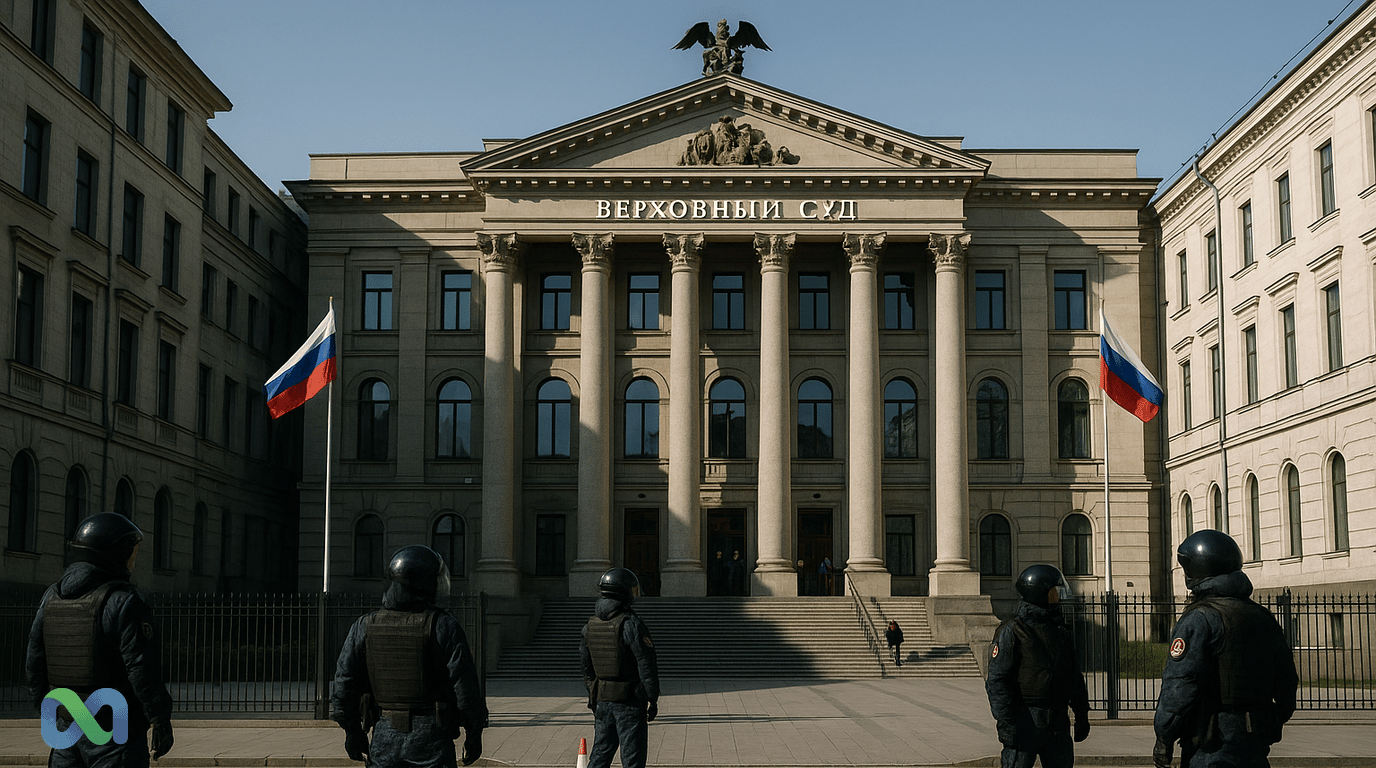
Russia's Supreme Court barred Yabloko from the September parliamentary ballot after a case brought by Rodina, a nationalist pro-Kremlin party. The court move removed the only registered party openly opposing the war in Ukraine from the national race. Yabloko denied the claims against it and said it would appeal.
The decision looks strange if the question is only electoral math. Yabloko polls around 2% to 3%, far below the 5% threshold needed for Duma seats. It has not held federal Duma seats since 2003. On paper, that is not a party that can threaten the Kremlin's grip.
So why Putin fears Yabloko anti-war vote signals is the right question. The answer is simple. In Russia, even a weak party can show that private doubts are shared.
But authoritarian systems do not only fear defeat. They fear shared action, public proof, and visible dissent. Yabloko offered those things to soldiers' relatives, draft-age men, war-weary families, urban liberals, and voters hurt by the cost of the war.
Therefore, the ban matters beyond one party. It shows that Moscow is trying to hide dissent before it becomes a larger political signal.
Why Putin Fears Yabloko Anti-War Vote Signals
The paradox is simple. Yabloko is small, but small does not mean harmless. A 2% party can become a shared signal in a political system where normal opposition channels have been closed.
Russia's electoral system already filters opposition through registration rules, media control, pressure on activists, and the threat of prosecution. In that setting, a legal party line on a ballot is not just a campaign. It is a rare public tool.
The Kremlin can tolerate many private complaints. A mother can resent mobilization. A worker can worry about prices. A student can fear conscription. A regional official can dislike the war's budget cost. Those concerns are manageable when they remain isolated.
However, a ballot option changes the format. It gives different groups a common signal. They do not need to agree on ideology. They only need to know that one legal box on the ballot means "not this war."
That is why the coordination issue matters more than the vote share. Yabloko did not need to cross the Duma threshold to create political risk. It only needed to show that anti-war demand exists in a measurable form.
This is also why the Kremlin's move should be read as a signal about confidence. A regime that feels secure can allow weak opponents to lose in public. A regime worried about hidden sentiment reduces the number of ways that sentiment can be counted.
The risk is not that Yabloko would govern Russia. The risk is that Yabloko could reveal a voting bloc the Kremlin prefers to keep split apart.
What the Court Decision Actually Did
The immediate facts are narrow. Russia's Supreme Court ruled on Aug. 10, 2026, to annul Yabloko's federal candidate list for the September parliamentary elections. The case was brought by Rodina, which alleged undeclared Western financial support. Yabloko rejected the allegation and disputed the evidence.
Kyiv Post framed the move as a sign that the Kremlin had become afraid of Yabloko's anti-war vote. DW described Yabloko as the only registered party opposing the war and noted the court's role in blocking it from the ballot. AP reported the courtroom scene and confirmed that party leader Nikolai Rybakov attended the hearing.
Those facts matter because they show how the exclusion worked. The Kremlin did not need to announce a broad ideological ban. It used a legal channel. A friendly party filed a case, the court accepted the claim, and the ballot became narrower.
That pattern is common in managed politics. The state does not always need to say, "anti-war voters are forbidden." It can say the paperwork is flawed, the funding is suspect, or the candidate list does not qualify.
For outside analysts, the process is part of the signal. When a system uses legal forms to remove a weak opponent, the legal form itself becomes a political-risk indicator. It shows which types of opposition the regime now sees as too costly to allow. This is why Putin fears Yabloko anti-war vote math even when the party is small.
Yabloko's leader, Nikolai Rybakov, framed the exclusion as a refusal to talk with citizens asking uncomfortable questions. That framing is important. The party was not positioned as a revolutionary threat. It was positioned as a legal channel for citizens who wanted the war questioned inside Russia's own institutions.
The court decision removed that channel from the national ballot. It did not remove anti-war sentiment. It made that sentiment harder to express in a legal and public way.
Anti-War Does Not Mean Pro-Ukraine
The Yabloko case needs careful language. Yabloko's position is anti-war, but that does not make it pro-Ukraine in the way Kyiv would define the term.
Yabloko founder Grigory Yavlinsky has argued for an immediate unconditional ceasefire. From a Russian domestic perspective, that is a direct challenge to the Kremlin's war policy. From a Ukrainian perspective, it is more complicated.
Kyiv has criticized ceasefire plans that could freeze Russian occupation over roughly one-fifth of Ukrainian territory. A pause without withdrawal could reward aggression. It could also leave Ukraine open to another Russian attack later.
So the significance of Yabloko is not that it represents Ukrainian interests. It does not. The significance is that it gives Russian voters a legal way to say the war should stop.
That distinction keeps the analysis honest. Ukraine's strategic interest is not the same as Russian anti-war sentiment. A Russian voter can oppose mobilization, casualties, sanctions, inflation, or isolation without accepting Ukraine's full demands.
The Kremlin understands that difference too. It is not only worried about moral opposition to the invasion. It is worried about practical fatigue. The longer the war lasts, the more reasons voters have to want a lower-cost path.
That is why an anti-war party can be risky even if it is not pro-Ukraine. It can gather many forms of discontent under one legal label. Some voters may oppose the war on principle. Others may oppose its cost. Others may simply want normal life back.
For the Kremlin, those differences are less important than the shared signal. On election day, all those motives could become one visible anti-war count. That is another reason why Putin fears Yabloko anti-war vote dynamics.
The Belarus Lesson: A Harmless Candidate Can Become a Proxy
Kyiv Post's analysis points to Belarus in 2020 as a lesson the Kremlin likely absorbed. Sviatlana Tsikhanouskaya was initially easy for the system to underestimate. She became a focal point for voters who wanted to register rejection of the incumbent order.
The comparison should be used carefully. Russia in 2026 is not Belarus in 2020. The scale, security services, war context, and level of repression are different. But the political mechanism is similar.
In closed systems, a candidate or party can become a proxy. Voters do not need to believe the proxy will win under fair conditions. They can use it to express a broader demand for change, accountability, or relief from pressure.
That is what makes ballot access dangerous. A ballot does not only assign seats. It can reveal hidden demand. It can show citizens that they are not alone. It can also give elites a rough map of where anger is building.
The Kremlin can control official results, but control is not the same as perfect information. A visible anti-war vote would still create data. It would show regional patterns. It would show whether war fatigue is strongest in large cities, poorer regions, border areas, or places hit by mobilization.
That information is useful to voters, elites, foreign governments, and markets. It can change expectations about the war's durability. It can also change expectations about how much force the Kremlin may need later.
The safest option for the regime is to stop the signal before it forms. That is what the Yabloko ban does. It removes a possible focal point before the campaign can test how much anti-war demand is willing to become public.
Why Putin Fears Yabloko Anti-War Vote Data
The Yabloko decision is a political-risk signal. It suggests the Kremlin is not only managing elections. It is managing the visibility of dissent around the war.
Public support for the war remains substantial in many polls. DW cited Levada polling that put support around 66%, lower than earlier phases of the invasion. Polling in authoritarian systems needs caution, especially on sensitive questions. Still, direction matters.
If support is high and stable, the Kremlin should have less reason to fear a tiny party. If support is still high but more brittle, the logic changes. The regime may prefer to reduce every channel that could reveal a negative trend.
Therefore, why Putin fears Yabloko anti-war vote signals is also a question about polling risk. The Kremlin may not fear the headline number. It may fear the trend behind it.
This is especially relevant before a parliamentary election. Even a tightly managed election creates campaign moments, local meetings, court challenges, speeches, and social media clips. Each moment gives anti-war voters a chance to see each other.
The Kremlin's war politics now revolve around three linked variables. The first is battlefield durability. The second is economic pressure. The third is domestic consent. Yabloko touches the third variable.
The party's exclusion does not prove that mass unrest is near. That would be an overclaim. It does show that the Kremlin wants fewer public measures of war fatigue. Again, this is why Putin fears Yabloko anti-war vote data more than Yabloko's formal seat count.
For a market-oriented reader, that is the key point. Political systems generate signals. Regimes sometimes suppress the signals that make them look weaker. When Moscow removes a legal anti-war option, it reduces transparency in the market for public sentiment.
That matters for anyone tracking Russia's war capacity. A state can keep fighting through force, propaganda, and budget support. But the cost rises if domestic consent declines. The Yabloko ban suggests the Kremlin does not want that cost curve measured at the ballot box.
The Election Legitimacy Hypocrisy
The decision also exposes a sharp legitimacy problem. Putin has criticized Ukraine for not holding national elections under martial law. At the same time, Russia is removing the only registered party opposing the war that Moscow is prosecuting.
That contrast helps explain why Putin fears Yabloko anti-war vote visibility. It could make Russia's own election look less like consent and more like a managed ritual.
That contrast is not just rhetorical. It shows what Moscow means by elections. The Kremlin wants process, turnout, and official results. It does not want open competition over the central issue shaping the country.
Ukraine's election delay happens under martial law during a defensive war on its own territory. Russia's ballot narrowing happens while Russia is the invading power. It also happens while the state suppresses legal opposition to that war.
The distinction matters. Elections can be formally scheduled and politically hollow. A ballot can exist while the main policy question is removed from voter choice.
That is why the Yabloko case should not be treated as a minor opposition story. It is a window into how the Kremlin defines legitimacy. The system wants the appearance of electoral process without the risk of voters turning the war into a measurable referendum.
In that sense, Yabloko's weakness was beside the point. The party's value was symbolic and informational. It could show that "no to the war" had a legal address.
The court ruling erased that address from the ballot. That does not make the sentiment disappear. It only makes the official election less informative.
In plain terms, this is why Putin fears Yabloko anti-war vote visibility. It could turn a managed election into a rough poll on the war.
What Analysts Should Watch Next
The next signal is the appeal. If Yabloko can keep the case alive, even briefly, the legal process may create more public attention. If the appeal is crushed quickly, that also tells analysts how little tolerance remains for legal anti-war activity.
For that reason, why Putin fears Yabloko anti-war vote signals should remain on the watch list after the court ruling.
Last reviewed: August 13, 2026. This article uses Kyiv Post, DW, and AP as source anchors, then applies a political-risk lens to the ballot decision.
Watch court gatherings and police behavior around them. Small crowds can matter because they show who is willing to appear in public. In Russia's current climate, public presence carries risk.
Watch regional candidate exclusions. If local Yabloko figures or other anti-war independents face similar barriers, the national case may be part of a broader pre-election filter.
Watch mobilization rumors. Anti-war voting demand can rise when households expect new manpower pressure. Even rumors can reshape behavior if families believe another round of mobilization is possible.
Watch elite messaging around negotiations. If official rhetoric starts to frame ceasefire talk as betrayal, the Kremlin may be preparing to stigmatize any domestic demand for compromise. If the rhetoric softens, the state may be testing a controlled path toward talks.
Watch economic pressure in regions that supply soldiers, labor, and logistics. Inflation, shortages, and local casualty networks can turn foreign policy into household politics. That is the zone where a small anti-war party can become more relevant than its polling suggests.
For Macro Markets readers, the broader frame is geopolitical risk. The same logic appears in prediction markets around conflict, where a small public signal can move expectations before official institutions admit the shift. It also connects with Ukraine war latest analysis and Black Sea chokepoint Russia Ukraine war risk, where markets focus on stress points that governments try to control.
None of these indicators should be read alone. The value is in the cluster. Courts, police, regional filters, mobilization talk, and elite messaging together can show whether Moscow sees anti-war sentiment as a manageable nuisance or a growing threat.
FAQ
Why did Russia bar Yabloko from the ballot?
Russia's Supreme Court barred Yabloko after a case filed by Rodina, which alleged undeclared Western financial support. Yabloko denied the allegations. Analytically, the move removed the only registered anti-war ballot option before the September parliamentary elections.
Why does Putin fear Yabloko if it polls around 2% to 3%?
The fear is not that Yabloko can win power. The fear is that it can turn scattered anti-war discontent into a visible, countable voting bloc. In a closed system, that can matter more than seats.
Is Yabloko pro-Ukraine?
Not in the full Ukrainian strategic sense. Yabloko is anti-war and has called for an immediate ceasefire. Kyiv has criticized ceasefire ideas that could freeze Russian occupation. The party matters mainly as a Russian domestic signal.
What does the Yabloko ban mean for Russia's elections?
It means the election will be less informative about public opposition to the war. Voters can still hold private views, but one legal channel for expressing anti-war sentiment has been removed.
Bottom Line
Why Putin fears Yabloko anti-war vote politics is not a story about a tiny party taking power. It is a story about visibility. Yabloko gave anti-war Russians a legal place to gather their preferences.
The Kremlin's decision removes that place before the vote. That keeps dissent more private, more fragmented, and harder to measure. For analysts, that is the real signal: Moscow is not only controlling the election outcome. It is controlling what the election is allowed to reveal.
That is why Putin fears Yabloko anti-war vote visibility. It turns a weak party into a public signal, and it turns a managed ballot into usable political data.
For traders and analysts, the next layer is prediction market accuracy. War politics, ballot access, and court pressure can all change expectations before official data catches up. In that sense, political and geopolitical markets are not just about who wins elections. They are about which risks become visible first.
