


Brazil World Cup 2026: Complete Team Guide
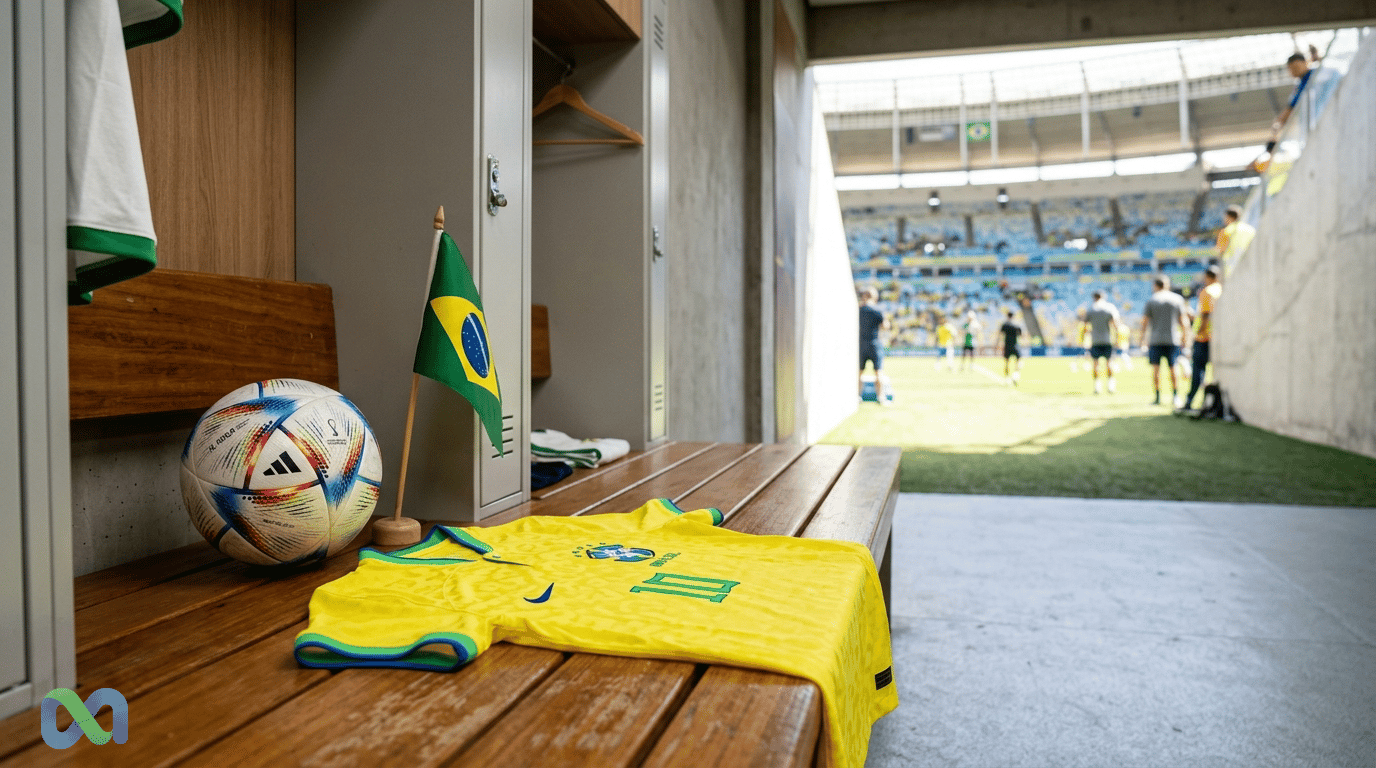
The Brazil World Cup 2026 case enters the tournament with a rare mix of historical weight, squad strength, and real uncertainty. Brazil still carries the heaviest shirt in World Cup history. Even so, the current read does not allow the sixth title to be treated as destiny.
Statistical models cited in the brief place Brazil in the group of strong contenders, but below Spain, France, England, Argentina, and Portugal. Opta, cited by CNN and Estadão, listed Brazil as the sixth favorite, with a 6.23% chance of winning the title. Polls cited by ge, Quaest, Datafolha, and InfoMoney point to another signal: a meaningful share of Brazilian fans is not fully convinced.
This guide organizes what matters for following Brazil in 2026. You will see squad status, coach, likely roster, key players, tactical risks, recent history, title probability, relevant markets, and frequently asked questions. The goal is to separate shirt, narrative, and price.
Prediction markets involve risk. Probabilities change with injuries, squad selection, warm-up matches, bracket path, and trading volume. Use this content as analysis, not as a promise of outcome.
Quick Summary of Brazil at the 2026 World Cup
The short answer is simple: Brazil enters the 2026 World Cup as a strong contender, but not as the clear favorite. The Brazilian national team has the squad to compete for the title. Still, the data in the brief suggests a moderate probability when compared with the historical weight of the shirt.
Carlo Ancelotti is the center of the cycle. The coach brings knockout experience, star management, and big-match reading. That reduces part of the emotional risk that marked recent Brazilian exits. But he still needs to turn talent into collective structure.
The final squad still depends on official confirmation from CBF and FIFA. Until then, any list should be treated as likely, not definitive. The most relevant names on the radar include Vini Jr, Neymar, Rodrygo, Raphinha, Endrick, Estêvão, Bruno Guimarães, Casemiro, Marquinhos, Alisson, and Ederson.
The market signal is colder than fans usually are. According to the brief, Opta gave Brazil 6.23%. That puts the team behind Spain, France, England, Argentina, and Portugal. So the right question is not “can Brazil win?” It can. The useful question is: does the current price compensate for the risk?
Brazil Group and Match Schedule at the 2026 World Cup
The group and schedule are living blocks in this article. They should be updated whenever FIFA and CBF publish final information on opponents, venues, times, and any operational changes. For market analysis, this update is essential.
Match order changes the risk read. An opener against a weaker opponent tends to reduce early pressure. On the other hand, a slip in that match can quickly damage confidence. In prediction markets, that type of event often moves price before the full tactical analysis even arrives.
A second match against a physical or organized rival requires another type of read. Brazil must control transitions, avoid anxiety, and create clean chances against low blocks. The third match can become a decision for group leadership, goal difference, or starter management.
Use this list as an editorial base:
- Matchday 1: Brazil vs opponent 1. Date, venue, and time via FIFA.
- Matchday 2: Brazil vs opponent 2. Date, venue, and time via FIFA.
- Matchday 3: Brazil vs opponent 3. Date, venue, and time via FIFA.
This table avoids a common World Cup content mistake: freezing information before the official source confirms it. For the reader, that improves trust. For the trader, it avoids decisions based on stale data. FIFA’s Brazil team page should be the first checkpoint for official tournament updates.
Brazil Squad and Likely Roster
Brazil’s 2026 squad should still be treated with caution. The best path is to separate three groups: likely core, players competing for spots, and players dependent on physical condition. That discipline reduces noise.
Goalkeepers
Alisson and Ederson remain natural references because of their history at the highest level. Both offer experience, foot skills, and exposure to major matches. The choice may depend on fitness, club season, and Ancelotti’s preference for buildup from the back.
The third goalkeeper usually has less weight in the title market, but matters for squad management. In a long tournament, stability on the bench reduces emergency risk.
Defenders
Marquinhos appears as a likely defensive leader. Brazil also needs center backs who can hold a high line, defend the box, and start moves without giving away possession. In a World Cup, that combination is rare and valuable.
At fullback, the key point is balance. Brazil may have very aggressive wingers. So the fullbacks must choose well when to push forward. A team exposed behind them becomes a target for France, Spain, England, or Argentina.
Midfielders
Bruno Guimarães and Casemiro represent different poles. Bruno helps progression and tempo control. Casemiro offers defensive reading and leadership. The big question is who completes the unit with intensity, vertical passing, and protection.
Midfield is Brazil’s thermometer. If it controls rhythm, the attack receives the ball better. If it loses duels, the defense is stuck in constant transition. This detail can separate a semifinal from a quarterfinal exit.
Forwards
The attack carries Brazil’s ceiling. Vini Jr, Rodrygo, Raphinha, Endrick, Estêvão, and Neymar form a talent block that few national teams can match. But talent is not enough.
Ancelotti must define clear roles. Who attacks depth? Who moves inside? Who presses first? Who takes penalties? These answers affect both collective performance and markets for top scorer, assists, and goal involvement. ESPN’s Brazil squad page is a useful English-language reference for player status as the cycle develops.
Players Competing for Places
Borderline names should be evaluated by function, not by popularity. A substitute who solves a specific problem may be worth more than a famous name without a fit. A World Cup demands pieces for different scenarios: a locked match, a lead, a deficit, extra time, and a physical duel.
Brazil’s Key Players at the 2026 World Cup
The Brazil World Cup 2026 team will be judged by structure, but the front-line players will define the ceiling. In short tournaments, stars change matches that looked blocked.
Vini Jr
Vini Jr is the main source of imbalance. He forces cover, pushes defensive lines back, and creates chaos in open space. If he arrives healthy and confident, Brazil gains a weapon that few opponents can control without double coverage.
The market can react strongly to his performance. A dominant Vini in friendlies or early matches should increase Brazil’s implied probability and individual markets as well.
Neymar
Neymar is the most sensitive variable. If he is physically ready, he adds final pass, set pieces, creativity, and reading between the lines. If not, he can become tactical and media noise.
Is the correct analysis binary? No. Neymar does not need to be the 2014 or 2018 version to help. He needs a clear role and the condition to sustain useful minutes. Without that, Brazil should prioritize rhythm and intensity.
Rodrygo
Rodrygo offers versatility. He can play on the right, inside, or as a second forward. That flexibility fits Ancelotti, who knows the player well and tends to value pieces that interpret space.
In the market, Rodrygo may be underestimated if the debate stays trapped around Vini and Neymar. He has the profile of a player who decides a major match without dominating headlines through the entire cycle.
Raphinha
Raphinha increases aggression, pressing, and volume from the wing. He can be decisive if Brazil needs width and medium-range finishing. His off-ball work also helps protect the fullbacks.
The point of attention is competition. If Ancelotti prefers more interior control, Raphinha may compete for minutes with other attackers. That affects individual markets.
Endrick and Estêvão
Endrick and Estêvão carry upside. Young players with rare talent can change games from the bench. But the World Cup does not reward potential alone. It demands maturity, decision-making, and adaptation to extreme pressure.
If either one gains real space before the tournament, the market may price in a “Brazilian surprise” narrative. That type of move is often fast, especially after goals in warm-up matches.
Carlo Ancelotti: Coach, Game Model, and Tactical Adjustments
Carlo Ancelotti changes the type of expectation around Brazil. He does not arrive as a laboratory coach. He arrives as an elite manager, used to adapting the plan to the squad and the opponent.
How Brazil Should Play
Brazil should lean toward a pragmatic model. That means less obsession with possession without progression and more focus on attacking the right spaces. With strong wingers, technical midfielders, and experienced center backs, the team can alternate control and transition.
The best version of Brazil should combine three things: coordinated pressing, clean buildup, and fast attacks when Vini or Rodrygo receive with an advantage. If one of those parts fails, the team becomes more predictable.
Strengths
The first strength is attacking talent. The second is depth. The third is Ancelotti’s experience in elimination matches. In knockouts, small adjustments decide outcomes.
Brazil also usually has players accustomed to the Champions League, domestic finals, and global pressure. That experience reduces the risk of emotional collapse.
Tactical Risks
The main risk is defensive transition. If too many players attack at once, Brazil can offer space to fast rivals. Against teams such as France and Spain, that is dangerous.
Another risk is chance creation against a low block. Brazil can control possession and still produce little. In those games, Neymar, Rodrygo, or a creative midfielder may be essential.
There is also the risk of dependence on stars. If every solution comes through individual action, the team loses consistency. World Cup champions usually have talent, but also clear patterns.
Brazil’s World Cup History
Brazil is a five-time world champion and the only national team to have played in every World Cup. That history creates automatic respect, but also raises the pressure. In 2026, the shirt cuts both ways.
The titles in 1958, 1962, 1970, 1994, and 2002 shaped Brazilian football identity. They show that the country knows how to win World Cups in different contexts. But the drought since 2002 has changed the narrative.
Recent exits reinforce the point. In 2018, Brazil lost to Belgium in the quarterfinals. In 2022, it lost to Croatia, also in the quarterfinals, after conceding a late equalizer in extra time. Those matches feed the idea that Brazil still needs an answer in knockouts against cold, organized rivals.
That is why the sixth-title narrative has changed. Before, it was enough to say Brazil was favored because of the shirt. Now, the analysis must show structure, squad, path, and price. The market does not pay for nostalgia. It pays for probability.
Brazil’s Chances: Probabilities and Prediction Markets
The question “what is Brazil’s chance of winning the 2026 World Cup?” asks for a short answer. According to Opta data cited in the brief, Brazil had a 6.23% chance in the model analyzed. That does not mean the team has only one route. It means that, across many simulated scenarios, a Brazilian title was less likely than titles for five rivals.
This read connects with opinion polls. ge cited Quaest showing 25% believing in the sixth title and 68% not believing. InfoMoney cited Datafolha showing 29% naming Brazil as favorite and 46% believing the team would not get past the quarterfinals. The contrast is useful: fans, models, and markets do not measure the same thing.
Statistical models use team strength, recent performance, and simulations. Polls measure public perception. Prediction markets aggregate decisions from participants with capital at risk. None is perfect. Together, they help avoid overconfidence.
How to Read Brazil Markets
The champion market shows the total title chance. Phase markets show the path. Brazil to win the group, reach the quarterfinals, reach the semifinals, or play the final are more granular reads.
There are also player markets. Vini Jr top scorer, Neymar selected, Endrick breakout, and Rodrygo goal involvement are natural examples. These markets depend on minutes, role, and health.
Where Edge Can Appear
Edge appears when your estimate differs from the price. If the market marks Brazil down because of exaggerated pessimism after a poor friendly, there may be value. If the market rises only because of shirt narrative, it can become expensive.
The discipline is to compare price and probability. It is not enough to like the squad. It is also not enough to distrust the team. The thesis must explain why the market is too high or too low.
Brazil’s Path to the Final
Brazil’s path depends on group, bracket, and performance. A clean group stage tends to protect the team from worse crossovers. But the expanded World Cup increases combinations and can create less predictable routes.
Conservative Scenario
In the conservative scenario, Brazil advances from the group but shows volatility. It may win accessible matches, struggle against strong marking, and reach the knockouts with doubts. In that case, the title price rises only a little or may even fall, despite qualification.
This scenario fits a talented team that still lacks a clear attacking pattern. The quarterfinals would be a natural barrier if the opponent is an elite European team or Argentina.
Optimistic Scenario
In the optimistic scenario, Brazil wins well, controls matches, and shows balance without the ball. Vini Jr arrives at a high level, Ancelotti finds a stable midfield, and the young players offer impact from the bench.
In that case, the market can reprice quickly. Brazil would move from the strong-contender range and could enter the top tier of consensus.
Likely Knockout Opponents
Opponents depend on the final bracket. Still, the macro read is clear: Brazil must be ready for teams that press high, attack transition, and defend the box with quality. France, Spain, England, Argentina, Portugal, and Germany are obvious references.
In knockouts, price does not measure only absolute strength. It measures route. A lighter bracket can increase probability without Brazil playing better. A heavy bracket can reduce price even with good performances.
Frequently Asked Questions About Brazil at the 2026 World Cup
Who is Brazil’s coach for the 2026 World Cup?
Carlo Ancelotti is the coach cited in the brief for the 2026 World Cup cycle. He brings experience in star management, knockouts, and tactical adjustments.
When will the final squad be announced?
The final squad depends on the official CBF and FIFA calendar. Until the announcement, any list should be treated as likely.
Will Neymar play at the 2026 World Cup?
Neymar still cannot be treated as guaranteed without official confirmation and clear physical condition. He is an important variable for Brazil’s ceiling.
How many World Cups has Brazil won?
Brazil has won five World Cups: 1958, 1962, 1970, 1994, and 2002. That is why it is chasing the sixth title in 2026.
What is Brazil’s chance of winning the title?
The brief cites Opta giving Brazil a 6.23% chance. That probability can change with squad selection, injuries, friendlies, group, and prediction markets.
How should I follow Brazil markets?
Track champion, group winner, phase reached, and player markets. Compare price with your own estimate. Avoid turning fandom into a thesis.
Conclusion
The Brazil World Cup 2026 team has the material to fight for the title. The squad offers talent, depth, and names capable of deciding locked matches. Carlo Ancelotti adds experience and may reduce part of the recent instability.
But Brazil does not arrive as the standalone favorite. Models and polls cited in the brief show a more cautious picture. The shirt still matters, but the market demands evidence: form, health, fit, and path.
The best read is dynamic. Update your view after the squad announcement, friendlies, first matches, and price changes. If Brazil shows structure, the probability can rise. If it depends only on flashes, the risk remains high.
In the end, the most useful question is not whether Brazil can win. It can. The question is whether the probability offered by the market pays enough for the path to the sixth title.
Brazil World Cup 2026: How to Update Your Read
Brazil World Cup 2026 should be read in layers. First, look at the list. Then, check fitness. Next, compare the price. This simple ritual avoids fan-driven errors.
It is also worth separating news from signal. A strong comment in a press conference can create noise. A good match against a weak rival can mislead. A compact team against elite opposition usually says more.
For tournament context, see the article on 2026 World Cup favorites, probabilities, and markets. For format, consult 2026 World Cup format. To compare the title thesis, follow the 2026 FIFA World Cup Winner market.
External sources also help. FIFA should be the base for the official schedule. CBF should be the base for squad selection. CNN Brasil helps with models. ge helps with polls and behind-the-scenes reporting. For a broad English schedule hub, FOX Sports’ World Cup coverage is another useful checkpoint.
Simple Checklist Before Trading
Use this checklist before changing your view on Brazil World Cup 2026:
- Are Brazil’s starters healthy?
- Has Ancelotti defined a stable midfield?
- Does Vini Jr receive the ball in advantage zones?
- Does Neymar have a clear role, if selected?
- Does the defense protect the box well?
- Does the group allow squad rotation?
- Did the price rise because of data or hype?
- Did the knockout path become lighter or harder?
If most answers are positive, the thesis improves. If the answers are vague, be careful. The market may be expensive.
The Signal That Matters Most
The best signal is not one isolated scoreline. It is the sum of form, plan, and price. Brazil World Cup 2026 can win big matches. But it must show that it can suffer little.
A World Cup champion usually has a strong attack and a calm defense. It also has a useful bench. Beyond that, it has a plan for bad days. Brazil has the pieces for this. Now it must prove it on the pitch.
Quick Guide to Reading Brazil Without Noise
The World Cup is short. One play changes everything. So the plan should be simple. Look at the team. Look at the price. Look at the opponent. Only then change your thesis.
Brazil has strength. It has fast wingers. It has good center backs. It has elite goalkeeping. It has the shirt. But none of that is enough if the team loses midfield.
When midfield works, Brazil breathes. The ball arrives cleanly. Vini Jr runs forward facing goal. Rodrygo finds space. Raphinha presses. Endrick can enter fresh.
When midfield goes badly, the risk grows. The defense runs backward. The opponent gains territory. The game stretches. The price tends to fall.
Brazil World Cup 2026 should be viewed this way: high strength, medium risk, and high ceiling. That sentence summarizes the case. It is not euphoria. It is not fear either.
Good Signals
A good signal is possession with progress. It is not just side-to-side passing. It is finding the interior pass. It is winning the second ball. It is shooting from good zones.
Another good signal is a compact defense. Brazil can attack a lot. But it must stay close when it loses the ball. If the team wins it back quickly, it saves energy.
One more good signal is a useful bench. The World Cup brings heat, travel, and fatigue. Players entering in the second half can decide matches. A strong bench changes the real probability.
Bad Signals
A bad signal is rushing. Rushing leads to weak shots. It also leads to crosses without a target. In a World Cup, that creates counterattacks.
Another bad signal is dependence on one name. If only Vini creates, the opponent doubles him. If only Neymar thinks, the team slows down. If only set pieces save the plan, the plan is too short.
There is also risk in conceding early. Brazil feels it less when it has a plan. It feels it more when it must chase without order.
How Price Should React
If Brazil wins well and controls the game, the price can rise. If it wins badly, it may rise only a little. If it draws with good volume, it may fall only slightly. If it loses without creating, it falls more.
The market does not judge only the score. It judges signal. That is why a solid 1-0 can be worth more than a chaotic 3-2.
That is the logic that helps in trading. Fans look at emotion. The market looks at chance. A good thesis combines both, but lets price lead.
What to Do Before Each Match
Before each match, review five points. Who plays? Who is out? Who is the opponent? What is the price? What has changed since the last match?
Then write your thesis in one sentence. If you cannot summarize it, you may not have a thesis yet. It may just be the desire to cheer.
For Brazil World Cup 2026, the best sentence can change every round. Before the opener, it may be “strong team, fair price.” After an injury, it may become “strong team, higher risk.” After a major win, it may become “strong team, expensive price.”
This simple review protects against error. It does not guarantee profit. But it reduces impulse decisions.
Brazil World Cup 2026 in One Sentence
Brazil World Cup 2026 is strong, but it must prove it. That is the base sentence. It is short. It avoids hype. It also avoids fear without data.
The team can win. The team can exit early. Both are real. The difference is in price, bracket, and level of play.
If Brazil plays well, the price rises. If it plays poorly, the price falls. If a strong rival loses a key piece, the price changes. If Vini Jr arrives at his peak, the price changes. If Neymar is out, the price changes.
Everything changes because the World Cup is a living map. Nothing stays still for long. So read less, but read well.
Rule of Three Signals
Use three signals before every decision. The first is health. The second is form. The third is price.
Health shows who can play. Form shows who is performing. Price shows what the market already knows. If all three signals point the same way, the thesis becomes clearer.
If the signals fight each other, reduce confidence. Maybe Brazil is strong but expensive. Maybe it is cheap but full of risk. Maybe it is correctly priced.
What Not to Do
Do not buy a thesis just because of the shirt. Do not sell a thesis just because of fear. Do not change everything because of one play. Do not ignore injury. Do not ignore the bracket.
Also, do not treat fan polling as a market. A poll shows mood. A model shows simulation. A market shows price. Each source has a role.
Final Read for Fans
For fans, Brazil will always be big. That is part of the World Cup. But for analysis, greatness is not enough. The team must create well, suffer little, and arrive intact.
Brazil World Cup 2026 has that ceiling. Now it needs to show a floor. The ceiling wins headlines. The floor wins tournaments.
