


Data Centers Energy Demand Climate Conference Gap: What AI Is Costing the Planet
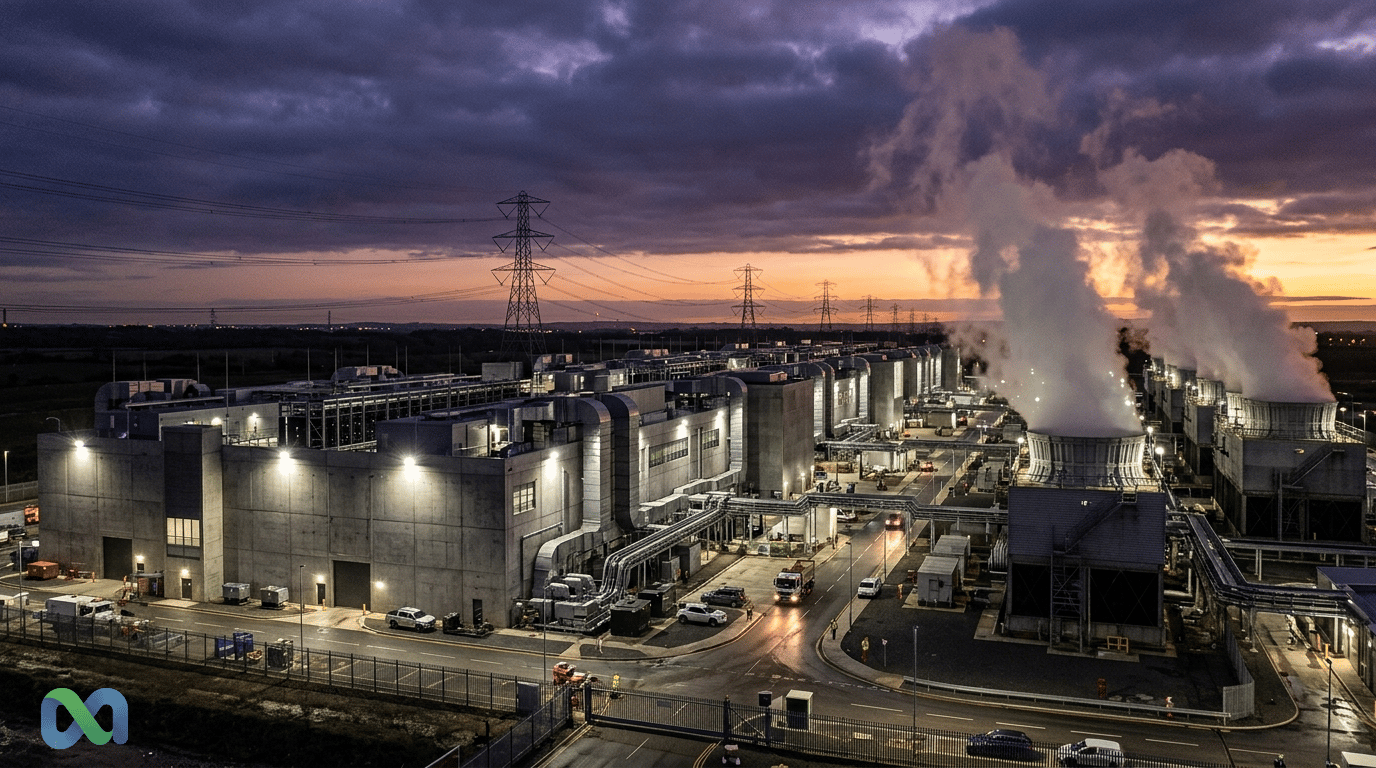
The data centers energy demand climate conference divide is growing fast. US data centers will soon burn more natural gas than most countries. Yet at COP30 in Belém, climate negotiators left tech emissions off the agenda.
This is not a small miss. Data centers now use as much power as entire nations. AI is making the problem worse, fast. The world climate system was not built to handle it.
This article looks at how big the energy gap really is. It covers what happens when the power grid hits its limit by 2028. And it covers what prediction markets say about policy steps on the data centers energy demand problem.
The Numbers: How Hungry Data Centers Have Become
From 460 TWh to 1,000+ TWh: The IEA Projection
Global data centers used 460 terawatt-hours (TWh) of electricity in 2024. The IEA projects that number will top 1,000 TWh by 2030.
That is more power than all of Japan uses in a year.
Put another way: data centers will add the equivalent of Germany's entire annual electricity demand in just six years.
AI is driving most of this growth. Modern AI workloads need far more energy than old-style web servers. Training one large AI model can use as much power as 500 long-haul flights. Serving AI answers in real time grows with every new user.
Data center electricity consumption grew at roughly 10% per year between 2015 and 2020. Since 2023, that rate has jumped sharply. The IEA updated its projections upward twice in twelve months. AI deployment keeps beating forecasts.
AI Rack Density vs. Traditional Servers
Old server racks draw 5–10 kilowatts (kW) each. New AI training racks typically need 60–80 kW. Next-generation GPU clusters push past 100 kW per rack.
That is ten times more power per rack than standard computing.
Operators built data centers for one type of workload. They are now retrofitting them for AI. The power infrastructure was not designed for this transition.
Power Usage Effectiveness (PUE) measures how efficiently a data center uses energy. The average US facility now runs at around 1.5 PUE. However, those gains cannot keep pace with raw demand growth. A more efficient kilowatt-hour means little when total consumption doubles.
Data Centers vs. Nations: A Revealing Comparison
US data centers already use more electricity than several medium-sized countries. Bloomberg projects that by 2028, US data centers will burn more natural gas than Argentina, Poland, or the Netherlands.
The contrast is sharp. Google, Microsoft, and Amazon have all promised to run on 100% renewable energy. Yet the combined energy footprint of their infrastructure is growing faster than any renewables build-out can match.
Therefore, the gap between corporate pledge and physical reality is the core tension in the data center energy story.
The 2028 Power Cliff: When Servers Outpace the Grid
Why Power Grid Expansion Lags Infrastructure Build-Out
TrendForce has identified a near-term risk: by 2028, planned US data center capacity will outpace available grid power in key regions. This is a real engineering problem, not a distant forecast.
The cause is a timing mismatch. A data center goes from permit to operation in 18–24 months. A new transmission line takes 5–10 years to permit and build. A gas plant takes 3–4 years. Wind or solar with storage takes 3–5 years.
Data centers build at AI speed. Grids grow at policy speed. Therefore, the gap widens every quarter.
Which Regions Face the Sharpest Constraints
Northern Virginia is already hitting its power limit. It has the world's largest cluster of data centers. Dominion Energy, the local utility, has a years-long backlog of power link requests. That backlog totals tens of gigawatts of unmet demand.
Texas, Phoenix, and Atlanta face similar problems. Each market drew data centers with low costs and available land. Each is now discovering that power supply is the real bottleneck.
European markets face the same problem, plus more policy rules. Ireland hosts a large share of European cloud systems. Data centers now make up a big portion of Ireland's national power use.
What This Means for AI Deployment Timelines
The power crunch is not just an energy problem. It directly affects when and where AI can be deployed.
If a major cloud firm cannot get power to a new data center, it cannot train new models or serve users at scale. The 2028 power cliff acts as a hard ceiling on US AI growth.
This limit is already showing up in earnings calls. The World Health Organization has documented the health impacts of fossil fuel emissions, including from the industrial sectors driving energy demand. As a result, companies are moving AI systems toward regions with available power, including places that run mainly on fossil fuels.
The Natural Gas Paradox: Clean Pledges vs. Dirty Reality
Why Tech Giants Are Signing Gas Contracts Despite Net-Zero Commitments
Bloomberg found a clear pattern in its reporting on data center energy use. Major cloud providers are signing large renewable energy agreements. They are also relying more on natural gas, both through backup generators and through the fossil-heavy grids they connect to.
The reason is uptime. Data centers need 99.999% steady service. That works out to about five minutes of downtime per year. Solar and wind cannot deliver that without large-scale storage.
Natural gas plants can ramp up in minutes. They deliver guaranteed power on demand. That makes them the default choice for operators who cannot afford any downtime.
The Gap Between Renewable Agreements and Actual Consumption
When tech companies sign power purchase agreements (PPAs), they fund new renewable capacity. These are real investments with genuine climate value.
However, a PPA does not mean every kilowatt-hour consumed comes from a clean source.
A data center in Virginia using 100 MW at 2am in winter may be running entirely on gas-fired power.
Meanwhile, the same company's solar PPA may fund a Nevada project that cannot physically deliver electrons across the country.
Renewable energy rules allow for these geographic and time gaps. It is legal and standard. Yet it means the carbon load of data center power is often higher than company reports suggest.
Also, the AI boom that claims to speed up climate solutions is also driving natural gas use higher at the same time.
COP30's Missing Agenda Item: Big Tech's Carbon Footprint
What COP30 Did and Didn't Cover on Tech Emissions
COP30 in Belém had four main topics: national climate pledges, loss and damage finance, carbon market rules under Article 6, and adaptation funding.
Tech sector emissions were not on the agenda. Data center energy demand did not come up as a formal item. No binding rules for reporting or limiting big tech emissions were proposed.
This is partly by design. The UNFCCC framework was built in the 1990s around what nations pledge to do. It has no way to bind private firms, including ones that run digital systems at national scale.
The Political Economy of Leaving Data Centers Off the Table
Several forces explain why climate talks have not caught up with data center emissions.
First, tech firms lobby hard in every major economy. Policy makers worry about economic and market risks if they limit data center operations.
Second, governments see AI as a key national asset. Capping data center energy use feels like capping AI growth. Most nations are not willing to make that trade, especially given US-China tech competition.
Third, the data is genuinely new. The IEA's 2025 energy and AI report was one of the first key studies to size the problem. Policy cycles move slowly. The evidence came too late to shape the COP30 talks.
Why the Climate Negotiating Framework Wasn't Built for This Problem
Under the Paris deal, power emissions are reported by national grid operators, not by single firms. A data center in Virginia does not show up in company climate reports unless the firm opts to share it.
The result is a rules gap. The energy use is real. The emissions are real. However, the policy tools to regulate or price them at the source do not exist in the current global framework.
COP31 may begin to address this. However, by then, today's planned data center capacity will already be under construction. The gas contracts to power it will already be signed.
What Prediction Markets Are Saying About Energy Policy
Pricing the Probability of Data Center Emissions Regulation
Prediction markets measure how informed participants price policy risk in real time. On Macro Markets, markets tracking energy regulation and AI infrastructure policy provide clear signals.
Markets covering federal data center reporting rules in the next two years show low odds. The current US setting is not friendly to new tech rules.
Markets covering state-level action show higher odds. California has flagged interest in Scope 2 reforms that would hit data center operators. New York and the EU are moving the same way.
Energy Sector Prediction Markets as Policy Intelligence
The value of prediction markets on energy policy goes beyond direction. It also captures timing.
A market asking whether the EU will set data center energy rules by 2027 prices both the odds and the expected timing. Traders include energy lawyers, grid experts, and climate policy pros. They bring data that standard analysis may miss.
When market odds on a policy event shift sharply, it often means new data has entered the process before it shows up in news coverage.
Also, for investors and operators with data center exposure, these markets offer a way to track policy risk that could change AI costs quickly.
FAQ: Data Centers Energy Demand Climate Conference and Policy Outcomes
How much energy do AI data centers use?
Global data centers used 460 TWh in 2024, according to the IEA. By 2030, that figure should exceed 1,000 TWh, more than Japan's total electricity consumption. AI workloads are the main driver. They need roughly ten times more power per rack than traditional servers.
Why do data centers burn natural gas?
Data centers need 99.999% uptime. Renewable sources are uneven without large-scale storage. Gas plants deliver set power on demand. That makes them the top backup and base source, even for firms with strong clean energy pledges.
What did COP30 say about data center emissions?
COP30 in Belém did not include tech sector emissions as a formal negotiating item. The conference focused on climate pledges, loss and damage finance, and carbon market rules. Data center energy demand was not addressed in the official agenda.
Which country uses as much energy as US data centers?
US data centers already exceed the electricity use of several medium-sized nations. Bloomberg projects US data center natural gas consumption will surpass Argentina, Poland, or the Netherlands by 2028.
Will data centers cause an energy crisis by 2028?
TrendForce finds that 2028 is when planned US data center capacity will outpace grid power in key markets. This will slow AI rollout in those regions. It is not a full national energy crisis, but it is a real limit.
Can prediction markets help forecast energy policy outcomes?
Yes. Prediction markets on energy rules gather views from domain experts, including energy lawyers, grid operators, and policy pros. They often give earlier signals than standard polls or analysis. That makes them useful for tracking policy risk in AI systems.
The Investment Angle: Following the Money in AI Energy
Capital Flowing Into Power Infrastructure
The data center energy problem is attracting serious capital. Hyperscalers are spending billions on dedicated power solutions. Microsoft, Google, and Amazon have each signed deals to restart or extend nuclear plants for data center power. Nuclear offers the reliability that renewables cannot yet match.
Private equity is also moving into grid infrastructure. Long transmission line projects that sat idle for years are now attracting investment. The reason is simple: power is the new bottleneck for AI growth.
Energy companies that operate gas plants near data center clusters are seeing stronger demand and higher prices. This is showing up in earnings. It is also showing up in prediction market prices on energy sector outcomes.
What Investors Are Watching
The data centers energy demand climate conference disconnect creates specific investment signals.
First, any state or federal move toward required Scope 2 reporting for data centers would raise costs. Firms with heavier gas-powered grids would face more exposure than those in green-heavy regions like the Pacific Northwest or Scandinavia.
Second, grid plays are gaining attention. Transmission firms, battery storage developers, and demand-response providers all gain from the power crunch. They are also more likely to get policy support than oil and gas players.
Third, the nuclear restart trend is worth noting. Small modular reactors (SMRs) are not yet ready. But old nuclear plants are now sending firm power to data centers. Utilities with nuclear plants near data center markets hold a key advantage.
Also, policy timing matters. Markets pricing a COP31 deal on tech sector emissions within two years show low odds. But markets pricing voluntary reporting rules or tax perks for low-carbon data center power show higher odds.
The gap between data centers energy demand and climate conference action is not an accident.
It is a core feature of a system built before AI existed at scale.
The 2028 power crunch will force the issue. Not because policy makers are ready, but because the grid will not wait for slow talks.
Follow Macro Markets prediction markets on energy policy and AI systems outcomes to track how these risks are priced in real time.
