


Ukraine War Latest: Why the Black Sea Strike Matters
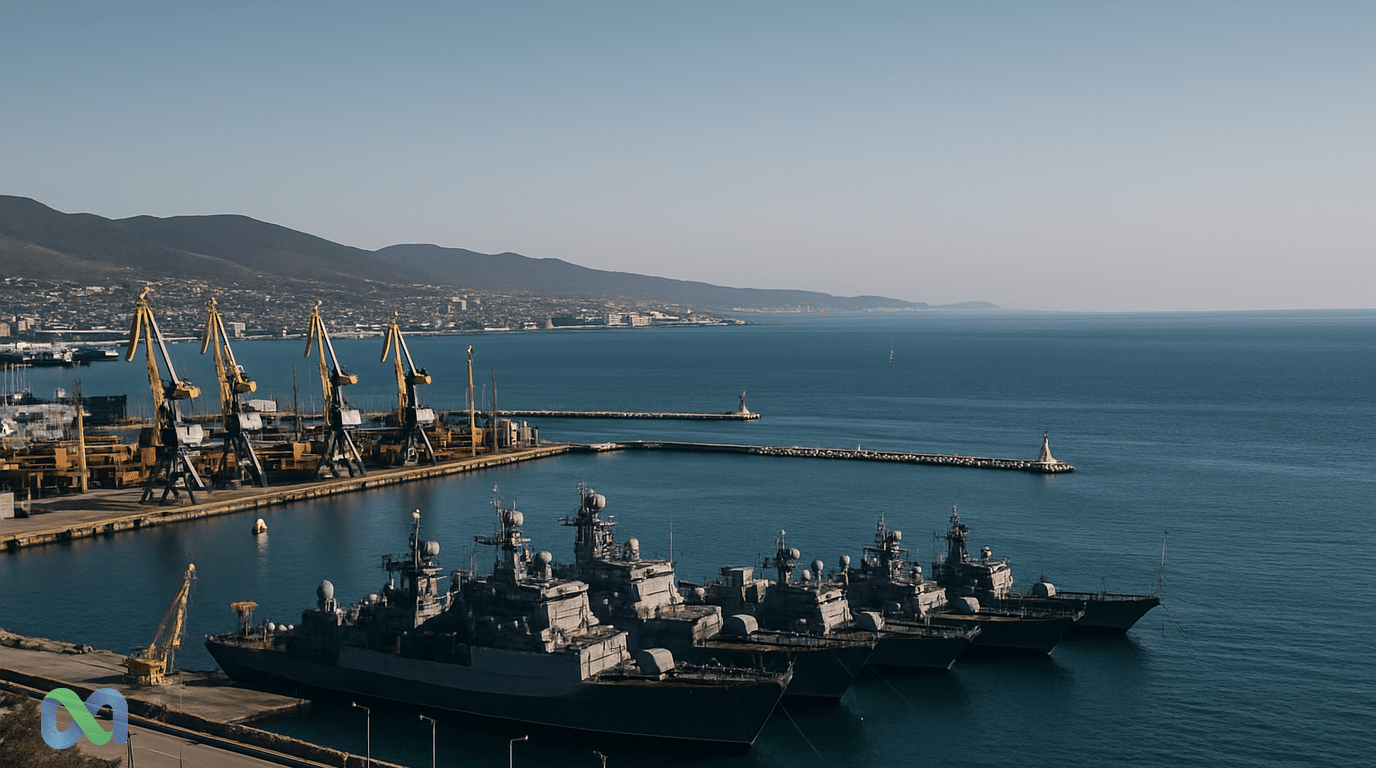
The Ukraine war latest is not only about another overnight attack. It is about whether Russia still has a safe naval rear in the Black Sea. Ukrainian reporting, regional Russian statements, and allied coverage point to a strike on the Novorossiysk area, a port that has become more important as Crimea and Sevastopol have come under sustained pressure.
The first facts are still narrow. Reports cited deaths in the area and claimed damage around Russia's Black Sea naval infrastructure. Ukrainian sources said several Russian warships were damaged. Russian regional officials described attacks and disruption, while Moscow has often framed such incidents in more limited terms. That difference matters because war reporting is contested by design.
The strategic question is clearer than the damage count. If Ukraine can keep reaching Novorossiysk, Russia's Black Sea Fleet loses the comfort of distance. It also faces a more expensive defense problem across ports, fuel nodes, air-defense sites, and logistics corridors.
For prediction-market readers, the useful lens is not certainty. It is probability. Each new deep strike changes the odds around fleet readiness, Black Sea shipping risk, allied support, Russian retaliation, and the next round of negotiations. It also belongs in the wider geopolitical risk map that traders track when military events change expected costs.
Ukraine war latest: the short answer
Kyiv is trying to show that Russia's Black Sea bases are not safe. The strike near Novorossiysk matters because Russia moved more naval weight there after Crimea became harder to use. If the reported ship damage is confirmed, the attack would mark another hit to a fleet that has already lost room to operate.
The key point is simple. Ukraine wants Russia to defend more ports, more depots, and more routes. That spreads Russian air defense and raises the cost of the war. It also helps Kyiv tell allies that support can still change the battlefield.
This does not prove that the war is close to an end. It does show that the Black Sea remains a live front. In the Ukraine war latest risk map, Novorossiysk now matters almost as much as the front line because it helps decide how freely Russia can use the sea.
For readers who only need the base case, here it is. Russia needs safe ports to keep ships ready. Ukraine is trying to make those ports feel less safe. If the strikes keep coming, Russia must spend more time on defense and less time on attack. That is why a port strike can matter even before every damage claim is checked.
The story is also about time. One raid can be repaired. A steady run of raids changes habits. Ships move. Crews wait. Cargo slows. Air-defense crews face new strain. Small costs can add up when they hit the same system again and again.
That is the core of the Ukraine war latest story. Safe ports help a navy fight. Unsafe ports make every plan harder.
The main signal is plain. Ukraine wants to raise the cost of each Russian move. Russia wants to show that its fleet can still work. The Black Sea tells us which side is closer to that goal.
That is why this port now matters. It is a test of reach, will, and time.
The stakes are easy to state. If the port is safe, Russia gains room. If it is not safe, Ukraine gains leverage.
Ukraine war latest: what happened at the Black Sea naval base
The reported strike focused on Russia's Black Sea naval infrastructure near Novorossiysk. The port sits on Russia's Black Sea coast, east of Crimea, and has served as a major fallback point for naval assets under pressure elsewhere. Several outlets described the attack as part of Ukraine's expanding campaign against military and logistics targets inside Russia.
The Independent framed the event as a deadly strike on a Russian naval base. The Kyiv Independent reported that four Russian warships were damaged in a strike on the Black Sea Fleet port in Novorossiysk. NBC News reported that President Volodymyr Zelenskyy said a nighttime blitz damaged Russia's Black Sea naval stronghold.
Those claims should be read carefully. In active war, each side has reasons to emphasize different parts of the same event. Ukraine has an incentive to highlight reach and damage. Russian officials have an incentive to narrow the public impact. Independent confirmation from wires such as AP News often arrives later, through satellite imagery, port data, ship movements, local footage, and repair activity.
For now, the confirmed core is simpler. Novorossiysk came under attack. The area matters to Russia's Black Sea posture. Ukraine wants Russia to feel the war inside its own military and logistics network. The exact damage count is the variable still being priced.
That makes this Ukraine war latest update different from a standard casualty headline. The strike is a signal about range, persistence, and target selection. It shows Ukraine is still trying to turn naval assets and rear-area infrastructure into recurring liabilities for Moscow.
Why Novorossiysk matters to Russia
Novorossiysk is not just another port city. It is one of Russia's most important Black Sea naval and commercial hubs. Earlier Ukrainian attacks made Crimea more dangerous for Russian ships. As a result, Novorossiysk became a more valuable shelter.
That word, shelter, is the point. A fleet needs places where it can refuel, repair, load weapons, and protect crews. If those places become reachable, the fleet's value changes. Ships may still exist on paper, but they become harder to use often.
Ukraine has spent much of the war attacking that logic. It has used missiles, naval drones, aerial drones, and special operations. The targets include Russian ships, ports, depots, and air-defense systems. Each strike can look tactical on its own. Together, they raise Russia's costs.
Russia can respond by moving assets, adding defenses, dispersing ships, or accepting lower availability. None of those responses is free. More defenses at one port can leave another route exposed. More dispersion can slow operations. More repairs can strain shipyards and crews.
That is why the Black Sea Fleet is best viewed as an asset being repriced. It still matters, but its risk profile has changed. A fleet that once helped project pressure against Ukraine now spends more effort protecting itself.
This also affects Russia's domestic risk. When military targets inside Russia are hit, the war becomes harder to present as distant. Zelenskyy has repeatedly argued that Russia should feel the consequences of continuing attacks on Ukrainian cities and infrastructure. Novorossiysk fits that message.
What Ukraine is trying to signal
Ukraine's message is not limited to damage. It is signaling that Russia cannot create a one-way war. If Moscow launches missiles and drones at Ukrainian cities, Ukraine wants to show it can impose costs on Russian military systems as well.
That signal has three audiences. The first is Russia. Kyiv wants Russian commanders to spend more resources on defense, repair, and uncertainty. The second is Ukraine's own public. Visible strikes inside Russia can support morale when the front line is slow and costly. The third is Ukraine's partners. Successful deep strikes argue that more support can translate into measurable pressure.
The timing also matters. Reports around the strike came as diplomacy and allied debates continued. Ukraine has said it will not accept agreements made over its head, a theme that also shaped coverage of Zelenskyy's Ukraine proposals to the US. European officials have repeated support for Kyiv. At the same time, Russia has shown little sign that it is ready to stop the war on terms Ukraine could accept.
In that setting, deep strikes are a bargaining tool as much as a battlefield tool. They do not replace infantry, artillery, air defense, or financing. However, they can change what each side believes the next month of war will cost.
For markets, that is the key link. Negotiating leverage does not come from statements alone. It comes from credible capacity to change the cost of delay. If Ukraine can keep striking valuable Russian assets, the expected cost of a long war rises for Moscow.
There are limits. Deep strikes can invite retaliation. They can also create political friction if a weapon system, target, or border incident tests allied red lines. That is why the most important question is not whether Ukraine can hit Russia once. It is whether it can do so repeatedly, within a strategy that partners can sustain.
The NATO and escalation angle
The NATO angle is more complex than a simple yes-or-no support story. Ukraine needs air defense, ammunition, drones, intelligence, mine-clearing support, and long-range strike capacity. Allies want Ukraine to survive and pressure Russia, but they also manage escalation risk.
Black Sea attacks sit directly inside that tension. On one hand, they weaken Russia's ability to threaten Ukraine from the sea. They can also reduce the freedom Russia has around shipping lanes, ports, and logistics. On the other hand, strikes inside Russia raise the chance of Russian escalation rhetoric and diplomatic pushback.
Mine-clearing support is part of the same picture. The Black Sea is not only a military theater. It is a shipping and insurance theater. Mines, drones, naval threats, and missile risks affect port operations and commercial decisions. Even when trade continues, the risk premium can rise.
For NATO members, the question is practical. Which forms of support reduce Ukraine's vulnerability without creating uncontrollable escalation? Air defense is the clearest case. Mine-clearing equipment is defensive. Intelligence support is more sensitive. Long-range weapons remain politically contested, even when Ukraine argues that Russia's own attacks justify deeper strikes.
Russia will try to exploit those seams. Moscow often presents Ukrainian attacks as escalatory while treating its own strikes as routine. Kyiv's counterargument is that Russia started the war and continues to hit Ukrainian territory. Therefore, Russian military infrastructure that supports the war cannot be immune.
Prediction-market analysis should not treat escalation as a single binary outcome. The better approach is to separate pathways. One path is more Russian missile and drone attacks on Ukrainian cities. Another is more sabotage or pressure around European infrastructure. A third is diplomatic escalation without major battlefield change. Each path has different triggers and odds.
What changes the outlook next
The first indicator is confirmed ship damage. If satellite images, port restrictions, or repair activity support Ukraine's claim of damaged vessels, the strike becomes more than a headline. It becomes another data point in the shrinking operational room for Russia's Black Sea Fleet.
The second indicator is port disruption. A short disruption is costly but manageable. A longer shutdown would matter more. Repeated alarms would also matter. Markets should watch whether ships disperse, cargo patterns change, or Russian defenses around the port increase.
The third indicator is Russia's air-defense response. If Russia has to move scarce systems toward Novorossiysk, it may leave other targets less protected. If it does not, Ukraine may try to repeat the pattern. Either choice carries opportunity costs.
The fourth indicator is allied language. Stronger European or NATO statements after successful Ukrainian strikes may imply confidence in Kyiv's strategy. More cautious language may suggest concerns about escalation, target selection, or ammunition supply.
The fifth indicator is diplomacy. If talks continue while Ukraine is showing reach inside Russia, the bargaining environment changes. That does not mean peace is near. It means each side is updating its view of pressure, time, and acceptable risk.
The final indicator is Russian domestic reaction. Attacks that kill civilians or disrupt visible infrastructure can create pressure on regional authorities. They can also be used by the Kremlin to justify harsher measures. The political impact depends on frequency, location, and whether Russians see the state as protecting them.
Ukraine war latest: confirmed, claimed, and still unknown
A clean evidence list helps avoid false confidence:
- Last updated: August 13, 2026.
- Method note: our analysis separates confirmed reports, claims, and open questions before drawing market conclusions.
- Confirmed: Novorossiysk and Black Sea infrastructure were reported under attack. This confirms Ukraine is pressuring Russia's rear-area naval network.
- Reported: 2 deaths were cited in coverage of the strike. The human impact raises political and escalation stakes.
- Claimed by Ukraine-linked reporting: 4 Russian warships were damaged. If verified, fleet readiness takes a bigger hit.
- Russian framing: regional disruption and air-defense activity were emphasized. Moscow may be narrowing public perception of damage.
- Still unknown: exact ship damage, repair time, and port downtime. These details determine the strategic weight of the attack.
This distinction is not just editorial caution. It is how serious geopolitical analysis should work. A claimed destroyed ship and a confirmed damaged ship do not carry the same weight. A one-night attack and a repeatable campaign do not carry the same weight either.
For that reason, the smartest Ukraine war latest assessment is conditional. If damage is confirmed and disruption lasts, the strike raises the probability that Russia's Black Sea posture is weakening further. If damage is limited, the strike still matters as a signal, but less as a direct capability loss.
Market implications for Black Sea risk
The Black Sea is a military theater, but it also affects markets. Shipping routes, insurance costs, grain flows, energy logistics, and regional security expectations all respond to perceived risk. Even limited disruptions can matter when they repeat, much like the broader Russia shadow fleet sanctions debate.
The direct financial impact of one strike may be small. However, markets rarely price only the direct event. They price the chance that the event becomes a pattern. A repeated pattern of Ukrainian strikes on ports and logistics sites can raise risk premiums around Russian infrastructure.
There is also a political risk channel. If Ukraine demonstrates that Russian rear areas are vulnerable, allied support may look more effective. That can strengthen the case for continued financing, air defense, and technical aid. It can also intensify Russian pressure campaigns aimed at weakening Western resolve.
Prediction markets are useful here because they force questions into measurable form. Will Russia suffer another major Black Sea Fleet loss this quarter? Will NATO expand a specific category of support? Will Ukraine and Russia hold another formal negotiation round? Each market can reflect new information faster than a quarterly policy report, though prediction markets around conflict need careful framing.
Still, market probabilities are analytical signals, not certainty. They are not trading advice. Thin markets can overreact. News headlines can move prices before facts are verified. Serious users should compare market moves with evidence quality, source reliability, and the timeline for confirmation.
Bottom line
The Ukraine war latest around Novorossiysk matters because it tests Russia's remaining Black Sea depth. The casualty reports are serious, and the alleged ship damage could become strategically important if verified. Yet the larger point is the pattern.
Ukraine is trying to make Russia defend more places, absorb more uncertainty, and negotiate under higher cost. Russia is trying to show that those strikes do not alter the war's direction. NATO and European backers are watching whether Ukraine's pressure campaign improves leverage without creating unacceptable escalation.
The next decisive evidence will come from ship movements, repair activity, port disruption, and allied statements. Until then, this Ukraine war latest strike should be read as a probability update, not a final verdict. It raises the importance of the Black Sea theater and keeps Novorossiysk in focus as one of the war's most important rear-area tests.
