


World Cup 2026 Opening Ceremony: Confirmed Details
Updated on May 7, 2026.
Last reviewed: May 7, 2026.
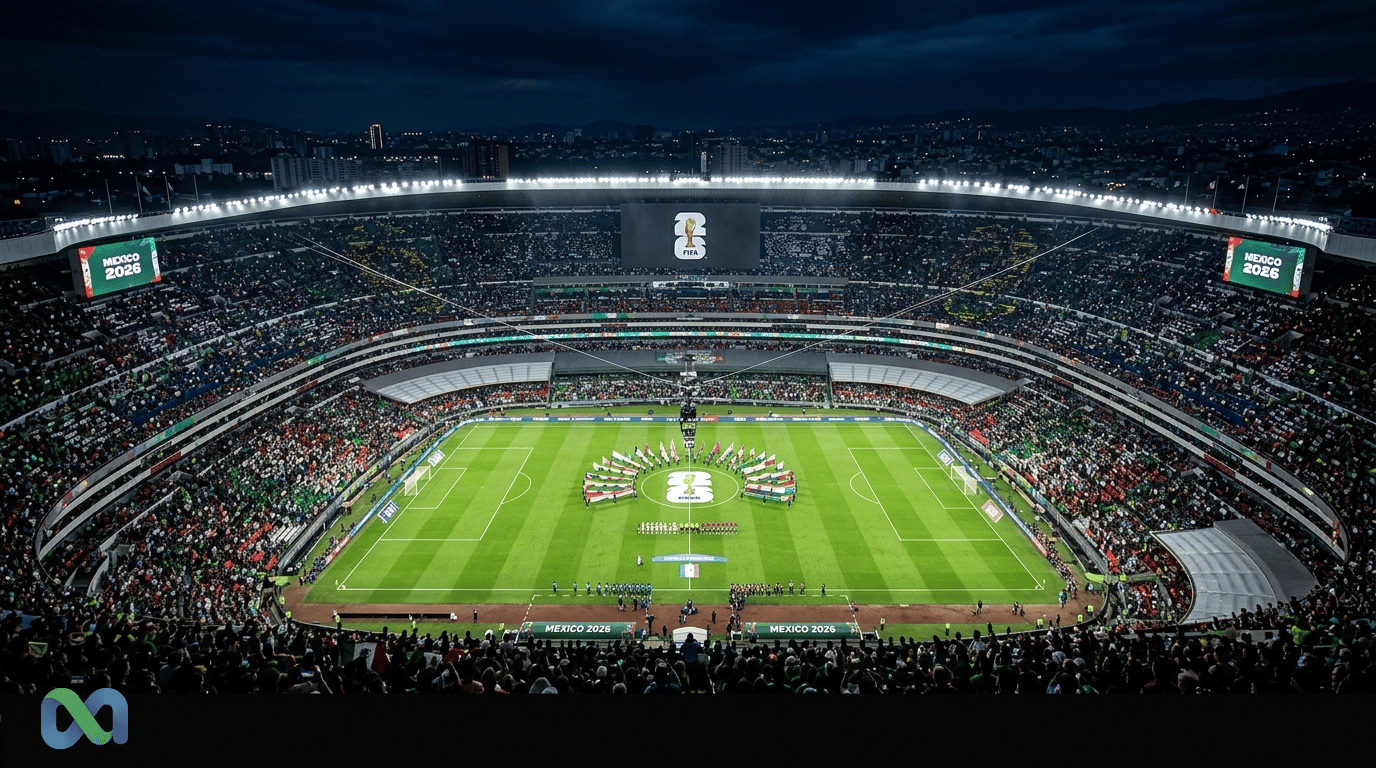
The World Cup 2026 opening ceremony already has several confirmed pillars: date, country, city, stadium, and opening match. The event is scheduled for June 11, 2026, at Estadio Azteca in Mexico City, before Mexico vs South Africa. FIFA has confirmed that venue and match in the official tournament calendar.
The missing pieces matter just as much as the confirmed ones. FIFA has not yet announced the exact ceremony start time, the final duration, or the artists who will perform. That is why the cleanest approach is to separate official facts from editorial projections and rumors.
Our editorial review tracks 8 confirmed or pending items: venue, date, opening match, performers, timing, duration, broadcast, and attention signals. This guide organizes what is confirmed, what is likely, and what still depends on future announcements. It also explains why the opening ceremony matters for media companies, sponsors, streaming platforms, and attention markets around the 2026 World Cup.
What Is Confirmed About the World Cup 2026 Opening Ceremony
The short answer is clear: the World Cup 2026 opening ceremony will take place at Estadio Azteca in Mexico City on June 11, 2026. It comes before the opening match between Mexico and South Africa.
FIFA has confirmed Mexico City Stadium as the host of the opening match. The stadium will be the symbolic starting point for the first men’s World Cup with 48 national teams. FIFA’s official match schedule helps frame the full tournament calendar.
- Date: confirmed for June 11, 2026.
- Country: Mexico.
- City: Mexico City.
- Stadium: Estadio Azteca, listed by FIFA as Mexico City Stadium.
- Opening match: Mexico vs South Africa.
- Performers: no official announcement yet.
- Exact start time: no final broadcast grid yet.
- Duration: likely short because a match follows.
- Broadcast in Brazil: needs a final check closer to the event.
Date, City, and Stadium
The opening is set for June 11, 2026. The selected city is Mexico City. The stadium is Estadio Azteca, one of the most important venues in World Cup history.
This choice is not just logistical. It creates a continuity narrative. Azteca has already hosted defining World Cup moments and returns to the center of global football in 2026.
The venue also helps the tournament tell a simple story. A larger, expanded World Cup begins in a stadium that fans already connect with football history. That gives the first images of the tournament more weight.
What Has Not Been Officially Announced
As of this update, FIFA has not confirmed the performers for the ceremony. It has also not published the complete show script, the exact presentation length, or the precise start minute.
That matters because searches for “who is performing” usually rise before major sports events. However, names mentioned by media outlets, social accounts, or speculative lists are not the same as official confirmation.
Until FIFA or the local organizers publish a formal announcement, any performer list should be treated as unconfirmed. That distinction protects readers from confusing social buzz with verified information.
Where the World Cup 2026 Opening Ceremony Will Take Place
The World Cup 2026 opening ceremony will take place at Estadio Azteca in Mexico City. The venue carries historical and commercial weight. It connects World Cup tradition with a larger tournament spread across Mexico, the United States, and Canada.
The choice also solves a narrative challenge. The 2026 World Cup is new in scale, but it begins in a stadium that already belongs to football memory. For broader context, readers should also follow the full World Cup 2026 schedule and the tournament’s expanded format.
Why Estadio Azteca Is Historic
Estadio Azteca hosted World Cup finals in 1970 and 1986. It is also tied to legendary matches, iconic national teams, and moments that shaped global football culture.
In 2026, the arena moves into another symbolic tier. It becomes the first stadium to host three men’s World Cup opening events or central tournament kickoffs, with 1970, 1986, and 2026 standing as the key Mexico milestones.
That history helps explain FIFA’s decision. An opening ceremony needs infrastructure, security, operational capacity, and symbolic power. Azteca delivers all four.
It also gives broadcasters a strong visual anchor. A familiar stadium makes the start of a new tournament feel bigger, more credible, and easier to promote across markets.
How the Ceremony Connects to the Opening Match
The World Cup 2026 opening ceremony happens before Mexico vs South Africa. That detail shapes the whole event. The production must impress on television while also respecting the pitch, warmups, team entrances, and match protocol.
For that reason, the opening is likely to be shorter than a standalone concert. The goal is global impact without disrupting the opening match.
The sequence is simple. First comes the cultural show. Then come anthems, official protocol, team entrances, and the match itself. Everything has to fit inside a tight international broadcast window.
This is why timing speculation should stay cautious. The World Cup 2026 opening ceremony may be promoted as a major show, but it still operates inside a matchday environment.
Who Will Perform at the World Cup 2026 Opening Ceremony?
The most searched question is also the least certain: who will perform at the World Cup 2026 opening ceremony? The responsible answer is that FIFA has not confirmed any artist yet.
That does not stop World Cup 2026 opening ceremony speculation. Major World Cups usually attract global names, local artists, and collaborations designed for television reach. However, until an official announcement arrives, every list should be treated as a rumor.
Confirmed Performers: Current Status
There is no official FIFA lineup for the 2026 World Cup opening ceremony at this time. Therefore, no artist should be described as confirmed.
This point deserves emphasis because search results often mix news, opinion, and rumor. For readers, the distinction is essential. “Linked with the event” is not the same as “confirmed.” “Popular with fans” is not the same as “booked.” “Possible” is not the same as “official.”
A clear rule helps: if the claim does not point to FIFA, a local organizing committee, a rights holder, or the artist’s official channel, it should not be treated as final.
Rumored Names and Why They Are Not Official Yet
Sports and entertainment outlets may mention likely names. Social media can also amplify lists of artists who would make sense for a Mexico-based global event.
Even so, a ceremony depends on contracts, calendars, sponsors, image rights, rehearsals, and FIFA approval. That process reduces the reliability of early rumors.
The best indicator will be an official FIFA communication or a statement from the local organizers. Until then, any name belongs in a separate speculation section, not in the confirmed facts.
This filter is useful for markets as well. Rumors can move attention quickly, but only verified information should carry real analytical weight.
What Recent World Cup Ceremonies Suggest
Recent ceremonies have followed a familiar formula. They combine a local artist, an international star, host-country symbols, and music built for a global broadcast.
In 2026, that logic should continue. Mexico offers a deep cultural repertoire, broad musical tradition, and a visual identity that international audiences recognize quickly. At the same time, the expanded World Cup must speak to audiences across all three host countries.
Therefore, the most likely format is hybrid. Mexican cultural elements should sit at the center, with international reach used to expand the audience.
That does not mean the show needs to be long. A compact production can still generate global clips, headlines, and search demand if the staging is sharp.
What the Ceremony Format Will Probably Look Like
The World Cup 2026 opening ceremony should work like a television event inside a sports venue. That means precise timing, fast setup, low risk to the pitch, and strong images for global broadcast.
The World Cup 2026 opening ceremony needs to look large without becoming too heavy operationally. The opening match begins soon after. That limit forces production choices.
Likely Duration and Pre-Match Protocol
FIFA has not confirmed the duration. Still, opening ceremonies before matches are usually short. The most likely range is 20 to 35 minutes, excluding formal protocol and team entrances.
That window allows music, dance, projections, flags, and institutional messages. However, it does not allow a production that feels like a Super Bowl halftime show.
The pitch is another critical factor. Modular stages and lightweight structures reduce risk. The teardown must be fast enough to protect match quality.
A shorter format also helps broadcasters. It keeps casual fans engaged while building momentum toward the first whistle.
Mexican Culture, Global Stars, and Television Production
The production should use Mexican symbols without limiting the message to a local audience. The World Cup is global. The opening needs to work in Mexico City, São Paulo, New York, Madrid, Seoul, and other major viewing markets at the same time.
That is why directors usually combine clear cultural references with simple visual language. Color, dance, architecture, rhythm, flags, and aerial shots create instant recognition.
Television also controls the pace. Each block needs quick cuts, wide shots, and moments that work on social platforms. The World Cup 2026 opening ceremony does not end inside the stadium. It continues through clips, thumbnails, commentary, and search demand.
For sponsors and platforms, that second life matters. A single visual moment can travel further than the live show itself.
How to Watch the World Cup 2026 Opening Ceremony in Brazil
Broadcast plans for the World Cup 2026 opening ceremony in Brazil should involve free-to-air TV, pay TV, streaming, and digital platforms. The key point is to check the final broadcast grid close to the event.
Fans should monitor four fronts: CazéTV, Grupo Globo, SBT, and NSports. Each may play a different role depending on rights packages, sublicensing, and distribution strategy.
CazéTV and Digital Rights
CazéTV has become a relevant force in major sports events. For the 2026 World Cup, the platform appears in discussions around digital distribution and free reach.
If the ceremony is included in a digital package, it could draw a large audience on YouTube and social platforms. That format changes consumption. Viewers do not only watch; they comment, clip, react, and share.
This is why the opening ceremony is not just a broadcast asset. It is also a social media asset that can create attention before the tournament rhythm settles.
Globo, SporTV, GE TV, and Globoplay
Grupo Globo should be monitored because of its historical strength with World Cups in Brazil. Free-to-air TV, SporTV, GE TV, and Globoplay may distribute different parts of the event.
The World Cup 2026 opening ceremony usually appears before the opening match. Therefore, it may be part of the main match broadcast rather than a separate program.
The practical recommendation is simple. Check the final schedule during the event week, and confirm whether the broadcast starts before the show.
This matters because pre-match windows can vary. A platform may promote the match while showing only part of the ceremony, depending on rights and programming decisions.
SBT, NSports, and Sublicensing
SBT and NSports also appear in discussions about sublicensing and match packages. For an event this large, the schedule can change as commercial agreements become clearer.
That does not mean every broadcaster will show the full ceremony. There may be a partial window, a pre-match cut-in, or news coverage without the entire show.
The correct answer today is cautious. The opening should be available in Brazil, but the exact channels, platforms, and final format need confirmation closer to June 2026.
Why the Opening Ceremony Matters for Media, Sponsors, and Attention Markets
The World Cup 2026 opening ceremony does not decide anything on the pitch. Even so, it moves attention, advertising, organic search, social media, and brand expectations.
That is the most important point for market analysis. The World Cup 2026 opening ceremony is an attention asset. It concentrates a global audience in a short window and creates signals about public interest before the first match.
Global Audience and Commercial Value
The World Cup is one of the most valuable media products on the planet. The opening ceremony acts as the front door for sponsors, broadcasters, digital platforms, and global brands.
The value does not come only from live viewers. It also comes from clips, artist searches, broadcast debates, accumulated audience, and social media reaction.
For sponsors, the moment offers emotional association. For broadcasters, it helps retention before the match. For digital platforms, it creates comment volume and viral cuts.
The World Cup 2026 opening ceremony also gives analysts an early read on the tournament’s attention curve. Strong search interest can signal higher demand for match content, team narratives, and related markets.
How Rumors Become Market Expectations
Rumors about performers, timing, and broadcast rights create expectations. Those expectations can move quickly when a credible source publishes new information.
In prediction markets, this type of dynamic is familiar. The price of an outcome changes when traders update probabilities based on new signals.
For the opening ceremony, signals include FIFA statements, artist calendars, broadcaster announcements, and sponsor activity. The challenge is to separate signal from noise.
That same filter helps analyze sports, politics, economics, and culture. Confirmed information has weight. Unsourced rumor has little value. A probability change needs evidence.
Macro Markets treats this distinction as central. The goal is not to chase every headline, but to identify which new facts should actually change expectations.
Timeline: What to Monitor Until June 2026
The World Cup 2026 opening ceremony still has several confirmation steps ahead. Anyone following the event should watch the announcement sequence instead of reacting to every rumor.
- Before the final draw: monitor calendar updates and protocol details.
- After the draw: review the complete match grid.
- Months before the event: watch for performer and official song announcements.
- Weeks before the event: confirm TV and streaming in Brazil.
- During match week: check the exact broadcast start time.
- On June 11: track the real duration and final format.
This timeline also keeps the article useful. Whenever FIFA releases a new detail, the page should be updated. Our editorial view is simple: treat FIFA communication as fact. Treat unsourced lists as noise. That filter reduces errors and helps readers follow new confirmations calmly.
Frequently Asked Questions About the World Cup 2026 Opening Ceremony
Where will the 2026 World Cup opening ceremony be held?
The World Cup 2026 opening ceremony will be held at Estadio Azteca in Mexico City. The event takes place on June 11, 2026, before the opening match between Mexico and South Africa.
Who will perform at the World Cup 2026 opening ceremony?
FIFA has not confirmed the performers for the opening ceremony yet. Any name mentioned before an official announcement should be treated as speculation.
What time is the World Cup 2026 opening ceremony?
The exact ceremony start time has not been officially announced. The opening will take place before Mexico vs South Africa on June 11, 2026.
Which country will host the World Cup 2026 opening ceremony?
Mexico will host the opening ceremony. The 2026 World Cup has three host countries: Mexico, the United States, and Canada.
Which match follows the ceremony?
The World Cup 2026 opening ceremony takes place before Mexico vs South Africa, the opening match of the 2026 World Cup.
Will the ceremony be free to watch in Brazil?
The final broadcast grid still needs confirmation. A broad Brazilian transmission is likely, but channels, platforms, and start times should be checked close to the event.
Will the ceremony be different because the World Cup has 48 teams?
The expanded tournament changes the narrative, but it does not necessarily make the ceremony longer. Because a match follows, the format should remain compact and television-first.
Why was Estadio Azteca chosen?
Azteca combines history, capacity, infrastructure, and symbolic value. It has already hosted central World Cup moments and returns as the opening stage in 2026.
Conclusion
The World Cup 2026 opening ceremony already has its core facts defined: June 11, 2026, Estadio Azteca, Mexico City, and the opening match between Mexico and South Africa. Those points are official.
The rest still requires caution. Performers, exact start time, duration, and the final Brazilian broadcast grid depend on new announcements. Until then, the best filter is to separate confirmed facts from rumors.
For anyone watching the World Cup as a media event, the World Cup 2026 opening ceremony will be more than a show. It connects to interest in World Cup 2026 favorites, teams such as Brazil, Argentina, and Spain, and World Cup 2026 prediction markets. It will be the tournament’s first major global attention test. It will also be a thermometer for platforms, sponsors, and market expectations.
Follow Macro Markets for updates on the 2026 World Cup, prediction markets, and the signals that help turn noise into analysis.
