


2026 World Cup Final: Date, Venue and Probabilities
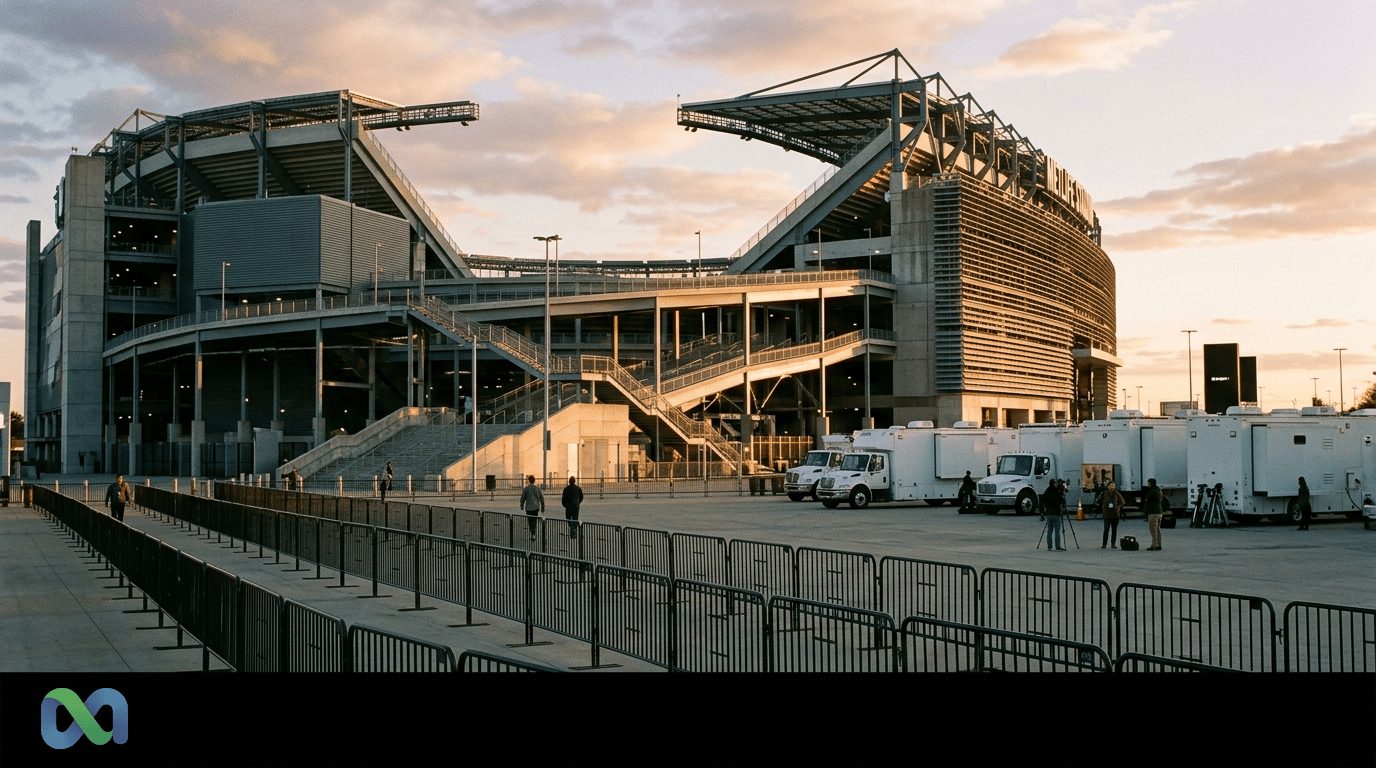
The 2026 World Cup final will be played on July 19, 2026. The match will take place at MetLife Stadium in East Rutherford, New Jersey. FIFA brands the host region as New York/New Jersey.
That is the key fact for anyone searching for the date and venue. However, the 2026 World Cup final also matters for traders who follow prediction markets. It will close a longer tournament, with more teams, more matches, and more signals to analyze.
The 2026 FIFA World Cup will include 48 teams and 104 matches. The United States, Mexico, and Canada will host the tournament. Therefore, the road to the final will be longer than in previous editions.
In this guide, you will see where the 2026 World Cup final will be played, when the match happens, how to follow ticket information, and how to read market probabilities without confusing analysis with fandom.
Updated in May 2026. Last reviewed: May 2026. Ticket and logistics data can change. Our editorial check uses FIFA schedule data as the source of truth, so always check FIFA’s official channels before making plans.
Where Is the 2026 World Cup Final?
The 2026 World Cup final will be at MetLife Stadium. The stadium is in East Rutherford, New Jersey. FIFA uses the New York/New Jersey host label because the venue serves the New York metropolitan area.
This answer looks simple. Still, it solves the main question for fans. It also helps anyone planning travel, tracking tickets, or watching markets linked to the tournament.
MetLife Stadium and New York/New Jersey
MetLife Stadium is one of the largest sports venues in the United States. It has the infrastructure needed for a global event. It is also close to airports, hotels, media centers, and the wider New York market.
The choice makes sense for a World Cup final. New York gives the match a global stage. New Jersey provides the stadium. Together, they create reach, logistics, and commercial value.
The main source should be FIFA. Use the official World Cup 2026 match schedule for dates, venues, and fixture updates. The 2026 FIFA World Cup final overview is also useful for background, but official FIFA pages should come first.
Why the Venue Changes the Analysis
The venue affects more than tourism. It changes travel, rest, climate, media pressure, and team routines. These details can enter market analysis.
For example, a team that plays near the East Coast before the 2026 World Cup final may face less travel fatigue. That does not decide the title. However, it can be a useful detail during final-week analysis.
The New York area also increases public attention. More attention can bring more volume to World Cup markets. Higher volume usually gives traders a richer price signal.
When Is the 2026 World Cup Final?
The 2026 World Cup final will be played on July 19, 2026. The opening match is scheduled for June 11, 2026. The tournament will include 104 matches.
Quick summary:
- Opening match: June 11, 2026.
- Final: July 19, 2026.
- Host countries: United States, Mexico, and Canada.
- Teams: 48.
- Matches: 104.
- Final stadium: MetLife Stadium.
The Date of the Decider
The final date closes a larger and longer World Cup. That changes how favorites should be read. It also creates more time for injuries, suspensions, form swings, and tactical changes.
For fans, the date matters for planning and travel. For traders, it marks the end of an information window. Until then, each match can move a team’s price.
The official calendar removes part of the uncertainty. Date, host region, and format are already clear. Therefore, analysis should focus on what can still change before the 2026 World Cup final.
How the 48-Team Format Changes the Road
The new format creates more paths to the final. More teams enter. More matches are played. More results can reshape the bracket.
Favorites still matter. Brazil, Argentina, France, England, Spain, Germany, and Portugal should attract attention. However, each team’s route may matter as much as raw strength.
In prediction markets, a champion price does not measure talent alone. It also measures likely path, injury risk, squad depth, rest, and knockout-round opponents.
That is why the 2026 World Cup final starts being analyzed before the tournament begins. The market updates its view with every new piece of information.
2026 World Cup Final Tickets and Official Sources
Official ticket prices for the 2026 World Cup final should be checked through FIFA channels. Avoid using rumors as a base case. Also avoid pages that promise guaranteed access without clear proof.
Ticket price is an important question. However, any number can change by sales phase, category, demand, and resale rules. The safer path is to follow official sources first.
Official Ticket Information
FIFA should publish sales phases, rules, and ticket categories. Official registration can help fans receive alerts. In addition, major ticket releases should be announced through organizer channels before large public sales.
Media reports can help confirm context. Still, buying a ticket requires caution. Check the URL, payment method, purchase terms, and refund rules before paying.
Resale Risk and Demand
Demand for a World Cup final is high. That creates room for scams and extreme resale prices. Therefore, do not buy in a rush.
Separate official price from resale price. The official price comes from the organizer. Resale pricing changes with scarcity, seat location, date, and demand.
This point also informs market analysis. Expensive tickets and high search interest show public attention. Public attention can increase volume in markets linked to the 2026 World Cup final.
How the Final Can Move Market Probabilities
The 2026 World Cup final will be the last step in a long chain of data. Before it, markets will react to squad lists, injuries, recent form, bracket path, and starting lineups.
Each new piece of information can move probabilities. That does not mean the market is always right. It means the market aggregates views from people who have capital at risk.
Favorites, Injuries, and Squad Lists
The final squad list is one of the first strong signals. It confirms team strength, shows absences, and reveals bench options.
An injury to a key player can change the analysis. Losing a goalkeeper, center back, or decisive forward matters. However, the impact depends on the replacement.
Then come the matches. A favorite that wins well can gain strength. A favorite that struggles can lose trust, even if it advances.
In the knockout rounds, details matter more. Cards, extra time, travel, and rest can move probabilities. The market watches both the result and the way a team wins.
Liquidity, News, and Real-Time Reaction
Liquidity is the ability to trade without moving the price too much. Near the 2026 World Cup final, liquidity should rise. More people watch the tournament, and more traders review positions.
The reaction is strongest when the news is clear. A lineup without a star player can move price fast. A vague quote from a coach may change almost nothing.
That is why it helps to separate signal from noise. Not every headline deserves action. Disciplined traders look for a reliable source, clear impact, and a price that has not fully adjusted.
Market Probability Is Not Fandom
Fandom is emotional. Market probability is numerical. They can move together, but they are not the same.
A team can be very popular and still have a lower probability than another team. That is not a mistake. The market weighs squad quality, form, bracket path, and risk.
There can also be overreaction after big wins. A rout against a weak opponent may create hype. The market may adjust only a little if the context is not strong.
That is the value of a prediction market. It helps replace guesswork with data. Still, every position involves risk.
How to Follow the 2026 World Cup Final on Macro Markets
Macro Markets lets users follow sports events as information markets. The goal is not to promise a result. The goal is to show how expectations change as new data arrives.
This helps readers compare narrative and price. The media says a team is now the favorite. Does the market agree? An injury went viral. How much did the probability move?
Prediction Markets as a Tool
Prediction markets convert expectations into price. Each trade updates the collective view. In football, that can apply to champion markets, finalist markets, group winners, or match outcomes.
For the 2026 World Cup final, this view is useful. A trader can watch probability, volume, and price movement over time.
However, probability is not certainty. A team at 60% can still lose. A team at 20% can still surprise. The number shows risk, not destiny.
Risk Management Before Trading
A simple process helps before entering a position:
- Verify the news with a reliable source.
- Check whether the probability moved.
- Ask whether the reaction looks fair.
- Set your risk limit.
- Review the position when new information appears.
This method reduces impulse. It also separates analysis from fandom. The 2026 World Cup final will be emotional, but market decisions should stay disciplined.
Signals to Monitor Before the Final
Some signals can change the reading of the 2026 World Cup final. Others are just noise. The challenge is knowing what truly affects the chance of winning.
Useful signals include:
- Final squad list: shows the real strength of the roster.
- Injuries: can change the tactical plan.
- Recent form: shows rhythm and confidence.
- Bracket path: changes the difficulty of the road.
- Rest: affects legs and focus.
- Starting lineup: confirms the match plan.
- Market volume: shows attention and liquidity.
What Moves Fastest
Injuries, lineups, and cards move fast. These facts affect the match directly. Therefore, they can move probabilities within minutes.
Base factors move more slowly. Playing style, coaching, and squad depth enter the price earlier. They matter, but they do not always create a shock.
The 2026 World Cup final should mix both groups. There will be a long-term view. There will also be quick adjustments near kickoff.
How to Avoid Overreaction
A common mistake is treating every update as a thesis. A closed training session does not always mean something. A social media photo may be noise.
Always ask: does this change the real chance of winning? If the answer is weak, it may not deserve action. If the answer is clear, check whether the market already adjusted.
That posture helps prevent impulse decisions. It also helps avoid chasing a late narrative.
Frequently Asked Questions About the 2026 World Cup Final
Where is the World Cup final in 2026?
The 2026 World Cup final will be at MetLife Stadium in East Rutherford, New Jersey. FIFA describes the host region as New York/New Jersey.
Where will the 2026 World Cup final happen?
The decider will be in the United States. The stadium is in New Jersey, near New York City.
When does the 2026 World Cup start and end?
The World Cup starts on June 11, 2026. It ends on July 19, 2026, the date of the 2026 World Cup final.
Which stadium hosts the final?
MetLife Stadium hosts the final. It is in East Rutherford and serves the New York metropolitan area.
How much are 2026 World Cup final tickets?
Check prices through FIFA’s official channels. Resale prices and rumors can change quickly.
How can I follow probabilities for the final?
Follow prediction markets, official sources, and team data. Compare probability, volume, and reaction to news.
Does the favorite always win?
No. The favorite has a higher chance, not a guarantee. Football includes variance, mistakes, injuries, and small details.
Conclusion: Reading the 2026 World Cup Final Like a Market
The 2026 World Cup final will be played on July 19, 2026. The match will be at MetLife Stadium in the New York/New Jersey region. Those details are already defined.
However, the analysis does not end there. The tournament will have 48 teams and 104 matches. The road to the decider will be long, with many signals to read.
For anyone using prediction markets, the 2026 World Cup final should be viewed as a sequence of data. Squad lists, injuries, bracket path, form, and liquidity help explain why the market moves.
On Macro Markets, you can follow that reading with a focus on data, transparency, and risk management. Explore markets linked to the 2026 FIFA World Cup and compare probabilities in a professional way.
Prediction markets involve risk. Trade only with amounts that fit your profile. Never treat probability as certainty.
