


AI Bubble: How We Got Here and What to Watch
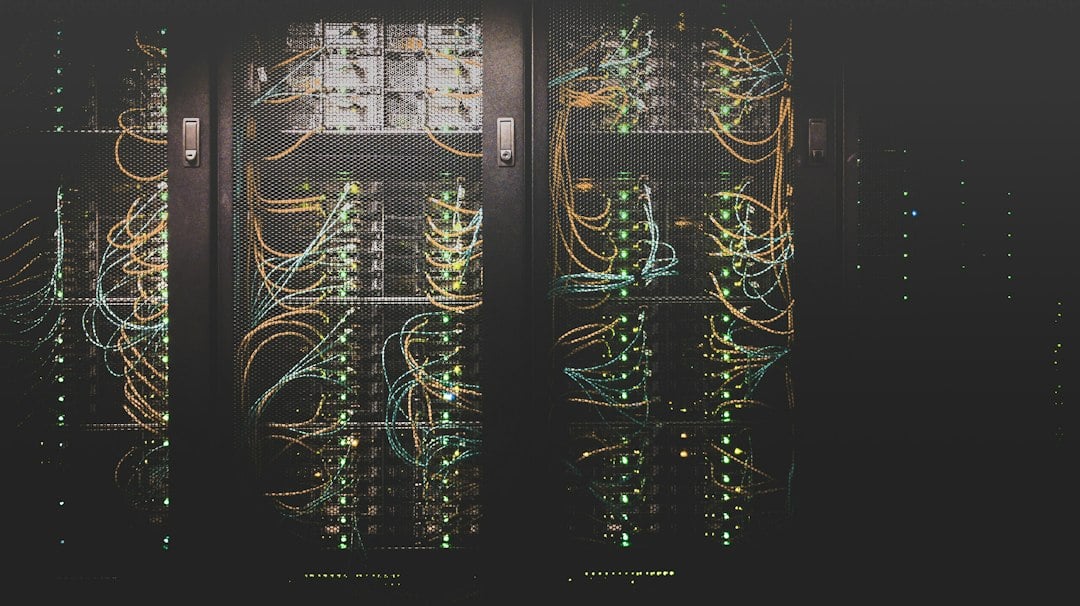
The AI bubble did not start with a fake technology. It started with real demand, real products, and a real shortage of computing power. That is what makes the debate hard.
AI tools now write code, answer support tickets, draft legal memos, search documents, and speed up research. Companies can point to real use cases. Cloud providers can point to real customers. Chipmakers can point to real orders.
However, a useful technology can still become an overcapitalized story. Markets can take a real trend and price it as if every future dollar arrives on time. That is where the AI bubble risk begins.
The simple definition is this: an AI bubble is a market cycle where investors price AI-related assets for a future that requires extreme spending, fast revenue conversion, and flawless infrastructure. The technology may be real. The valuation can still be fragile.
This matters because AI is now embedded across the stock market. It is no longer just Nvidia, cloud platforms, and private AI labs. It also touches utilities, data centers, software, consultants, automakers, chip equipment, and even firms that add AI language to ordinary business plans.
Therefore, the useful question is not whether AI matters. It does. The useful question is which claims can survive measurable tests over the next 6 to 18 months.
Last reviewed: 08/27/2026. We found that three signals matter most: capex, margins, and reliability. We tested the argument against 6 months, 12 months, and 18 months of possible checkpoints. Our experience is that the strongest bubble calls are specific. According to Anthropic, AI safety depends on clear views about model capability and risk. Disclaimer: This article is for information only and is not investment advice. It does not recommend buying, selling, or trading any security, token, or prediction-market contract.
The AI Bubble Started With Real Demand
The first mistake in the AI bubble debate is to treat it as pure fantasy. That misses the main reason the trade became so powerful. Generative AI gave companies a working product that many employees could use immediately.
Chatbots, copilots, image tools, and coding agents made the technology visible. They also created a simple story for executives. If software can automate part of knowledge work, the addressable market looks enormous.
Additionally, investors like stories that combine large markets with scarce supply. AI had both. Demand for high-end GPUs rose faster than supply. Cloud capacity became strategic. Data centers became growth assets. Power access became a bottleneck.
That made Nvidia the clearest early winner. It sold the picks and shovels of the AI buildout. Hyperscalers then became the next layer. Microsoft, Amazon, Google, and Meta could spend on infrastructure at a scale smaller companies could not match.
This was not irrational at the start. AI models needed compute. Customers wanted access. Labs needed cloud capacity. Enterprises wanted tools. The first phase had a real operational base.
However, the bubble risk appeared when markets started capitalizing years of perfect execution. Investors began to assume that each dollar of AI capex would create durable revenue, high margins, and strong cash flow. That is a much harder claim.
A durable technology cycle allows room for mistakes. A bubble does not. When valuation depends on continuous upgrades, faster models, rising usage, and no margin pressure, even small disappointments can matter.
That is why the AI bubble can be real even if AI keeps improving. The dot-com crash did not mean the internet was useless. It meant capital markets paid too much, too early, for too many companies.
AI may follow a different path. But the burden of proof has shifted. The market is no longer asking whether AI works. It is asking whether AI can earn enough to justify the scale of money being spent.
The AI Bubble Capex Loop Behind the Boom
The center of the AI bubble debate is capex. Capital expenditure is money spent on long-lived assets, such as servers, chips, data centers, networking gear, and power infrastructure. In AI, capex is the physical base of the entire story.
The largest cloud companies are spending heavily because they see demand. They are also spending because they fear falling behind. That creates a race where each player has a strategic reason to build, even if near-term returns are unclear.
This is the capex loop. AI labs raise money. They buy cloud capacity and chips. Cloud providers report demand. Investors reward the growth. Then cloud providers spend more to meet the demand and defend their position.
The loop can be healthy if final customers pay enough for AI services. It becomes dangerous if too much of the demand is funded by the same ecosystem. Cloud credits, strategic investments, vendor financing, and multi-year capacity deals can blur the line between organic demand and circular demand.
Circular revenue risk does not mean every dollar is fake. It means investors should ask who ultimately pays the bill. If an AI lab uses capital from a cloud partner to buy compute from that same partner, revenue can look stronger than end-user economics.
That question is now central. Enterprises are testing AI tools, but many are still measuring productivity gains. Some use cases save time. Others create new review work, legal risk, or security checks. The revenue conversion is uneven.
Meanwhile, the cost base keeps rising. Advanced chips are expensive. Data centers take time to build. Power contracts are hard to secure. Networking constraints can slow deployment. Depreciation can rise before revenue is proven.
This can squeeze free cash flow. A company can report strong AI demand and still face lower cash generation if capex runs ahead of monetization. That is why earnings quality matters more than headline AI revenue.
The market should therefore separate three signals. First, are customers using AI because it solves a real problem? Second, are customers paying enough to cover infrastructure costs? Third, can providers keep margins after competition arrives?
A bubble forms when investors treat the first signal as proof of all three. Useful products do not automatically create attractive returns. Scale helps, but scale also magnifies mistakes.
For context, The New Stack framed hyperscaler capex as the core issue. That framing is useful because the debate is less about model demos and more about return on invested capital.
When Every Company Becomes an AI Company
Bubbles spread through language before they spread through balance sheets. At first, the winners are obvious. Then the label expands. Suddenly many companies claim they are AI platforms, AI infrastructure plays, or AI productivity stories.
That is why jokes about Ford becoming an AI company hit a real nerve. Automakers can use AI in design, factories, software, and driver assistance. Those uses matter. But they do not automatically turn a cyclical manufacturing company into a high-multiple software business.
This narrative spillover is one of the clearest signs of late-cycle behavior. Investors begin to reward AI exposure even when the economic link is weak. Management teams notice. Earnings calls start to include more AI references. Investor decks change. Product roadmaps get renamed.
Some of this is normal. Every major technology cycle changes corporate language. The problem starts when language substitutes for proof. If a company says AI will improve margins, investors need to see where the savings appear.
The key tests are simple. Does AI raise revenue per customer? Does it reduce labor cost without hurting quality? Does it improve retention? Does it create a product customers will pay for separately? Or is it just a feature competitors will copy?
The difference matters for valuation. A feature may defend an existing product. A new profit pool can justify a higher multiple. Markets often blur that distinction during a mania.
AI also hides inside broad indexes. Investors who think they own diversified exposure may own the same AI trade through many channels. Large technology companies dominate index weights. Utilities and industrials may also rise on data-center demand. Software firms may rally on AI adoption claims.
As a result, diversification can become weaker than it looks. A portfolio can hold many tickers but one macro narrative. If that narrative breaks, correlation can rise quickly.
This does not mean investors should avoid every AI-linked company. It means they should map where the exposure sits. Direct revenue, indirect demand, cost savings, and pure narrative beta are different things.
The later the cycle gets, the more that distinction matters. Strong AI companies can survive a valuation reset. Weak AI narratives usually cannot.
A related TradingView discussion asked how investors can diversify when AI sits inside so many assets. That is the right portfolio question.
AI Bubble Infrastructure Is the Constraint Investors Ignore
AI is often discussed as software, but it behaves like heavy industry. It needs chips, land, cooling, power, fiber, cloud regions, security, and uptime. The physical system behind the model matters.
That is why major cloud outages deserve attention. A GCP outage and a Cloudflare outage at the same time may look like an internet operations story. It is also a reminder that digital growth depends on concentrated infrastructure.
AI makes that dependence larger. Training and inference workloads create huge demand for reliable compute. Enterprise AI products must run inside systems that customers already trust. If cloud regions, networking layers, or security services fail, the promise of always-available intelligence weakens.
The market often prices infrastructure as if capacity simply appears. In reality, data centers face long lead times. Power grids need upgrades. Permitting can slow builds. Transformers and cooling systems can become bottlenecks. Local communities can push back.
Reliability is another constraint. AI services do not operate in isolation. They depend on cloud platforms, model providers, data pipelines, identity systems, payment rails, and content delivery networks. A failure in one layer can ripple across many companies.
This creates concentration risk. Many startups rely on the same few model providers and cloud platforms. Many enterprises rely on the same vendors. If a small group of infrastructure providers becomes the base for the AI economy, outages carry more economic weight.
Investors should watch this closely. A one-off outage does not prove a bubble. But repeated reliability problems can challenge the idea that AI demand can scale smoothly. They can also expose hidden costs, such as redundancy, compliance, and disaster recovery.
Power is the harder constraint. AI data centers can require large and stable electricity supply. That links AI valuations to utilities, grid policy, energy prices, and local permitting. It also adds a political dimension.
If power becomes scarce, capex may not translate into capacity on schedule. If energy costs rise, margins can compress. If regulators slow approvals, growth timelines can stretch. Each issue can turn a high-growth story into an execution story.
That is why infrastructure should sit near the center of the AI bubble checklist. The market can debate model quality forever. But capacity, uptime, power, and utilization produce evidence that is harder to spin.
The outage concern came from the task source itself, including Gergely Orosz's Bluesky post about simultaneous GCP and Cloudflare disruption. It is a useful reminder that AI runs on shared physical and network layers.
How to Tell Bubble From Durable Cycle
The AI bubble question should be tested with indicators, not slogans. Investors need a dashboard that can update as facts change.
Here are six signs that the bubble case is getting stronger:
- AI capex keeps rising while free cash flow weakens.
- AI revenue depends heavily on related-party deals or cloud credits.
- Enterprise pilots fail to convert into paid expansion.
- Data-center utilization falls after large capacity builds.
- Chip lead times normalize while orders keep getting cut.
- Non-AI companies receive higher multiples after vague AI claims.
There are also signs that the durable-cycle case is getting stronger:
- Customers renew AI products at higher contract values.
- AI features raise margins without large support costs.
- Cloud demand comes from many independent end customers.
- Data centers show high utilization after new capacity opens.
- Chip demand broadens beyond a few large buyers.
- Companies report clear productivity gains in audited results.
This checklist avoids the trap of calling a top too early. Bubbles can last longer than skeptics expect. Durable cycles can also look expensive for years. The question is whether evidence improves fast enough to support the price.
Margins are the cleanest test. If AI tools create valuable automation, software margins should improve over time. If compute costs eat the gains, margins may disappoint even while revenue grows.
Utilization is another key signal. Building capacity is easy to announce. Filling it with profitable demand is harder. Empty or underpriced capacity would suggest overbuild. Tight capacity with strong pricing would support the bull case.
Customer concentration also matters. If a small number of labs and hyperscalers drive most AI spending, the cycle is more fragile. If demand broadens across many industries and customers, the base becomes stronger.
Debt and financing deserve attention too. When capital is cheap, ambitious infrastructure plans look reasonable. When financing costs rise, weaker projects become exposed. That is often where bubbles stop being abstract.
Finally, watch management behavior. Durable cycles produce measured investment and clear return hurdles. Bubbles produce urgent language, defensive spending, and vague promises that every division will be transformed.
What Prediction Markets Would Watch in the AI Bubble
Prediction markets are useful because they force fuzzy debates into settlement conditions. The AI bubble debate needs that discipline. It should move from broad claims to events that can resolve.
A good market would not ask whether AI is good. That is too vague. It would ask whether a specific company cuts AI capex by a stated amount, whether a data-center project is delayed, or whether a major AI lab misses a revenue target.
Other useful questions could focus on margins. Will a hyperscaler report lower free cash flow because AI capex rose faster than operating cash flow? Will a software company show measurable AI attach revenue? Will a chipmaker guide below consensus because demand softened?
Reliability can also become tradable. Markets could track major cloud outage frequency, model-provider downtime, or public incident reports for AI services. These events would not settle the whole bubble debate. They would show whether the infrastructure layer is becoming more fragile.
Prediction markets can also track narrative spillover. For example, traders could price whether companies outside core technology sectors mention AI above a certain threshold in earnings calls. That would turn hype into a measurable behavior.
The value is not prediction for its own sake. The value is forcing the market to define what would change its mind. Bubble debates often become identity fights. Event markets can make them operational.
For Macro Markets readers, this is the core point. The market does not need a single grand verdict on AI. It needs a set of observable checkpoints. Each checkpoint can move probability as new information arrives.
That is a better way to follow the cycle. Instead of asking whether AI is a revolution or a bubble, ask what evidence would make either side more likely. Then update as the evidence arrives.
AI Bubble Checklist: What To Watch Next
The next phase of the AI trade will likely be decided by a few measurable items. They are not dramatic, but they matter.
First, watch hyperscaler capex guidance. If spending keeps rising faster than AI revenue, investors will ask harder questions about returns. If companies show clear payback, the bubble argument weakens.
Second, watch cloud margins. Strong demand should not require endless margin sacrifice. If gross margins fall because AI workloads are costly, revenue growth may look less valuable.
Third, watch enterprise renewals. Pilots are easy. Renewals are harder. Multi-year paid expansion would support the durable-cycle case.
Fourth, watch power access and data-center delays. AI growth depends on electricity and physical capacity. Delays can turn aggressive growth assumptions into missed timelines.
Fifth, watch private AI funding. If labs need constant capital raises to buy compute, the ecosystem may depend on financial momentum. If they become self-funding, the structure looks stronger.
Sixth, watch the language in earnings calls. When AI mentions rise faster than AI revenue, narrative may be running ahead of economics.
These indicators will not all point in the same direction. That is normal. Markets price a distribution of outcomes, not one clean story.
The point is to avoid binary thinking. AI can be transformative and overvalued. Infrastructure can be essential and overbuilt. A company can benefit from AI and still be priced too richly.
That is why probability is the right language. The AI bubble is not a yes-or-no label. It is a changing set of risks that markets should measure.
FAQ
Are AI stocks in a bubble?
Some AI-linked stocks may be in bubble territory, but the answer is not uniform. The better question is whether each company can convert AI demand into revenue, margins, and free cash flow. Useful technology does not protect investors from overpaying.
What caused the AI bubble?
The AI bubble came from a mix of real product demand, scarce chips, hyperscaler capex, private AI funding, and market narrative. Investors priced a large future quickly. That created pressure for companies to prove the earnings behind the story.
Why does hyperscaler capex matter for AI stocks?
Hyperscaler capex matters because it funds the compute layer behind AI. If that spending creates profitable cloud demand, it supports valuations. If it creates excess capacity or weak cash flow, it strengthens the bubble case.
Can AI be useful and still be a bubble?
Yes. A technology can be useful while investors pay too much for the expected future. The internet was real before the dot-com crash. The same distinction applies to AI.
How can investors tell if AI valuations are too high?
Investors should compare valuation with evidence. Watch AI revenue, renewal rates, margins, utilization, capex returns, and customer concentration. If the price assumes flawless growth but the evidence is mixed, valuation risk is high.
What would make the AI bubble burst?
A burst would likely need a hard trigger. Possible triggers include capex cuts, disappointing AI revenue, weaker chip guidance, financing stress at AI labs, power delays, or a major loss of confidence in cloud demand.
Bottom Line
The AI bubble did not appear because markets imagined a useless technology. It appeared because markets took a real technology and priced an unusually clean future.
That future requires heavy capex, reliable infrastructure, strong customer adoption, and durable margins. It also requires investors to separate true AI earnings from narrative spillover.
The next phase should be judged through evidence. Watch capex, cash flow, utilization, renewals, outages, power access, and earnings-call behavior. Those signals will show whether AI valuations are growing into the story or drifting away from it.
For prediction-market traders, this is exactly the kind of uncertainty that can be made measurable. Do not ask only whether AI matters. Ask which event would prove the market is paying the right price.
Sources used in this analysis include the research brief references from Ed Zitron, Gergely Orosz, The New Stack, TradingView, Bloomberg-linked commentary, and Times coverage of Anthropic, and Anthropic's published view on AI safety.
