




Anthropic AI Chips: Why Claude Needs Its Own Silicon Strategy
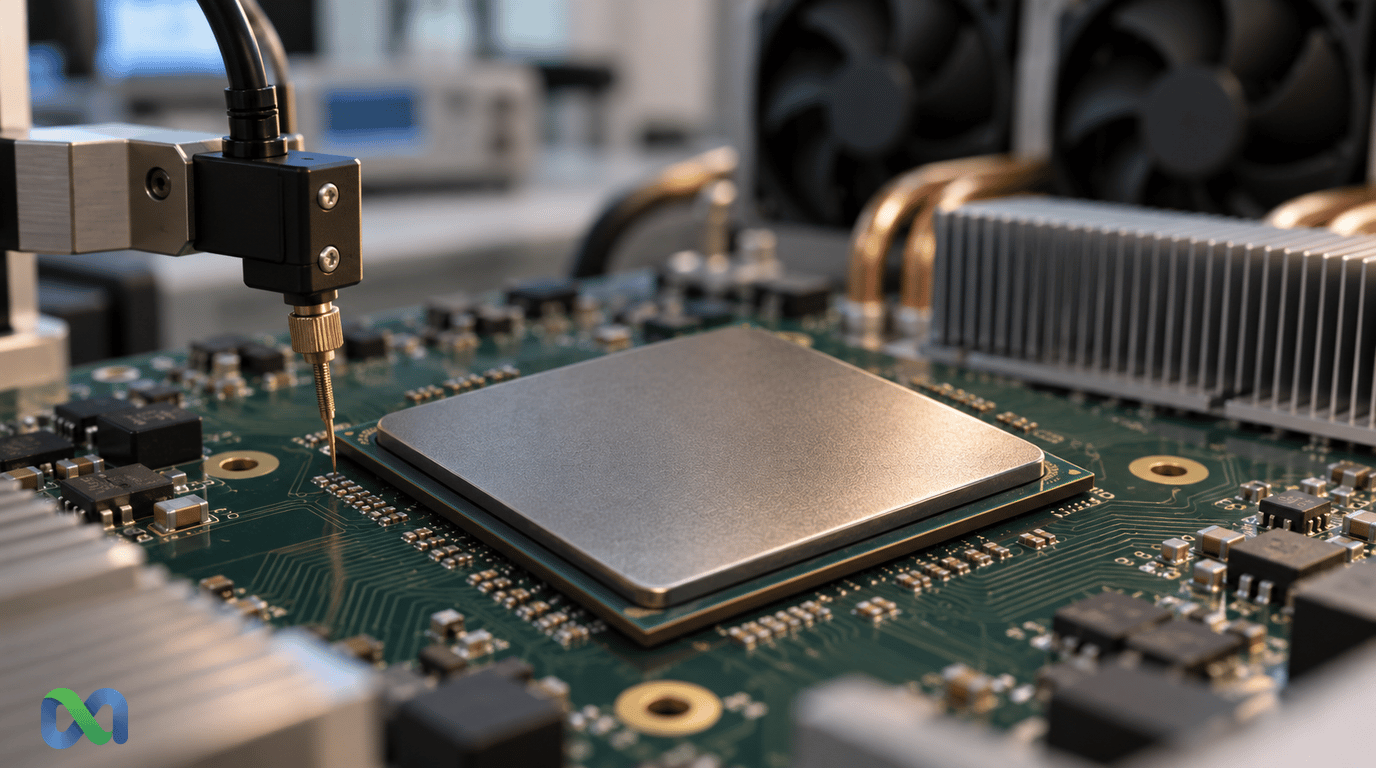
Anthropic AI chips are now part of the frontier AI story. The company is reportedly building an internal team to design chips for Claude. The news was covered by Reuters, TechCrunch, and Quartz. It does not mean Anthropic will replace Nvidia soon. It means Claude's cost base has become too important to leave fully to outside hardware plans.
The key question is simple. If Claude keeps growing across chat, business tools, coding agents, and long-context work, who controls the next dollar of compute? Today, the answer is still a mix of cloud firms, GPU makers, power supply, and contracts. A chip design team gives Anthropic another lever.
It can shape hardware around Claude's own workloads. It can bargain from a stronger place. It can also reduce its risk when chips are scarce.
That is why the story matters. AI labs are becoming compute companies. The winners will not only train better models. They will serve those models with cheaper, denser, and more reliable compute.
What Anthropic Is Reportedly Building
The reported move is a chip design team. It is not a full chip factory. That difference matters.
Designing a chip means deciding how it should run a task. Making a chip means using foundries, testing lines, packaging partners, and data-center teams. Those steps take time and large sums of money.
Reuters reported that Anthropic plans to hire engineers for a chip design effort tied to Claude. TechCrunch and Quartz framed the move as part of a wider AI push for more control over compute. Spanish and Portuguese outlets repeated the same main point. Anthropic wants hardware skill closer to the Claude roadmap.
The most important detail is not the hiring alone. It is the workload. Claude is no longer only a chat page. It is also a layer for company search, code work, analysis, support tasks, and agents that run for longer sessions.
Each product turns model quality into repeated compute demand. Training gets most headlines because it uses huge clusters. However, inference becomes the margin story after a model reaches mass use.
Inference is the compute used each time Claude answers a user. Every prompt, tool call, code review, and long-context task has a cost. If use rises faster than pricing power, margins can shrink. If chip supply tightens, product quality can suffer.
That is the core case for Anthropic AI chips. A custom plan can make Claude workloads cheaper or more stable. It can also give Anthropic more leverage with cloud partners and chip suppliers.
Anthropic AI Chips Are About Design, Not Factories
A chip plan has several layers. First comes design. Engineers choose what math the chip should run well. For AI, the focus is often memory, speed, power use, and how chips connect to each other.
Then comes fabrication. Firms such as TSMC, Samsung, or Intel Foundry turn designs into real silicon. After that, packaging and tests decide how the chips work in a data center. Cloud teams then deploy them at scale.
Anthropic can build skill in the first layer without owning all the other layers. Many large tech firms use this model. Google has Tensor Processing Units. Amazon has Trainium and Inferentia. Microsoft has Maia. Meta has its own AI chip work. OpenAI has also explored custom chip options.
This does not push Nvidia or AMD out of the picture. Custom chips can live beside GPUs for years. GPUs remain flexible. They also have strong software support and are central to many training and inference jobs.
Custom chips are narrower. They can be useful when a company knows its workload and can send enough volume to that chip. Claude may fit that pattern if enterprise use keeps growing.
The supply chain also limits speed. A serious chip project can take years. It needs design work, software tools, data-center links, and power planning. Hiring a chip team is the start of the path, not the end.
For traders and analysts, that timing is important. The near-term signal is bargaining power. The long-term signal is whether Anthropic can turn design work into lower costs, more capacity, and better Claude uptime.
The Real Prize Is Lower Inference Cost
The strongest case for Anthropic AI chips is inference cost. Inference is what happens when a trained model runs for users. It is the work behind each Claude answer.
Products like Claude Code can make that cost heavier. Coding agents may run many steps. They inspect files, call tools, revise work, and keep context across a session. A single task can use far more compute than a simple chat reply.
A custom chip can help if it fits those patterns. It may use less power per token. It may run long-context requests with better speed. It may also give Anthropic a dedicated pool of capacity for its most valuable workloads.
The financial logic is not only lower unit cost. It is also control. If a model lab depends only on outside chips, it competes with every other lab for the same supply. That can bring higher prices, delivery delays, and cloud contract limits.
A design team gives Anthropic more options. It can work with cloud partners on a chip that fits Claude. It can tune its software for certain chips. It can compare Nvidia GPUs, AMD chips, cloud chips, and internal designs with more depth.
That creates leverage before a proprietary chip ships. Suppliers know the buyer has other paths. Cloud partners know the customer can push for tighter fit. Investors can see that compute cost is now a board-level issue.
A Simple Scenario Map for Claude's Chip Strategy
| Scenario | What it means | Market signal to watch |
|---|---|---|
| Design-only team | Anthropic builds internal skill but still uses partner chips | Hiring pace, job descriptions, and cloud contracts |
| Co-designed chip | Anthropic works with a cloud or chip partner for Claude workloads | News from Amazon, Google, AMD, or Nvidia |
| Dedicated inference chip | Claude gets a chip for high-volume serving | Lower delay, lower cost per token, and capacity deals |
| Wider compute stack | Anthropic controls more design, software, and deployment | Large capex plans, foundry deals, and data-center growth |
The most likely path is not full independence. A multi-chip path looks more realistic. Anthropic can use Nvidia for some work, cloud chips for other jobs, and custom designs where Claude's scale can support the cost.
That mix is also safer. Frontier AI firms cannot afford one point of failure. If one supplier is constrained, another path can keep products running. If one workload changes, GPUs can still handle demand while custom hardware catches up.
What This Means for AI Infrastructure Markets
The Anthropic chip story is part of a wider market shift. Frontier AI is no longer only a model race. It is also a race for power, data centers, networking, memory, packaging, and special chips.
Nvidia remains central because its ecosystem is mature. Developers know CUDA. Data centers are built around GPU clusters. Cloud firms can deploy Nvidia systems at huge scale. That makes fast displacement hard.
However, the direction is clear. Large AI buyers want more leverage. Google, Amazon, Microsoft, Meta, OpenAI, and Anthropic all have reasons to reduce dependence on one supplier. The goal is not to end Nvidia demand. The goal is to avoid being pure price takers when compute is scarce.
For prediction-market traders, the useful question is not only, “Will Anthropic make a chip?” A better question is, “Which bottleneck will define Claude's next growth phase?” The answer could be GPU supply, power, cloud terms, safety review, or customer adoption.
Several signals deserve attention in 2026:
- Anthropic job posts that mention inference chips, compiler teams, networking, or hardware-software work.
- Cloud contract updates from Amazon or Google that include dedicated AI capacity.
- Nvidia and AMD comments about custom chip demand from frontier labs.
- Foundry and advanced packaging capacity tied to AI chips.
- Claude product metrics, especially enterprise adoption and coding-agent use.
These signals can move expectations before a chip exists. Markets often price the path before the product launch.
Risks: Execution, Dependence, and Safety Scrutiny
Custom silicon has real risks. The first is execution. Chip design is costly and hard. A late design can miss the workload it was built for. Weak software can make strong hardware hard to use. A supply bottleneck can delay a good chip.
The second risk is dependence. Anthropic may reduce reliance on one supplier while relying more on another. A custom chip still needs foundry space, packaging, cloud deployment, and power. If those inputs are tight, the plan may improve leverage without ending scarcity.
The third risk is governance. Anthropic is growing its compute plans while Claude faces more public safety review. Recent coverage from BBC, Reuters, and The Guardian focused on Claude models in cyber tests. Those stories are separate from the chip hiring news. Still, they point to the same board-level issue.
More capable systems need stronger controls, not only more compute. This matters for investors and markets because expansion can raise both upside and risk. More compute can support better products and higher revenue. It can also increase scrutiny if reliability or trust falls behind capability.
Anthropic has long put safety at the center of its public message. A strong chip plan must fit that promise. The company needs capacity, but it also needs confidence that Claude can scale in high-stakes business settings.
How Anthropic Compares With Other AI Labs
Anthropic is not moving alone. Google already runs its own TPU stack. Amazon sells and uses Trainium and Inferentia. Microsoft has Maia. Meta has internal AI chip work. OpenAI has explored custom chips while also making large cloud and data-center deals.
The difference is that Anthropic's move appears more focused. The company is building design skill around Claude. It is not trying to present itself as a broad chip seller.
That makes sense. Anthropic's edge is model quality, business trust, and product fit. Hardware supports that edge. It does not replace it.
This is why the story should not be read as a simple negative for Nvidia. If Claude grows, Anthropic may still buy many more GPUs. A custom chip effort could expand the total compute budget rather than replace current suppliers.
Still, leverage changes who captures value. If AI labs can move some work to custom or cloud chips, they may keep more margin. They may also push suppliers for better price, better supply, or tighter links with their software.
For markets, pace is the key. A job post is an early signal. A partner announcement is stronger. A tape-out or deployment plan is stronger still. Real cost savings inside Claude products would be the strongest proof.
FAQ
Is Anthropic making its own chips?
Anthropic is reportedly building a chip design team for Claude. That is not the same as making chips in its own factories. The company would still need foundry, packaging, cloud, and deployment partners.
Will Claude stop using Nvidia GPUs?
That is unlikely soon. Custom silicon can live beside Nvidia GPUs, AMD chips, and cloud-provider chips. Frontier labs need several hardware paths because training, inference, and long-context work differ.
Why do AI labs want custom chips?
AI labs want custom chips because compute is costly and scarce. A tailored chip can lower inference costs, improve speed for known workloads, and give the buyer more leverage with suppliers.
What should traders watch next?
Watch hiring patterns, cloud contracts, chip partner news, foundry capacity, and Claude product adoption. Those signals show whether the plan is still early or moving toward real deployed capacity.
Bottom Line
Anthropic AI chips should be seen as a strategic hedge. The company is not becoming a foundry. It is trying to control more of the compute stack behind Claude.
That matters because frontier AI margins will depend on inference efficiency. Model quality gets attention, but serving that model at scale decides the economics. If Claude becomes more central to business work, Anthropic needs cost control, reliable capacity, and hardware tuned to its own use cases.
The next phase of AI competition will be measured in chips, power, software tools, and data-center access. Anthropic's reported hiring push is an early sign that the model race is turning into a compute race. Traders should follow the hardware signals as closely as the model launches.
