


Brazil 2026 election dates: first round and runoff
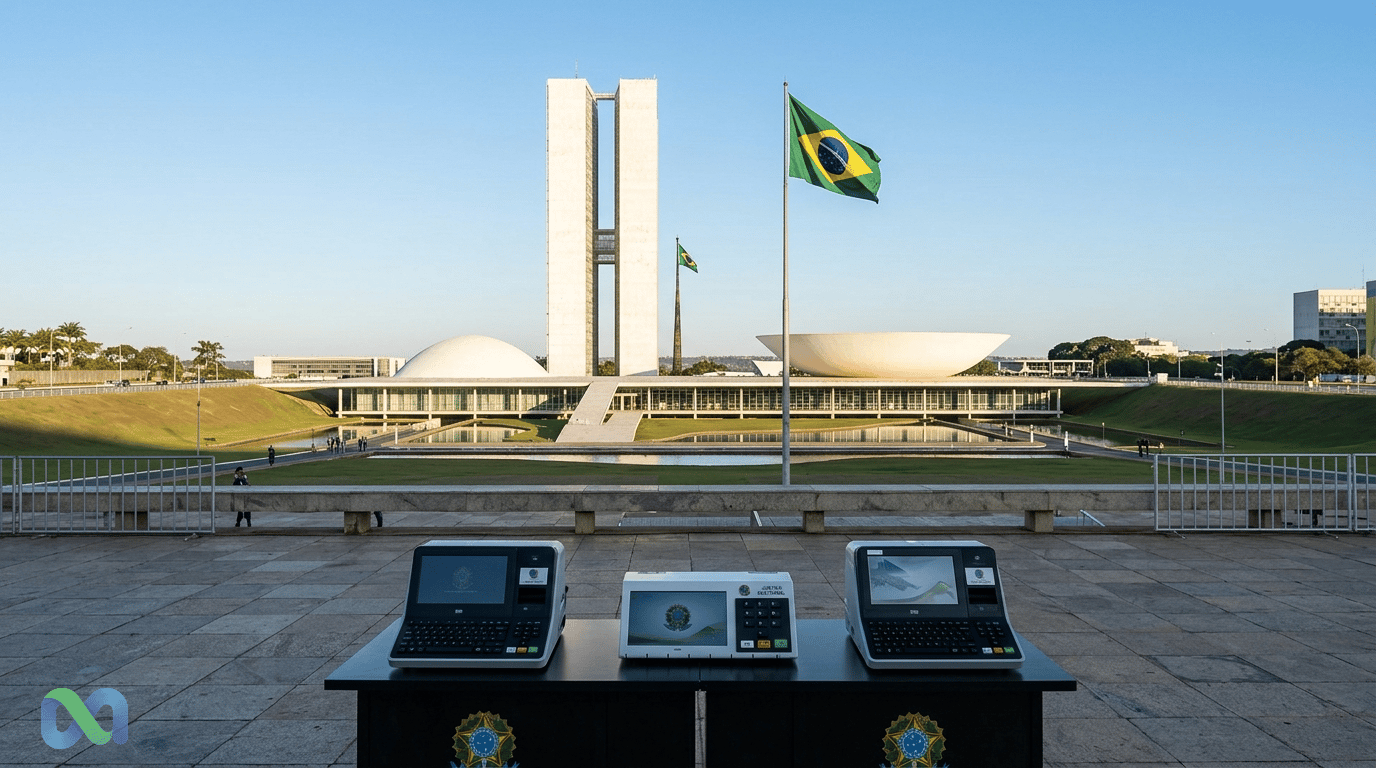
Brazil’s 2026 election dates were October 4 for the first round and October 25 for the runoff. Both voting dates have passed. This guide records the timetable, explains why there were two rounds and shows where to check official results and the historical context of market prices.
Reviewed: November 7, 2026. The Superior Electoral Court’s calendar is the reference for the dates. A voting date, a count published on a particular night and the formal status of a result are different pieces of information.
Brazil 2026 election dates at a glance
| Date | Event | Status at this review |
|---|---|---|
| October 4, 2026 | First round | Voting date passed |
| October 25, 2026 | Second round | Voting date passed |
| July 20–August 5, 2026 | Party conventions | Calendar period ended |
| August 15, 2026 | Candidate registration deadline | Deadline passed |
| August 16, 2026 | Start of official campaign advertising | Campaign milestone passed |
This page focuses on the two voting days and runoff mechanics. Registration, advertising and other procedural deadlines belong to the broader official calendar. Use the TSE’s current guidance when you need to act on an electoral obligation.
When was the first round?
The first round took place on Sunday, October 4, 2026. It covered the presidency, governorships, Senate seats and federal, state and district legislative races.
The first round also determined which executive contests needed a runoff. A second vote was required where no presidential or gubernatorial candidate obtained the necessary majority of valid votes.
When was the second round?
The second round date was Sunday, October 25, 2026. The gap between voting days was three weeks. The runoff concerned the executive contests that remained open after the first vote; legislative races did not restart on that date.
An article saying the October 25 runoff is still “next” describes the pre-election period. When reading an older forecast or guide, check its date before using it as a current account of the election.
What the first-round count showed
The TSE’s first-round report named Flávio Bolsonaro and Luiz Inácio Lula da Silva as the two candidates advancing to the presidential runoff. In that report’s count, with 99.99% of ballot boxes counted, they had 47.03% and 45.16% of valid votes respectively.
Those percentages describe the first-round snapshot reported by the court. They are not the second-round result. Keeping the round and publication time attached to each figure prevents a preliminary or historical number from being mistaken for the outcome of a later vote.
The first round remained important after the runoff because it established the legislative map and regional patterns of support. The presidency and Congress are separate electoral questions, even when voters choose them on the same first-round ballot.
How Brazil’s two-round system works
For president and governors, the relevant threshold is more than half of valid votes. Blank and null ballots are excluded from that calculation. If nobody reaches the threshold in the first round, the two leading candidates proceed to a runoff.
The second vote has its own turnout and vote distribution. First-round percentages do not carry over as votes in the next round. Endorsements, coalition choices and changes in participation can therefore affect the later contest.
Senate and deputy races follow different electoral systems and have no second-round rematch. In 2026, 54 Senate seats were contested alongside the Chamber of Deputies and state and district legislatures. Those contests are part of understanding the governing context discussed in our politics coverage.
Why the three-week interval mattered
The interval gave the remaining candidates a concentrated period for debates, endorsements and campaigning. For a historical analysis, compare polling and prices with information available on the date of each observation.
A price recorded before an endorsement and a price recorded after it answer different questions about the information then available. An eventual election result does not mean that every earlier estimate was unreasonable; it means the uncertainty was ultimately resolved by an outcome.
Where to check dates and official results
Start with the TSE’s 2026 election hub for official election information, and use the court’s linked results services to identify the year, office, region and round you want.
For a calendar question, check the resolution and scheduled date. For a result question, check the appropriate count and its status. A first-round press report is not a substitute for the runoff count, and a market’s settlement is governed by that contract’s published rules.
Voters who need electoral services after the election should follow the court’s current instructions. This historical calendar should not be treated as a fresh instruction to attend a polling place on a date that has already passed.
Reading prediction markets after October 25
Prices from the campaign can be useful as historical observations of expectations. Read them with a timestamp, the exact contract question and its resolution source. A market concerning a completed vote may be closed, awaiting resolution or settled; check the status shown on that market.
A market price is different from a poll percentage. It reflects what participants were willing to trade under particular contract terms. Our prediction-market glossary explains the mechanics and why prices should be read with liquidity and rules in mind.
For other events that are still open, use the current market directory:
Browse current prediction markets
For regional context, see Brazil’s restrictions on prediction-market platforms. Check the date and scope of that coverage when comparing it with a historical election market.
Common questions about Brazil’s 2026 voting dates
What were Brazil’s 2026 election dates?
October 4 was the first round and October 25 was the second-round date. Both dates are in the completed 2026 voting timetable.
Was October 25 another first round?
No. It was the runoff date for executive contests that required a second vote. Legislative contests did not start again.
Who advanced to the presidential runoff?
The TSE’s cited first-round report identified Flávio Bolsonaro and Luiz Inácio Lula da Silva. Consult the court’s results services for the separate runoff result.
Is the October 25 election still upcoming?
No. As of this November 7 review, that date has passed. Older pages and snippets may still describe the campaign before it happened.
Who sets the official calendar?
Brazil’s Superior Electoral Court, the TSE. Its calendar, resolutions and results services are the primary references.
Using the calendar today
The dates explain when voting and its major information events occurred. Keep the two rounds separate, retain dates on historical counts and market prices, and use the TSE for official electoral records.
