




Brazil Mayor Election 2028: Is There a Vote in 2026?
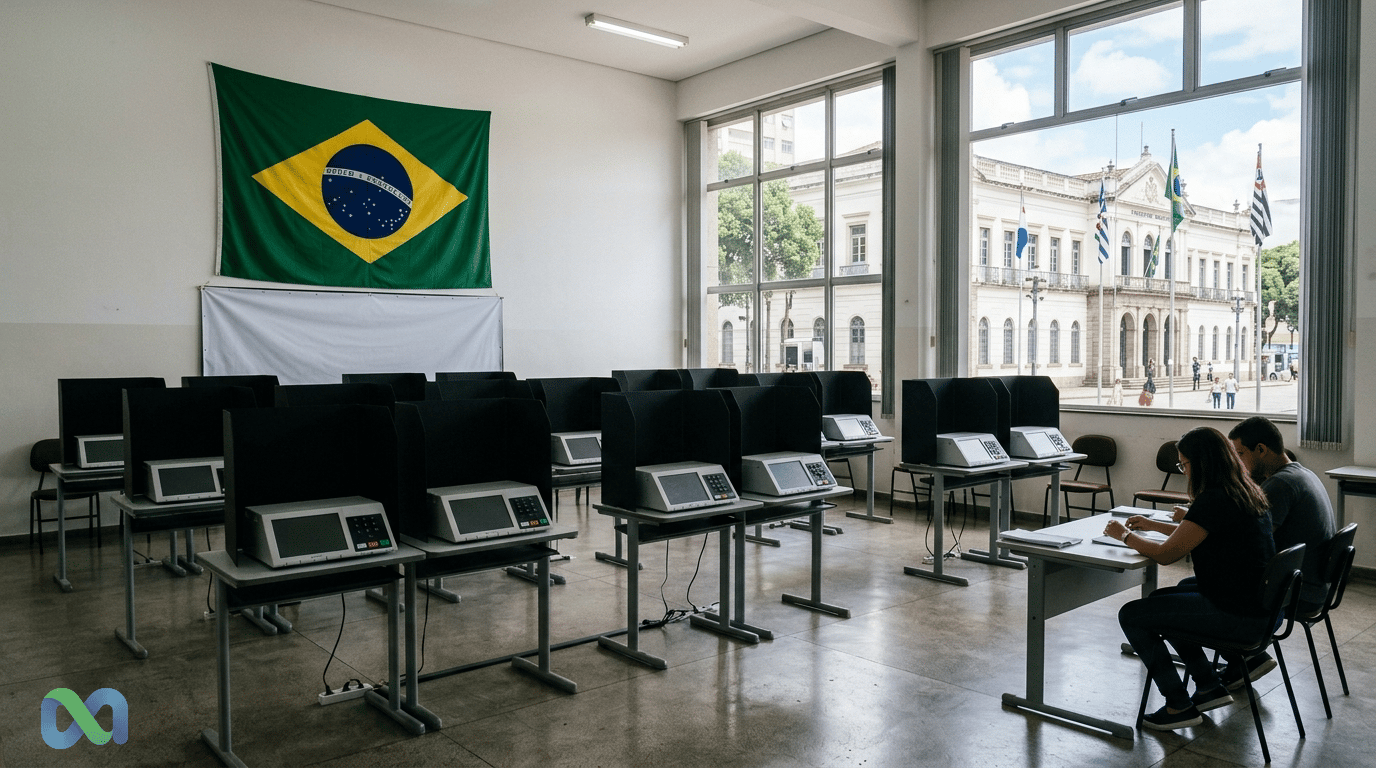
Direct answer: Brazil will not hold a regular mayor election in 2026. The 2026 vote is a general election. Voters will choose the president, governors, senators, federal deputies, state deputies, and district deputies. The next regular Brazil mayor election is scheduled for 2028.
The question appears because Brazil votes every two years. However, not every election year chooses the same offices. One cycle is municipal. The next cycle is general.
In 2024, voters chose mayors and city council members. In 2026, the focus shifts to national and state offices. Then, in 2028, Brazil returns to the municipal cycle. That alternating calendar explains most of the confusion.
This guide explains when the next mayor election will happen in Brazil, which offices are on the 2026 ballot, and how to follow the electoral calendar without mixing the cycles. It also includes a simple table you can check whenever the question comes up.
Direct Answer: Will Brazil Have a Mayor Election in 2026?
No. Brazil will not have a regular municipal election for mayor in 2026. The next regular year for mayoral elections is 2028.
The 2026 election exists, but it is a different kind of election. It belongs to the general election cycle. Voters will choose offices in the national and state executive branches, plus representatives in the legislature.
That distinction matters because the search for Brazil mayor election 2028 often starts with the wrong year. There is an election in 2026. However, mayor is a municipal office. Therefore, the year and the office must be separated.
Why 2026 Does Not Elect Mayors
Mayors are elected in municipal elections. This cycle happens every four years and also includes city council members. Since the last regular municipal election was in 2024, the next one falls in 2028.
The year 2026 is a general election year. That cycle includes president of the Republic, state governors, senators, federal deputies, state deputies, and district deputies. Mayors and city council members are not part of the regular 2026 contest.
Brazil's Superior Electoral Court, the TSE, organizes the official calendar for each cycle. It publishes deadlines for party conventions, candidate registration, campaign periods, voting days, campaign finance reports, and certification. For the official source, check the TSE electoral calendar.
When the Next Municipal Election Happens
The next regular municipal election in Brazil will happen in 2028. In that election, voters will choose mayors and city council members in Brazilian municipalities.
The first round usually takes place on the first Sunday of October. If a runoff is required, it takes place on the last Sunday of October. That rule applies in municipalities where a runoff is allowed and necessary.
So, if the practical question is "when will Brazilians vote for mayor again?" the answer is 2028. If the question is "what will be voted on in 2026?" the answer is completely different.
Which Offices Are on the Ballot in Brazil's 2026 Elections?
Brazil's 2026 elections are general elections. That means voters will choose offices tied to the federal government, state governments, and legislative assemblies.
According to the election calendar, 2026 will include votes for president and vice president of the Republic. It will also include governors and vice governors in the states and the Federal District.
Voters will also choose senators, federal deputies, state deputies, and district deputies. The Senate is part of the 2026 cycle, with a partial renewal of seats.
The TSE has already released key dates for the 2026 calendar. They include party convention periods and voting days. The TSE page on the main dates for Brazil's 2026 elections is the official base for tracking those rules.
President, Governor, Senator, and Deputies
In 2026, the most visible race will likely be the presidential election. It decides who will lead the federal executive branch in the next cycle. Still, the election does not stop with that office.
Governors will also be elected. They lead the states and have direct influence over public security, education, infrastructure, and state budgets.
The legislature will also be at stake. Federal deputies represent states in the Chamber of Deputies. State deputies serve in state legislative assemblies. In the Federal District, voters choose district deputies.
Senators represent the states in the Federal Senate. Since senators serve eight-year terms, renewal happens in alternating patterns. In some cycles, a larger share of seats is renewed.
Offices Not Included in 2026: Mayor and City Council
Mayor and city council are not part of Brazil's regular 2026 election. Those offices belong to the municipal cycle, not the general cycle.
The mayor leads the municipal executive branch. The role covers local issues such as urban services, city transport, basic health care, early education, public works, and city administration.
City council members serve in the municipal chamber. They create local laws, oversee the mayor, and monitor city-level policy. Because both offices belong to the same cycle, mayor and city council are elected together.
This separation avoids a common mistake. If someone asks whether the next Brazil mayor election is in 2026, the right answer is not "October 2026." The right answer is: 2028 for mayor; 2026 for president, governor, senator, and deputies.
Table: Municipal Election vs. General Election
The easiest way to understand the calendar is to separate the cycles. Brazil holds elections every two years, but they alternate between municipal and general contests.
| Year | Election type | Main offices | Mayor included? |
|---|---|---|---|
| 2024 | Municipal | Mayor and city council | Yes |
| 2026 | General | President, governor, senator, and deputies | No |
| 2028 | Municipal | Mayor and city council | Yes |
| 2030 | General | President, governor, senator, and deputies | No |
This table answers the central question. The next regular mayor cycle is 2028. The 2026 election is important, but not for mayors.
2024: Mayors and City Council Members
In 2024, voters chose mayors and city council members. Those municipal mandates last four years. That is why the next cycle lands in 2028.
The logic is simple but useful. If the municipal term lasts four years and the previous election happened in 2024, the next regular municipal election happens in 2028.
2026: National and State Offices
In 2026, voters will follow another political board. The focus moves to the presidency, state governments, the Senate, the Chamber of Deputies, legislative assemblies, and the Legislative Chamber of the Federal District.
This cycle usually receives more national coverage. Presidential polling, party alliances, state races, and the composition of Congress gain more attention.
That is why people may see many headlines about Brazil elections 2026 and assume mayors are included. In the regular calendar, they are not.
2028: The Next Municipal Cycle
In 2028, municipalities return to the center of the race. That will be the regular year to choose mayors and city council members.
This cycle tends to have strong local impact. Issues such as transport, city maintenance, municipal health care, education, neighborhood security, and city budgets usually dominate campaigns.
So, if you want to follow the mayoral race in your city, 2028 is the reference year. Before then, political movements can happen, but not the regular municipal election.
Why Do So Many People Search for Mayor Elections in 2026?
The search for Brazil mayor election 2028 makes sense because users often know that 2026 is an election year. They want to know whether that year includes mayors.
The confusion comes from Brazil's frequent election calendar. There is a national vote every two years. Yet the offices rotate from one cycle to the next.
Political coverage also contributes to the confusion. News about 2026 begins long before the official campaign. Polls, parties, possible candidates, and scenarios appear early. That can create the impression that every office is being voted on that year.
Local political conversations also start early. Sitting mayors may support candidates for governor or president. City council members may run for state office. Municipal leaders can be part of the 2026 debate even when there is no mayor election.
Election Cycles Every Two Years
Brazil votes in even-numbered years. In one cycle, the focus is municipal. In the next cycle, the focus is general.
That creates a practical rule:
- 2024: municipalities.
- 2026: country and states.
- 2028: municipalities.
- 2030: country and states.
This rule makes election news easier to read. If the year is 2026, think president, governor, senator, and deputies. If the year is 2028, think mayor and city council.
How TSE Dates Help Avoid Confusion
The TSE publishes the electoral calendar with formal deadlines. It shows when party conventions, candidate registrations, campaign advertising, voting, finance reports, and certification take place.
These dates help separate political speculation from official steps. A leader can move before the calendar begins, but a formal candidacy must follow legal deadlines.
The Regional Electoral Court of São Paulo, TRE-SP, also highlighted that the 2026 election will have first and second rounds in October. That regional update reinforces the general election calendar. It also helps confirm that the 2026 cycle is not municipal. See the TRE-SP reference on the October 2026 election dates.
How to Follow Brazil's 2026 Elections Without Mixing Offices
The best approach is to separate the topic by question. First, ask which office is being disputed. Then, check which calendar applies.
If the topic is president, governor, senator, or deputy, it belongs to 2026. If it is mayor or city council, it belongs to the 2028 municipal cycle.
This split also helps anyone following polls and prediction-market probabilities. Each office has its own dynamics. A presidential race does not behave like a municipal election.
Electoral Calendar
For official dates, always use sources from Brazil's Electoral Justice system. The calendar shows real deadlines and avoids confusion with speculative content.
For the 2026 cycle, track dates for party conventions, candidate registration, campaign advertising, the first round, a possible runoff, campaign finance reports, and certification.
For the 2028 municipal cycle, the specific calendar will be published closer to the election. Until then, the general rule already answers the main question: mayors return only in the regular 2028 cycle.
Candidates and Polls
For 2026, polls and candidacies should focus on general offices. That includes the presidential race and state contests.
Mayor candidates may appear in the news, but in a different context. They may support alliances, test local strength, or prepare for 2028. Still, that does not turn 2026 into a municipal election year.
This detail matters when reading headlines. A popular mayor can be an important political player in 2026. However, that mayor is not running for municipal reelection that year, except in exceptional supplemental elections.
Prediction Markets and Political Context
Prediction markets help track how expectations change over time. They do not replace official sources, but they show how participants price political scenarios.
In 2026, those markets will likely focus on the president, governors, the Senate, and the legislative balance. For mayoral races, the relevant regular cycle is 2028.
That split helps avoid a bad read. If a market or analysis discusses 2026, first check which office it covers. The date alone is not enough.
Exception: Can Brazil Hold a Supplemental Mayor Election Before 2028?
Yes. Brazil can hold a supplemental mayor election in specific cases. However, that does not change the general rule.
A supplemental election can happen when the Electoral Justice system annuls a local race, when a mandate is revoked, or in other situations provided by law. In those cases, a specific municipality may return to the polls before the next regular cycle.
Still, that does not mean Brazil will hold a national mayor election in 2026. The regular rule remains 2028 for municipal elections.
This distinction is essential. When someone asks, "Will Brazil have a mayor election in 2026?" the answer for the regular calendar is no. The local exception applies only to municipalities with a specific Electoral Justice decision.
Quick FAQ About Mayors and Brazil's 2026 Elections
When Is the Next Mayor Election in Brazil?
The next regular municipal election for mayor in Brazil will be in 2028. It will also elect city council members in Brazilian municipalities.
Will Brazil Have a Mayor Election in 2026?
No. Brazil will not hold a regular mayor election in 2026. The year 2026 is for general elections, including president, governors, senators, and deputies.
How Long Is a Mayor's Term in Brazil?
A mayor's term in Brazil lasts four years. After the 2024 municipal election, the next regular municipal cycle therefore happens in 2028.
Are City Council Members Also Elected in 2028?
Yes. City council members are elected in the same municipal cycle as mayors. Therefore, the next regular city council election is also in 2028.
What Will Brazilians Vote for in 2026?
In 2026, Brazilians will vote for president, governor, senator, federal deputy, state deputy, and district deputy in the Federal District.
Can There Be a Municipal Election Outside the Regular Cycle?
Yes, but only in specific situations. Supplemental elections depend on an Electoral Justice decision and apply to specific municipalities.
Conclusion: Is the Next Brazil Mayor Election in 2026?
The final answer is simple: no. The next regular Brazil mayor election is not in 2026. It is scheduled for 2028.
In 2026, Brazil will hold general elections. Voters will choose president, governors, senators, federal deputies, state deputies, and district deputies. Mayors and city council members stay in the next municipal cycle.
Use this practical rule: 2026 is a general election; 2028 is a municipal election. That way, you can follow news, polls, official calendars, and prediction-market probabilities without confusing the offices.
Updated on May 14, 2026.
