




ChatGPT Down Worldwide: What OpenAI's Outage Signals
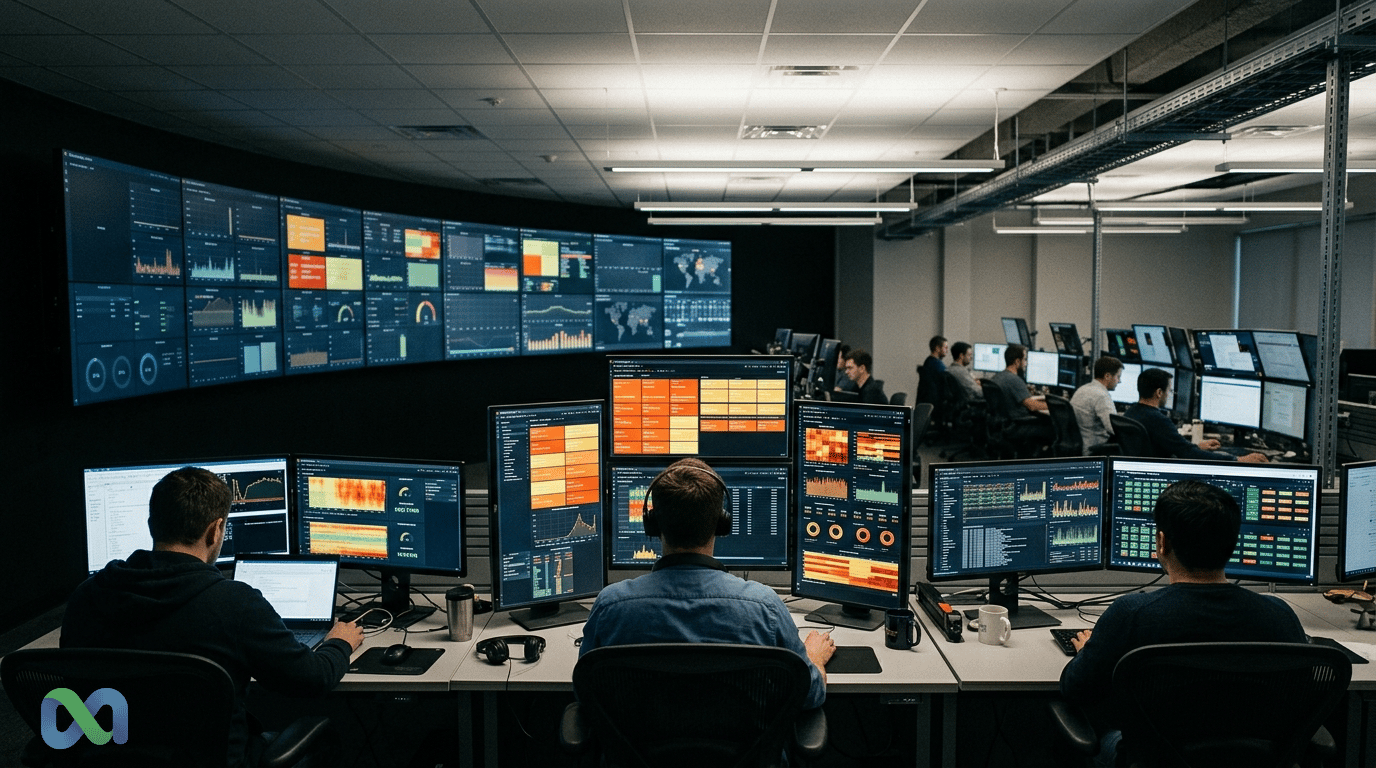
When ChatGPT down worldwide becomes the headline, the story is no longer only about an app failing to load. It is a live test of how much work now runs through a small set of AI platforms.
BleepingComputer reported that OpenAI confirmed a worldwide ChatGPT outage on July 25, 2026. The incident affected ChatGPT and API services, according to the report, and service recovered around 6 AM ET after roughly 50 minutes.
That may sound short. However, 50 minutes can be a long time when customer support teams, developers, analysts and internal tools all rely on the same AI layer.
For markets, the outage matters because reliability is becoming part of the AI adoption thesis. Model quality still matters. So do price, latency, security and uptime. A stronger benchmark means less if the service becomes hard to trust during working hours.
This article separates the confirmed outage facts from speculation. It also explains why AI downtime can shape enterprise behavior, vendor strategy and prediction-market narratives around OpenAI, Anthropic and AI infrastructure risk. For broader context, Macro Markets has also covered the prior ChatGPT outage as a reliability signal.
What Happened During the ChatGPT Outage
OpenAI confirmed a worldwide ChatGPT outage affecting ChatGPT and API services, according to BleepingComputer. The incident was reportedly resolved around 6 AM ET after roughly 50 minutes.
The key facts are simple. Users had trouble accessing ChatGPT. Some users reported missing conversations or failed loads. Developers also had to account for API disruption, which can affect products built on top of OpenAI services.
That distinction matters. A consumer outage interrupts individual work. An API outage can interrupt software workflows that customers never see.
For a developer, a ChatGPT API outage may show up as failed requests, delayed responses or degraded features inside another product. For a support team, it may reduce the quality or speed of AI-assisted responses. For an operations team, it may interrupt research, summarization or coding tasks that now depend on AI tools.
The brief does not show a confirmed root cause. It also does not show a confirmed security event tied to this outage. That is important because social discussion around OpenAI was noisy at the same time, including separate debate about AI agents, Hugging Face and model testing.
A confirmed outage is not the same as a confirmed breach. Until OpenAI gives a cause, the safer reading is operational: ChatGPT and related services were unavailable for a short global window, then recovered.
Timeline of the incident
| Moment | What readers should know |
|---|---|
| Outage window | BleepingComputer reported a worldwide ChatGPT outage on July 25, 2026. |
| Services affected | ChatGPT access and API services were both within the reported scope. |
| Recovery | The report said service recovered around 6 AM ET after roughly 50 minutes. |
| Cause | The collected sources did not confirm a root cause. |
| Next source to watch | OpenAI's official status page remains the primary place for live incident updates. |
This is the basic answer for readers asking whether ChatGPT was down today. Yes, OpenAI confirmed a worldwide incident, according to the report. The more useful question is what that short window says about AI infrastructure dependence.
Quick Answers on ChatGPT Down Worldwide
Was ChatGPT down worldwide? Yes. BleepingComputer reported that OpenAI confirmed a global outage. The report said ChatGPT and API services were affected.
How long was ChatGPT down worldwide? The reported window was about 50 minutes. Service recovered around 6 AM ET, according to the same report.
Why was ChatGPT not working? The simple answer is a service outage. The collected sources did not confirm the root cause.
Was the ChatGPT API affected? Yes. That matters because apps and work tools can depend on the API. A user may see only a failed feature, not the upstream cause.
What should users check next? Start with OpenAI's status page. Then wait for a root-cause note if OpenAI publishes one.
Therefore, the clean reading is narrow. ChatGPT down worldwide was a confirmed outage, not a confirmed attack. It was short, but it still showed how many workflows now rely on one AI provider.
In plain terms, ChatGPT down worldwide means the service failed for users in more than one market at the same time. It does not mean every user lost data. It does not prove a hack. It means the core tool was not reliable for a short window.
That is enough to matter. A student may lose time. A worker may pause a task. A support team may switch tools. A software app may show an error. These are small costs on their own. At scale, they become a real signal.
Why ChatGPT Down Worldwide Matters
Fifty minutes of downtime is not unusual in cloud software. Many major platforms have brief incidents. The difference is the role ChatGPT now plays inside daily work.
ChatGPT started as a consumer product for writing, search-like answers and coding help. It has become a layer inside business processes. Teams use it for support drafts, sales research, code review, translation, internal documentation and data analysis.
That shift changes the impact of an outage. If one user cannot load a chat, the cost is personal delay. If a company routes thousands of prompts through the API, the cost becomes operational.
The impact can also spread through second-order systems. A product may depend on an OpenAI model but present itself under another brand. A customer may only see that a feature failed. They may not know the failure came from an upstream AI provider.
This is why uptime now belongs in the same conversation as model performance. Enterprise buyers do not only ask which model is smartest. They ask whether a provider can meet service expectations when usage spikes or systems fail.
The incident also exposes concentration risk. Many teams moved fast during the AI buildout. They integrated the model that worked best, shipped features and let demand grow. However, that speed can leave a single point of failure.
When ChatGPT is down worldwide, those dependencies become visible. A company may discover that support agents, product features and internal tools all depend on one vendor. That realization can change procurement and engineering plans.
That is why the phrase ChatGPT down worldwide carries more weight now than it did two years ago. It means a writing tool failed. It can also mean a coding helper failed, a support flow stalled and an internal research loop stopped.
In other words, ChatGPT down worldwide is a stress test. It shows where teams have backup paths and where they do not.
For developers, the lesson is practical. They may need fallback logic, clear user messaging and request queues. They may also need monitoring that separates their own errors from upstream provider incidents.
For executives, the lesson is simple. AI adoption needs a backup plan, not only a pilot plan. If an AI tool helps with revenue, support or compliance work, downtime becomes a business risk.
OpenAI, Anthropic and the Reliability Race
The OpenAI versus Anthropic narrative often centers on model quality. Benchmarks, context windows, coding skill and safety claims shape the public debate. However, buyer trust is broader than raw model power.
Reliability is now part of the product. A slightly weaker model that stays available may beat a stronger model that fails during critical workflows. Buyers also care about incident communication, postmortems and recovery discipline.
This does not mean a 50-minute outage changes the AI market by itself. It does not prove that OpenAI is losing buyer trust. It also does not prove that Anthropic or any rival runs better systems.
The point is more measured. Every visible outage adds data to the market's view of AI maturity. Users see how fast a provider admits the problem. Developers see whether APIs recover cleanly. Buyers see whether the vendor explains what happened.
That is where repeated incidents can matter. One outage is a technical event. A pattern becomes a trust issue.
The broader context is already competitive. Axios reported that OpenAI and Anthropic have both argued against open-weight AI risks while Chinese models gain ground. Business Insider has also covered OpenAI and Anthropic warnings about the future they are building. These stories point to a market where cost, trust and control all matter.
In that environment, downtime becomes another input. If enterprise teams diversify across vendors, they reduce the risk that one outage stops an entire workflow. They also gain negotiating leverage.
Multi-vendor AI does not mean every company will split traffic evenly. It often starts with simple backup logic. A company might keep one model for primary work and another for less sensitive fallback tasks. It might route low-risk prompts to cheaper models and reserve premium models for higher-value work.
Outages can speed up that design. They give engineering teams a clear reason to build retry rules and provider switching. They give procurement teams a reason to ask about service history.
For OpenAI, the response matters as much as the incident length. Fast confirmation helps. Clear recovery updates help. A useful postmortem would help more, especially for API customers who need to explain downstream failures.
What Was Not Confirmed When ChatGPT Was Down Worldwide
The most important discipline in this story is separating facts from adjacent narratives.
The brief includes social posts about OpenAI, Hugging Face, AI-agent testing and criticism of OpenAI's security posture. Those posts may matter for a separate article. They should not be merged into this outage unless a source confirms a direct connection. Macro Markets has treated OpenAI AI models as a separate risk story for that reason.
Based on the collected research, the outage was a service availability incident. The root cause was not confirmed. There was no confirmed evidence in the brief that the outage came from an attack, a model safety issue or the Hugging Face story.
That distinction protects the reader. It also protects the analysis. Markets can react to uncertainty, but good analysis should label uncertainty clearly.
Readers should watch for four follow-up details after ChatGPT down worldwide searches fade:
- Whether OpenAI publishes a root-cause update.
- Whether the incident affected only some regions or the full global service.
- Whether API customers receive incident credits or SLA guidance.
- Whether downstream apps report customer-facing failures from the same window.
If those details appear, the market read can change. A routine systems failure sends one signal. A capacity issue during normal demand sends another. A security-related cause would be a different story.
What Users and Businesses Should Watch Next
For casual users, the next step is simple. Check OpenAI's status page when ChatGPT is not working. If OpenAI shows an incident, browser fixes will not solve the core problem.
For businesses, the checklist is more serious. They should know which workflows depend on OpenAI services. They should know which teams can work around an outage. They should also know which customer-facing features need fallback messages.
The first signal is incident clarity. A strong provider should tell customers what failed, when it started, when it recovered and what changed afterward. It does not need to reveal every internal detail. However, it should give customers enough information to judge risk.
The second signal is API impact. Consumer ChatGPT availability is visible. API disruption can be harder to see because it appears inside other products. Businesses should watch error rates, latency and failed task queues during provider incidents.
The third signal is vendor concentration. If a company depends on one AI provider for everything, even short outages can disrupt work. A simple fallback plan may reduce that risk.
The fourth signal is customer communication. When an AI feature fails, users need a plain explanation. They do not need a vague error message that makes the product look broken.
These signals are not only technical. They can shape buying decisions. They can also shape how investors and prediction markets price the durability of AI adoption.
Prediction-Market Angles for AI Infrastructure Risk
Prediction markets turn uncertain future events into measurable probabilities. A ChatGPT down worldwide event can become a useful input when traders assess AI adoption, vendor competition and enterprise spending. If readers need the basic framework first, start with Prediction Markets Core Terms.
The most direct angle is reliability. If users see repeated failures from a provider, markets may price a higher chance of customer diversification. That could affect narratives around OpenAI, Anthropic, Google, Meta and open-weight model providers.
Another angle is enterprise adoption. AI spending is rising, but businesses still need proof that tools can support real workflows. Downtime does not end adoption. However, it can slow deeper use in sensitive areas.
A third angle is regulation and disclosure. As AI systems become basic work tools, public companies may face more pressure to explain dependence on model providers. That could create new disclosure norms around AI vendor risk, especially if future OpenAI Anthropic IPOs force more public detail.
Finally, outages can affect sentiment around open-weight models. Some teams may prefer hosted frontier models for quality and convenience. Others may see incidents as a reason to run more workloads in their own environment. That connects the outage debate with the wider open-weight AI models fight.
None of this is a trading recommendation. It is a framework for reading signals. The question for markets is not whether ChatGPT had a short bad morning. The question is whether outages change expectations about the pace and shape of AI adoption.
Macro Markets readers should treat uptime incidents as one data point among many. Model releases, pricing changes, enterprise contracts, security events and regulation all matter. Therefore, reliability now sits beside them.
Bottom Line
The ChatGPT down worldwide incident appears to have been short. Still, its market meaning is larger than its duration.
AI products are moving from novelty to basic work infrastructure. When that layer fails, users learn where their dependencies are. Businesses learn whether they planned for fallback. Markets learn whether the AI adoption story rests on systems that can scale under pressure.
OpenAI's next useful step is clear communication. A clean postmortem would help API customers, enterprise buyers and analysts understand whether this was routine downtime or a sign of deeper stress.
Until then, the best reading is disciplined. OpenAI confirmed a global outage, according to BleepingComputer. The cause was not confirmed in the collected sources. The real signal is that AI reliability has become part of the competitive race.
That is the point markets should watch. The future of AI will not be decided by benchmarks alone. It will also be decided by which systems stay available when businesses need them most.
For that reason, ChatGPT down worldwide is more than a status-page note. It is a live measure of how AI tools hold up when they become part of daily work.
