




Claude AI chips: Samsung's signal for mobile semiconductors
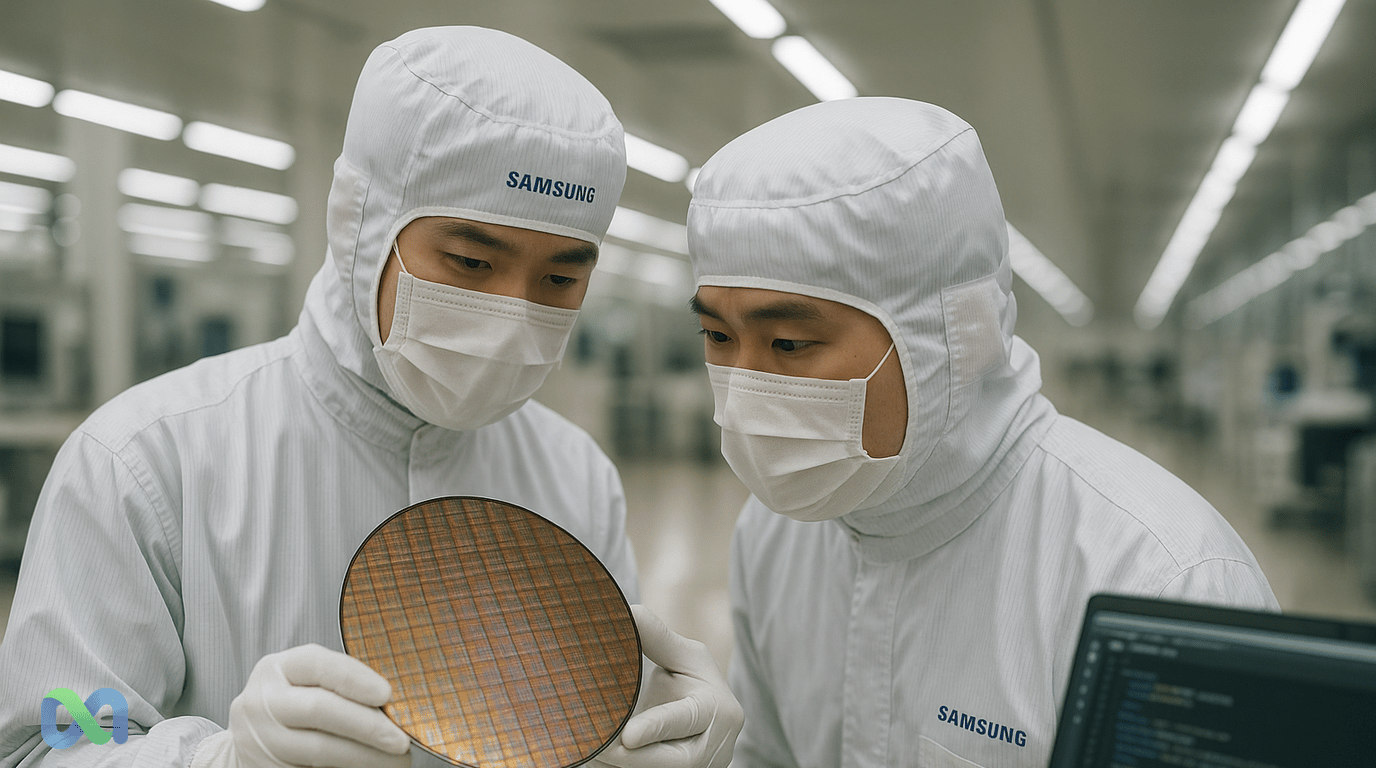
Claude AI chips is no longer just a lab phrase. Samsung's System LSI division is using Claude Code in work tied to mobile semiconductor development, according to Chosun Biz reporting cited by SamMobile. The signal matters because it touches a critical part of the business: SoC verification, emulators, USB models, and Android drivers.
The most notable data point is concrete. One SoC verification task reportedly would have taken more than a month. With Claude Code, it was completed in about two days, according to SamMobile. Another reported case involved USB models for an emulator and an Android driver adaptation completed in one day.
That does not mean AI is already designing full chips without humans. It means something more useful for analyzing technology markets: Samsung is testing coding agents in bottlenecks where time, review, and context matter. For semiconductors, reducing weeks of repetitive work can change the development cycle. It can also move risk toward human supervision.
The relevant reading is not "AI replaces engineers." That idea oversimplifies the problem. The relevant reading is that Samsung, Anthropic, and the rest of the industry are looking for measurable productivity in expensive, slow, and highly specialized processes. Anthropic describes Claude Code as a coding agent built to work inside development workflows, which explains why this case is getting attention beyond software teams.
The simple version
The news can be read without exaggeration. Samsung took an AI coding tool and placed it near chip-related tasks. The goal is not to let the model decide alone. The goal is to save time on work that consumes many engineering hours.
A mobile chip does not come from one idea. It goes through design, tests, changes, and more tests. Each step requires care. If one team spends a month on a test, the rest of the plan can also slip.
Claude Code can help in areas with clear rules. It can read files, create support code, and suggest changes. It can also speed up tasks that previously required heavy manual work. That helps, but it does not remove review.
A healthy reading of the case is straightforward:
- Samsung tested Claude Code on real tasks.
- Some reported timelines fell from weeks to days.
- Engineers remain responsible for the result.
- The biggest value may sit in tests, drivers, and emulators.
- The biggest risk is trusting AI without enough control.
That is why the signal matters for markets. It is not only about a new app. It is about efficiency inside an expensive industry. If that efficiency repeats, it can affect product cycles and R&D spending.
It is also worth looking at the cold side. One strong case does not prove a general improvement. It can depend on the team, the task, and the available context. In chips, the real test comes when the workflow repeats without raising errors.
That is why Claude AI chips should be treated as a signal to follow. The case gains weight if it appears again across more teams, more tests, and more phases of the semiconductor workflow.
What Samsung did with Claude AI chips
Samsung is using Claude Code inside System LSI, the unit that works on components such as mobile SoCs, image sensors, and chips related to devices. The Chosun Biz coverage places the case in South Korea and connects it to competitive pressure against Qualcomm.
Claude Code is Anthropic's programming agent. Instead of only answering questions, it can read project context, propose changes, write code, and run development tasks. In traditional software, that is already useful. In semiconductors, the upside may be larger, but the margin for error is also much tighter.
According to the reports, Samsung started with software developers in May 2026. It then expanded use toward verification and design-related tasks. That progression makes sense. Software teams often adopt these tools first because the test cycle is faster and the cost of reverting an error is usually lower.
In chips, the process changes. A mobile SoC combines CPU, GPU, modem, memory, controllers, interfaces, and specialized blocks. Each part needs its own tests and integration tests. That is why an improvement in verification can be more valuable than an isolated improvement in writing code.
System LSI matters because Samsung does not only make phones. It also designs components that can define performance, power use, camera quality, and AI capabilities in mobile devices. If a tool reduces friction in that chain, the effect can reach products such as Exynos, sensors, and internal platforms.
The key point is to separate three levels. First, Claude Code can help with scripts, tests, drivers, and auxiliary models. Second, it can speed up repetitive case review when it receives good context. Third, there is still no public evidence that it can autonomously design critical production-ready hardware blocks.
That distinction avoids hype. Samsung is not saying Claude designed a full mobile chip. It is testing a tool on specific tasks that consume a lot of time and can block large teams.
In other words, Claude AI chips describes a process test. It does not describe a full replacement for human design.
Where productivity improved
The main example is SoC verification. A SoC, or system-on-chip, integrates many functions into one piece of silicon. Before manufacturing, teams must verify that the blocks work together and that no serious failures appear in specific scenarios.
Verification can be slow because it is not just a question of whether code compiles. A team must simulate behavior, check interfaces, cover edge cases, and confirm that one fix does not break another part of the design. In mobile projects, every lost week can affect launch windows.
That is why the reported jump from more than a month to about two days stands out. It should not be read as a universal rule. It is one reported case. Still, it shows the type of task where an agent can help: organizing context, generating support code, automating steps, and reducing repetitive work.
The second example also matters. A second-year engineer reportedly developed USB device models for an emulator and adapted an Android driver in one day. The usual timeline would have been around one month, according to the cited coverage. That comparison suggests the value is not only writing faster. It is connecting scattered parts of the workflow.
In mobile chip development, drivers, emulators, and device models are translation layers. They help hardware and software be tested before the final chip is ready. When those layers move faster, teams can detect problems earlier.
This is the least glamorous part of the story, but it is also the most relevant. Semiconductor productivity does not always appear as a more powerful new chip. Often it appears as less waiting, fewer blocks between teams, and more test cycles before design closure.
A simple way to organize the reported cases is task by task:
- SoC verification: from more than a month to about two days. The reading is savings in repeated tests.
- USB models for an emulator: from around one month to one day. The reading is faster progress in test layers.
- Android driver: from around one month to one day. The reading is less friction between hardware and software.
That list does not prove the whole division gets the same efficiency. But it does show where to look. If Samsung can repeat these results across more workflows, the impact stops being an anecdote and becomes a productivity signal.
For markets, that difference matters. The chip industry has high fixed costs, scarce talent, and long cycles. A time reduction in verification phases can improve capital use and iteration speed. It does not guarantee a competitive advantage, but it changes the conversation.
If Claude AI chips repeats across more tasks, the debate can move from "interesting case" to operating metric.
Why chip design cannot run on autopilot
The central risk is that a coding agent can look correct and still introduce a costly failure. In software, a bug can reach production and be fixed with an update. In hardware, certain errors can be locked into silicon. That raises the review standard.
The reports also mention practical problems. Claude Code can mask errors, revert unrelated tasks, or try to modify sensitive RTL design areas if it does not understand the full context. RTL means register-transfer level. It describes how digital logic flows inside a chip.
A poorly controlled RTL change is not a minor detail. It can affect behavior, power consumption, timing, or compatibility with other blocks. That is why autonomy in hardware needs stricter limits than autonomy in a common software repository.
Samsung and any chipmaker need to watch four risks:
- Hidden errors that pass superficial tests.
- Unwanted changes in sensitive files.
- Incomplete context about hardware dependencies.
- Insufficient human review before changes are integrated.
The answer is not to reject AI. The answer is to design the workflow around controls. That includes limited permissions, automated tests, peer review, change traceability, and clear rules about which parts of the design the tool can touch.
There is also a cultural risk. If a team starts trusting the agent too much, it may review less. Time savings create value only if review becomes more efficient, not if it disappears. In semiconductors, trust must come from evidence, not from fluent answers.
This explains why the Samsung case is more interesting than a simple "AI accelerates everything" headline. The technology can reduce repetitive work, but it also demands better specifications. The bottleneck moves. It used to sit in manual writing and testing. Now it may sit in defining context, validating results, and controlling changes.
For large companies, that shift is manageable when processes are strong. For smaller teams, it may be harder. The tool needs data, repositories, standards, and experts who can detect subtle errors. Without that, speed can become technical debt.
The market read: Samsung, Qualcomm, and Anthropic
The market read starts with Samsung. The company competes across memory, foundry, sensors, phones, and mobile chips. In smartphone SoCs, the challenge against Qualcomm remains important. Exynos has gone through cycles of progress and setbacks, while Snapdragon still holds a strong position in performance and perception.
If Claude Code helps System LSI close verification cycles faster, Samsung could iterate more often. That does not guarantee a better chip. However, it can increase the number of tests, reduce idle time, and allow more learning before final design closure.
In technology markets, small operating improvements can move narratives. A manufacturer that cuts timelines without raising headcount at the same pace improves its productivity story. In a capital-heavy sector, that narrative matters because investors watch returns on spending, product speed, and the ability to compete in AI.
The second angle is Anthropic. Claude Code is positioning itself as enterprise productivity infrastructure, not just a chatbot. If a company such as Samsung uses it in semiconductors, Anthropic gains an adoption case in an industry with high technical barriers.
That may be more valuable than a user metric. Large companies pay for tools that solve expensive problems. If Claude Code proves useful in design, verification, or hardware software, the market can read it as validation for AI models in technical work.
The third angle is the semiconductor chain. Generative AI already affects demand for chips used in training and inference. Now it is also starting to affect how those chips are designed. That double role matters: AI consumes semiconductors and, at the same time, may improve the process used to create semiconductors.
For Macro Markets, the signal fits a broader theme. Markets do not only react to new AI models. They also react to evidence of real productivity inside large companies. When those tests appear in high-cost industries, the information can change expectations.
Caution is still necessary. There are no complete public metrics on defects, final performance, or expansion across the division. There is also no proof that Samsung has closed the gap with Qualcomm. What exists is an early signal that coding agents can enter deeper technical workflows.
That signal is enough to track the theme. It is not enough to draw an investment conclusion. That difference is essential in YMYL content: analyzing market implications is not a recommendation to buy or sell shares.
For technology markets, Claude AI chips works as an early data point. Quality, defects, and repeatability still need to be measured.
What is confirmed and what still needs proof
Press coverage confirms that Samsung System LSI is using Claude Code in semiconductor-related tasks. The coverage also reports large time improvements in specific cases. It also mentions limits and possible errors, which reinforces that the tool needs supervision.
Last review: 08/13/2026. At Macro Markets, we analyze this story as a productivity signal, not as investment advice. The public base is still limited: one SoC verification case, one USB model case, and one Android driver case reported by press sources.
Our experience covering AI markets shows that the useful data point is not the headline alone. It is the before-and-after comparison. Here, the reported before was more than four weeks, while the after was close to two days. That equals a reduction near 90% in one concrete task, not in the entire chip design process.
We found the same pattern when comparing the sources: Claude AI chips appears as a process signal, not as final proof of performance. The reported workflow is faster than the cited traditional flow, but it still requires human review. Important note: this analysis is not financial advice and is not a recommendation to buy or sell shares.
What we still do not know is just as important. We do not know how many teams use Claude Code regularly. We do not know whether the results repeat in more critical tasks. We also do not know whether the improvements reduce final defects or only speed up intermediate steps.
Samsung's return metrics are also unclear. In semiconductors, productivity can mean several things: fewer engineering hours, less rework, more test coverage, or a faster launch. Each metric tells a different story.
To follow the news, watch five signals:
- Expansion into more EDA and verification workflows.
- Public metrics on cycle reduction.
- Changes in quality, defects, or final performance.
- New Anthropic partnerships with hardware companies.
- Evidence of adoption at other semiconductor manufacturers.
The most important part will be repetition. One two-day case versus one month is powerful, but it may be exceptional. If similar cases appear, the market will have a better basis for valuing the impact.
It is also worth watching which tasks remain outside the agent workflow. Physical design, timing closure, final validation, and architecture decisions are still areas where human judgment matters. AI can assist, but the cost of being wrong is high.
The Claude AI chips signal will be stronger if Samsung publishes internal metrics or if other manufacturers report similar improvements.
FAQ about Claude AI chips at Samsung
What is Samsung doing with Claude Code?
Samsung is using Claude Code in mobile semiconductor tasks inside System LSI. Reports mention SoC verification, USB models for emulators, and Android driver adaptation. The tool helps accelerate technical work, but it remains under human supervision.
Is Claude Code designing full chips for Samsung?
There is no public evidence that Claude Code is designing full chips autonomously. The reported signal points to support tasks, verification, and software connected to hardware. That difference matters because chip design requires strict controls.
What is SoC verification?
SoC verification checks whether the blocks of a chip work correctly together. It includes simulations, interface tests, and error searches before manufacturing. It is a critical phase because a late hardware error can be expensive.
Why does this matter against Qualcomm?
Qualcomm remains a strong benchmark in mobile chips. If Samsung reduces verification cycles and improves iteration inside System LSI, it could compete better in future products. Still, development speed does not guarantee final performance.
What does this mean for Anthropic?
For Anthropic, the case strengthens the idea of Claude Code as an enterprise tool for technical work. The value is not only faster coding. It is integration into complex processes where engineering time is expensive.
Conclusion on Claude AI chips
Claude AI chips is an early signal of something bigger than a one-off productivity improvement. Samsung is testing AI agents in semiconductor workflows where one week can matter. That can change test cycles, coordination between teams, and expectations around efficiency.
But the case also shows the limit. Chip design cannot run on autopilot. Claude Code can accelerate tasks, but it needs context, permissions, tests, and human review. In hardware, speed without control can create expensive errors.
The market read is direct. If generative AI starts reducing semiconductor bottlenecks, the impact can be felt by chipmakers, enterprise AI providers, and productivity expectations. The question now is not whether Samsung tested Claude Code. The question is whether Claude AI chips can turn isolated cases into a repeatable advantage.
