


Data Center Moratoriums Are the New AI Bottleneck
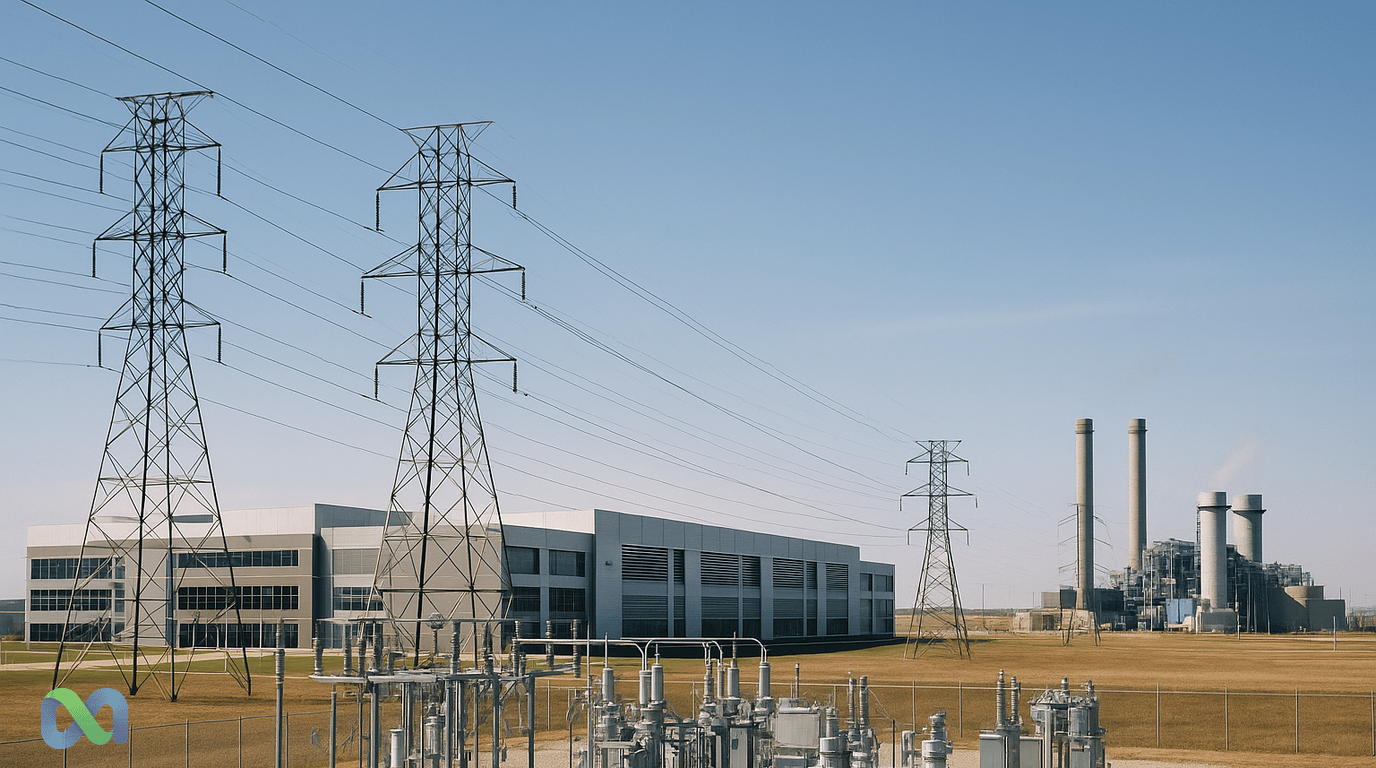
Data center moratoriums are turning into one of the clearest signals in the AI infrastructure trade. The first bottleneck was chips. The next one was power. Now the constraint is moving into zoning boards, utility commissions, county councils, water districts, and local elections.
That matters because the AI buildout does not happen in a spreadsheet. It needs land, transmission lines, power plants, cooling systems, permits, and public tolerance. When those inputs become scarce, the market has to rethink timelines.
The point is not that data centers are finished. Demand for compute is still real. However, the spread of moratoriums shows that AI infrastructure is now running into political capacity, not only engineering capacity.
For traders, this is a useful signal. A moratorium headline can move many markets at once. It can change probabilities around AI capex timing, natural gas demand, utility bills, local rules, and the next data center map.
Why Data Center Moratoriums Are Spreading
A data center moratorium is a temporary pause on approvals, permits, zoning changes, or utility connections for data center projects. Officials usually use it to study impacts, write rules, or regain leverage before more projects lock in local costs.
The local concerns are practical. Data centers can use large amounts of electricity. Some projects need water for cooling. Others bring noise, backup generators, land-use conflict, and higher demand on grid infrastructure.
According to Governing, the pushback is spreading across different political environments. The article points to actions or debates in Chicago, Texas, New York, Pennsylvania, Maryland counties, and tribal jurisdictions.
That breadth is important. This is not one party opposing one company. It is a local control issue. It can attract conservatives worried about land and power costs. It can also attract progressives worried about emissions and water. Ratepayers worried about bills may join both sides.
Why are data center moratoriums spreading?
- Electricity demand can arrive faster than new power supply.
- Grid upgrades may raise costs for households and businesses.
- Water use can become a local flashpoint.
- Noise and diesel backup generators create quality-of-life concerns.
- Communities often feel they have weak control over large projects.
- AI has become a visible target for broader technology backlash.
The political pattern is still early. Yet the signal is clear. Local governments want time before they absorb a large share of the AI economy's physical footprint. Data center moratoriums give them that time.
The Bipartisan Pattern
Chicago's oversight push reflects an urban concern about scale, transparency, and who pays for infrastructure. Texas brings a different frame. There, officials care about grid reliability, industrial load growth, and whether large users can be served without raising risks for everyone else.
New York and Pennsylvania show another version of the same issue. They have energy policy goals, local development needs, and communities that do not want to become passive hosts for high-load infrastructure. Maryland county pauses point to the zoning side of the story.
The Cherokee Nation example adds a sovereignty layer. Tribal governments can weigh energy, water, land, and long-term development differently from nearby state or county governments.
These cases are not identical. Still, they rhyme. Local officials are asking a simple question. Do the benefits of data centers stay local enough to justify the costs?
Why the Backlash Is Tied to AI
Data centers existed long before generative AI. The political backlash is different now because the expected scale changed. AI training and inference need large, steady, high-quality power loads.
That makes each project feel less like ordinary commercial real estate and more like industrial infrastructure. A warehouse can be ugly. A data center can also change a region's power planning.
Communities understand that difference. They may not know the details of GPU clusters or power purchase agreements. But they can see substations, transmission lines, water rights, tax abatements, and monthly utility bills.
This is why data center moratoriums matter for markets. They turn a technical growth story into a political economy story.
The Grid Mismatch Behind the Political Backlash
The core mismatch is simple: data centers can be built faster than the grid can be expanded. A developer can move quickly on land, shells, equipment, and financing. New generation, transmission, and interconnection capacity often take years.
404 Media captured that timing problem well. Data centers are relatively easy to build, but powering them is complicated, slow, and expensive.
That mismatch creates conflict. If a region promises capacity too quickly, someone must absorb the cost of upgrades. If the utility cannot serve the new load, the project slows. If the project relies on onsite generation, local pollution concerns rise.
The grid is therefore not just a technical input. It becomes the place where the AI boom meets the public.
Fast Buildings, Slow Power
Power markets were not designed for a sudden wave of massive AI loads. Many regions already face queues for interconnection. Transmission planning moves through regulatory, legal, and land-use processes.
Even when new generation is approved, it still needs equipment, labor, financing, fuel, and grid integration. Those timelines do not always match the speed of hyperscaler demand.
This gap can make secured power more valuable than cheap land. A site with available electricity may beat a cheaper site with a long queue. That shifts project economics.
For AI companies, the issue is not only whether total power exists somewhere. It is whether reliable power exists in the right place, at the right time, under rules that can survive local politics.
Why Ratepayers Care About Grid Stress
Residents may support economic development in theory. They respond differently when they suspect that their bills will subsidize private infrastructure.
Large loads can require wires, substations, reserve capacity, and other grid upgrades. Regulators then have to decide who pays. The data center may pay directly, or costs may spread across the customer base.
That is where politics heats up. A new data center can promise jobs and tax revenue. But if voters see higher power bills, the project becomes a household issue.
Utilities face a hard balance. New load can support revenue growth and justify investment. However, it can also create reliability risk and rate pressure. That makes the utility a central political actor, not a neutral pipe.
Natural Gas Is the Swing Fuel for the AI Buildout
AI data centers can increase natural gas demand because they need steady electricity. Gas plants can supply power day and night when renewables, storage, nuclear, or transmission cannot scale fast enough.
This does not mean every data center will run on gas. Many companies still want clean power contracts. Yet the speed and reliability needs of AI load make gas a practical swing fuel in many regions.
That is why the energy market is watching this story. If AI demand keeps rising and grid buildout lags, gas-fired generation and pipeline utilization can benefit. But the same politics that slows data centers can also slow pipelines and power plants.
The result is not a clean bullish or bearish story. It is a timing story, a permitting story, and a local acceptance story.
Onsite Power Reduces One Problem and Creates Another
Some developers look at onsite power to reduce dependence on congested grids. That can mean gas turbines, fuel cells, backup generation, or hybrid systems.
The advantage is control. A project with its own power solution may move faster than one waiting for a utility queue. It can also reduce some strain on the public grid.
The trade-off is political. Onsite fossil generation can raise emissions, air quality, and noise concerns. Backup generators can also become a local symbol of the project's costs.
So onsite power does not remove the moratorium risk. It changes the argument. Instead of asking whether the grid can handle the project, officials may ask whether the community should host a private power plant.
Pipeline Upside Depends on Permits
Pipeline and midstream companies may benefit from stronger gas demand. Higher industrial power load can support long-term throughput, capacity contracts, and related infrastructure.
However, investors should not treat demand as the only variable. Permits matter. Local approvals matter. Utility cost recovery matters. Community acceptance matters.
A gas demand thesis based on AI can be right in total and still wrong on timing. Projects may shift across states. Some regions may welcome the load. Others may pause it until new rules are written.
This is where prediction-market thinking helps. The right question is not simply, "Will AI use more energy?" It is, "Where will the energy be delivered, when, and under what political constraints?"
What Data Center Moratoriums Change for Markets
Moratoriums change the market story because they convert demand into risk-adjusted demand. The headline number for AI power needs may still rise. But the probability that every planned project arrives on time should fall when local resistance grows.
The effects differ by sector.
- Hyperscalers gain an edge when they already have power. The risk is delay.
- Utilities gain new load. The risk is anger over bills.
- Gas producers may see more fuel demand. The risk is a permit fight.
- Pipelines may see higher use. The risk is siting conflict.
- Households may get tax revenue and jobs. The risk is higher bills, water stress, and noise.
- Local politicians gain leverage. The risk is voter anger if costs rise.
This is not investment advice. It is a map of where probabilities can move when a local government pauses approvals.
Hyperscalers Face Timing and Location Risk
For hyperscalers, moratoriums are not just paperwork. They create timing risk and location risk.
Timing risk means a project misses the window assumed in an AI capacity plan. Location risk means the next project may need to move to a region with better politics, better power, or both.
That can affect capital spending patterns. It can also change the value of existing campuses with secured grid links. In a tight market, old sites with spare power become more strategic.
The largest companies can manage some of this risk through contracts, lobbying, and diversified locations. Smaller developers have less room to absorb delays.
Utilities Gain Demand but Inherit Politics
Utilities often look like winners in the AI load story. More demand can support rate base growth, grid investment, and long-term planning.
However, utilities also inherit the political burden. If bills rise, voters may blame the utility as much as the data center. Regulators may then tighten cost allocation rules or demand more direct payment from large users.
This can make utility earnings more sensitive to local politics. Load growth is valuable only if regulators allow the utility to earn on needed investment.
Reliability is another issue. A region that serves data centers while households face outages will face a sharp political backlash. That is why grid planning and public communication matter.
Local Elections Can Become AI Infrastructure Referendums
Data center fights can enter local elections quickly. A county board race can become a vote on water use, tax breaks, or power costs. A mayoral race can become a debate over whether AI infrastructure helps residents.
This creates a new class of political signals. Traders can watch zoning calendars, public hearings, utility filings, and local campaign messaging.
Those signals are not noise. They are early indicators of whether AI infrastructure can keep expanding in a specific region.
For Macro Markets users, this is the point. Local politics can change national technology timelines. Prediction markets are designed to price those updates before they appear in quarterly results.
The Prediction-Market Angle for Data Center Moratoriums
Data center moratoriums should not be treated as isolated local headlines. They are observable updates to several probability questions.
First, they can move probabilities around AI infrastructure timelines. If more jurisdictions pause approvals, the chance of slower capacity growth rises.
Second, they can move probabilities around energy policy. States may respond with special tariffs, large-load rules, grid audits, or tax changes.
Third, they can move probabilities around natural gas demand. If the grid cannot expand fast enough and onsite gas becomes common, demand expectations may rise. If moratoriums slow projects, the timing may push out.
Fourth, they can move local political probabilities. Officials who approve unpopular projects may face challengers. Officials who block projects may face business opposition.
Which Probabilities Should Move?
A serious trader should separate the headline from the mechanism. A one-month pause is different from a broad rule. A study period is different from a ban. A single county is different from a state-level rule.
Useful questions include:
- Does the moratorium affect approvals, utility connections, water use, or only zoning language?
- How long is the pause?
- Are existing projects exempt?
- Does the rule apply to all data centers or only large projects?
- Is there a clear path to approval after the pause?
- Are local utilities warning about reliability or cost allocation?
- Are state officials trying to override local rules?
Each answer changes the probability weight. A narrow pause with a clear review process may have little market impact. A broad rule with no path to approval can change project economics.
Temporary Pause or Durable Constraint?
The hardest part is separating temporary noise from durable constraints. A moratorium can be a negotiation tool. Officials may want stronger tax terms, more direct grid payments, or clearer water protections.
In that case, the project may still happen. It may just cost more or take longer.
But some pauses reveal a deeper constraint. If a region lacks power, water, transmission, or political trust, the project may move elsewhere. That is a larger signal.
The market should watch repetition. One moratorium is a local story. Many data center moratoriums across different states are a pattern. A pattern can change the base case for AI infrastructure.
How to Read Data Center Moratoriums in Plain English
There is a simple way to read these headlines. Ask what input is scarce.
If the scarce input is land, the project may move nearby. If the scarce input is water, the developer may need a new cooling plan. If the scarce input is power, the delay can be much more serious.
Then ask who pays. A project that pays for its own upgrades faces less public anger. A project that pushes costs onto local bills creates a stronger case for data center moratoriums.
Finally, ask whether the pause has an exit. A short study period with clear rules is a speed bump. A broad pause with no clear path is a real constraint.
That simple checklist helps traders avoid overreacting. It also helps them spot the moratoriums that should change market probabilities.
A Simple Signal Map for Traders
Data center moratoriums are useful because they turn vague risk into a clear event. A town votes. A county pauses permits. A state asks the grid operator for a review. Each step can be tracked.
However, not every step has the same weight. A short pause with a clear end date is a small signal. A wide pause with no clear end date is a much bigger one.
Start with power. If the grid can serve the load soon, the project may still move. If the grid needs years of work, the risk is real.
Then check cost. If the developer pays, the fight may cool. If local bills rise, the fight can grow fast.
Next, check water. In dry areas, water can be as important as power. A data center that needs a lot of water may face a harder path.
Finally, check politics. If local leaders run on blocking data centers, the odds of approval fall. If state leaders step in to overrule local boards, the odds may rise again.
This is the practical value of data center moratoriums. They do not tell traders that AI demand is gone. They show where the demand is hard to build.
The plain rule is this. Demand is not the same as supply. A company can want more compute. It still needs a site, power, water, and a yes from local officials.
That is why the next AI trade may look less like a chip story and more like a town hall story. Watch who can get power. Watch who can keep bills low. Watch who can win local trust.
When those pieces line up, the buildout can move. When they do not, data center moratoriums can slow the plan.
Bottom Line
Data center moratoriums do not end the AI boom. They show that power, permits, water, and public tolerance are becoming scarce inputs.
That is the real bottleneck. Chips can be ordered. Buildings can be planned. But local approval has to be earned, and grid capacity has to exist.
For energy markets, this keeps natural gas, utilities, transmission, and rate design at the center of the AI story. For technology markets, it adds timing and location risk to capex plans. For politics, it turns AI into a local cost-of-living issue.
The most useful way to read moratorium headlines is as probability updates. They show where the AI buildout is meeting resistance. They also show where secured power is gaining value. Most of all, they show where local politics may reshape national infrastructure timelines.
