




Dembélé World Cup 2026: impact, odds and scenarios
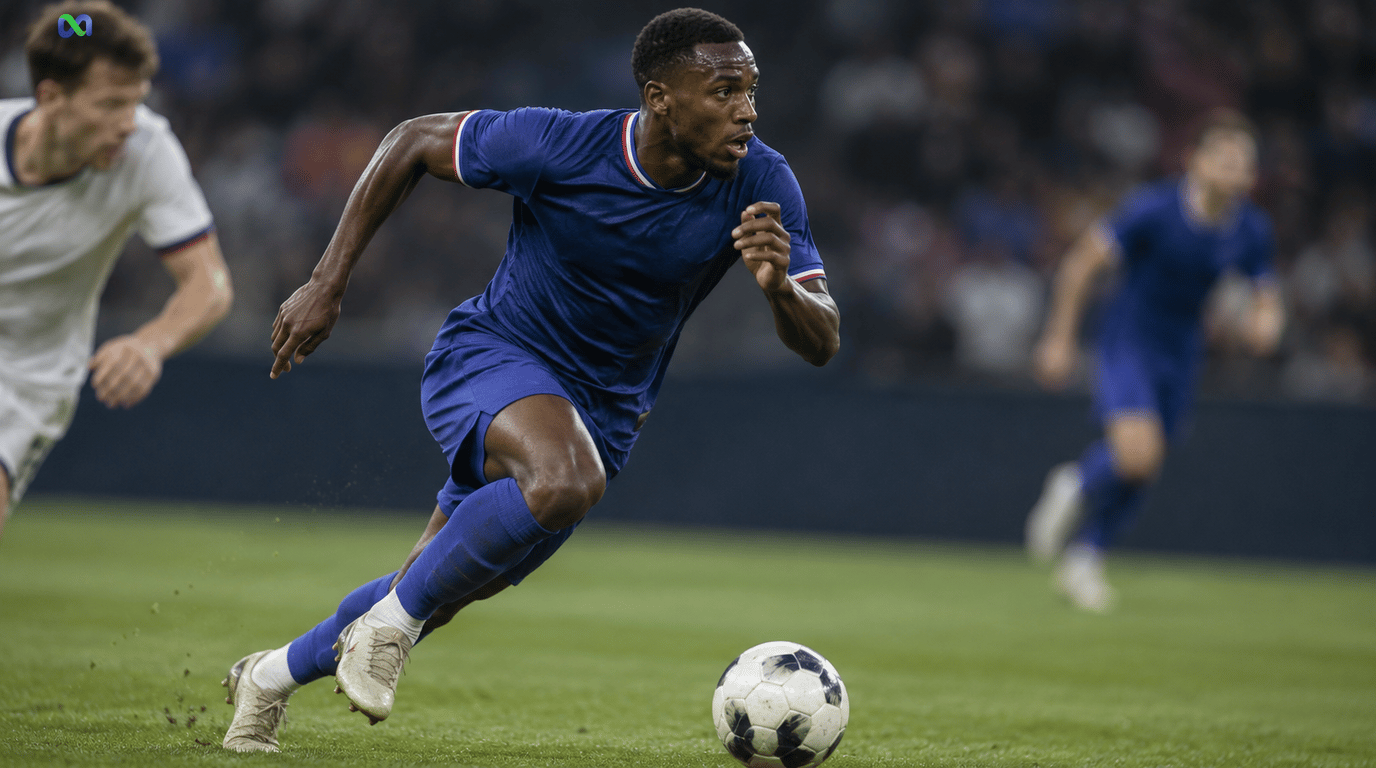
Ousmane Dembélé already belongs in any serious conversation about Dembélé World Cup 2026 analysis. The reason is simple. Few forwards combine pace, improvisation and the ability to tilt a big match the way he does. For people who follow prediction markets, this topic goes beyond hype. The real question is how Dembélé's form, fitness and role with France could change probabilities throughout the tournament.
In this guide, we examine why Dembélé could be one of the most important players at the 2026 World Cup, which factors move his implied price across related markets and how to read the key signals before and during the tournament. We also connect that debate to the broader 2026 World Cup landscape and to Macro Markets' trading logic.
Why Dembélé matters so much for Dembélé World Cup 2026 markets
Dembélé is not just a fast winger. He is a player who changes the geometry of the pitch. When he is in rhythm, he forces defenders backward, creates numerical superiority in one on one situations and produces shots for himself and his teammates. In short tournaments, that profile matters even more than it does across a long season.
France usually arrives at major competitions with a deep squad, but not always with the same level of attacking unpredictability. Dembélé provides exactly that. He breaks lines, attacks short and long spaces and expands the number of ways France can win tight matches. That is why any market linked to France's progress, attacking output or individual star power tends to react to his form.
There is also an important psychological layer. Explosive players tend to shift public perception quickly. A strong run in friendlies, qualifiers or club competition can push market sentiment higher. The opposite is also true. An injury, a physical drop or a stretch of poor efficiency can cut expectations within days.
Which prediction markets could move around Dembélé
When people talk about Dembélé at the 2026 World Cup, the market does not see a single narrative in isolation. In practice, he can influence several types of contracts. The first is the most obvious one, markets on how far France will go. If Dembélé arrives healthy, productive and decisive, the French attack gains an extra layer of threat.
The second group involves individual markets. That includes top scorer, total goals, assists, a place in the team of the tournament or even status as one of the standout forwards in the competition. These contracts are usually more volatile because they rely on a small sample. One huge group stage performance can already distort the wider perception.
There are also indirect markets. One example is France's total goals. Another is the output of teammates who benefit from Dembélé's ability to create defensive chaos. When a winger pulls a second marker, he opens space for midfielders arriving late and for strikers attacking gaps between center backs. That secondary effect matters for attentive traders.
For broader context on tournament structure and pricing, see FIFA's official 2026 World Cup hub: 2026 World Cup. On platforms where the world is tradable, a player like Dembélé can also act as a proxy for reading momentum. If the market starts pricing France more aggressively before an official squad announcement or an important friendly, that may reflect a broader read on his fitness, tactical fit or expected usage.
The main risk factor, fitness and availability
If there is one central issue in any Dembélé analysis, it is availability. In terms of raw talent, he is one of the players most capable of deciding knockout matches. However, international tournaments do not reward talent alone. They reward continuity. Players who arrive healthy and can maintain intensity for seven matches start ahead.
That is why any view on Dembélé at the 2026 World Cup needs to consider recent minutes, match rhythm, recovery between games and the coach's confidence in using him for long stretches. A forward who flies off the bench for 25 minutes is useful. A forward who can sustain 70 or 80 high level minutes is far more valuable for long horizon markets.
This point affects pricing directly. If the market believes Dembélé will reach the tournament without restrictions, France usually gains strength in title and semifinal contracts. If there is physical doubt, the adjustment can be fast. In efficient markets, injury risk and uncertainty over minutes matter almost as much as talent.
How his style changes the read on France
France usually brings depth, physical power and individual talent. Even so, Dembélé adds something that does not appear clearly in basic statistics. He increases France's ability to create high value actions from seemingly neutral situations. A slow possession can become a clean shot in two touches.
That matters because World Cups are full of tight matches. In balanced games, the team with more players who can create an edge without a perfect structure usually survives better. Dembélé does that in open play, against low blocks and in transition. His tactical weight therefore goes beyond goals and assists.
Another key point is flexibility. Because he can play wide, attack inside channels and switch flanks naturally, the manager has more ways to adjust the team across different stages of the tournament. Prediction markets respond well to teams that offer multiple paths to victory. In other words, versatility often lowers perceived risk.
Signals worth tracking before the tournament
Before the 2026 World Cup begins, traders need to separate headlines from useful signals. The first important data point is consistent high level minutes. It is not enough to see Dembélé play well in one match. The ideal is a run of matches. How often does he sustain top intensity. How often is he directly involved in goals. How many individual duels does he win without losing his burst.
The second signal is tactical role. Will he be a central part of the attack or a situational weapon. Will he receive the ball in advantageous areas or get stuck in more conservative duties. This kind of detail changes his impact ceiling a lot. A player who is free to attack the final third creates more positive variance than a winger forced to spend all game recovering shape.
The third signal comes from the market itself. Gradual moves in France's probabilities can show that informed participants are rethinking the squad. That does not replace tactical analysis, but it does complement it. Instead of watching public opinion alone, it helps to watch how implied price moves. For another useful reference point, UEFA's France team pages and match coverage can help track role, selection and form in the lead-up: France national team coverage.
What could push the odds higher
There are a few clear catalysts for a rally in markets linked to Dembélé. The first is a strong season in big matches. When a forward delivers against elite opponents, the market gains confidence that his form can carry into international knockout games.
The second is chemistry with the rest of France's attack. If he is synchronized with the team's main finishers and creative midfielders, the ceiling rises. This kind of fit often shows up in creation metrics and high quality chances, but also in the visual sense of control and fluidity.
The third is the group and knockout path. If France gets a relatively favorable route and Dembélé finds rhythm early, individual markets can heat up quickly. In short tournaments, opportunity matters as much as quality. A decisive player with a friendly path usually earns an extra premium in pricing.
What could pull the probabilities lower
On the other side, the risks are clear. The biggest one remains physical condition. Any doubt about his burst, confidence in one on one actions or total minutes load tends to affect projections. A large share of Dembélé's value comes from his ability to accelerate the game. If that ability drops, the market reprices quickly.
Another risk is inconsistency in decision making. Very aggressive attackers create a lot, but they also waste promising sequences at times. At club level, that can be absorbed across months. At a World Cup, one poor game matters more. That is why traders need to monitor real efficiency, not just attacking volume.
There is also internal competition risk. France usually arrives with many attacking options. If another player in the front line takes on a larger role, Dembélé can remain important while losing space in individual markets. In those cases, value can shift from contracts centered on him to broader contracts on France's collective performance.
Is Dembélé worth tracking in prediction markets
Yes, but with discipline. Dembélé is the kind of player who creates asymmetry. When he is healthy and confident, he can change a tournament in a few actions. That creates opportunity for traders who can read early signals about fitness, tactical role and collective fit.
At the same time, he should not be treated as a stable asset. His pricing can swing hard because the market reacts to news, minutes, public perception and recent performances. So the best analytical use of Dembélé is not just asking whether he will play well. The better question is whether the market is underestimating or overestimating his impact on France and on individual contracts.
That is the core point. In prediction markets, the edge rarely comes from cheering harder. It comes from reading better. If Dembélé arrives healthy, with a clear role and strong rhythm, he could be one of the players who moves 2026 World Cup odds the most. If he arrives surrounded by doubts, the market will probably adjust fast. In both cases, the trader who reads the signal before consensus gets ahead.
If you want to turn match reading into real positioning, it is worth following how Macro Markets organizes global, sports and political events inside one trading framework. During a World Cup, understanding implied price, timing and narrative can make a real difference. For official context, follow FIFA's 2026 World Cup page.
