




Gatwick Airport Water Outage: What Happened and Why It Matters
Last reviewed: July 27, 2026. This article uses the research brief, BBC coverage, AOL coverage, and Macro Markets' live-event analysis framework.
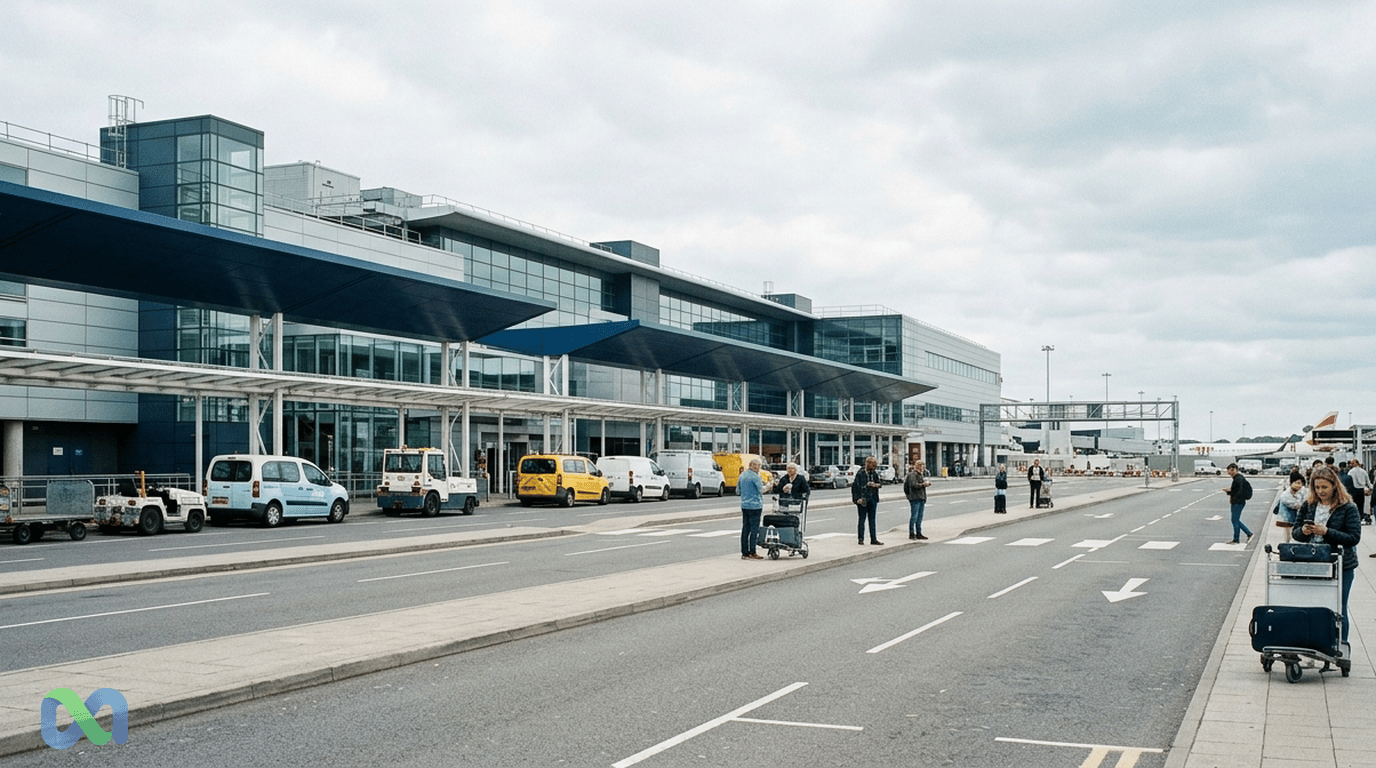
Gatwick Airport water outage became a live test of airport resilience on Sunday. A water supply failure hit both terminals. It closed some facilities and forced passengers into long toilet queues before supply returned to most of the airport.
The incident was not only a travel story. It showed how fast an external utility problem can move into a major transport hub. For analysts, it was also a clean example of how public signals can change expectations during a live disruption.
The key question is simple: did the outage create a short passenger inconvenience, or did it point to a deeper operational risk? The answer depends on timing, verified cause, restoration updates, and whether flight operations were affected.
What Happened at Gatwick Airport?
Gatwick Airport lost running water across both terminals after a major supply issue linked to a power failure at a water treatment works. Toilets, restaurants, and bars were disrupted. Gatwick later said water had returned to most of the airport, while some parts still had lower pressure.
That summary matters because it separates the event from the more dramatic social posts around it. The confirmed core was a water supply outage. The visible impact was passenger flow: queues, closed washrooms, and pressure on food and beverage areas.
The BBC report on the Gatwick outage said the issue affected both terminals. It also said the airport was working with its water supplier. AOL also reported that a water supply issue affected Gatwick, with passengers facing closed facilities and long waits.
Gatwick Airport Water Outage Timeline
The Gatwick Airport water outage moved through four clear stages. First came the upstream utility fault. Next came low pressure and closed facilities inside the terminals. Then passenger reports spread the story across social platforms. Finally, Gatwick moved into a recovery phase after water returned to most of the site.
This timeline helps avoid stale analysis. A live disruption can look severe at the peak and much less severe two hours later. It can also look calm in an official update while passengers still face queues in specific zones.
The useful question is not only what happened. The useful question is what changed since the first alert. Each update can lower or raise the expected impact.
Current Status of the Water Supply
The latest reported status in the brief is that supply returned to most of Gatwick's campus. That does not mean every tap instantly went back to normal. In large sites, pressure can recover unevenly, especially when many users return at once.
For readers checking this after publication, the safest rule is to treat operator statements as the main source. Airport and utility updates carry more weight than isolated passenger clips. Social posts are useful, but they often show one location at one moment.
Which Parts of the Airport Were Affected
The important operational detail is that both terminals were affected. A single closed washroom can be handled locally. A two-terminal water issue creates a different problem because it reduces redundancy across the airport.
When restaurants, bars, and toilets lose water at the same time, passenger movement changes. People leave gates to search for open facilities. Queues form in remaining usable areas. Staff must explain a problem they do not control.
Why the Water Outage Spread Across Both Terminals
The brief points to a power issue at the Bough Beech treatment works. The site serves the wider area through SES Water. That detail is crucial. Gatwick did not need an internal airport system failure to suffer a major passenger impact.
Airports depend on networks outside their walls. Water, power, telecoms, fuel logistics, road access, and rail links all sit around the terminal operation. If one outside network fails, the airport can become the public face of a problem caused elsewhere.
The Role of SES Water and Bough Beech
SES Water was identified in coverage as the supplier involved. Bough Beech was the treatment works connected to the problem. A power failure there created the upstream supply issue that flowed into Gatwick's terminals.
This chain is easy to miss in breaking news. Passengers see closed toilets. The airport sees pressure loss. The supplier sees a treatment works problem. Analysts need to link all three layers before judging likely recovery time.
That is why "who supplies water to Gatwick Airport?" became a useful search question. The supplier matters because recovery depends on the external utility's repair path, not only the airport's customer service response.
From Low Pressure to Closed Facilities
Water outages create more than inconvenience. Toilets need running water for basic hygiene. Food operators need it for cleaning and service rules. Staff areas, passenger washrooms, and cleaning routines all depend on steady supply.
Low pressure can be just as disruptive as a full stop. A tap may run in one area while another facility remains closed. That uneven recovery makes passenger reports messy. It also makes official updates sound cautious.
For a transport hub, the risk is not only "is water back?" The better question is more practical. Is enough water available in the right places to support peak passenger volume?
Fast Answers for Travelers
The basic facts are now clear. Gatwick had a water supply outage. Both terminals felt the impact. Water later returned to most of the airport.
Did the outage mean every flight was delayed? Not by itself. A terminal service problem can hurt passengers without stopping flights.
Who supplied the water? The coverage points to SES Water. The key reported fault was tied to Bough Beech treatment works.
Why did queues form so fast? Airports move many people through a small number of shared services. When toilets close, the remaining facilities fill quickly.
However, travelers should still check live airport and airline updates. The status can change quickly during recovery.
Gatwick Airport Water Outage FAQ
Was Gatwick still open? Yes, the reports in the brief focus on terminal services. They do not prove a full airport closure.
Was water restored? Gatwick said water returned to most of the airport. Some areas could still face low pressure during recovery.
Was the cause inside the airport? The reported cause was upstream. Coverage pointed to a power issue at a water treatment works.
What should passengers do next time? Check your airline app first. Then check the airport update page. If the cause is a utility fault, also watch the supplier's public updates.
How Passengers Experienced the Disruption
Passenger experience turned the outage into a national story. Reports described long queues for toilets, closed food and beverage outlets, and frustration around communication. Those are not minor details. They show where a utility event becomes an airport management problem.
The airport can keep flights moving while the terminal feels broken. That distinction matters. A passenger stuck in a long washroom queue may experience a severe disruption, even if the departure board does not show a matching flight delay.
Toilets, Restaurants, and Passenger Flow
Toilets were the most visible pressure point. When capacity falls, queues grow quickly. A large terminal does not need every facility to close before the experience deteriorates.
Restaurants and bars add a second layer. If they cannot operate safely, passengers lose places to sit, eat, and wait. That sends more people into concourses and gate areas. As a result, crowding can rise even if flight schedules stay mostly stable.
This is why analysts should avoid a narrow view of airport disruption. Delays are one signal, but they are not the only one. Terminal services, passenger density, queue length, and staffing pressure all help define severity.
What Social Posts Added to the Picture
Social posts gave fast evidence of passenger stress. They showed closed facilities and long queues before all details were clear. However, they should not replace operator statements.
The best use of social signals is directional. If many posts from different terminal zones point to the same problem, confidence rises. If one viral clip shows one queue, it is useful but limited.
In this case, the social layer matched the reported facts: passengers faced a real water problem. The analysis should still keep the hierarchy clear. Official statements define cause and current status. Passenger posts show lived impact.
What Analysts Should Watch During Airport Infrastructure Failures
Gatwick's water outage is a useful case for prediction-market thinking. A live event starts with uncertainty, then information arrives in layers. Each layer can change the expected duration, severity, and public impact.
For Macro Markets readers, the point is not to turn every airport problem into a trading recommendation. The point is to show how structured signals can reduce noise. A market prices probabilities better when participants know what to monitor.
Official Status Updates
Official updates are the first tier. For an airport outage, watch the airport, the utility provider, airlines, and local transport operators. Each source sees a different part of the incident.
Airport statements tell you passenger-facing status. Utility statements tell you the technical recovery path. Airline statements show whether the disruption is reaching operations. Rail and road updates show whether access is also affected.
During the Gatwick outage, the key status shift was water returning to most of the airport. That changed the story from an active broad outage to a recovery phase. In a live market, that shift would matter.
Flight Delay Data
Flight delays need careful handling. A water outage in terminals does not automatically mean runway, air traffic, or airline operations are delayed. The brief specifically warns against implying delays without verified data.
Analysts should check departure and arrival boards, airline alerts, and regulator or airport operations notices. If flights remain broadly on time, the event is mainly a terminal service disruption. If delays begin to cluster, the severity changes.
This distinction keeps the analysis honest. Passenger inconvenience can be high while operational flight impact stays limited. Markets should price those outcomes separately.
Utility Restoration Signals
Utility restoration signals often matter more than airport messaging early in the incident. If the supplier identifies a power failure and gives a repair timeline, uncertainty falls. If updates stay vague, risk remains open.
For water, the key signals are repair status and pressure restoration. Bottled water, temporary sanitation, and the size of the affected area also matter. A local airport-only issue has one risk profile. A wider supplier issue has another.
In Gatwick's case, the supplier dependency explains why both terminals could feel the impact. It also explains why restoration could happen in stages instead of as one clean switch.
Our signal checklist uses 5 simple tests:
- Airport says supply is restored. That lowers the expected disruption time.
- Utility identifies the failed asset. That makes the repair path clearer.
- Both terminals report impact. That shows the problem is broad.
- Flight delay data starts to cluster. That raises wider travel risk.
- Passenger posts keep rising. That shows the lived impact may still remain.
What This Means in Plain English
The Gatwick Airport water outage was a simple story on the surface. A busy airport lost running water. Passengers could not use some toilets. Some food outlets could not work as normal. The airport then moved into recovery.
The deeper story is about fragile links. Airports look like single sites, but they depend on outside services. Water comes from a supplier. Power comes from a grid. Passengers arrive by rail, road, bus, and taxi. If one link breaks, the terminal feels it.
That is why the cause matters. A broken sink inside one terminal is local. A water treatment works problem is wider. The second case can affect both terminals at once. It can also take more time to explain.
For travelers, the lesson is basic. Check the airport. Check the airline. Check whether the cause sits inside or outside the airport. If the cause is outside, the airport may not control the full repair.
For markets, the lesson is also basic. Good pricing starts with clear facts. What failed? Who controls it? Has supply returned? Are flights affected? Each answer changes the likely outcome.
Why This Matters Beyond Gatwick
The Gatwick Airport water outage matters because it exposed a simple truth about complex systems. A modern airport is not one system. It is a bundle of connected systems that must work at the same time.
Passengers often judge an airport by the visible layer: flights, queues, toilets, food, and information. Operators manage a deeper layer: utilities, staff, suppliers, safety rules, and contingency plans. The public story forms when those layers collide.
Infrastructure Dependency as a Market Signal
Infrastructure dependency is a market signal because it affects recovery time. If a disruption sits inside the airport's direct control, the response path may be clearer. If it sits with an outside utility, the airport must coordinate rather than simply fix.
That difference can affect public expectations. A short outage may fade quickly. A repeated or poorly explained outage can damage confidence, especially at a busy airport where passengers already face timing stress.
Prediction markets are useful here because they force a cleaner question. Instead of asking whether the story feels bad, they ask what outcome is more likely by a specific time. Will supply return by the evening? Will flights show material delays? Will the operator confirm full restoration?
What Would Change the Outlook Next Time
Several facts would change the outlook in a similar event. A confirmed repair timeline would reduce uncertainty. A second failure would raise it. Airline delay clusters would move the incident from terminal inconvenience toward travel disruption.
Weather, school holidays, staffing levels, and peak departure banks would also matter. The same water outage can feel different at 5 a. m. on a quiet day than during a peak holiday wave.
For travelers, the lesson is practical: check the airport's own update channel, your airline app, and utility news if the cause is external. For analysts, the lesson is structural: map the dependency chain before judging severity.
Bottom Line
The Gatwick Airport water outage started with a utility problem and quickly became a passenger-facing airport disruption. Both terminals were affected, toilets and food outlets faced pressure, and water later returned to most of the campus.
The broader lesson is that infrastructure failures create tradable uncertainty before the facts settle. The best analysis does not chase the loudest clip. It ranks signals by reliability, tracks recovery milestones, and separates passenger inconvenience from confirmed operational delay.
For Macro Markets, Gatwick is a reminder that live events move in stages. Probabilities should move the same way: first with verified cause, then with restoration data, and finally with evidence of whether the disruption spread beyond the original failure.
