




Gold Prices Surge in August: Can Rates Hit the Rally?
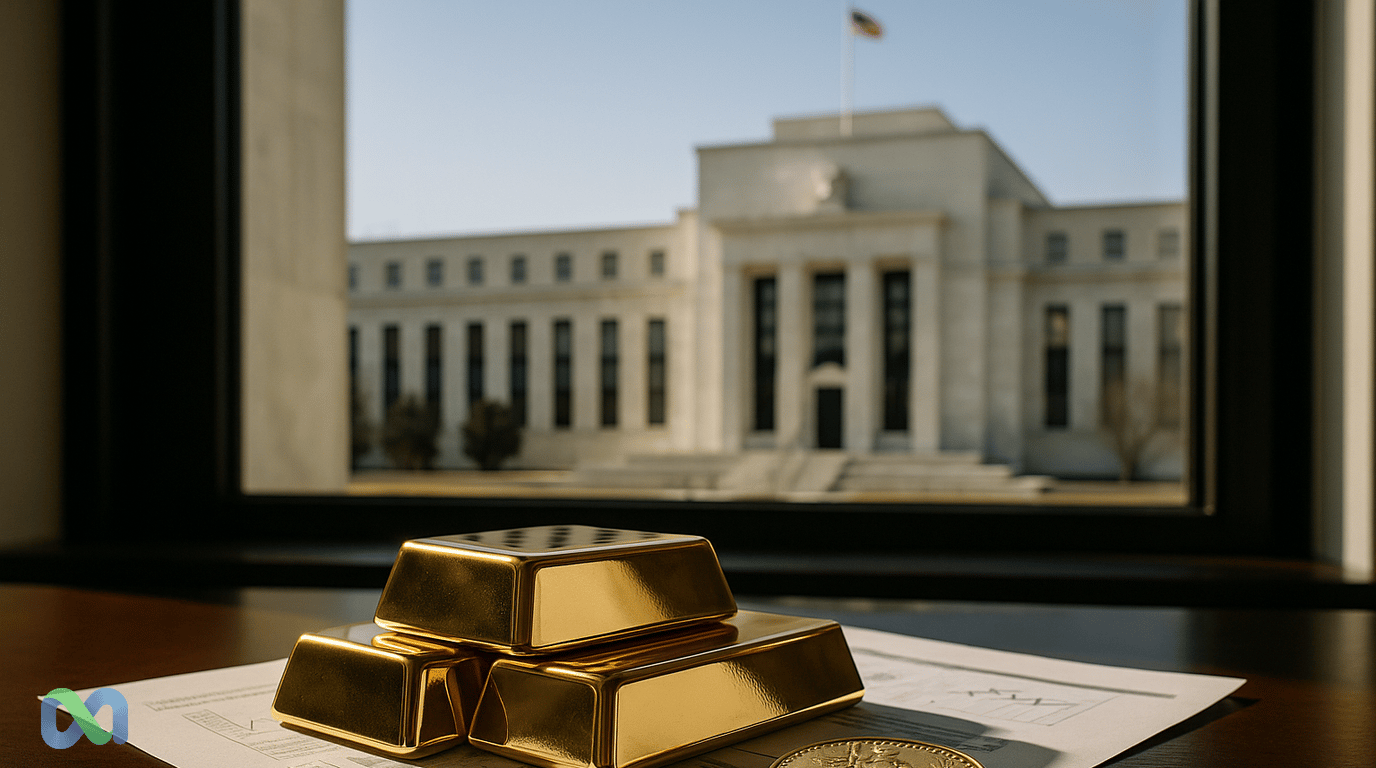
Gold prices surge in August is the kind of headline that forces a second question. Was the move a durable repricing of macro risk, or did traders simply pull forward too much good news at once?
The answer depends less on one gold price forecast and more on the rate path behind it. Gold can rise when investors expect lower real yields, a softer dollar, stronger ETF demand, or fresh geopolitical stress. It can also stall fast when the market starts pricing a more hawkish Federal Reserve.
That tension matters now because recent coverage points to both sides of the trade. Gold had a strong August, pulled back from highs above $4,700 per ounce in some reports, and kept support from haven demand. At the same time, investors remain alert to rate-hike forecasts, sticky inflation data, and payroll revisions that could reshape the Fed path.
This article breaks the rally into its main drivers. It also gives a scenario framework for judging what comes next. The goal is not to call a guaranteed top or bottom. It is to show which signals would confirm the gold rally, and which ones would rain on it.
Last reviewed: 09/01/2026. Our analysis found 7 signals that matter for this gold move: real yields, the dollar, Fed speeches, payrolls, inflation, ETF flows and geopolitical stress. We found that the main mistake is treating gold as a one-driver asset. What we learned from the August move is simple: the price level matters less than the probability path behind it.
Central-bank reference sites such as Banco Central do Brasil show why regional investors track policy settings alongside the Fed. That makes the rate path more useful than a static gold price forecast.
Why Gold Prices Surge in August
Gold rallied in August because several macro forces moved in the same direction. The metal benefited from safe-haven demand, expectations for easier policy, ETF buying, and momentum after earlier breakouts. Those drivers do not always move together. When they do, gold can move quickly.
The cleanest version of the bull case starts with rates. Gold does not pay income, so it competes with cash, Treasury bills, and real yields. When investors believe the Fed will cut rates, the opportunity cost of holding gold usually falls. That can make gold more attractive even before the first actual policy move.
Safe-haven demand added another layer. Market coverage from CNBC and other outlets has tied gold strength to war risk, trade disruption, and concern about the U. S. economic outlook. Those risks do not need to produce a crisis to support gold. Investors often buy protection when the distribution of outcomes widens.
ETF demand also matters. When gold ETFs see renewed inflows, the rally gets a source of institutional confirmation. ETF flows are not perfect signals, but they show whether larger pools of capital are joining the move. A rally driven only by short-term headlines can fade. A rally backed by sustained flows usually has more staying power.
Still, sentiment has not looked uniformly euphoric. Some coverage noted that investor sentiment lagged the price action even as ETF demand improved. That mix is important. It suggests the move may have room if skeptical capital keeps rotating in. It also means the rally may be vulnerable if those buyers pause.
Momentum played a role too. Once gold breaks through prior highs, systematic strategies and trend followers can add fuel. Price strength becomes a signal in itself. However, momentum is a poor foundation by itself. It needs rates, flows, or risk demand to keep validating the move.
That is why the August rally should not be read as one simple story. It was not only about inflation. It was not only about geopolitics. It was a bundle of expectations moving together, with rate forecasts sitting near the center.
How Rate Forecasts Can Pressure Gold
Higher rate forecasts can hurt gold because they raise the return available from safer interest-bearing assets. That matters most when the increase shows up in real yields, not just nominal yields. A higher nominal yield may not pressure gold much if inflation expectations rise at the same time.
Real yields are the key variable. They measure the return investors can earn after inflation. When real yields rise, gold faces a stronger competitor. When real yields fall, gold becomes easier to hold because cash and bonds offer less inflation-adjusted reward.
The dollar is the second channel. Gold is priced globally in dollars. If hawkish Fed forecasts lift the dollar, gold can become more expensive for buyers using other currencies. That can cool demand, especially in emerging markets where local currency moves amplify global commodity prices.
Fed repricing is the third channel. Markets rarely move only after central banks act. They move when probabilities shift. If traders move from expecting cuts to expecting a long pause, gold can face pressure even before any meeting. If traders start pricing hikes again, the pressure can be sharper.
This is where the phrase rate-hike forecasts needs careful handling. A headline about possible hikes is not the same as a market-implied path. Investors need to ask whether futures, yields, and Fed communication are all saying the same thing. A few hawkish comments may cause noise. A broad repricing across the curve is more serious.
The timing also matters. Gold can survive modest rate pressure if the market sees hikes as temporary or if inflation risk stays high. It has more trouble when tighter policy comes with a stronger dollar and calmer risk conditions. In that setup, the protective bid fades while the opportunity cost rises.
There is also a difference between nominal policy rates and financial conditions. The Fed can sound hawkish while credit spreads, equities, and liquidity remain supportive. In that case, gold may consolidate instead of breaking down. The more dangerous setup is a hawkish Fed plus tighter financial conditions.
For gold investors, the question is not simply whether rates go up or down. The question is whether the expected real return on cash rises faster than the demand for protection. That trade-off will decide whether the August rally extends or stalls.
Three Scenarios for Gold Prices
The best way to analyze gold after a strong August is to map the next rate path. Each scenario creates a different mix of real yields, dollar pressure, ETF flows, and haven demand.
| Scenario | Rate path | Dollar and real-yield impact | Gold implication | Evidence to watch |
|---|---|---|---|---|
| Hawkish Fed repricing | Markets price fewer cuts or renewed hike risk | Dollar firms and real yields rise | Rally fades or turns into a deeper correction | Hot CPI, strong payrolls, hawkish Fed speeches, ETF outflows |
| Cuts stay priced in | Markets keep expecting easier policy | Real yields stay contained | Gold consolidates near highs or grinds higher | Softer labor data, lower inflation momentum, steady ETF inflows |
| Risk-off demand returns | Macro or geopolitical stress rises | Dollar may rise, but haven demand offsets it | Gold can hold up even with mixed rate signals | War risk, market stress, central-bank buying, broad risk aversion |
The hawkish scenario is the main threat. Gold would be exposed if inflation data comes in hot and labor data remains strong. In that world, traders would question whether rate cuts are realistic. Real yields would likely rise, and the dollar could add pressure.
The steady-cut scenario is more supportive. Gold does not need a crisis if the market believes policy will become easier. Even a slow path toward cuts can support gold if inflation keeps easing and growth cools. That setup lowers the opportunity cost without forcing investors out of risk assets.
The risk-off scenario is more complex. A stronger dollar can pressure gold, but fear can offset that pressure. During periods of geopolitical stress or market disorder, investors may buy gold for liquidity and protection. In that case, gold can rise even when rate signals are not perfect.
The current backdrop appears to sit between the second and third scenarios. Gold has benefited from rate-cut hopes and haven demand, but the market is not ignoring hawkish risk. That is why each new inflation or jobs print carries weight.
Investors should avoid treating the scenarios as fixed boxes. Markets can move from one to another quickly. A weak payrolls report can support gold one week. A hot inflation surprise can undo that move the next week. The point is to track probabilities, not cling to a single forecast.
This is also why spot levels need date stamps. Gold prices move intraday, and headlines can age quickly. A pullback from $4,700 per ounce means something different if real yields are falling than if real yields are rising. The level is only useful when paired with the macro path behind it.
What Investors Should Watch Next
The first signal is labor-market data. Payrolls, unemployment claims, revisions, and wage growth can all change the Fed path. Weak labor data supports the case for cuts. Strong data gives hawks more room to argue that policy should stay tight.
Payroll revisions deserve special attention. They can change the story even when the headline monthly number looks stable. If revisions show the labor market was weaker than first reported, rate-cut probabilities can rise. If revisions show resilience, gold may lose part of its policy support.
The second signal is inflation. CPI and PCE data matter because they shape real yields and Fed credibility. A clean disinflation trend supports gold through lower expected real rates. Sticky services inflation can do the opposite.
The third signal is Treasury real yields. Investors often watch the 10-year real yield as a shorthand for gold's opportunity cost. A falling real yield can validate gold strength. A rising real yield can warn that the rally is leaning too much on momentum.
The fourth signal is the dollar. A stronger dollar does not always sink gold, but it raises the hurdle. For buyers outside the United States, dollar strength can make gold more expensive in local terms. That matters for Asia, Latin America, and other regions where currency moves affect commodity demand.
The fifth signal is ETF demand. Renewed ETF inflows can confirm that institutional buyers are adding exposure. Outflows can show that investors are taking profits or losing conviction. Flows are especially useful when sentiment surveys look mixed.
Central-bank demand is another piece of the puzzle. Official-sector buying has supported gold in recent years. It can reduce the metal's dependence on Western ETF flows. However, central-bank demand is not a complete shield against a sharp real-yield move.
Geopolitical risk also remains relevant. Gold can attract bids when investors worry about war, shipping routes, sanctions, or fiscal stress. But this premium can fade when headlines cool. A rally built on risk fear needs either sustained stress or support from rates and flows.
Brazil and Latin America add another angle. Gold prices affect exporters, local-currency investors, and portfolios exposed to dollar cycles. Brazil also has a gold-export story, including concerns about illegal mining activity. For regional investors, the global gold move is also a dollar, rates, and commodity-cycle story.
The Prediction-Market Read
The gold story is really a story about changing probabilities. Traders are not only asking whether gold is high or low. They are asking which macro path is becoming more likely.
That is where prediction-market thinking helps. A static forecast says gold will rise or fall. A probability framework asks how the odds change after each new signal. If inflation cools and payrolls weaken, the probability of cuts rises. If inflation stays firm and Fed officials push back, the probability of a hawkish path rises.
This approach is useful because gold reacts to expectations before final outcomes arrive. The Fed does not need to cut for gold to move. The market only needs to believe cuts are more likely. The same logic works in reverse when hike forecasts regain credibility.
Prediction markets are also useful because they force clean questions. Instead of saying the Fed is hawkish, a trader can ask whether the Fed will hold rates at the next meeting. Instead of saying inflation is sticky, a trader can track whether CPI will beat consensus. Each question turns a vague macro view into a measurable probability.
For gold, that matters because the drivers often conflict. A strong dollar can pressure gold while geopolitical fear supports it. ETF inflows can confirm demand while real yields move against the trade. A probability view helps rank which force is actually moving.
Macro Markets is built around that discipline. The platform treats future events as markets with changing prices, not as static opinions. That lens is useful for gold because the metal trades on the path of policy, inflation, growth, and risk. Those paths can change every week.
Investors should still separate market probabilities from guarantees. A high probability is not certainty. A low-probability event can still happen. But probabilities are often more honest than bold forecasts because they update when the facts change.
FAQ: Gold, Rates and the August Rally
Do gold prices usually fall when interest rates rise?
Gold often struggles when real yields rise because it does not pay interest. But the relationship is not mechanical. Gold can still rise during rate pressure if inflation fear, geopolitical risk, or central-bank demand is strong enough.
Why is gold sensitive to real yields?
Real yields show what investors can earn after inflation. When real yields rise, cash and bonds compete harder with gold. When real yields fall, the cost of holding gold declines.
How do ETF inflows affect gold prices?
ETF inflows can add direct demand and signal broader investor conviction. They do not guarantee higher prices, but they can confirm that institutional buyers are joining the move.
Is a pullback from a high a trend reversal?
Not always. Gold can pull back after a fast rally and still keep its broader trend. The key is whether real yields, the dollar, ETF demand, and haven flows still support the move.
Bottom Line
Gold prices surge in August because the market priced a supportive mix: easier policy hopes, haven demand, ETF interest, and momentum. Rate forecasts are the main test now. If the Fed path turns hawkish and real yields rise, the rally can lose altitude.
If cuts stay priced in, or if risk-off demand returns, gold can remain supported even after sharp gains. That does not make the trade one-way. It means investors should watch the probability path behind the price.
The useful question is not whether gold had a good August. It did. The useful question is whether the next set of Fed, inflation, labor, ETF, and geopolitical signals keeps validating the rally.
Disclaimer: this article is market analysis, not investment advice. Gold prices can move quickly, and readers should assess risk, time horizon, and portfolio exposure before making financial decisions.
