


How Old Is Cristiano Ronaldo? CR7's Age in 2026
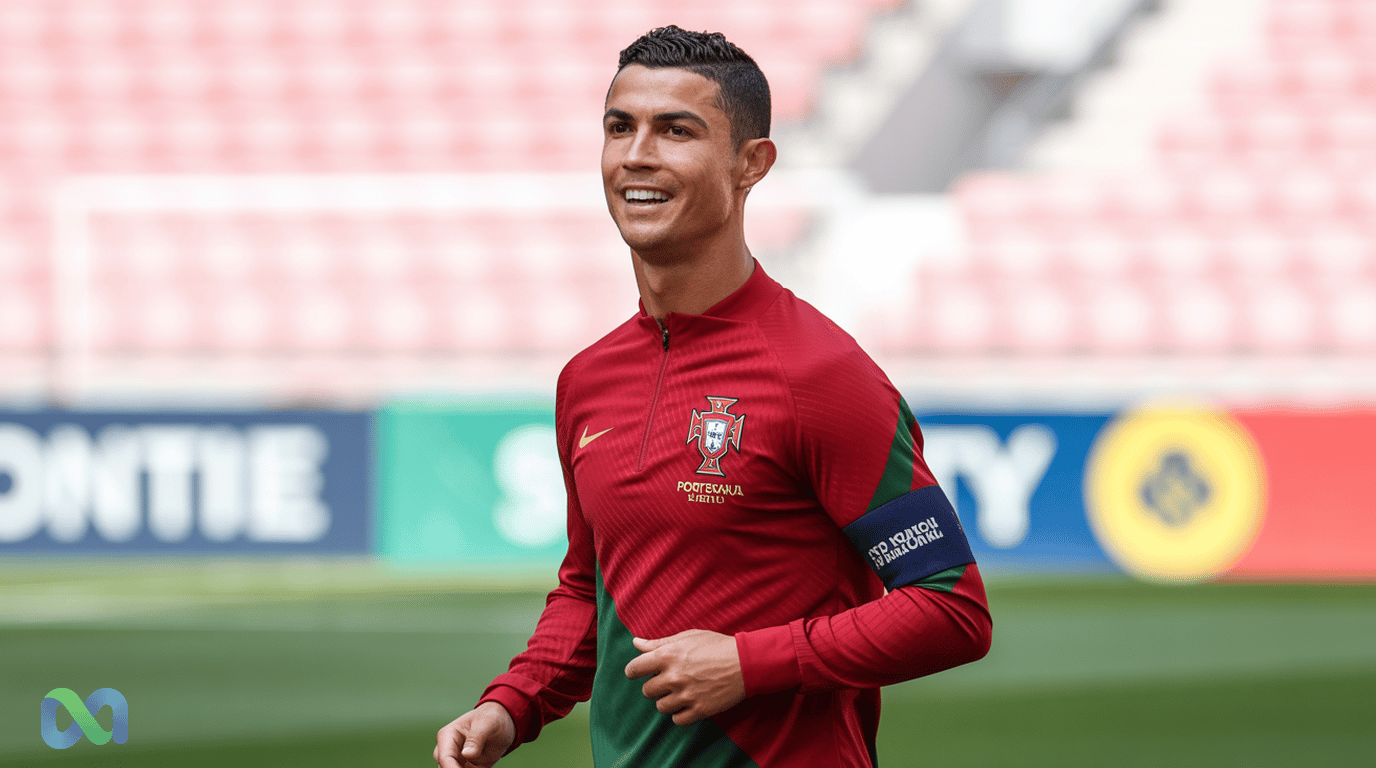
Updated on May 21, 2026.
Cristiano Ronaldo was born on February 5, 1985. That means Cristiano Ronaldo is 41 years old on May 21, 2026. He turned 41 on February 5, 2026, and he will not turn 42 until February 5, 2027.
That answer is simple. The analysis is not. CR7's age has become a serious variable for the 2026 World Cup, match minutes, contract decisions, goal records, and expectations around Portugal. In 2026, the question is not only how old Cristiano Ronaldo is. The more useful question is what a 41-year-old striker can still deliver at elite level.
This guide separates facts from speculation. It starts with Ronaldo's date of birth and age calculation. Then it explains why his age matters for his career stage, Al-Nassr, Portugal, the 2026 World Cup, and the chase for 1,000 career goals.
How Old Is Cristiano Ronaldo Today?
Cristiano Ronaldo is 41 years old on May 21, 2026. The calculation starts with his date of birth: February 5, 1985. Because his 2026 birthday has already passed, he is in his 41-year-old season.
Cristiano Ronaldo's age changes every February 5. Until February 4, 2027, the correct answer remains 41. On February 5, 2027, he turns 42.
That date matters for search results and sports analysis. Many older pages still say Ronaldo is 40, or they list a biography without a clear update date. The cleanest answer gives three details: date of birth, current age, and the date used for the calculation.
Cristiano Ronaldo Date of Birth
Cristiano Ronaldo dos Santos Aveiro was born on February 5, 1985, in Funchal, Madeira, Portugal. This date appears in public profiles and widely used biographical references, including Wikipedia's Cristiano Ronaldo profile.
The core fact is not disputed. Ronaldo was born in 1985, so he turned 41 in February 2026. The context is more important: very few footballers remain relevant for their club, national team, and individual records at this age.
That is why Cristiano Ronaldo's age and performance have to be read together. His career has already included Sporting CP, Manchester United, Real Madrid, Juventus, a return to United, and Al-Nassr. It has also included five World Cups before the 2026 cycle.
How to Calculate CR7's Current Age
The calculation is straightforward. Take the current year and subtract 1985. Then check whether February 5 has already passed in that year.
In 2026, the raw calculation is 2026 minus 1985, which equals 41. Because May 21 comes after February 5, Ronaldo has already had his birthday. So the correct age is 41.
If the date were January 1, 2026, the answer would be different. On that date, Ronaldo would still be 40. He only became 41 on February 5.
When Was Cristiano Ronaldo Born?
Cristiano Ronaldo was born on February 5, 1985. That is the date every short answer about CR7's age should include. It also answers related searches such as "how old is Cristiano Ronaldo," "CR7 age," and "Cristiano Ronaldo 41 years old."
Precision matters because this topic is often treated as trivia. For sports analysis, age helps frame injury risk, recovery, minutes, tactical role, and the probability of future records. Those factors affect expectations for his club, Portugal, and tournament performance.
In 2026, Ronaldo is not just an older player. He is a rare case of elite longevity. That explains why every birthday still receives broad sports coverage.
Cristiano Ronaldo's Next Birthday
Cristiano Ronaldo's next birthday is February 5, 2027. On that date, he will turn 42. Until then, any article updated in 2026 should describe him as 41 years old.
That difference may look small. In elite football, six or twelve months can change the reading of pace, explosiveness, recovery, and availability. A 41-year-old striker can still decide matches, but the analysis has to include minutes and physical management.
There is also a narrative effect. Every birthday increases the attention on retirement questions. At the same time, it increases interest in the records that remain within reach.
Cristiano Ronaldo's Age by Career Stage
The best way to understand CR7's age is to look at his career in phases. The date then becomes more than a number. It shows how long Ronaldo has stayed productive across different leagues and competitive environments.
| Career stage | Approximate period | Approximate age | Main milestone |
|---|---|---|---|
| Sporting CP | 2002-2003 | 17-18 | Professional debut in Portugal |
| Manchester United, first spell | 2003-2009 | 18-24 | Global breakout and first Champions League title |
| Real Madrid | 2009-2018 | 24-33 | Peak goals, Champions League titles, Ballon d'Or awards |
| Juventus | 2018-2021 | 33-36 | Serie A adaptation and continued scoring |
| Manchester United return | 2021-2022 | 36-37 | Late-cycle Premier League return |
| Al-Nassr | 2023-2026 | 37-41 | New competitive and commercial phase in Saudi Arabia |
| Portugal | 2003-2026 | 18-41 | Euro title, Nations League, and 2026 World Cup cycle |
The table shows the scale of the case. Many forwards decline before 35. Ronaldo passed 40 while still remaining central to club narratives, Portugal analysis, and football markets.
Sporting, Manchester United, and the First Champions League
Ronaldo started at Sporting while still a teenager. At 18, he moved to Manchester United. There, he stopped being only a Portuguese prospect and became one of the Premier League's most important players.
His first United spell shaped his physical and tactical evolution. He moved from a dribbling winger into a forward with more penalty-box presence. That transition helps explain his longevity.
His first Champions League title came before age 25. At that stage, Ronaldo already combined pace, volume, and finishing. That package became the foundation for his Real Madrid peak.
Real Madrid, Juventus, and Al-Nassr
At Real Madrid, Ronaldo produced the most dominant period of his career. From age 24 to 33, he accumulated goals, European titles, and records. That was when the debate around historic scoring numbers became global.
At Juventus, after age 33, the discussion changed. He still scored heavily, but the team had to adapt its system around his profile. Age became part of the analysis, not just a biographical detail.
At Al-Nassr, age took on another meaning. Saudi football increased investment, visibility, and competition for global stars. Ronaldo became a symbol of that shift while continuing to chase individual marks.
Portugal, the European Championship, and the World Cup
For Portugal, Cristiano Ronaldo's age is even more relevant. He debuted early and stayed on the international stage for more than two decades. That created a rare relationship between player, country, and major tournaments.
The Euro 2016 title is already part of Portuguese football history. The Nations League added another layer to that career. Even so, the World Cup remains the major missing trophy in Ronaldo's resume.
That makes 2026 especially important. If Ronaldo is at the tournament, he will play the World Cup at 41. That changes how his role should be evaluated. He could be a starter, a box reference, a locker-room leader, or a player used for specific match states.
Why CR7's Age Matters in 2026
Cristiano Ronaldo's age matters because 2026 combines three fronts. The first is the World Cup. The second is his continued role at Al-Nassr. The third is the pursuit of individual records, especially career goals.
For elite athletes, age is not just a calendar fact. It affects recovery, acceleration, match sequencing, and load management. Ronaldo built his career on physical discipline, but time still changes the risk profile.
For anyone tracking sports markets, age also becomes a probability variable. It does not decide Portugal's results or Al-Nassr's results by itself. It does change the uncertainty around minutes, role, and impact.
That distinction matters because public discussion often compresses Ronaldo into a single narrative. Some readers see only the age and assume decline. Others see only the name and assume old standards still apply. A better model sits between those extremes. It treats Ronaldo as an exceptional player whose age still changes the distribution of outcomes.
In practical terms, 41 affects three questions. Can he start multiple matches close together? Can he press with the same intensity as younger forwards? Can Portugal maximize his finishing without reducing the team's collective speed? None of those questions has a permanent answer. They depend on form, opponent, match state, and the tactical plan.
2026 World Cup
Cristiano Ronaldo will be 41 during the 2026 World Cup. The exact match dates can change calendar details, but they do not change the main conclusion. He will be in his 41-year-old cycle during the tournament.
That turns any possible participation into a longevity story. Few forwards reach a World Cup at this age with this level of attention. Fewer still arrive with Ronaldo's scoring history for a major national team.
The analysis should stay sober. Age does not rule him out. It also does not guarantee that he will dominate. Portugal would need to balance leadership, penalty-box presence, collective intensity, and other attacking options.
Minutes, Goals, and Conditioning
For veteran players, minutes are almost as important as talent. A player can remain decisive in 30 minutes without delivering the same effect across 90. That difference changes lineups, substitutions, and market interpretation.
Ronaldo has adapted his game over time. He reduced his dependence on long carries and increased his focus on positioning, finishing, and penalty-box movement. That adaptation helps explain why he kept scoring after 35.
Still, every season carries a cost. Travel, fixture congestion, national-team breaks, and training intensity all matter. In 2026, CR7's age should be read alongside recent fitness, scoring rhythm, and squad role.
Market Expectations for Portugal and Individual Records
Prediction markets should not treat age as an isolated headline. The data belongs inside a broader model. For Portugal, the key variables include squad quality, group draw, knockout path, injuries, and the form of major players.
Cristiano Ronaldo's age weighs more heavily in markets tied to minutes, goals, and records. If he plays less, the probability of repeated scoring falls. If he preserves efficiency, the chance of goals in specific matches can remain meaningful.
That is the difference between trivia and analysis. Knowing that Cristiano Ronaldo is 41 is only the starting point. The professional use of that fact is asking how age changes the probability of future events.
It also matters for timing. A market priced months before a tournament may overreact to reputation or headlines. A market priced near kickoff can incorporate lineups, recent minutes, and fitness reports. Ronaldo's age is fixed, but the information around his actual role keeps changing.
For Portugal, the most useful questions are specific. Is Ronaldo likely to start? Is he more valuable against deep blocks than against high-tempo opponents? Does his penalty-box movement increase expected goals even if his open-field pace is lower? Those are better questions than a generic debate about whether 41 is too old.
Can Cristiano Ronaldo Still Reach 1,000 Goals?
Cristiano Ronaldo can still chase 1,000 goals, but the answer depends on the scoring count used and the number of official matches ahead. In February 2026, Brazilian outlet ge published a birthday analysis saying Ronaldo was 39 goals away from 1,000 in the context of turning 41.
That number needs care. Goal totals can vary by criteria and recent matches. A short run of games can also change the distance to the record quickly.
The direction of the analysis matters more than one frozen number. To reach 1,000, Ronaldo needs match volume, health, and efficiency. Age does not remove the possibility, but it reduces the margin for error.
How Many Goals Does Ronaldo Need for 1,000?
The source brief points to ge's coverage of Cristiano Ronaldo turning 41, which mentioned 39 goals to reach 1,000 on February 5, 2026. For an operational count, the safest approach is to check the latest source before publishing a closed number.
Even with that caveat, the order of magnitude matters. This is not a symbolic target hundreds of goals away. It is a possible mark, but it depends on schedule, physical condition, and role.
If Ronaldo keeps a high club average and remains available for Portugal, the window stays open. If he loses minutes or moves into a more occasional role, the target becomes harder.
What Could Speed Up or Slow Down the Chase
Three factors can accelerate the pursuit of 1,000 goals. The first is staying healthy. The second is playing heavy minutes in official competitions. The third is operating in a system that creates high-quality chances.
There are also downside factors. Injuries, squad management, reduced explosiveness, and lower shot volume can reduce his scoring average. For veteran players, the difference between strong and weak months often matters more.
That is why age and goals need to be read together. At 41, Ronaldo can still score often. But the analysis has to update with current-season data, not rely only on historical reputation.
There is one more point: records create incentives. A player close to a historic milestone may stay active longer, prioritize competitions with reliable minutes, or manage his calendar differently. Clubs and national teams may also frame his role around high-leverage attacking moments. That does not guarantee the record. It explains why the 1,000-goal chase remains part of the age conversation.
The safer conclusion is conditional. Ronaldo's path to 1,000 goals is still plausible if he combines availability, shot volume, and efficient finishing. It becomes much less likely if injuries or squad decisions reduce his minutes. That is exactly why age is not just a biographical detail in 2026.
FAQ: Cristiano Ronaldo Age
How old will Cristiano Ronaldo be at the 2026 World Cup?
Cristiano Ronaldo will be 41 during the 2026 World Cup. He was born on February 5, 1985, and turned 41 on February 5, 2026.
What year was Cristiano Ronaldo born?
Cristiano Ronaldo was born in 1985. The full date is February 5, 1985, in Funchal, Portugal.
When is Cristiano Ronaldo's birthday?
Cristiano Ronaldo's birthday is February 5. In 2026, he turned 41. In 2027, he will turn 42.
What is CR7's age today?
CR7 is 41 years old on May 21, 2026. That answer remains correct until February 4, 2027, while he is still in his 41-year-old cycle.
Will Cristiano Ronaldo play in the 2026 World Cup?
Age alone cannot answer that question. Cristiano Ronaldo will be 41 during the tournament, but participation depends on selection, fitness, and Portugal's technical decisions. The age is factual. The competitive role has to be evaluated closer to the World Cup.
Who is richer, CR7 or Neymar?
That question depends on the source and the criteria. Estimated net worth, annual salary, bonuses, commercial contracts, and personal companies can produce different rankings. Treat any comparison as an estimate, not an official figure.
How much does CR7 earn per day?
Daily earnings estimates depend on the contract and source used. The basic calculation divides annual value by 365. Salary, bonuses, and commercial revenue may be listed separately. Any daily number should include a source and date.
Which footballer is worth 1 billion?
The phrase "worth 1 billion" can mean several things. It could refer to estimated net worth, contract value, release clause, or market value. Without defining the criterion, the question has no safe technical answer.
Conclusion: CR7's Age Is a Simple Fact and a Useful Sports Signal
Cristiano Ronaldo is 41 years old on May 21, 2026. He was born on February 5, 1985, and will turn 42 only on February 5, 2027. That is the direct answer for anyone searching "how old is Cristiano Ronaldo."
The fact does not end with biography. In 2026, CR7's age helps frame the World Cup, match minutes, individual records, and expectations around Portugal. For sports analysis, the right question is not only how old he is. It is how those 41 years affect performance, risk, and the probability of new milestones.
Prediction markets should separate fact from narrative. The date of birth is fact. The competitive impact is a hypothesis that has to be tested against fitness, calendar, selection, and recent goals.
