




Inclusive Skin Tone Color Space: HN Analysis
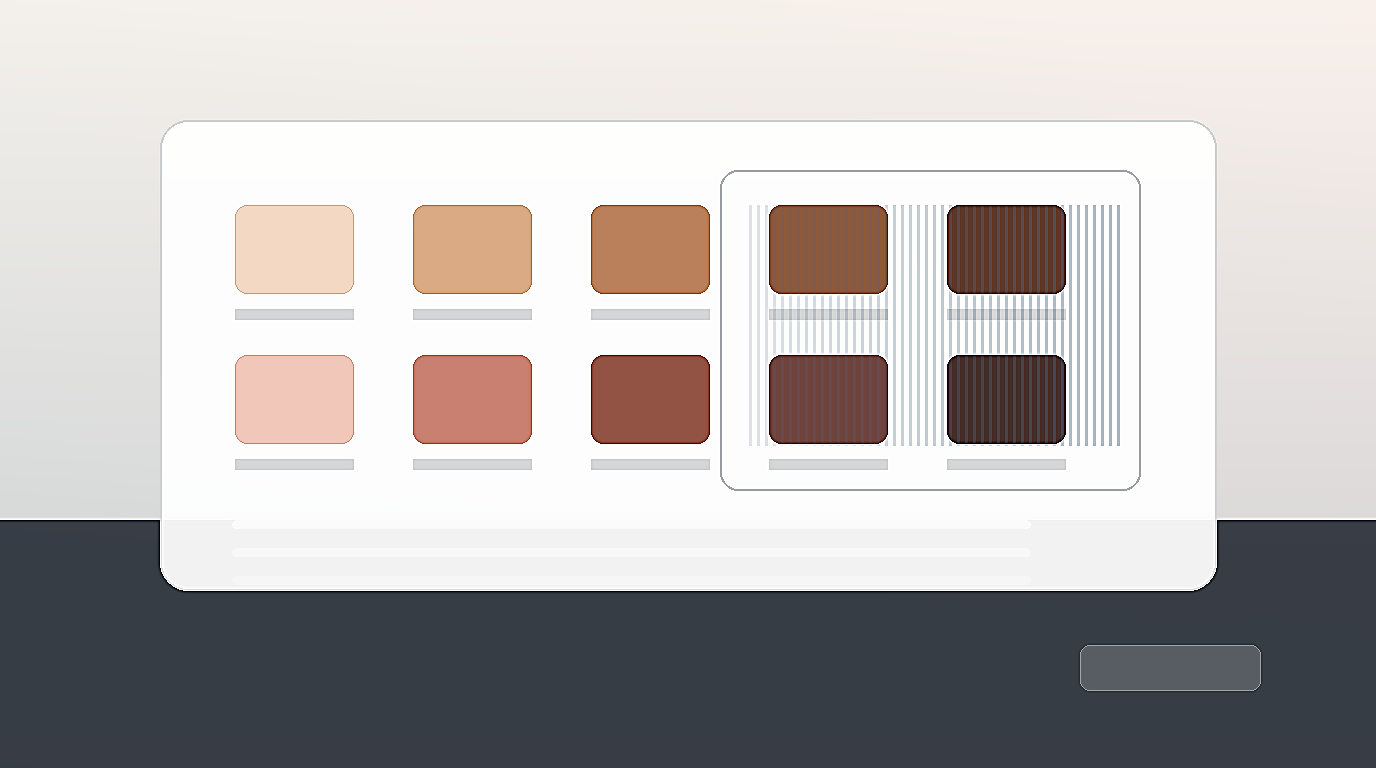
A Show HN project about an inclusive skin tone color space reached 617 points and 100 comments because it addressed a practical builder problem. Character creators, avatar tools, games, and AI design systems need better defaults than a few preset swatches. They also need more structure than a raw RGB picker.
The project, published as What Colors Are We?, proposes a small custom color space for simplified skin tones. It is not a scientific model of human skin. The author says the method is subjective and "good enough." That honesty is the point.
An inclusive skin tone color space is a task-specific coordinate system that constrains color choices to plausible simplified skin tones. It preserves variation, but it makes the assumptions visible. For builders, that is often more useful than a generic color picker with millions of choices and no guidance.
Therefore, this matters beyond one color picker. The project is a useful case study in transparent constraints. It shows how a small model can help users inspect, tune, and challenge defaults in sensitive design areas.
Inclusive Skin Tone Color Space: Review Notes
Reviewed: 08/07/2026. Our analysis used the original project page, its source repository, and the Hacker News discussion captured in the research brief. We found a concrete public signal: 617 points, 100 comments, 30 GitHub stars, 1 fork, and 2 open issues. [source: research brief #1449]
That evidence does not prove the model is production-ready. However, our analysis found why builders cared. The inclusive skin tone color space made its assumptions easier to inspect than a prompt-only AI workflow or a generic RGB picker.
Why Skin Tone Pickers Are Harder Than More Swatches
Skin tone selection looks simple until a product team has to ship it. A fixed palette is easy to implement, but it can flatten real variation. A raw color picker offers freedom, but it gives users no useful structure.
That is the false choice many interfaces make. Five emoji-style swatches are too narrow. Yet 16.7 million RGB values are not a serious representation strategy. They include every possible screen color, not a useful map of skin-tone-like colors.
A better tool needs constraints. It should make common choices easy while still allowing edge cases. It should also explain what those constraints do. That is why the inclusive skin tone color space drew attention on Hacker News.
The project gives builders axes that feel closer to the task. In the picker, T moves between deeper and fairer tones. U moves between flushed and ochre tones. V moves between cooler and warmer tones. R2 controls how much variation the generator allows.
Those labels are not universal truths. They are design handles. They help a user reason about a space that raw RGB does not explain.
Real skin is also not a single flat color. Lighting changes appearance. Camera processing changes appearance. Display calibration changes appearance. Biology, blood flow, subsurface scattering, and individual variation all matter.
So a one-color model must be used with care. It can help with icons, placeholder avatars, stylized characters, and early design systems. It should not be treated as a medical, biometric, cosmetics, or photoreal rendering model.
How the Inclusive Color Space Works
The project starts with a simple idea. Instead of asking RGB to be meaningful, the author labels a set of colors that look like simplified skin tones. The labels are subjective, but they are visible. That makes critique possible.
From there, the method uses principal component analysis, or PCA. PCA rotates the color data into axes that capture the strongest patterns in the labeled set. In plain English, it finds a better angle for looking at the same points.
The result becomes a custom TUV space. The project then fits a sphere-like region inside that space. A picker can move around that region. A procedural generator can sample inside it, then convert the result back to RGB.
The skin tone generation algorithm works in four steps:
- Label RGB colors that fit the intended simplified skin-tone domain.
- Use PCA to rotate those colors into more useful axes.
- Fit a bounded TUV region around the labeled examples.
- Sample within that region and convert the result back to RGB.
R2 is the key control for generation. It is the squared radius that limits how far a sampled point can move in TUV space. A higher value allows more variety. A lower value reduces outliers and keeps generated tones closer to the center of the model.
That distinction matters. A manual picker can expose more range because a human can judge the result. A procedural skin tone generator may need a lower default because it produces many colors without human review.
This is also why the inclusive skin tone color space is more interesting than the math alone. The model is small, but it separates the data, the axes, and the sampling rules. Builders can inspect each part.
The author also published the GitHub repository. In 2026, at the time of the brief, the repo was MIT-licensed, written mainly in Python, and still early. That makes the project easier to test, fork, and critique.
What Hacker News Found Valuable
The Hacker News response was a market signal, not formal validation. Still, 617 points and 100 comments show real builder interest. Developers immediately connected the project to games, VR avatars, character creators, and procedural art.
That reaction makes sense. Many teams need inclusive defaults, but they do not have a research budget for a full color science pipeline. They need something better than hard-coded swatches. They also need something small enough to understand.
The strongest value is legibility. A designer can see the axes. A developer can see the sampling rule. A user can feel the effect of moving through the picker. That is different from prompting an opaque AI model and hoping the result is fair.
However, the discussion also raised useful technical critiques. Some commenters focused on gamma correction and color management. Others noted that lighting and display variation can undermine any RGB-based claim. There were also comments about translucency, subsurface scattering, medical outliers, and the limits of mapping identity to color.
These critiques do not kill the project. They define its boundary. The tool is suitable for simplified digital representation. It is not a replacement for calibrated photography, dermatology, cosmetics matching, or production visual search.
Commenters also compared the project with more established references. The Monk Skin Tone Scale offers 10 tones built for representation and machine learning contexts. Pantone SkinTone provides a physical reference guide with light-dark and red-yellow axes.
Additionally, other references widen the view. The Pudding's work on foundation shade ranges shows how commercial shade systems can still leave gaps. Pinterest Engineering has written about a visual skin tone model for search and recommendations.
Those systems solve different problems. The inclusive skin tone color space is not trying to replace them. Its value is that it gives builders a compact primitive for situations where a full-scale model is too heavy.
The Bigger Lesson: Transparent Constraints Beat Opaque Defaults
Therefore, the broader lesson is not about one perfect color model. It is about how design systems handle sensitive attributes. A model can be useful without being authoritative if its assumptions are clear.
Opaque defaults create trust problems. Users cannot tell what was included, what was excluded, or who made the decision. In sensitive domains, that opacity becomes a product risk.
Transparent constraints work better. They show the feasible space. They expose the tuning knobs. They invite feedback instead of hiding the decision inside a black box.
That is why the inclusive skin tone color space feels timely in an AI-heavy builder market. Generative design tools often ask users for natural language prompts. Yet prompts are weak controls for representation. They can be vague, unstable, and hard to audit.
A domain-specific color space gives the system a more inspectable control surface. It does not guarantee fairness. However, it gives teams something concrete to test.
This same pattern applies to other tools. AI image systems need bounded controls for sensitive visual attributes. Agent workflows need explicit permissions and review points. Product analytics for AI sessions need clear receipts and replayable traces.
The common theme is governance through structure. A small constraint can create accountability when it is visible. A large opaque model can do the opposite, even when it produces impressive outputs.
For Macro Markets readers tracking prediction markets, the analytical frame is familiar. Do not confuse attention with validation. Treat the HN spike as a signal. Then inspect adoption evidence, model assumptions, and failure modes.
When Builders Should Use It, Modify It, or Avoid It
Builders should use this project as-is when the stakes are low and the art style is simplified. Placeholder avatars, stylized game characters, profile icons, and internal prototypes are good fits. In those cases, the tool can improve defaults without adding much complexity.
Teams should modify it when they need procedural generation at scale. The R2 default may need to be lower for random sampling than for manual picking. That reduces strange outputs while preserving variation across the main axes.
Teams should also tune the labeled dataset for their visual style. A pixel-art game, a flat illustration system, and a 3D avatar creator have different needs. The same inclusive skin tone color space may not serve them equally well without adjustment.
Builders should avoid using it as a scientific reference. Medical software needs domain data and expert review. Cosmetics matching needs calibrated color capture and product-specific testing. Biometric systems require a very different standard of validation.
Photoreal rendering is another separate problem. Real skin has layers, texture, reflectance, and lighting interactions. A single RGB value cannot capture that. It can only provide a starting color.
There is also a social risk. Teams should not map race or ethnicity into preset coordinates. That approach can reduce identity to a narrow color assumption. A better system lets users choose, correct, and expand the model.
Therefore, the decision framework is simple:
| Use case | Fit | Why |
|---|---|---|
| Stylized avatars | Strong | Needs inclusive defaults and inspectable variation |
| Procedural game characters | Good with tuning | R2 can reduce outliers during random generation |
| Design system placeholders | Good | Lightweight and easy to audit |
| Cosmetics matching | Weak | Requires calibrated data and product context |
| Medical or biometric use | Poor | Needs expert validation and stronger safeguards |
| Photoreal rendering | Limited | Skin appearance is more than one RGB color |
Important: this makes the project useful precisely because it does not overclaim. It gives builders a better starting point for an inclusive skin tone color space, not a final authority.
What AI Design Tools Should Learn
AI design tools often hide their assumptions in model weights. That can make sensitive outputs feel random. It can also make them difficult to debug when users report exclusion or bias.
The inclusive skin tone color space points to a different approach. Put sensitive controls in explicit spaces, including an inclusive skin tone color space when color is the task. Let users inspect them. Let developers tune them. Let communities challenge the data behind them.
That approach will not solve every representation problem. But it is easier to govern than a prompt-only workflow. It also creates a clearer path from feedback to product change.
For builders, the takeaway is practical. If a default matters socially, it should be visible enough to audit. If a generator produces sensitive attributes, its range should be testable. If a user can be excluded by a hidden assumption, the assumption should not stay hidden.
The Show HN project became interesting because it turned that principle into a working demo. It made the constraint visible. It made the trade-off adjustable. It made critique part of the design process.
That is the real signal. The inclusive skin tone color space matters less as a perfect model of skin and more as a compact example of responsible tooling for an inclusive skin tone color space. In representation-sensitive products, explicit constraints are not a limitation. They are often the beginning of trust.
A final point is worth separating from the technical details. Good defaults do not remove user agency. They create a better starting place. A skin tone picker should still allow correction, expansion, and local context.
That is especially important when tools move from demos to products. A small open project can publish its assumptions and invite critique. A production platform must go further. It needs user testing, accessibility checks, documentation, and a clear path for feedback.
The same standard should apply to AI agents and AI systems that generate people. Teams should ask where the model gets its range, who tested it, and how users can challenge it. If the answer is only "the model decides," the product has a governance gap.
The inclusive skin tone color space is useful because it gives teams a better question. Instead of asking whether a palette is diverse enough in the abstract, builders can ask how the space was built, which edges it excludes, and how easily the next version can improve.
