




Jorge Messias STF Rejection: What Happened and the Political Fallout
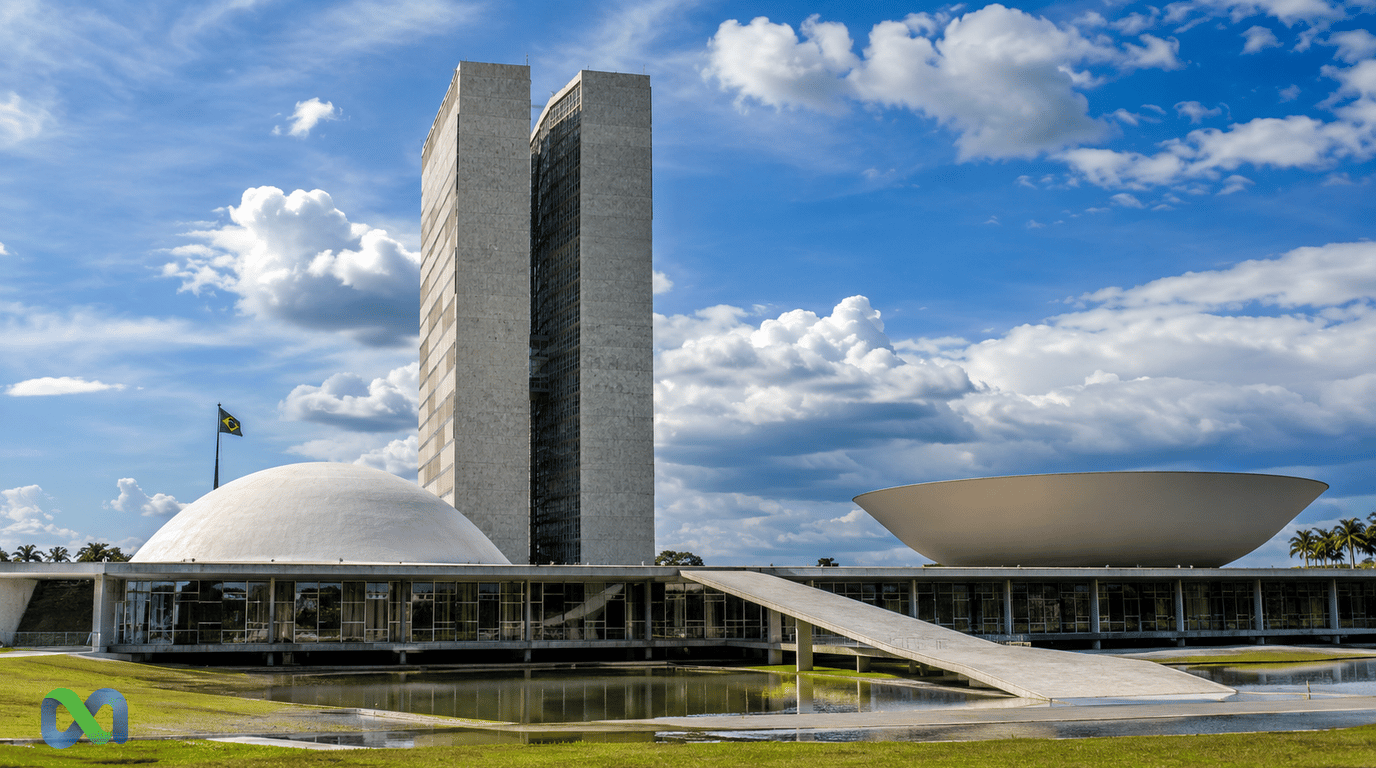
The Jorge Messias STF rejection became one of Brazil’s most important political events of 2026. The Senate blocked President Luiz Inácio Lula da Silva’s nominee for a seat on the Supreme Federal Court, triggering a rare institutional crisis. The episode reshapes relations between the presidential palace and Congress, changes how observers measure the government’s political strength, and could influence how analysts interpret the road to 2026.
The case drew so much attention because rejections like this are exceptional in Brazil’s republican history. This was not just a personal defeat for Jorge Messias. The message was broader. The Senate showed it could impose a high political cost on the Planalto even in a nomination to the country’s highest court.
In this guide, you’ll understand who Jorge Messias is, why Lula nominated him, why the Senate rejected his name, what happens after a Supreme Court nomination rejection in Brazil, and how political markets may read this institutional shock. We’ll also separate confirmed facts from political interpretation to reduce noise around a topic likely to be exploited through partisan dispute.
What the Jorge Messias STF rejection was
The Jorge Messias STF rejection was the Senate’s decision not to approve Lula’s choice to fill a seat on Brazil’s Supreme Federal Court. In practical terms, that means the appointment cannot be completed. The president must present another nominee and reopen political negotiations to try to fill the vacancy. Readers new to the space can also use our forecasting, probability, and crowd intelligence glossary to understand how institutional shocks get translated into market odds.
Put simply, the rejection happened because the nomination failed to gather enough support among senators. The defeat combined opposition resistance, cracks inside the government’s coalition, and doubts about the political cost of approving a nominee seen as too closely tied to the administration’s inner circle.
Senate vote and tally
The exact tally and official voting record should always be confirmed through the Senate’s own communications, including its official report on the rejection: Brazil Senate rejects Jorge Messias’s nomination to the STF. Even so, the central fact does not change: Jorge Messias did not receive the votes needed for confirmation. In a process like this, the tally matters for two reasons.
First, it measures the scale of the defeat. A narrow rejection points to an unstable but still recoverable coalition. A wider rejection suggests a serious failure of political coordination. Second, the vote signals how different Senate blocs wanted to position themselves toward the government, the Supreme Court, and voters.
For anyone following institutional politics, the number is not just a detail. It helps distinguish whether the episode was an isolated stumble or a sign that the Planalto has lost the ability to organize wins even on top-priority issues.
Why the case is historic
The case is historic because the rejection of an STF nominee is rare in Brazil. The process is often tense, but political tradition usually favors approval after negotiation, hearings, and backroom adjustments. When the Senate says no, the message goes beyond the rejected name.
This kind of defeat signals a break in institutional expectations. It also suggests that the relationship between the executive branch and the Senate has entered a more conflict-heavy phase. In a system that depends on constant negotiation, rejecting a Supreme Court nominee is a strong act of autonomy and, at the same time, confrontation.
The episode also puts the Supreme Court back at the center of political debate. Brazil’s top court is already a frequent target of public pressure, narrative disputes, and arguments over its limits. When a justice nomination collapses, constitutional law, legislative strategy, and electoral calculation all merge into a single crisis.
Timeline of the case
| Stage | What happened | Why it matters |
|---|---|---|
| Presidential nomination | Lula chose Jorge Messias for the STF vacancy | Shows the Planalto’s political priority |
| Hearing and whip operation | The government sought Senate votes | Tests coalition coordination capacity |
| Floor vote | The Senate rejected the nomination | Triggers a rare institutional crisis |
| After the rejection | The president must nominate someone else | Restarts the political fight over the seat |
Who Jorge Messias is and why Lula nominated him
To understand the Jorge Messias STF rejection, it helps to look at the nominee’s trajectory. Jorge Messias built an image as a jurist and trusted government figure. Over the past several years, he became associated with Lula’s political camp and with core Planalto priorities.
That helps answer the question, who is Jorge Messias? He did not emerge as a purely technical name detached from politics. On the contrary, his public identity came to be read as part of the government’s institutional strategy. That closeness can be an advantage in coordination environments. But in moments of tension, it also becomes a liability.
Lula likely nominated him because of a combination of trust, legal alignment, and political affinity. Presidents usually look for names that combine technical ability, institutional predictability, and commitment to a certain vision of the state. In theory, an STF justice does not act as a representative of the government. In practice, the nomination process is always read politically.
Jorge Messias’s background
Supporters presented Jorge Messias’s career as proof of legal experience and familiarity with sensitive areas of public administration. That record helped sustain the argument that he could serve on the Supreme Court with technical command and institutional perspective.
But critics read the same background differently. Instead of independence, they saw excessive closeness to the government. Instead of the profile of an impartial referee, they saw the profile of an ally. That divergence is central. In STF nominations, a résumé is never interpreted neutrally. Every previous post can function either as a credential or as evidence of political alignment.
That is why the Senate hearing is never only about titles or professional experience. It also measures the perception of autonomy. When senators conclude that a nominee would arrive at the court too closely identified with the president, the political cost of approval rises.
Relationship with Lula’s government
Messias’s relationship with Lula was one of the most explored points in the debate. For the Planalto, that closeness reinforced trust. For opponents, it weakened the perception of independence. This clash of interpretations helps explain why the nomination moved out of the technical realm and into open political dispute.
In STF confirmations, the real question is rarely just whether the nominee understands constitutional law. The underlying question is usually: how will this name be perceived in the balance among the branches of government? In Jorge Messias’s case, many senators seemed to believe the answer did not favor the administration.
That does not automatically mean he lacked technical ability. It means that in institutional politics, image matters as much as résumé. And the dominant image around his nomination was of someone very close to the presidential core at a moment when the executive had little margin for error.
Why the Senate rejected Jorge Messias
The question why the Senate rejected Jorge Messias does not have a single answer. The likeliest explanation is a combination of three forces: organized opposition resistance, cracks in the governing coalition, and doubts about the cost of approving a nominee so closely identified with the Planalto.
That point matters because simplistic narratives usually hide the real mechanics of defeat. A Supreme Court nominee rarely falls for only one reason. In general, rejection happens when different groups find their own reasons to vote no while also concluding that the government lacks the strength to reverse the outcome.
Opposition resistance
The opposition had a clear incentive to turn the vote into a demonstration of force. Blocking one of Lula’s nominees to the STF creates immediate symbolic gains. The move hurts the president, exposes coalition fragility, and reinforces the argument that the government has lost its coordination capacity.
There is also an institutional reason. The Supreme Court is a central actor in electoral, regulatory, and constitutional matters. As a result, the court’s composition directly matters to political groups already thinking about the 2026 environment. Rejecting the nominee prevents the government from placing on the court a figure seen as favorable to its worldview.
On top of that, the opposition knows that defeats in high-profile votes tend to contaminate the next agenda items. A government that fails in an STF nomination begins negotiating under greater pressure on other bills and appointments. That raises the strategic value of the rejection.
Cracks in the governing coalition
The rejection cannot be explained by the opposition alone. If the government had held a cohesive coalition, the nomination would have been unlikely to fail. That is why the episode also reveals internal fissures. Some senators aligned with the Planalto may have hesitated, demanded a higher price, or chosen to create distance because of the reputational cost of approval.
Those fissures can appear for several reasons. Sometimes the issue is local: senators want to signal independence to their states. In other cases, the calculation is national: keeping distance from a controversial nomination can help in a broader environment of executive wear and tear.
There is also the coordination factor. A government may have potential votes but still lose if it misjudges timing, whip counts, or the way negotiations are conducted. When that happens on a sensitive issue, the political cost doubles. The defeat exposes not just a lack of support, but an operational failure.
Technical and image concerns
Another relevant point involves public image and technical questioning. In nominations of this size, perceptions of independence, balance, and institutional preparedness carry major weight. Even when criticism does not legally disqualify the nominee, it can provide a comfortable rationale for undecided senators to vote against confirmation.
Many lawmakers prefer to justify a no vote in the language of institutional caution. Instead of openly admitting a direct clash with the government, they say they want to preserve the autonomy of the STF or avoid setting a bad precedent. That framing is often easier to defend in public.
In short, the rejection gained strength because the nomination entered an already tense political environment. In that setting, any weakness in image became more expensive. Once the government failed to build a strong enough shield, the sum of these factors was enough to sink the nomination.
What happens next after the rejection
The next question is straightforward: what happens after a Supreme Court nomination rejection in Brazil? The answer is simple. The president must choose another name and restart the process. That includes a new nomination, a new round of political negotiations, and new Senate review.
There is no institutional shortcut. The rejection ends that specific nomination process. The government cannot move forward as if nothing happened. Politically, it could insist on the same name, but that would raise the cost and is generally not the most rational path after an explicit defeat.
A new nominee must be presented
Brazil’s Federal Constitution gives the president the power to nominate STF justices, subject to Senate approval after a hearing. If the Senate rejects the nominee, the seat remains vacant until another name is approved.
In practice, that creates a new round of political speculation. The Planalto must decide whether to double down on an ideological profile, seek a more technical name, or choose someone with broader acceptance among centrist parties. Each option sends a different signal to the political market.
If Lula picks a consensus name, the likely reading will be tactical retreat. If he insists on a figure seen as very close to the government, the reading may be confrontation. None of those choices is neutral, because the next nomination is born under the shadow of the previous rejection.
Timing and Senate negotiations
Although the formal process can move relatively quickly under normal conditions, political timing rarely depends only on constitutional text. The Senate can speed up or slow down the process depending on the mood among party leaders, the Senate president, and the government.
After a defeat of this scale, the Planalto is likely to spend more time on informal pre-negotiation. That means privately testing names before making an official choice. The goal is to avoid a second humiliation.
It is also possible that the vacancy remains open longer. That affects the Supreme Court because it reduces the number of justices available for cases, increases pressure on major dockets, and prolongs the political fight around succession.
What the Senate is rejecting in a case like this
When the Senate rejects an STF nominee, it is not canceling the president’s constitutional authority to nominate. It is exercising its role of political and institutional review over that choice. That is part of Brazil’s constitutional design.
In theory, the mechanism exists to prevent appointments seen as lacking minimal support or viewed as inappropriate. In practice, the same process also becomes an arena for bargaining and for demonstrations of force between the branches. That is exactly what made this episode so relevant.
The political impact on Lula and the 2026 outlook
The political impact on Lula is immediate because the defeat weakens the perception that he controls Congress. In Brasília, perceived strength matters almost as much as actual strength. When a president loses a Supreme Court nomination, opponents begin treating the government as more vulnerable.
That effect can spill into other agendas. Allies raise the price of support. The center demands more concessions. The opposition feels encouraged to launch new offensives. And political markets reprice the odds of stable governability through 2026.
A sign of weakness in Congress
The episode works as a public stress test of coordination capacity. If the government fails on such a high-priority agenda, a natural question follows: will it be able to pass difficult matters in the coming months?
That doubt does not stay confined to political headlines. It affects the decisions of party leaders, the behavior of independent senators, and even the appetite of groups interested in negotiating cabinet posts, budget amendments, and programmatic commitments.
More than that, the rejection changes the tone of public conversation. The government stops being seen as an actor that distributes near-automatic victories and starts being seen as one that can suffer visible defeats. That adjustment in perception is central to understanding the cost of the episode.
Effects on succession and governability
Looking toward 2026, the rejection has two effects. The first is short term: it increases doubt about the government’s ability to maintain a functional coalition through the end of the term. The second is medium term: it feeds the view that Lula or his political camp may arrive at the next succession battle in a less comfortable position.
That does not determine any election result. But it does influence the environment in which candidates will be priced by analysts, parties, and forecasting markets. If the rejection adds to other signs of erosion, the episode may be remembered as an inflection point in the governability narrative.
The defeat may also change the calculations of actors who are currently neutral. Politicians who once preferred to align with the government out of pragmatism may now see more value in bargaining hard or even drifting away. That kind of movement does not fully appear the next day, but it accumulates over time in congressional dynamics.
How prediction markets may read this institutional shock
This is the angle much of the traditional coverage misses. An institutional shock like the Jorge Messias STF rejection can influence how prediction markets read political risk, government strength, and the probability of future events.
Prediction markets do not measure opinion alone. They try to aggregate what participants believe is most likely to happen next. That is why episodes that alter perceptions of governability often ripple through markets tied to elections, cabinet stability, reform approval, and the level of conflict between branches of government.
If you want additional international context on the nomination itself, see Courthouse News’s report on Lula nominating Jorge Messias and MercoPress coverage of his Senate hearing.
Institutional confidence and pricing
When the Senate rejects an STF nominee, the political market updates its beliefs across three fronts. First, the government’s strength in legislative negotiation. Second, the degree of conflict between the executive and Congress. Third, the likelihood of fresh gridlock on sensitive issues.
Each of those fronts can affect implied prices in political markets. A government seen as weaker tends to suffer worse pricing on events that depend on coordination. Scenarios of greater institutional conflict also tend to increase uncertainty and widen the dispersion of expectations.
That does not mean there is an automatic answer. It means the episode provides new information, and markets that trade on political expectations usually react quickly to new information, often faster than headline narratives settle.
Which political markets may react
Some markets are more sensitive to shocks like this:
- 2026 presidential election markets: the rejection may be read as a sign of wear inside the governing camp.
- Congressional approval markets: defeat on an STF nomination suggests legislative coordination trouble.
- Markets on key ministers’ staying power: institutional crises can trigger internal reshuffles.
- Markets on relations between branches: more conflict changes perceptions of institutional stability.
The limits of market-based interpretation
It is still important to separate market analysis from factual certainty. Prediction markets work with probability, not guarantees. They capture shifts in perception after new facts emerge, but they do not replace factual reporting, constitutional text, or real partisan negotiation.
That is why using this lens well requires discipline. First, identify the confirmed fact. Second, evaluate what it changes in the political balance. Third, watch whether markets incorporate that new information consistently.
In the Jorge Messias case, the confirmed fact is clear: the Senate blocked the nomination. From there, interpretation begins. Some readings will be plausible. Others will be partisan noise. The analytical value lies in separating one from the other.
Why this case breaks from the usual pattern
Many competing articles mention that the episode is rare, but few explain why that matters so much. Under normal conditions, the Senate uses hearings to signal concerns, negotiate conditions, and stake out positions. In the end, however, approval usually prevails.
When a rejection happens, that logic flips. The Senate stops merely moderating the president’s choice and starts actively overruling the government’s political calculation. That is much stronger than a tough hearing or a narrow confirmation.
This case also breaks from the usual pattern because it unfolds in an already polarized environment, with the Supreme Court frequently at the center of public disputes. In another context, the defeat would already be serious. In this setting, it carries even more weight because it feeds accumulated tensions among the executive, Congress, public opinion, and the justice system.
The rejection also has consequences beyond Brasília. Voters, analysts, and institutional investors may revisit their views on political stability. That spillover is one reason the case matters not only to legal specialists but to anyone tracking political risk in Brazil.
How Lula’s next nominee could redefine the episode
Lula’s next nomination will be decisive in determining whether the Jorge Messias STF rejection is treated as a setback on the path or as proof of a deeper loss of strength. In politics, serious defeats can be partially reversed when the next response shows fast adaptation and a correct reading of the environment.
If the government chooses a name with broader acceptance, the move will be read as an attempt to rebuild bridges with the Senate. That kind of choice helps lower the institutional temperature because it swaps confrontation for accommodation. In the short term, it may disappoint part of the more ideological base. Even so, it often produces a bigger benefit: reducing the risk of another defeat.
A nominee perceived as a direct challenge to the Senate would have the opposite effect. It would turn the previous rejection into the opening chapter of a longer crisis. In that scenario, the dispute would stop revolving around one person and start revolving around who really controls the political process. That almost always increases uncertainty.
It is also worth watching which profiles begin to dominate informal speculation in Brasília. When interlocutors start converging around technical, moderate names with good congressional relationships, the signal is that the government understood the message. When the shortlist remains dominated by figures viewed as excessively aligned with the Planalto, the odds of new friction rise.
In other words, the next nominee will be interpreted as a political response. It will show whether Lula intends to rebuild a majority, test limits, or simply buy time. Each of those strategies carries different implications for governability.
What to watch in the days and weeks ahead
After a rejection of this scale, the news cycle tends to focus on hard-edged statements, dramatic backstage accounts, and lists of possible replacements. That matters, but it is not enough. To understand the real weight of the episode, it is worth tracking five objective signals.
1. The tone of the Senate president and party leaders. If the dominant message is one of de-escalation, there is room for accommodation. If the tone remains confrontational, tension may last longer.
2. How quickly the Planalto starts testing names. A confident government moves fast. An insecure government delays, consults, and avoids early exposure.
3. The reaction of the governing coalition. If allies minimize the episode in public but avoid strongly defending the defeated nomination, that suggests real discomfort.
4. The reading from economic actors and political analysts. The more often the case is cited as evidence of coordination weakness, the stronger the effect on perceived risk.
5. The behavior of future votes in Congress. The best way to measure the damage is to see whether the government struggles more to organize support on other relevant matters.
Those signals help cut through the surface drama and assess the practical consequences. Not every symbolic defeat becomes a structural problem. But defeats of this size almost always leave some mark on the executive’s bargaining capacity.
Why this matters beyond the legal world
The Jorge Messias STF rejection matters to legal observers, but it does not stop there. It also matters to people following elections, political economy, governability, and perceptions of institutional risk.
That is because the Supreme Court takes part in decisions that shape the rules of the game. The process of composing the court is therefore not just a contest of résumés. It affects how political actors think about their next moves. A government that loses this type of battle tends to face a more hostile environment elsewhere.
For investors, consultancies, newsrooms, and political observers, the episode functions as an institutional stress test. It shows how far the Senate wants to go to assert autonomy, how far the Planalto can negotiate, and to what extent the Supreme Court remains a permanent axis of tension in national debate.
That is also why coverage needs to be more careful than in smaller crises. Excessive partisan cheering often hides the most useful information: which incentives changed after the defeat? In the end, that answer is what separates a noisy event from a genuinely important political inflection point.
FAQ
Who nominated Jorge Messias to the STF?
It was President Luiz Inácio Lula da Silva. The nomination came from the Planalto and depended on Senate approval to be confirmed.
Who is Jorge Messias?
Jorge Messias is a jurist and political figure associated with Lula’s government. His public and institutional trajectory made him a trusted Planalto name, but it also led to criticism that he was too close to the executive’s inner circle.
What happens when the Senate rejects an STF nominee?
When the Senate rejects an STF nominee, the president must choose another name. The process starts over with a new nomination, new political negotiations, and a new Senate review.
Why did the rejection carry so much political weight?
Because defeats of this kind are rare and signal government weakness in an area of extremely high institutional priority. The episode affects perceptions of governability and may influence political readings of 2026.
Does the case change how the STF functions right now?
Yes. The seat remains vacant until a new nominee is approved. That extends the political dispute and can affect the court’s internal dynamics while the position remains unfilled.
Conclusion
The Jorge Messias STF rejection should not be read as only an individual setback. It is a strong political signal. The episode exposes the limits of the government’s coalition management, increases the perception of conflict between branches, and reopens the fight over how Lula will try to rebuild strength in the Senate.
It is also a useful case for understanding how institutional crises affect political probability. Events like this do not just change headlines. They change how relevant actors assess governability, succession, and institutional risk.
If the Planalto gets the next nomination right, part of the damage may be contained. If it miscalculates again, the rejection of Jorge Messias could stop looking like an exception and start looking like evidence of structural weakness. For anyone following Brazilian politics strategically, that is the central point to watch from here.
