


Nvidia AI Forecast: Growth Signal or Bubble Stress Test?
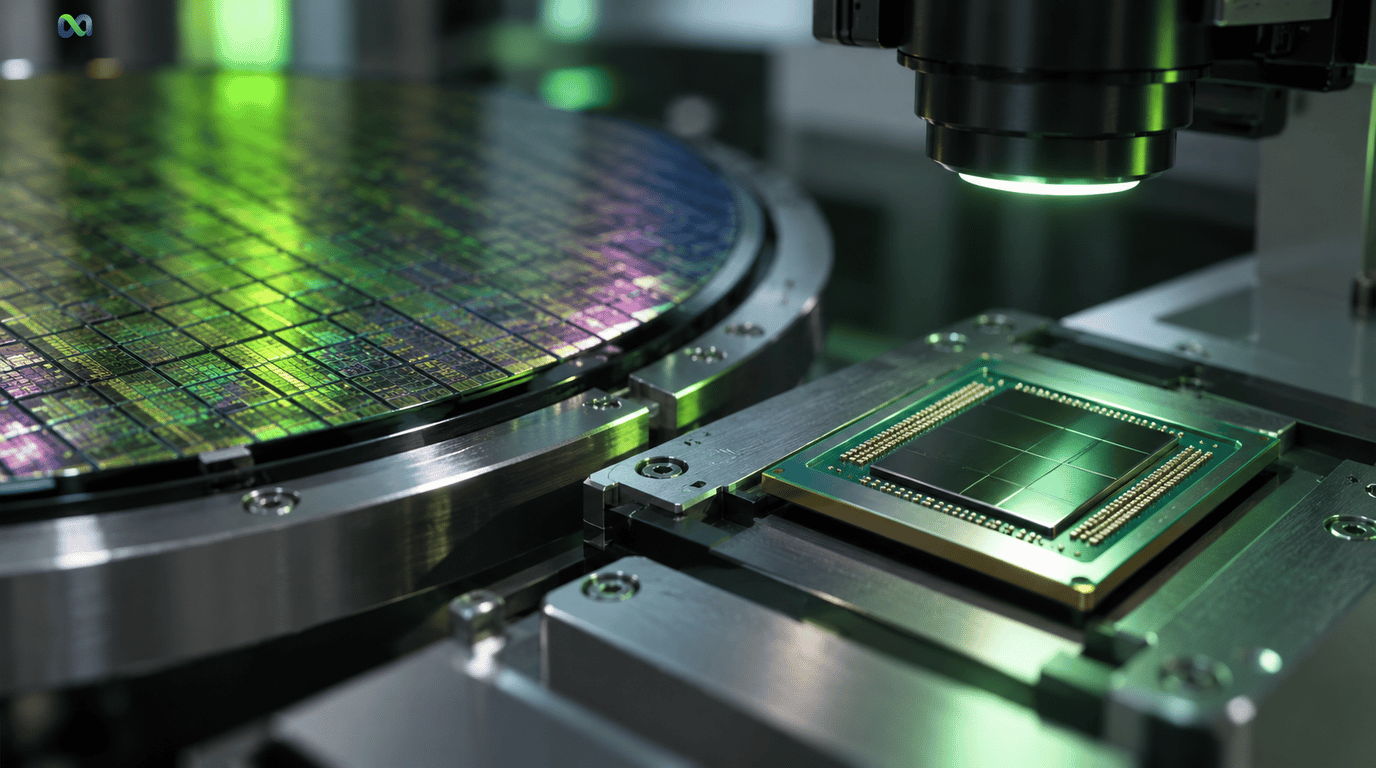
Nvidia's first year-ahead forecast was designed to change the debate. The company is no longer asking investors to judge AI demand one quarter at a time. It is putting a larger claim in front of the market. The Nvidia AI forecast points to roughly 70% growth over the next year, even as critics warn that AI spending has become too circular and too dependent on easy capital.
That is a major signal. It does not, however, end the AI bubble argument.
The better question is not whether Nvidia is still growing. The answer is clearly yes. The real question is whether the demand behind that growth is durable, cash-generating, and broad enough to support the next leg of AI infrastructure spending.
For prediction markets, this is the useful frame. A single forecast should move probabilities, not close the case. Traders should ask what evidence would raise the odds of continued AI capex strength, and what evidence would raise the odds of an eventual unwind.
This article breaks down the bull case, the bear case, and the five signals that matter next. It is market analysis, not investment advice.
Why Nvidia's First Year-Ahead Forecast Matters
Nvidia usually gives investors a near-term view. A year-ahead guide is different. It tells the market that management believes it can see demand beyond the next quarter.
That matters because Nvidia sits at the center of the AI capex cycle. Hyperscalers, cloud providers, AI labs, enterprise buyers, and sovereign technology programs all depend on advanced chips. Broad market coverage from AP News and BBC shows why Nvidia earnings now sit inside a wider debate about AI spending. When Nvidia says growth can stay near 70% over the next year, it is making a statement about the whole stack.
The timing also matters. Investors entered the earnings cycle with three concerns.
First, AI valuations had moved faster than many cash-flow models. Nvidia became a symbol for the wider AI trade. A strong guide can support that trade, while a weak one can pressure the entire group.
Second, markets were worried about hyperscaler spending. Microsoft, Alphabet, Amazon, Meta, and other cloud buyers have raised capex sharply to build AI capacity. If their spending plans keep rising, Nvidia benefits. If they slow orders, the pressure reaches Nvidia quickly.
Third, critics kept pushing the circular financing argument. They worry that chipmakers, cloud providers, and AI startups are supporting each other's revenue through investments, commitments, and purchase agreements. In that version of the story, headline sales look real, but the final source of demand is less clear.
So the forecast is not just an earnings line. It is a credibility test for the AI investment cycle.
The Bull Case: Demand Is Still Running Ahead Of Supply
The bull case starts with a simple point: Nvidia is still reporting exceptional demand for AI chips. Recent coverage highlighted revenue growth above 100% and continued strength in data center sales. That kind of growth is hard to dismiss as only market excitement.
AI workloads also keep expanding. Model training requires large clusters, but inference can become even larger over time. Every time a user asks a model a question, a data center must run chips, memory, networking, and power. If AI use keeps spreading across search, software, coding, media, finance, and customer support, the demand curve can stay steep.
Supply is another key part of the bull case. Advanced GPUs are not simple commodities. Nvidia's ecosystem includes chips, networking, software, developer tools, and long customer relationships. That gives the company pricing power and visibility that many cyclical hardware businesses do not have.
A year-ahead forecast suggests management sees firm orders, customer commitments, or enough demand signals to support confidence. Investors should not treat that as proof of perfect visibility. Still, it is evidence that the order book has not cracked.
The strongest version of the bull case has four parts.
- Hyperscaler capex keeps rising, which means large cloud buyers still need more AI infrastructure.
- Data center revenue remains strong, which shows Nvidia's core AI segment is still scaling.
- Gross margin stays resilient, which points to pricing power and tight supply.
- Inference demand grows, which moves AI spending from buildout to daily use.
This is why the Nvidia AI forecast has market weight. It gives bulls a clear answer to the bubble story: real customers are still buying, and the largest technology companies are still racing to secure compute.
However, strong demand today is not the same as permanent demand. The bull case still needs proof that customers can turn compute into profitable products.
The Bear Case: Circular Financing And AI Bubble Risk
Circular financing is the cleanest phrase for the bear case. It does not mean Nvidia's revenue is fake. It means investors worry the AI ecosystem may be funding itself in loops that make demand look stronger than it will be over time.
Here is the simple version.
- A supplier or large technology company invests in an AI startup.
- The startup uses capital or cloud credits to buy compute.
- The compute purchase supports revenue for the supplier or cloud provider.
This flow can be normal in a young industry. Strategic investment, cloud credits, and capacity agreements can help new customers scale. The risk appears when investors cannot tell how much demand comes from end-user revenue and how much depends on continued funding.
That is why circular financing matters. It shifts the debate from "are there orders?" to "who ultimately pays for those orders?"
The bear case also includes customer concentration. If a small group of hyperscalers drives most demand, Nvidia's growth depends on a narrow buyer base. Those buyers have deep balance sheets, but they also face investor pressure. If AI products do not produce strong returns, boards can slow capex.
Depreciation is another pressure point. AI data centers are expensive, and chips age quickly. A customer that buys massive GPU capacity must earn enough from that capacity before the next generation arrives. If pricing falls or utilization drops, returns can compress.
Power is a further limit. AI infrastructure needs electricity, land, cooling, grid connections, and permitting. Even if demand is real, physical constraints can change the pace of growth.
Finally, financing conditions matter. The AI boom has benefited from strong equity markets and open credit channels. If rates stay high or risk appetite falls, weaker AI startups may find it harder to fund compute purchases. That would not break the whole sector, but it could expose which buyers have real cash flow.
The bear case is therefore not a claim that Nvidia is weak today. It is a claim that future orders may be more fragile than current revenue suggests.
What The Nvidia AI Forecast Does Not Prove
The 70% growth figure is powerful because it gives the market a number to anchor around. It also creates a risk. Investors may treat the number as final proof that AI is not a bubble.
It is not final proof.
A forecast reduces uncertainty, but it does not verify the return on AI infrastructure. Nvidia can sell chips into a market where customers still struggle to earn adequate returns. Those two facts can coexist for a while.
Revenue growth also does not answer the utilization question. A cloud provider can buy GPUs because it expects future demand. The market still needs to see whether those GPUs stay fully used at attractive prices.
The forecast does not remove concentration risk either. If a few large buyers account for much of the demand, their capex cycles become a macro variable. A small change in their budgets can have a large effect on the supply chain.
Nor does the forecast settle valuation. A business can be excellent and still face valuation risk. If investors price years of high growth in advance, even good results can be judged against very high expectations.
This is why prediction-market thinking is useful. The right question is not "bubble or no bubble?" The better question is: what probability should the market assign to each path after this new evidence?
The Nvidia AI forecast lowers the probability of an immediate demand collapse. It does not lower every risk. It moves the argument to demand quality, buyer returns, and the timing of the capex cycle.
The Market Checklist: Five Signals To Watch Next
Investors need a checklist, not a slogan. The next data points will show whether Nvidia's forecast reflects durable end-demand or a late-cycle surge.
1. Hyperscaler Capex Revisions
The first signal is capex guidance from the largest cloud companies. If Microsoft, Alphabet, Amazon, Meta, and Oracle keep raising AI infrastructure budgets, Nvidia's forecast gains support.
However, the details matter. Traders should watch whether management teams describe spending as demand-led or defensive. Demand-led capex means customers are already using capacity. Defensive capex means companies are spending because they fear falling behind.
Both can support Nvidia in the short term. Demand-led spending is healthier for the long term.
2. Cloud GPU Utilization And Pricing
GPU utilization is the bridge between chip sales and AI economics. High utilization means customers are using the installed base. Strong pricing means compute remains scarce.
If utilization stays high while new capacity comes online, the bull case strengthens. If pricing falls quickly, the market will start to question whether supply has caught up with demand.
This signal is harder to track than quarterly revenue, but it matters more for the bubble debate.
3. Nvidia Gross Margin And Backlog Commentary
Nvidia's margin tells traders about pricing power. If gross margin stays strong, demand is likely still tight. If margin compresses faster than expected, the market may infer more competition, more supply, or tougher customer negotiations.
Backlog commentary is also important. A healthy backlog suggests buyers are still waiting for supply. Weak backlog language would be a warning sign, even if current revenue remains strong.
4. Financing Flows Across The AI Stack
The circular-financing debate will not disappear. Traders should watch investments, cloud credit deals, supplier financing, and purchase commitments across the AI ecosystem.
The key is not to treat every strategic deal as negative. The key is to ask whether the customer can eventually pay with operating revenue. If the answer is yes, financing can bridge growth. If the answer is no, financing can hide weak demand.
5. S&P 500 Earnings Breadth Outside Mega-Cap AI
Nvidia affects more than semiconductor stocks. AI capex has become a support for broader index earnings and sentiment. If growth stays concentrated in a few mega-cap AI names, the market remains fragile.
Broader earnings strength would reduce that risk. It would show that AI demand is spreading into software, industrials, utilities, data centers, and services. Narrow leadership would keep the bubble question alive.
Why This Matters Beyond Nvidia Stock
Nvidia is now a macro signal. Its results influence semiconductor suppliers, cloud capex, power demand, private AI funding, and equity-index leadership. That is why this forecast matters even for traders who do not follow Nvidia shares directly.
If AI infrastructure spending remains strong, markets may keep pricing higher earnings growth for large technology companies. Utilities and power infrastructure may also benefit, because data centers need reliable electricity. Semiconductor equipment companies may see better demand as the supply chain expands.
If the cycle breaks, the impact can spread quickly. Cloud companies may slow orders. AI startups may face tougher funding conditions. Investors may cut valuation multiples for firms tied to the AI buildout. The S&P 500 could then become more exposed to a reversal in a small group of leaders.
Prediction markets can turn this debate into specific contracts. Instead of arguing in broad terms, traders can track probabilities around earnings beats, capex increases, AI regulation, data-center buildouts, and broader market outcomes.
That is the advantage of a probabilistic approach. It does not require certainty. It requires clear evidence and a willingness to update.
The Nvidia AI forecast is one such piece of evidence. It supports the view that AI infrastructure demand remains strong. Yet it also raises the standard for future proof. If management has made a bigger claim about next year, the market will expect the next few quarters to defend it.
Bottom Line
Nvidia's year-ahead forecast is a major growth signal. It challenges the idea that AI demand is already rolling over, and it gives bulls a concrete number to defend.
But the forecast does not settle the bubble debate. It does not prove that every AI customer earns attractive returns. It does not prove that circular financing is harmless. It does not prove that hyperscaler capex can rise at this pace forever.
The clean read is probabilistic. The odds of an immediate AI demand collapse look lower after Nvidia's guide. The odds of a longer-term overbuild still depend on customer returns, utilization, financing quality, and capex discipline.
For Macro Markets readers, that is the tradeable lesson. Track the evidence, update the probabilities, and separate revenue momentum from demand quality. Nvidia has raised the bar for the AI cycle. Now the rest of the market has to clear it.
