


Ronaldinho Gaúcho: Career, Titles, Clubs and Now
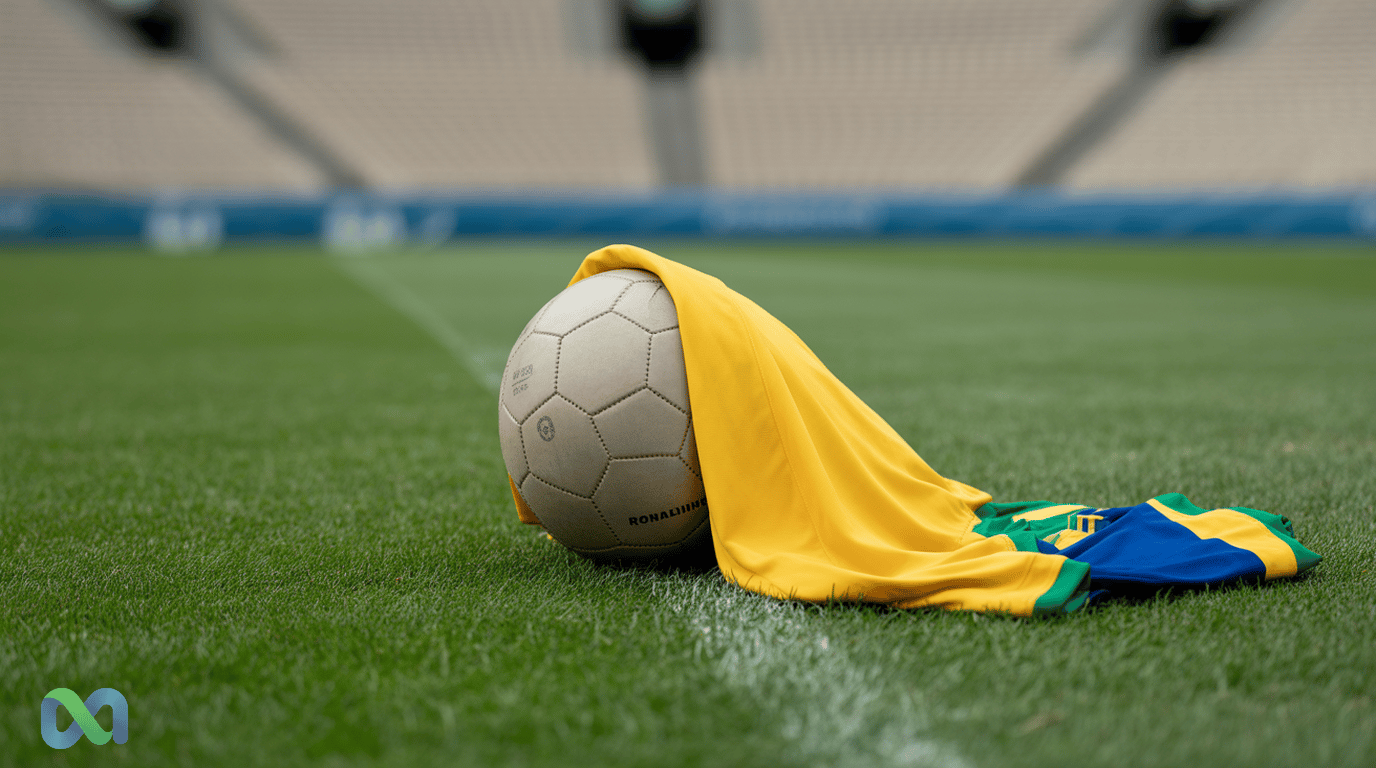
Ronaldinho Gaúcho is Ronaldo de Assis Moreira, a retired Brazilian attacking midfielder born in Porto Alegre on March 21, 1980. He won the 2002 World Cup with Brazil, received the 2005 Ballon d'Or, and became one of the most recognizable players in modern football.
Today, Ronaldinho Gaúcho is retired from professional football. His relevance comes from three areas: sporting legacy, global personal brand, and constant presence in events, advertising, social media, and football projects. This profile is updated as of May 21, 2026.
Search interest around Ronaldinho Gaúcho mixes biography, nostalgia, and practical questions. Many readers want to know which clubs he played for. Others look for trophies, estimated wealth, the Paraguay case, or where Ronaldinho is now. This guide separates confirmed facts from estimates and context. It also gives readers a cleaner English reference for the same biography-driven search demand. It also explains why Ronaldinho Gaúcho remains a search and media asset, from Barcelona nostalgia to brand partnerships and questions about his son, net worth, and current public role.
Quick Answer: Who Is Ronaldinho Gaúcho?
Ronaldinho Gaúcho is a retired Brazilian footballer known for creativity, dribbling, passing, free kicks, and elite technical control. He played for Grêmio, PSG, Barcelona, Milan, Flamengo, Atlético-MG, Querétaro, and Fluminense. He was also an important player for the Brazil team that won the 2002 World Cup.
His global peak came at Barcelona between 2003 and 2008. During that period, Ronaldinho won the Champions League, won La Liga, and received the Ballon d'Or. His image combined performance, improvisation, and charisma at a rare global scale.
Away from the pitch, Ronaldinho became a brand. The official Ronaldinho website still works as a showcase for his public presence, activations, and global identity. His Instagram account also keeps major reach, which helps explain why he remains relevant years after retirement.
Profile and Career Timeline
Ronaldinho Gaúcho Profile
| Field | Information |
|---|---|
| Full name | Ronaldo de Assis Moreira |
| Sporting name | Ronaldinho Gaúcho |
| Date of birth | March 21, 1980 |
| Place of birth | Porto Alegre, Rio Grande do Sul, Brazil |
| Nationality | Brazilian |
| Position | Attacking midfielder / forward |
| Dominant foot | Right |
| Most notable clubs | Grêmio, Barcelona, Milan, Atlético-MG |
| National team | Brazil |
| Status | Retired from professional football |
The profile gives the essentials, but it does not fully explain the size of the phenomenon. Ronaldinho became a reference point because his career had an extremely high technical peak and huge visual appeal. In just a few touches, he could deliver something easy to understand even for casual viewers.
That matters for brand value. Retired athletes stay relevant when people remember them without needing a live competition calendar. Ronaldinho does that through highlights, public appearances, commercial campaigns, and emotional links to a specific era of Brazilian football.
Career Timeline
Ronaldinho started at Grêmio, where he moved from the academy to the senior team. His early years in Porto Alegre shaped his public identity: street football talent, joyful style, and a strong connection with Rio Grande do Sul. His transfer to Paris Saint-Germain in 2001 brought that profile to the European market.
At PSG, he gained international visibility, but he was still maturing. The real jump came in 2003, when he signed for Barcelona. There, Ronaldinho stopped being a global prospect and became the center of a sporting project.
After Barcelona, he played for Milan. He won Serie A and still produced high-level moments, although without the same physical dominance from his Spanish peak. In his return to Brazil, he played for Flamengo and Atlético-MG. With Atlético, he won the 2013 Copa Libertadores, a title that reinforced his relevance in South America.
The final stretch included Querétaro in Mexico and Fluminense in Brazil. His spell at Fluminense was short. In 2018, his brother and agent Roberto Assis formalized his retirement. Since then, Ronaldinho has worked as a sports celebrity, ambassador, and media asset.
| Period | Club | Main context |
|---|---|---|
| 1998-2001 | Grêmio | Development and professional debut |
| 2001-2003 | PSG | First European stage |
| 2003-2008 | Barcelona | Technical peak and Ballon d'Or |
| 2008-2011 | Milan | Italian title and post-peak phase |
| 2011-2012 | Flamengo | Return to Brazil |
| 2012-2014 | Atlético-MG | Libertadores and Recopa |
| 2014-2015 | Querétaro | Mexican stage |
| 2015 | Fluminense | Last relevant professional spell |
Barcelona Peak and Ballon d'Or
Barcelona is the chapter that defines Ronaldinho's international legacy. He arrived at a club that needed to rebuild its competitive and symbolic weight. In a short time, he became the face of that rebuild.
On the pitch, Ronaldinho worked as both creator and finisher. He broke lines with dribbles, pulled defenders out of shape, and accelerated attacks with unexpected passes. He also decided matches with free kicks and shots from medium range.
The 2005-06 season consolidated that cycle. Barcelona won the Champions League and La Liga. Ronaldinho had already received the 2005 Ballon d'Or, the award that recognized him as the best player in the world during that period.
The sporting record is only part of the story. What made Ronaldinho different was the form of his football. He became a cultural product because his moves were easy to share on video, easy to recognize, and hard to copy. In football's digital economy, that matters.
Brazil National Team and the World Cup
With Brazil, Ronaldinho belonged to a historic generation. The trio with Ronaldo and Rivaldo shaped the 2002 World Cup. Brazil won the tournament and returned to the top of world football after losing the 1998 final.
Ronaldinho was not the top scorer at that World Cup, but he played a decisive role. His most remembered moment is the free-kick goal against England in the quarter-final. The play still appears in highlight reels because it combines technical execution with a high-pressure match context.
Beyond the 2002 World Cup, Ronaldinho also won other titles with Brazil. He won the 1999 Copa América and the 2005 Confederations Cup. Those results strengthen his résumé, even though his club peak was more dominant.
His relationship with the national team also included frustration. The 2006 World Cup ended with a quarter-final loss to France. Expectations were enormous, and the performance fell short of what the public expected. That contrast still shapes how many fans remember his international career.
Ronaldinho Gaúcho Titles and Awards
Ronaldinho has a long list of club titles, national team titles, and individual awards. The summary below focuses on the achievements with the highest sporting and reputational value.
| Category | Major achievements |
|---|---|
| Brazil national team | 2002 World Cup, 1999 Copa América, 2005 Confederations Cup |
| Barcelona | 2005-06 Champions League, 2004-05 and 2005-06 La Liga |
| Milan | 2010-11 Serie A |
| Atlético-MG | 2013 Copa Libertadores, 2014 Recopa Sudamericana |
| Individual | 2005 Ballon d'Or, FIFA World Player in 2004 and 2005 |
Databases such as Transfermarkt help organize club spells, positions, and market history. Broad reference pages such as Wikipedia can also help with the big picture, but they still require careful reading.
The central point is that Ronaldinho won in the two environments that most support legacy in Brazilian football: an elite European club and the national team. Later, he also added a Copa Libertadores with Atlético-MG. That combination is less common than it may seem.
Current Life and Public Image
Where Is Ronaldinho Now?
Today, Ronaldinho Gaúcho works as a sports celebrity, brand ambassador, event guest, advertising figure, and media personality. He does not play professional football. His public activity is tied to the value of the Ronaldinho brand and to the memory of his peak.
This answer needs regular updating because calendars, contracts, and events change. Still, the pattern is clear. Ronaldinho appears in exhibition matches, campaigns, commercial activations, music-related content, entertainment projects, and football initiatives.
His strength is accumulated attention. A retired player can lose relevance after leaving the competitive routine. Ronaldinho stayed visible because his style became a visual language. Dribbles, passes, and celebrations still circulate across social media.
For brands, that creates a rare asset. Ronaldinho communicates joy, creativity, and nostalgia without requiring much explanation. That symbolic efficiency supports invitations, sponsorships, and presence at global events.
Paraguay Case, Controversies, and Public Image
The main recent controversy involving Ronaldinho happened in Paraguay in 2020. He and his brother Roberto Assis were detained after entering the country with false Paraguayan documents. The BBC reported the initial detention in March 2020.
Later, Ronaldinho left prison and moved to house arrest in a hotel in Asunción. BBC Sport reported that move in April 2020. The case ended in August 2020 after a judicial agreement and payment of a fine, according to international coverage at the time.
In practice, the answer to "how long was Ronaldinho in prison?" needs to separate prison time from the total legal episode. He spent about one month in a prison facility. After that, he spent several months under house arrest in Paraguay. In total, the episode lasted close to five months in the Paraguayan system.
The case affected his public image, but it did not erase the sporting value of his career. The right reading is factual. There was a relevant legal episode, with specific dates and decisions. It does not need to become sensationalism.
Net Worth, Sponsorships, and Brand Value
Ronaldinho net worth is a popular search topic, but there is no definitive public number. Celebrity wealth estimates vary widely by methodology. Some include old contracts, real estate, and companies. Others project advertising income without access to private documents.
For that reason, any single figure should be treated as an estimate, not as an audited fact. What can be stated more safely is that Ronaldinho earned income through salaries, bonuses, sponsorships, image licensing, events, and international campaigns.
His brand value also has a strong feature: longevity. Many athletes monetize only during their competitive peak. Ronaldinho remained attractive because his legacy is recognized across different markets, including outside Brazil.
That dynamic explains why searches about Ronaldinho net worth remain strong. The public does not only want a number. It wants to understand how a retired athlete continues to generate value.
Does Ronaldinho Have a Disability?
There is no reliable basis for saying that Ronaldinho Gaúcho has a disability. This question appears in search data, but it often comes from confusion, rumors, or incorrect association with other topics. Without a medical source or a reliable public statement, the responsible approach is not to make that claim.
The correct answer is simple. Ronaldinho is known for his football career and for documented public episodes. Any claim about health or a personal condition needs a direct and verifiable source. Without that, it should not be repeated.
This care matters for EEAT. Content about living people requires precision and respect. Instead of exploiting a sensitive query, the article should clarify the limits of available information.
Why Ronaldinho Still Matters
Ronaldinho still matters because his legacy does not depend only on statistics. He represents a type of football the public recognizes immediately: improvisation, joy, technical control, and charisma. That combination creates lasting memory.
The internet expanded that effect. Ronaldinho highlights work well in short videos because each play has a start, surprise, and visual reward. This keeps him visible even for audiences that did not watch his peak live.
There is also a market component. In modern football, attention becomes an economic asset. Athletes with global communities can monetize presence, image, and nostalgia. Ronaldinho is one of the clearest examples of that model.
For Macro Markets readers, the case also shows how expectations and reputation shape value. In prediction markets, price and probability depend on collective information. In football, brand value also depends on collective perception, even if it is not traded like a contract.
Ronaldinho Gaúcho in Numbers
| Metric | Reading |
|---|---|
| Main search | "ronaldinho gaúcho" has high English-language volume |
| Search intent | Navigational and informational |
| Dominant theme | Biography, clubs, titles, and current activity |
| Content risk | Confusing sporting fact with financial estimate |
| Best format | Quick profile, timeline, tables, and FAQ |
These numbers help explain demand. Readers want fast answers, but they also want context. That is why the strongest format combines an objective profile with editorial analysis.
The current search results are dominated by encyclopedias, social profiles, and football databases. That leaves space for a guide that is less scattered. The advantage is not listing everything. It is organizing what matters and explaining where uncertainty exists.
FAQ About Ronaldinho Gaúcho
What is Ronaldinho Gaúcho's full name?
His full name is Ronaldo de Assis Moreira. "Ronaldinho Gaúcho" became the sporting name used to differentiate him and mark his origin in Rio Grande do Sul.
When was Ronaldinho Gaúcho born?
Ronaldinho was born on March 21, 1980, in Porto Alegre. On May 21, 2026, Ronaldinho age is 46.
Which clubs did Ronaldinho Gaúcho play for?
He played for Grêmio, Paris Saint-Germain, Barcelona, Milan, Flamengo, Atlético-MG, Querétaro, and Fluminense. His technical peak came at Barcelona.
When did Ronaldinho Gaúcho retire?
His retirement was formalized in 2018. Before that, he was already away from regular professional football after a short spell at Fluminense.
How many titles did Ronaldinho Gaúcho win?
The count changes depending on the criteria. His most important titles include the World Cup, Copa América, Confederations Cup, Champions League, La Liga, Serie A, and Copa Libertadores.
How long was Ronaldinho Gaúcho in prison?
He spent about one month in a prison facility in Paraguay in 2020. After that, he spent several months under house arrest in a hotel. The overall episode lasted close to five months.
What is Ronaldinho net worth?
There is no audited public number. Estimates vary by source and methodology. The responsible approach is to treat any figure as an approximation, not a definitive fact.
Who is Ronaldinho son?
Ronaldinho's son is João Mendes, a footballer who has been linked to youth and professional development pathways in Europe and Brazil. Search interest in Ronaldinho son usually reflects curiosity about whether the family legacy continues on the pitch.
What is the Ronaldinho jersey Barcelona connection?
The Ronaldinho jersey Barcelona connection comes from his peak years at the club. His Barcelona period produced the Ballon d'Or, the Champions League, two La Liga titles, and many of the highlights that still drive his global brand.
Where is Ronaldinho now?
Ronaldinho is retired from professional football and works mainly through events, brand partnerships, media appearances, exhibition matches, and football-related projects. His exact schedule changes, but his public role is built around the Ronaldinho brand.
Conclusion
Ronaldinho Gaúcho holds a rare place in Brazilian football. He has enough titles to support the résumé and a visual memory that goes beyond statistics. His Barcelona peak, the 2002 World Cup, and the Copa Libertadores with Atlético-MG form the sporting base. His personal brand explains his current relevance.
The best way to understand Ronaldinho is to separate three layers. The first is factual: clubs, dates, titles, and awards. The second is reputational: charisma, influence, and nostalgia. The third is economic: how attention, image, and community preserve value after retirement.
That separation avoids two common errors. The first is reducing Ronaldinho to beautiful highlights. The second is treating controversies or net worth estimates as if they define the entire career. The full picture is more useful: Ronaldinho was a player with an exceptional peak, a durable global brand, and a public figure who still creates search demand around the world.
