




Tesla Optimus 2026 Launch Odds: Why the Market Is Skeptical
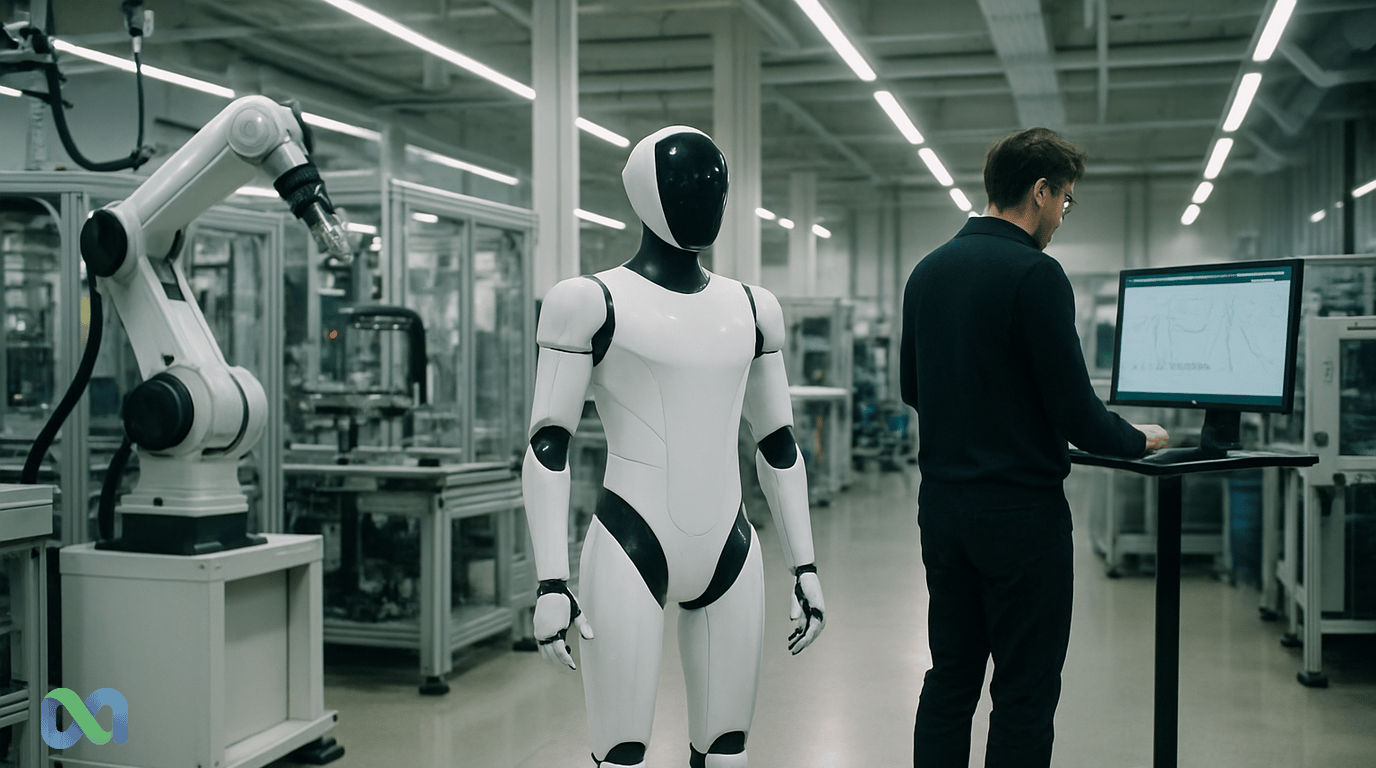
Tesla Optimus 2026 launch odds look low because traders are not voting on Elon Musk's full robot vision. They are pricing one event with a deadline, rules, and clear exclusions. The market question is not whether humanoid robots matter. It is whether Tesla can make Optimus available to public buyers before 2027.
That difference matters. Yahoo Finance highlighted a Benzinga report about this analyst view. The report says Tesla has a "massive advantage" before selling Optimus widely. The argument is simple: Tesla can use its own factories as the first real customer. However, prediction-market traders are focused on a narrower standard.
The latest cited market range is roughly 3% to 9% for a valid 2026 release, depending on the market snapshot. NewsBreak carried the Benzinga report. It cited 9% odds and a prior peak near 33%. The Polymarket event page cited in the research brief showed about 3% Yes and more than $115,000 in volume at the time of collection. Those figures can move fast, so read them as a time-stamped signal, not a permanent verdict.
The useful question is why the market is so skeptical. The answer is not just "robots are hard." Internal use, pilots, demos, waitlists, and employee-only programs may all matter for Tesla's business. Yet they may not count as a public Optimus release under market rules.
What Tesla Optimus 2026 Launch Odds Are Pricing
Tesla Optimus 2026 launch odds are best understood as an event contract. Traders are not rating the whole robotics opportunity. They are estimating whether one defined result happens by a set date.
The market tracked in the brief asks whether Tesla will release Optimus by the 2026 deadline. The live Polymarket event page shows the release question, price, volume, and rules. The brief also cites the Yahoo Finance syndication of Benzinga's report on the same market and analyst thesis.
That split keeps the odds grounded. A 3% or 9% price does not mean traders think Optimus has no long-term value. It means they see a low chance that Tesla meets the public-release standard before the clock runs out.
The 2026 Release Definition Is Narrow
Market rules tend to reward precision. That is useful for traders, but it can make headlines easy to misread. A humanoid robot can appear in a factory, at an event, or in a polished demo without satisfying a market about public access.
The brief's key rule is that a valid release needs public access through an official Tesla consumer channel. That implies a real checkout flow or a paid preorder. It does not mean a video, a waitlist, a private pilot, or internal use at Tesla.
This is the core reason Tesla Optimus 2026 launch odds can stay low while analysts still sound positive. The market is not asking whether Tesla can learn from internal use. It is asking whether an outside buyer can access the product through Tesla before the end of 2026.
Here is the practical split:
- Factory deployment inside Tesla may prove real utility. It is usually not enough by itself.
- A public demo can show progress. It is not the same as a release.
- A waitlist can show demand. It may still fall short.
- An employee-only program can test support. It usually stays outside public access.
- A paid public preorder creates a clearer consumer channel.
- Public checkout availability is the strongest release signal.
This split explains why traders may react sharply to one official Tesla page. A live order page would change the event. A factory video would not have the same force.
A Low Price Is Not Long-Term Pessimism
The market price says more about timing than destiny. Tesla may build a large Optimus business later and still miss a public 2026 release. Those are compatible views.
This is common in prediction markets. A contract can price a narrow calendar outcome while investors debate a much larger story. Traders can believe Tesla has strong robotics assets and still doubt that Optimus reaches public access soon.
That is why the phrase "launch odds" needs care. Tesla Optimus 2026 launch odds are not an estimate of total addressable market. They are also not a direct TSLA stock forecast. They are an estimate for one event under defined rules.
Why Tesla Could Still Have an Optimus Advantage
The bullish thesis starts with Tesla's unusual position. Most robotics companies need to convince outside customers to test early machines. Tesla can put robots into its own operations first.
That matters because early robots rarely start as finished consumer products. They need controlled environments, repeatable tasks, maintenance data, and constant iteration. A factory gives Tesla a place to test Optimus before a broader commercial launch.
The analyst argument cited by Benzinga focuses on this point. Tesla can be the first customer, reduce internal labor pressure, and collect real work data. That is a real edge if the robot can perform useful tasks.
It also fits Tesla's broader playbook. The company often tries to link hardware, software, manufacturing, and fleet data into one system. If Optimus follows that path, internal use could create a feedback loop that smaller robot firms cannot match.
Tesla as the First Customer
Using Tesla factories as the first customer would solve a hard problem in robot adoption. Early buyers do not want fragile machines, unclear support, or weak payback. Tesla can accept more friction inside its own system.
That gives the company room to learn. It can test tasks, refine parts, improve training data, and adjust the robot for real work. It can also decide where humanoid form helps and where simpler automation works better.
However, this advantage does not automatically lift Tesla Optimus 2026 launch odds. Internal use may be bullish for product maturity. It may still fail the public-release rule.
That is the tension traders are pricing. Tesla might make meaningful progress inside its own facilities, yet the market can still say the 2026 public launch threshold is unlikely.
Labor Opportunity Versus Near-Term Demand
Humanoid robots attract large labor-market claims because the possible use cases are broad. Robots that can walk, carry, sort, inspect, and assist could affect many industries over time. But broad opportunity is not the same as near-term serviceable demand.
The first commercial buyers will ask basic questions. What tasks can Optimus do today? How often does it fail? Who repairs it? What is the payback period? How many units can Tesla deliver?
Those questions matter more than the size of the total labor market. A huge market on paper does not create a 2026 consumer release by itself. It only shows why investors and analysts care.
For prediction-market readers, this is the clean split. The bullish case is about the size of the robotics prize. The bearish case is about the launch path before a specific deadline.
Why Traders Are Skeptical About 2026
Low Tesla Optimus 2026 launch odds reflect three types of doubt. The first is production. The second is product readiness. The third is market resolution.
Production is hard because humanoid robots need many parts to work together. Hardware, batteries, actuators, sensors, software, safety systems, and factory processes all need to improve. A public launch also needs support, pricing, ordering, and delivery logistics.
Product readiness is harder to judge from demos. A robot can perform selected tasks on stage and still be far from broad customer use. Traders often discount demos unless they are paired with shipments, paid orders, or third-party use.
Resolution risk is the final layer. Even if Tesla announces progress, traders must ask if that progress will satisfy the market rules. That makes the contract more strict than a normal product-news headline.
Factory Ramp and Hardware Timing
The brief points to Fremont production updates and future hardware generations as key catalysts. That makes sense. If Tesla shows a dedicated Optimus line, rising production numbers, and clearer hardware maturity, traders may reprice the market.
Yet a factory ramp is not just a press event. The company must show it can build reliable units in meaningful volume. It must also show that the units can work outside a tightly controlled demo.
This is why 2026 remains a tough deadline. Tesla can make progress and still choose internal deployment first. It can also delay public ordering until reliability, cost, or support improves.
Internal Deployments Do Not Satisfy Release Rules
The strongest bullish fact can also be a reason for market caution. If Tesla uses Optimus inside its own factories, that may validate the product. But it may not count as a release to the general public.
This is not a small technicality. The market is built around a public commercial threshold. A robot doing useful work at Tesla could support the long-term thesis while leaving the contract unresolved.
That is why traders need to read the rules before reading the headline. "Tesla is using Optimus" and "Tesla has released Optimus to public buyers" are different claims. Only the second one is likely to move the market decisively.
Competitors Add Pressure
Tesla is not the only company chasing humanoid robots. Figure AI, Agility Robotics, and other firms have pursued customer deployments, warehouse use cases, and enterprise pilots. Their progress gives traders a benchmark for what "deployment" looks like.
This does not mean Tesla is behind in every dimension. Tesla has manufacturing scale, AI talent, brand reach, and its own industrial footprint. However, competitors can reduce the market's patience for demo-only progress.
If other firms show paid customer use while Tesla focuses on internal testing, traders may keep public-launch odds low. The market will wait for evidence that Tesla can cross from development into an accessible commercial channel.
What Could Move the Odds Next
The next move in Tesla Optimus 2026 launch odds will likely come from concrete signals, not broad vision statements. Traders will look for proof that the product is moving toward public availability.
The highest-impact catalyst would be an official Tesla page with paid preorder or checkout access. That would address the release rule directly. It would also reduce doubt around who can buy, when units ship, and what product is being sold.
The second catalyst is production data. If Tesla gives clear unit targets, confirms factory line progress, or reports meaningful Optimus activity in a shareholder update, the market could move. The size of the move would depend on whether the update points to public buyers or internal use.
The third catalyst is hardware maturity. A named generation, visible design lock, supplier signals, or safety certification path could make the timeline more credible. Traders care about these details because robots are physical products, not just software launches.
Catalyst Checklist
Therefore, watch these signals before assuming the market has changed its mind:
- An official Tesla Optimus preorder page with payment enabled.
- Public checkout availability through a Tesla consumer channel.
- Clear delivery timing for outside customers.
- Fremont or other line updates with unit targets.
- Evidence that Gen 3 or later hardware is production-ready.
- Customer-facing support, warranty, or service details.
- Third-party use beyond Tesla-controlled environments.
- Resolution guidance that matches the prediction-market rule.
Each signal has a different weight. A new demo may create attention. A paid preorder page would affect the contract more directly.
Bottom Line for Prediction-Market Readers
Tesla Optimus 2026 launch odds are low because the market is pricing a narrow event. Traders want evidence of public availability, not just internal testing or an impressive robotics roadmap.
The analyst's "massive advantage" thesis can still be true. Tesla may benefit from using itself as the first customer, especially if factory deployment speeds up learning. That would matter for the long-term robotics story.
However, a prediction market needs a resolvable outcome. Under strict rules, internal deployments, pilots, demos, and waitlists may not count. Public checkout or paid preorder availability would matter much more.
That is the key reading for Macro Markets users. The market price is not a final judgment on Optimus. It is a timestamped probability on whether Tesla clears a specific launch threshold before the deadline.
For traders, the disciplined approach is to compare live odds with official Tesla signals. If the company moves from factory tests to a public buying channel, the probability can change quickly. Until then, skepticism around a 2026 release is not irrational. It is a rules-based interpretation of the event.
