




Trump Election Bill: What the SAVE America Act Signals for 2026
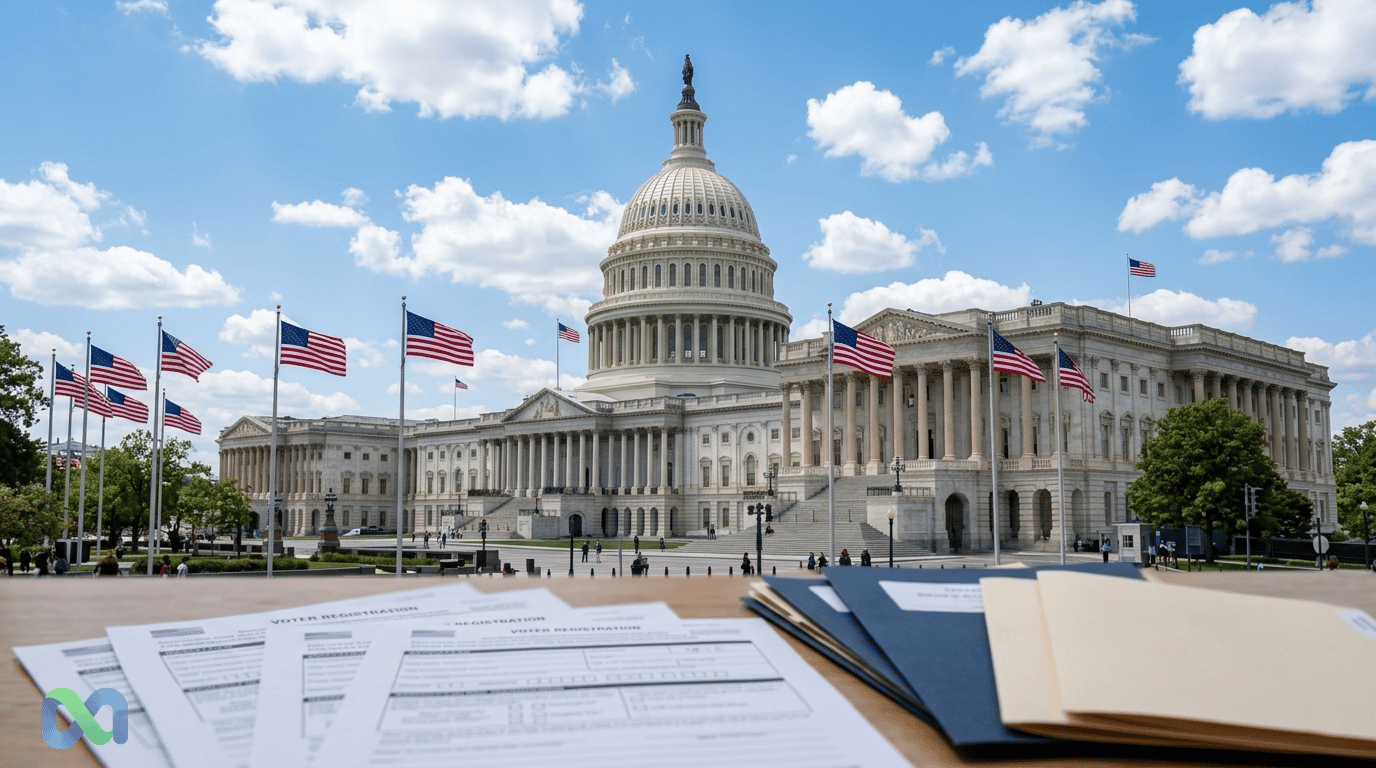
Donald Trump's election bill fight is about more than one vote in Congress. It is a signal about how Republicans may frame election rules before the 2026 midterms.
The bill, known in the current House version as the SAVE America Act, passed the Republican-controlled House in February. NBC News reported that the vote was 218-213, with every Republican voting yes and all but one Democrat voting no. The measure then moved to the Senate, where its path became much harder.
The core issue is simple. The Trump election bill would require documentary proof of citizenship for federal voter registration. It would also add national rules around photo ID and mail ballots.
However, the politics are more complex than the policy summary. Trump is pressuring Senate Republicans to move the bill and to weaken or end the filibuster if needed. Senate Republican leaders have signaled support for debating election legislation. Yet several senators have also resisted changing the 60-vote threshold.
That gap matters for political markets. The bill may have low passage odds, but the fight can still move expectations around 2026 election risk. It can affect campaign messaging, litigation risk, turnout narratives, and confidence in how close races are administered.
What the Trump Election Bill Push Means Now
Trump is trying to turn a House-passed election bill into a Senate priority. According to NBC News, the House version passed in February and was sent to the Senate after a narrow party-line vote. The bill is now part of a broader pressure campaign around election rules.
This makes the current story different from a normal legislative update. The news is not only that a bill exists. It is that Trump is asking Republicans to spend scarce Senate time and political capital on it.
That distinction matters. Political markets rarely price only the text of a bill. They also price the incentives around it. A bill can fail and still shape the campaign if it becomes a repeated message.
The Latest Pressure Campaign
The pressure campaign has two parts. First, Trump wants Senate Republicans to pass the elections bill. Second, he has urged them to end the filibuster if the bill cannot clear the usual Senate hurdle.
That is a hard demand. Most Senate bills need 60 votes to move past a filibuster. Republicans hold a majority, but they do not have 60 seats. They would need Democratic support.
NBC reported that Senate Majority Leader John Thune said Republicans were having a "robust" discussion about the measure. He also said there were not close to enough votes to end the filibuster. That comment is key. It separates support for the bill from support for changing Senate rules.
Why the Midterm Timeline Matters
The 2026 midterms give the bill its political urgency. Election rules, voter ID, mail ballots, and fraud claims are all campaign issues. They can energize the Republican base even when a bill faces steep procedural odds.
For analysts, the calendar creates three clocks. The first is the campaign clock, where messages can move fast. The second is the Senate clock, where rules can slow or stop a bill. The third is the legal clock, where any new rule could face court fights.
Markets should track all three. A speech can change the campaign narrative within hours. A Senate rules fight can take weeks. A court challenge can stretch beyond the next election cycle.
What the SAVE America Act Would Change
The SAVE America Act would create a national voter-registration rule for federal elections. The House text cited by NBC would require states to get proof of citizenship in person from people who register to vote in federal races.
That proof could include documents such as an American passport or birth certificate. The House version also adds photo ID rules for in-person voting. It also creates ID rules for requesting and casting absentee ballots.
Supporters describe the bill as an election-integrity measure. They argue that federal elections should have stronger identity and citizenship checks. They also point to public support for voter ID rules.
Opponents argue that noncitizen voting in federal elections is already illegal and rare. They say the bill could block eligible voters who lack easy access to records. They also frame it as a federal mandate on state-run election systems.
Both frames matter. Policy substance affects the legal and administrative risk. Political framing affects how campaigns use the issue.
Proof of Citizenship in Plain English
Proof of citizenship means a voter would need to show a document that verifies citizenship, not only sign a form under penalty of law. Today, federal voter registration relies heavily on attestation and penalties for false claims.
The proposed change would move the burden toward written proof at the sign-up stage. That may sound narrow. However, it can affect voter drives, state election offices, and voters who do not keep records nearby.
The question is not only whether the rule is popular in polling. The implementation question is whether states can process the rule without mistakes, delays, lawsuits, or uneven access.
A Federal Rule Across State Systems
States and local offices run American elections. That creates tension for any national election bill. Congress can set rules for federal elections, but state systems still do much of the work.
That is why some Republicans have raised states' rights concerns. NBC reported that Sen. Lisa Murkowski opposed plans that would federalize parts of election work. Sen. Susan Collins also raised concerns about the broader revised version.
Those concerns matter because the bill needs more than partisan enthusiasm. It needs enough Republican unity to survive internal objections. It also needs a Senate path that Democrats cannot block.
Why Senate Passage Is Still a Long Shot
The Senate is the main obstacle for the Trump election bill. Republicans can bring attention to the bill. They can hold hearings. They can force votes. However, none of that guarantees passage.
The main constraint is the filibuster. If Democrats oppose the bill, Republicans would usually need 60 votes to advance it. They do not have that number.
That leaves two paths. One is a bipartisan deal, which looks unlikely given the current tone. The other is a change to Senate rules. Many Republican senators have opposed that move in the past.
The Filibuster Is the Hard Constraint
The filibuster is not a side issue here. It is the procedural wall between a House-passed bill and enacted law.
Trump can pressure senators, but he cannot end the filibuster by himself. The Senate controls its own rules. Senators would need to support a rules change or a special path for election bills.
That is why the market question should not be "Does Trump want this?" The better question is "How many senators will change Senate rules for this bill?" Those are very different signals.
Republican Incentives Versus Procedural Reality
Republican senators face mixed incentives. Supporting the bill can align them with Trump and voters who care about election integrity. Yet ending the filibuster could weaken a tool Republicans may want later.
That trade-off is real. Republicans used the filibuster to block Democratic voting-rights bills in recent years. Some senators may resist a rule change because it would make future Democratic majorities stronger.
This is why passage odds can remain low even if public pressure rises. Political intensity and legislative probability do not always move together.
The Market Signal: Passage Odds Are Only Part of the Story
The most useful way to read the SAVE America Act is as a political-risk signal. The bill's direct passage odds matter. However, the side effects may matter more for 2026.
If the bill stalls, Trump can still use the fight to argue that Republican candidates need larger majorities. He can also use it to keep election-integrity claims in the campaign bloodstream. Democrats can use the same fight to warn about voting access and institutional risk.
For prediction markets, that creates several possible inputs. The bill can affect views on Senate control, House control, turnout, lawsuits, and post-election disputes. It can also affect how traders read close-race risk.
Election-Integrity Narratives as Campaign Assets
Election-integrity language is not only a policy argument. It is also a campaign asset. It gives candidates a message about trust, fraud, and control of key institutions.
That message can be powerful even without enacted legislation. A failed Senate vote can become evidence for a primary challenge. A procedural blockade can become a fundraising hook. A court fight can become a proof point for either side.
Markets should therefore avoid a narrow yes-or-no view. The bill either passes or fails, but the story can still spread. In politics, a repeated story can be a market signal.
What Analysts Should Monitor Next
Analysts should track five signals. First, watch whether Thune schedules a vote or keeps the bill in discussion. Second, track public statements from Murkowski, Collins, McConnell, and other Senate Republicans. Third, watch for any shift in filibuster language.
Fourth, monitor whether Democrats use the bill in paid media or Senate messaging. Fifth, watch for state election officials and legal groups preparing challenges. Those responses can reveal whether the bill is moving from symbolic pressure to operational risk.
The strongest market signal would be a real Senate vote. The second strongest would be a clear change in Republican support for a filibuster exception. Without either signal, the bill remains more useful as campaign fuel than as likely law.
What This Means for 2026 Election Risk
For 2026, the Trump election bill matters in three ways. It can change the Senate agenda. It can shape campaign stories. It can raise the perceived risk of lawsuits or voter-registration fights.
Those risks are not equal. Passage is the hardest outcome. Narrative impact is easier. Lawsuit risk becomes more relevant only if the bill advances or if states copy parts of the policy.
That hierarchy helps analysts avoid overpricing the headline. A strong Trump statement does not mean a new federal election law is imminent. It does mean election rules may remain a live campaign issue through the midterms.
Administrative and Legal Timelines
If a bill like this became law, rollout would not be instant. States would need guidance. Election offices would need new processes. Voters and legal groups would likely challenge parts of the law.
That creates timing risk. A rule passed close to an election can face claims that it disrupts registration. Courts may also weigh whether the federal rule conflicts with state systems or creates unfair burdens.
For markets, timing matters. A late rule change can create uncertainty before courts decide the merits. Traders should separate the chance of enactment from the chance of election-office disruption.
Potential Prediction-Market Variables
The clearest variables are Senate action, filibuster momentum, and 2026 congressional control. If Republicans move closer to a filibuster carveout, the bill's passage probability changes. If senators reject that move in public, the bill remains mostly symbolic.
Other inputs are indirect. Watch whether voter ID and citizenship-proof messaging improves Republican turnout. Watch whether Democrats gain traction with voting-access warnings. Also watch whether election lawsuits become a larger part of the 2026 risk map.
Prediction-market probabilities are signals, not guarantees. They help quantify expectations when new information arrives. In this case, the new information may come from Senate procedure as much as from campaign rallies.
FAQ
What is the SAVE America Act?
The SAVE America Act is a Trump-backed election bill that would require documentary proof of citizenship for federal voter registration. The House-passed version also includes national rules for photo ID and mail ballots. Supporters call it an election-integrity bill. Opponents call it a voting-access threat.
Did the House pass the SAVE America Act?
Yes. NBC News reported that the Republican-controlled House passed the bill 218-213 in February. Republicans voted unanimously for it, while all but one Democrat opposed it. The bill then moved to the Senate, where it faces a much harder path.
Can Trump end the filibuster by himself?
No. The president cannot end the filibuster alone. Senate rules are controlled by senators. Trump can pressure Republicans, but a rules change would require enough Senate support. Current Republican comments suggest that support is not close.
Can the Trump election bill pass the Senate?
It can be debated, but passage remains difficult. The main obstacles are Democratic opposition, the 60-vote threshold, Republican hesitation over federal election mandates, and the risk of changing Senate rules. A procedural vote would be the key signal to watch.
How could the bill affect 2026 election risk?
The bill could affect 2026 even if it does not become law. It can shape campaign messaging, voter-access disputes, and expectations around close races. If it advances, analysts should watch implementation timelines, lawsuits, and state election-office responses.
Bottom Line
The SAVE America Act is not only a voting-law proposal. It is also a test of Republican unity, Senate procedure, and the political value of election-integrity messaging before 2026.
The bill's direct path remains steep because the Senate filibuster is still intact. However, the pressure campaign can still matter. It may change what campaigns talk about, how voters assess election rules, and how markets price political risk.
That is the key takeaway for analysts. Do not treat the Trump election bill as inevitable. Treat it as a live signal. The next real catalysts are Senate scheduling, filibuster language, swing-senator statements, litigation preparation, and any measurable shift in 2026 election expectations.
Sources: NBC News on House passage and the House Rules Committee bill text.
