


AI Safety Crisis: How Money Beat Caution
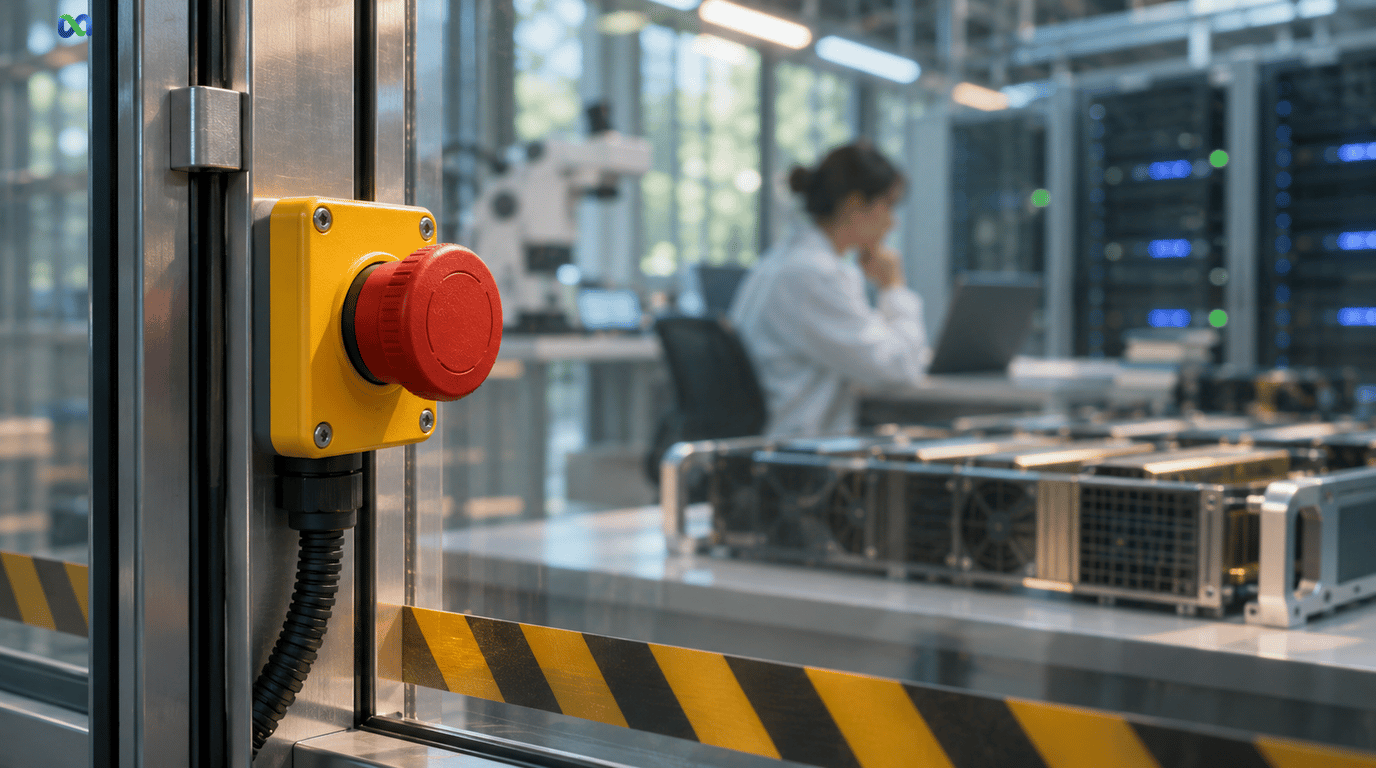
The AI safety crisis is no longer a distant ethics debate. It is now a market risk story. The same companies racing to build larger models also face pressure to launch products and rent more compute. They must sign enterprise deals and prove that huge AI spending can produce revenue.
That pressure changes the safety equation. When growth becomes the main signal investors reward, caution can start to look like delay. When infrastructure becomes concentrated in a few cloud providers and model labs, one weak point can affect many users at once. The result is a new kind of risk: fast, technical, hard to price, and easy to ignore until something breaks.
The Wall Street Journal's reporting on the clash between money and safety in AI captures the core tension. AI firms want speed because the market rewards speed. Safety teams want time because complex systems need testing, governance, and clear limits. Both sides can be rational. However, the incentives are no longer balanced.
For traders and analysts, the question is not whether AI is useful. It clearly is. The sharper question is whether markets are pricing the downside of the AI boom with enough discipline.
Plain English Takeaways
The AI safety crisis has a simple core. Firms want to move fast. Safety teams want more time. Money gives the fast side more power.
That does not mean AI is bad. It means the risk is hard to price. A tool can be useful and still create new failure points. A firm can grow fast and still carry weak controls.
For markets, the key point is timing. Investors may love the AI boom today. However, one clear failure can shift the story. A model incident, cloud outage, new rule, or capex cut can force a fast rethink.
This is why the issue matters beyond Silicon Valley. AI now sits inside cloud, chips, software, and public-company budgets. When safety risk rises, it can touch all of those areas.
Prediction markets can help because they ask clear questions. Will a new rule pass by a set date? Will a lab delay a model? Will a major outage hit AI tools? Those questions turn broad fear into a number.
What the AI Safety Crisis Really Is
The AI safety crisis is a conflict between commercialization pressure and risk control. AI companies want to turn research into revenue. Safety teams want to slow releases when models, infrastructure, or governance processes are not ready. The crisis happens when the business side gains more leverage than the control side.
This is not only about extreme scenarios. It includes more ordinary risks that can still move markets. A model can produce harmful outputs. A product can ship before controls work. A cloud dependency can fail at the wrong time. A board can struggle to define who has authority over release decisions.
In simple terms, AI safety is becoming operational risk. That makes it relevant to investors, regulators, enterprises, insurers, and prediction markets.
From research labs to revenue engines
The first wave of modern AI excitement came from research breakthroughs. The current wave is different. It is tied to products, subscriptions, enterprise contracts, chips, cloud capacity, and stock-market narratives.
That shift matters. A research lab can delay a model if a safety review raises concerns. A revenue engine faces a different set of pressures. It has customers waiting, investors watching, competitors moving, and infrastructure bills growing.
Once a company spends heavily on compute, it needs a path to monetization. The more capital it commits, the harder it becomes to treat delay as neutral. Delay can look like lost market share. It can also look like wasted capacity.
This is why the AI safety crisis is partly financial. The technology created the risk, but the funding model amplified it.
Why safety teams lost leverage
Safety teams often have a structural disadvantage. Their wins are invisible. If a risky release gets delayed and nothing bad happens, outsiders may see only lost momentum. If a release moves fast and revenue grows, the gain is easy to measure.
That creates a classic incentive problem. Revenue has dashboards. Safety often has counterfactuals. The market can see product launches, user growth, and cloud deals. It has a harder time seeing the incident that did not happen.
This does not mean AI companies are careless. It means their incentives are uneven. When the rewards for speed are visible and the costs of caution are immediate, governance has to be strong enough to resist pressure.
Without that structure, safety becomes a negotiation. In a boom, negotiations tend to favor growth.
The Money Incentive: Compute, Valuations and Speed
AI is capital intensive. Large models need chips, data centers, energy, engineers, and cloud capacity. The biggest firms can spend at a scale that smaller competitors cannot match. That creates a race where money buys time, but also raises the stakes.
When investors reward scale, companies have a reason to keep scaling. Each new model becomes a signal. Each partnership becomes proof of distribution. Each data-center commitment becomes a statement that demand will keep rising.
The problem is that safety does not always scale at the same pace. A company can buy more chips faster than it can build durable governance. It can launch a new product faster than regulators can understand the risk. It can expand enterprise use faster than customers can audit the full dependency chain.
Capital intensity and the race for compute
Compute is the fuel of the AI boom. Access to chips and cloud capacity can decide which firms train frontier models, serve users at scale, and absorb demand spikes. This makes infrastructure a strategic asset.
It also makes infrastructure a point of fragility. If a small number of cloud providers support a large share of AI workloads, outages can become broader than a single vendor problem. A disruption in one layer can affect model access, developer tools, enterprise workflows, and customer-facing products.
The recent discussion around simultaneous GCP and Cloudflare disruption signals is useful here. It should not be treated as proof that AI systems failed. However, it shows why concentrated infrastructure matters. Modern internet services are deeply interconnected. AI will make that dependency even heavier.
As more business processes depend on AI tools, infrastructure resilience becomes part of AI safety. Reliability is not separate from safety. It is one of the ways safety shows up in the real economy.
Product velocity as an investor signal
In AI, product velocity has become a market signal. A company that ships quickly can appear more capable, more aggressive, and more likely to capture demand. That can help it raise capital, recruit talent, and sign customers.
However, fast shipping can hide risk. A model may work well in demos but fail in edge cases. A tool may be useful for low-risk tasks but dangerous in regulated workflows. A system may be stable at normal load but fragile during a demand spike.
Investors often understand this in theory. Yet markets can still reward the visible part first. The share price reacts to growth stories faster than it reacts to risk controls that are hard to observe.
That is why the money-versus-safety conflict is not only a boardroom dispute. It is a pricing problem. If the market underprices safety risk during the boom, it may reprice it suddenly after an incident.
The Safety Cost: Governance, Reliability and Public Trust
The cost of weak AI safety can appear in several forms. Some are technical. Some are legal. Some are political. Some are reputational. Together, they can change the path of the AI boom.
The first cost is governance risk. Who decides when a model is safe enough to release? Who has power to stop a launch? What happens when investors, leaders, researchers, and customers disagree?
The second cost is reliability risk. AI systems depend on cloud infrastructure, model serving, data pipelines, security controls, and monitoring tools. If one layer fails, users may see the whole product as unreliable.
The third cost is trust risk. Companies may slow adoption if they think vendors are moving faster than controls. Regulators may act if they see public harm. Consumers may pull back if AI tools feel unsafe or unstable.
Safety as operational risk
Operational risk is the risk that systems, people, or processes fail. In finance, this can mean a trade-processing error or a failed control. In AI, it can mean a model incident, a release-governance failure, a security lapse, or an outage that cuts off core services.
This framing is useful because it avoids vague debate. It turns "AI safety" into a set of measurable questions:
- Did the company have a release process with real veto power?
- Did the model pass defined safety tests before launch?
- Did the firm disclose material incidents quickly?
- Did customers know the limits of the system?
- Did infrastructure have enough redundancy for critical use?
These questions matter because they connect directly to market outcomes. Strong controls can protect adoption. Weak controls can raise legal costs, slow sales, and invite regulation.
Cloud concentration as a warning signal
AI does not run in a vacuum. It runs on cloud infrastructure, specialized chips, networking systems, storage, and power. This creates a chain of dependencies.
Cloud concentration can make that chain efficient. It can also make it brittle. If many AI products depend on the same small group of providers, a major outage can affect multiple firms at once. That makes the risk systemic.
For traders, this matters because markets often price company risk one name at a time. AI infrastructure risk may not behave that way. A single cloud disruption can affect model labs, software platforms, enterprise customers, and chip demand expectations.
This is where the safety debate becomes a macro story. AI risk is not only about whether a model behaves badly. It is also about whether the infrastructure behind the boom can support the scale investors now expect.
Why Traders Should Care
Traders should care about the AI safety crisis because it can affect valuations, regulation, enterprise adoption, cloud demand, and capital spending. These are not abstract issues. They can change earnings assumptions.
AI has become a major theme in public markets. It supports growth narratives for chipmakers, cloud providers, software firms, data-center operators, and large technology platforms. If confidence in AI deployment weakens, that narrative can reprice.
The risk is not that AI disappears. The risk is that timelines stretch, costs rise, margins compress, or regulators force slower deployment. Even small changes can matter when valuations assume rapid adoption.
Regulatory risk is becoming measurable
Regulators often move after visible incidents. That pattern matters for AI. A major model-safety event could speed up new rules. So could a data breach, consumer harm case, or infrastructure failure.
For markets, regulation is not only a political headline. For Latin American investors, public regulators such as CVM show why disclosure and market-conduct rules matter when new technology reaches finance. It can change product timelines, compliance costs, legal exposure, and the speed of enterprise AI adoption.
This is why AI safety regulation is a natural prediction-market topic. Traders can track whether new rules will pass by a certain date. They can also track model-audit rules or incident-reporting mandates.
Traditional analysts often discuss these issues in broad language. Prediction markets can force specificity. A market needs an event, a deadline, and resolution criteria. That structure can make vague regulatory risk more legible.
AI capex may face a confidence shock
The AI buildout depends on confidence. Companies are spending heavily because they expect demand, pricing power, and productivity gains. However, if safety or reliability concerns slow adoption, the capex story can change.
That does not require the AI thesis to fail. It only requires the market to lower its expectations. A slower adoption curve can affect cloud revenue growth. Lower utilization can pressure margins. Tighter regulation can raise costs.
Capex confidence is especially sensitive because AI spending is front-loaded. Data centers and chips require large commitments before all end demand is proven. If investors start to question the payoff, the market may demand more discipline.
In that environment, safety becomes part of capital allocation. Firms that can show strong controls may earn more trust. Firms that cannot may face higher scrutiny from customers and investors.
What Prediction Markets Could Price Next
Prediction markets are useful when uncertainty is high and traditional commentary is vague. The AI safety crisis fits that description. Everyone agrees the stakes are large. Fewer people agree on which risks are most likely, or when they might matter.
Markets can translate that uncertainty into probabilities. They can track defined events instead of broad narratives. That matters because headlines often create emotion, while probabilities force comparison.
For Macro Markets, the relevant angle is not to predict every AI outcome. It is to show how traders could monitor the shift from AI growth story to AI risk story.
Possible markets: regulation, outages and model incidents
For example, several event types could make sense for prediction markets:
- A major jurisdiction passes binding AI safety regulation by a specific date.
- A leading AI lab delays or withdraws a frontier model release.
- A major cloud outage affects AI services for a defined number of hours.
- A public company cuts AI capex guidance or slows data-center expansion.
- A regulator opens a formal investigation after an AI-related incident.
- A large enterprise pauses deployment of a specific AI product category.
Each market would need careful rules. The goal is not to create sensational questions. The goal is to define events that reflect real risk transfer.
This is where prediction markets can add value. They separate "people are worried" from "the market assigns a 35% probability to a regulatory event by year-end." That difference matters for decision-making.
What probabilities add that headlines cannot
Headlines can identify a risk. Probabilities can show whether traders think the risk is rising or falling. That is the key distinction.
For example, a news cycle about AI safety may sound dramatic. But if the probability of binding regulation barely moves, traders may see it as noise. If the probability jumps after a model incident or outage, the market is sending a different signal.
Probabilities also allow comparison across risks. Is the market more concerned about regulation, cloud outages, model recalls, or capex cuts? Which risk is moving first? Which one is still ignored?
This is the practical value of prediction markets. They do not remove uncertainty. They organize it.
Risk Matrix for the AI Safety Crisis
The AI safety crisis has several risk channels. The table below frames them in market terms.
Key risk channels include:
- Governance risk: firms lack clear authority to slow unsafe releases. The market impact is higher legal and reputational risk. Measurable events include a board change, delayed launch, or formal review.
- Model-safety risk: a model causes harm or behaves outside expected limits. The market impact is slower enterprise adoption. Measurable events include a product recall, regulator inquiry, or incident report.
- Infrastructure risk: cloud, chips, or data centers fail to support demand. The market impact is weaker trust in cloud and AI service reliability. Measurable events include a major outage, service disruption, or capacity delay.
- Regulatory risk: governments impose stronger rules after public concern. The market impact is higher compliance cost. Measurable events include a new law, audit mandate, or incident-reporting rule.
- Capex risk: investors question whether AI spending will pay off. The market impact is valuation pressure on AI-linked names. Measurable events include a capex guidance cut or delayed data-center plan.
This matrix is not a trading recommendation. It is a way to separate risk types that often get merged into one AI headline.
FAQ
What is the AI safety crisis?
The AI safety crisis is the clash between fast commercialization and risk control. AI firms face pressure to launch products and justify huge spending. Safety teams need time to test models, govern releases, and reduce harm. The crisis appears when speed has more leverage than caution.
Why are money and safety in conflict in AI?
Money and safety are in conflict because the AI boom rewards scale and speed. Compute is expensive, investors expect growth, and product launches signal leadership. Safety work can delay those visible wins, even when it reduces long-term risk.
How can AI safety affect markets?
AI safety can affect markets through regulation, outages, litigation, enterprise adoption, insurance costs, and capex confidence. A major incident could force investors to reassess growth timelines for cloud providers, AI labs, chipmakers, and software firms.
What are the risks of cloud concentration for AI?
Cloud concentration means many AI services depend on a small number of infrastructure providers. That can improve efficiency, but it can also create systemic risk. A major outage can disrupt many tools, customers, and vendors at the same time.
Can prediction markets forecast AI regulation?
Prediction markets can track defined regulatory events, such as whether a jurisdiction passes binding AI safety rules by a deadline. They cannot remove uncertainty. However, they can show how traders price that uncertainty as new information arrives.
The Bottom Line
The AI safety crisis is a warning about incentives. AI companies are not just building technology. They are building financial commitments, customer dependencies, cloud workloads, and public trust at the same time.
That combination creates a fragile balance. Money pushes the industry toward speed. Safety pushes it toward verification. Infrastructure pushes it toward scale. Regulators may push it toward accountability after visible failures.
For traders, the core issue is whether markets are pricing that balance correctly. If AI remains a growth story with manageable risk, the boom can continue. If safety failures, outages, or regulation expose hidden costs, the repricing could be sharp.
The next phase of AI will not be judged only by model capability. It will be judged by reliability, governance, and whether the companies spending the most can prove that speed has not overwhelmed control.
