




Algeria National Team World Cup 2026: Complete Guide
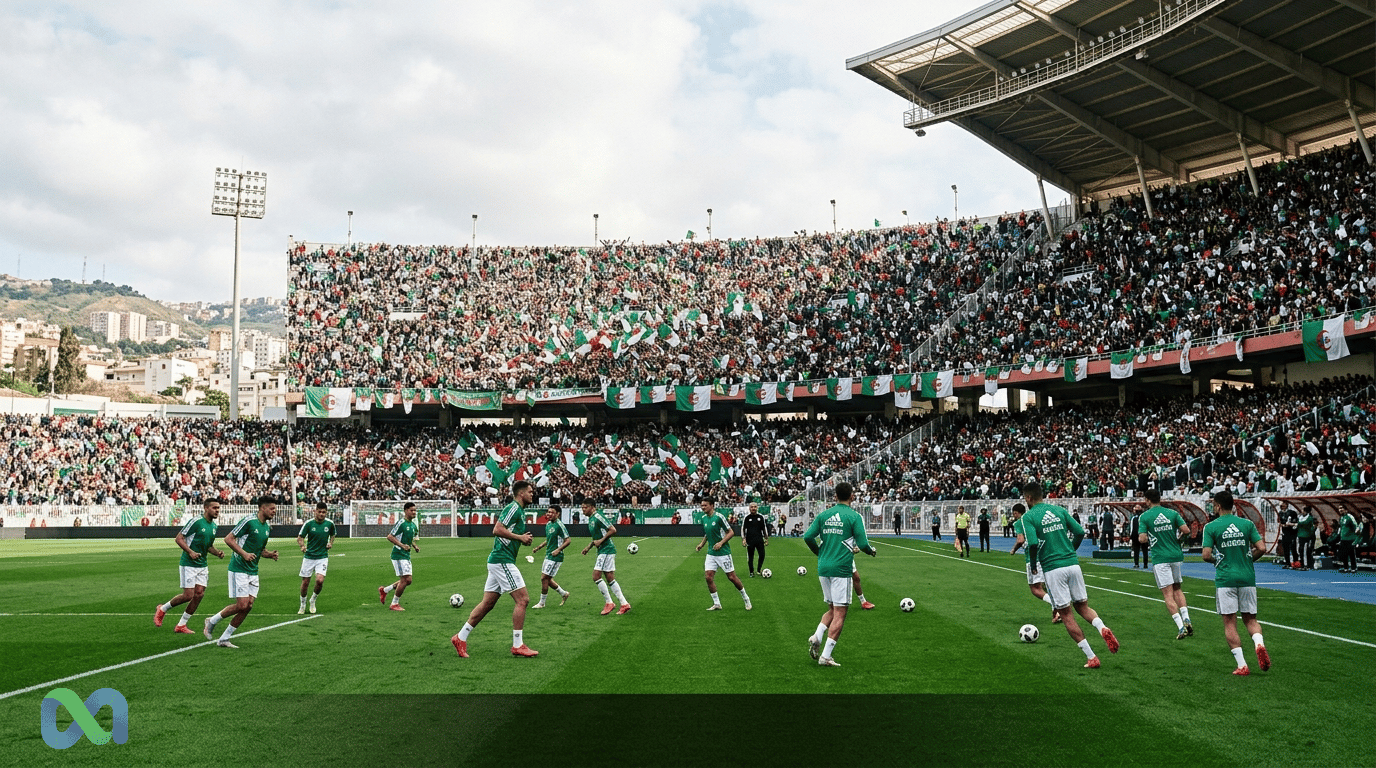
The Algeria national team World Cup 2026 story is back on the global map after two straight absences. Algeria secured its place through African qualifying, beating Somalia 3-0, finishing on top of Group G, and giving supporters a clear sense of competitive renewal.
The main point is not only qualification. Algeria arrives with an unusual mix. It has veteran leadership, players tested in strong European leagues, pace in attack, and a generation that can still grow before the tournament starts.
This guide covers what matters if you want to follow Algeria at the 2026 World Cup. We will go through qualification, history, coach, likely squad, key players, group path, schedule, and probability analysis. The goal is to separate narrative from useful market analysis.
When the group draw and full match schedule are confirmed, this page should be updated. Until then, the best approach is to understand Algeria's team profile, strengths, risks, and the markets that can measure its real level.
Has Algeria Qualified for the 2026 World Cup?
Yes. Algeria has qualified for the 2026 World Cup. The national team confirmed its place by beating Somalia 3-0 in African qualifying. That result brought Algeria back to the World Cup for the first time since 2014 and set up its fifth tournament appearance.
The qualification also ended a frustrating run. Algeria missed the 2018 and 2022 World Cups despite having strong names in both cycles. Therefore, 2026 carries sporting weight and symbolic value.
How Algeria Qualified Through African Qualifying
Algeria built its qualification through a solid campaign in Group G of African qualifying. According to CAF's match report, the 3-0 win over Somalia secured top spot and confirmed the team's return after a 12-year absence.
Riyad Mahrez and Mohamed Amoura were central figures in the decisive stretch. That matters because they represent different sides of the team. Mahrez brings control, experience, and final-third passing. Amoura brings depth, intensity, and constant runs into space.
The campaign also showed an important point. Algeria does not rely on only one name. The team has attacking options and midfield depth. However, the World Cup brings a different level of testing.
Return After Missing 2018 and 2022
The return after two missed World Cups changes public expectations. For many supporters, 2026 is a chance to reopen the cycle that ended on a high note in 2014.
The 2014 team took Germany to extra time in the round of 16. Germany later won that tournament. Therefore, that campaign became the reference point for modern Algeria analysis.
Now the question is different. Algeria does not need to repeat 2014 for the campaign to be positive. Reaching the knockout stage would already be a strong signal. Competing well against elite teams would also carry value.
Algeria's World Cup History
Algeria has a short but meaningful World Cup history. The country played in 1982, 1986, 2010, 2014, and now 2026. Its best run came in 2014, when it reached the round of 16.
Here is the quick history:
- 1982: group stage, including a historic win over West Germany.
- 1986: group stage, in Algeria's second straight appearance.
- 2010: group stage, after a long absence.
- 2014: round of 16, the country's best World Cup campaign.
- 2026: qualification secured after missing 2018 and 2022.
FIFA's Algeria team profile treats the country as a team with strong World Cup memories. That comes partly from the shock of 1982 and partly from the competitive level shown in 2014.
The Legacy of 1982
The 1982 World Cup still holds a special place in Algerian football history. The win over West Germany was one of the major shocks of that tournament. Even without advancing, Algeria showed it could compete with European powers.
That legacy explains why Algeria does not enter World Cups as a passive participant. There is an expectation of resistance, intensity, and competitive pride.
The Best Campaign in 2014
In 2014, Algeria advanced from the group stage and faced Germany in the round of 16. The match was hard, physical, and balanced for long stretches. The extra-time defeat did not erase the performance.
That match also offers a lesson for 2026. Algeria can be dangerous when it combines defensive discipline with fast transitions. However, it must sustain concentration for 90 minutes or more.
Algeria Coach and Playing Style
Vladimir Petković is Algeria's coach in this cycle. He is known for tactical organization and for important work in European football. His mission is to turn good individual players into a stable national team.
The challenge is clear. Algeria has the talent to speed up games. However, the World Cup punishes teams that leave space between defense and midfield. Balance will be the key word.
Who Is Vladimir Petković?
Petković gained wider attention as Switzerland manager. He led a competitive cycle and showed that he could organize teams against stronger opponents.
With Algeria, his work has two main tasks. First, he must protect the defense better. Second, he must use the team's attacking quality without making the structure predictable.
That combination will define Algeria's ceiling at the 2026 World Cup. If the team stays compact, it has enough material to trouble opponents. If it becomes stretched, stronger teams can punish it.
Strengths: Transition, Width, and Technique
Algeria has players who attack open space well. Mohamed Amoura is the clearest example. He can press, run behind defenders, and finish with few touches.
Rayan Aït-Nouri gives width and ball-carrying on the left. Mahrez still offers pause, creation, and set-piece quality from the right. Amine Gouiri can connect midfield and attack with more mobility.
The team also has players developed or tested in competitive European environments. That reduces the pace shock in big matches. Even so, the World Cup is a tournament of details.
Risks: Defending Elite Teams and Finishing Chances
The main risk appears against elite teams. Algeria may suffer if it has to defend for long periods. Attacking full-backs leave space, and recovery runs must be fast.
Another risk is efficiency. In World Cups, a mid-tier team often creates only a few clear chances. Therefore, wasting one major opportunity can change the whole tournament.
That is why market analysis should not focus only on names. It should consider the group, schedule, opponent profiles, and the price of each scenario.
Algeria Squad and Key Players for 2026
Algeria's final 2026 World Cup squad is not locked yet. Call-ups can change because of injuries, form, coaching choices, and club performance. Still, there is already a likely core.
Here are the names to monitor by position:
- Goalkeeper: Anthony Mandrea and Alexis Guendouz are competing for space.
- Defense: Ramy Bensebaini, Aïssa Mandi, and Rayan Aït-Nouri give the back line its base.
- Midfield: Houssem Aouar, Ismaël Bennacer, and Farès Chaïbi can control the rhythm.
- Attack: Riyad Mahrez, Mohamed Amoura, Amine Gouiri, and Baghdad Bounedjah bring creativity and goals.
The official list should only be treated as final when the federation releases the squad. Until then, the correct approach is to work with a likely squad and updated player status.
Goalkeepers and Defense
Algeria's defense mixes experience with attacking full-backs. Bensebaini and Mandi bring international mileage. Aït-Nouri adds ball progression and aggression on the left.
The key concern is box protection. Against strong teams, the defense must handle crosses, passes between the lines, and counter-pressing pressure. This unit will be decisive for Algeria's knockout-stage chances.
Midfield
The midfield may be Algeria's thermometer. Houssem Aouar adds passing and late runs. Farès Chaïbi can operate between the lines. Bennacer, if fit, greatly improves control.
This area also needs to balance creativity and coverage. If the midfield pushes too high, the defense becomes exposed. If it drops too deep, the attack loses support.
Attack
The attack is the most exciting area. Mahrez can still decide games through set pieces and one-on-one actions. Amoura gives speed. Gouiri adds technique and interpretation.
Baghdad Bounedjah remains an experienced option. However, the World Cup may favor more mobile forwards, especially against slower center-backs. The center-forward choice will depend on the match plan.
Key Algeria Players at the 2026 World Cup
The key Algeria players for 2026 are Riyad Mahrez, Mohamed Amoura, Amine Gouiri, Rayan Aït-Nouri, Ibrahim Maza, Houssem Aouar, Ramy Bensebaini, and Farès Chaïbi. They form the technical core of the team.
Riyad Mahrez
Mahrez is the most recognized name in the squad. Even away from his European peak, he remains a technical reference. He creates chances, takes set pieces, and controls the tempo in the final third.
His value goes beyond the ball. In a short tournament, leadership matters. Mahrez knows how to play under pressure and can connect generations inside the group.
Mohamed Amoura
Amoura may be the player who best represents Algeria's physical ceiling. He accelerates attacks and pressures defenders. He also offers a direct threat that can change an opponent's defensive line.
If Algeria faces rivals that dominate possession, Amoura's value rises. He can turn a defensive recovery into a clear chance within seconds.
Amine Gouiri
Gouiri gives the attack more refinement. He can play as a mobile striker, second forward, or linking player. That flexibility helps Petković adjust the team without changing the whole system.
In tight games, his ability to receive between the lines may be essential. Algeria will need that type of solution when there is little space for transition.
Rayan Aït-Nouri
Aït-Nouri is one of the most interesting full-backs in the squad. He carries the ball, combines inside, and helps break lines. He can also be a strong outlet against pressure.
The risk is defensive. If he attacks too much, the left side can become a target. Therefore, his role must be coordinated with the midfielder and center-back on that side.
Ibrahim Maza, Houssem Aouar, and Farès Chaïbi
Ibrahim Maza is a player to monitor as a creative piece for the future. Aouar has more senior experience and can arrive in the box. Chaïbi adds passing, mobility, and set-piece quality.
This midfield and attacking layer is important. It prevents Algeria from depending only on Mahrez. It also gives the coach more options for different match scenarios.
Algeria's Group, Schedule, and Path
Algeria's group at the 2026 World Cup should be watched carefully. The draw, match order, venues, and rest windows can change the probability reading a lot.
When the schedule is confirmed, three questions will be decisive:
- Does Algeria open against a favorite, a direct rival, or the group's weakest team?
- Does the second match offer a real chance of points?
- Does the team reach the third match with a live path to advance?
These questions matter more than a generic squad rating. In short tournaments, context controls the analysis.
Algeria's Group When Confirmed
If Algeria lands in a group with a European power and a strong South American side, the margin becomes smaller. If it faces one clear favorite and two teams in a similar range, the chance to advance grows.
The expanded 48-team format also changes the calculation. The 2026 World Cup will have more teams and a different structure than 2014. Therefore, direct comparisons with older campaigns can mislead.
Matches, Venues, and Dates
Venues matter. Long travel, climate, pitch conditions, and rest between matches can affect intensity. For a team that depends on transition, fresh legs make a difference.
Dates also influence preparation. Facing the strongest rival in the opener can be positive if that team is still adjusting. However, it can also create immediate pressure.
Probabilities and Relevant Markets for Algeria
The best way to analyze Algeria at the 2026 World Cup is to turn opinions into scenarios. Prediction markets help because they organize expectations into probabilities. They do not guarantee results, but they show how consensus changes as new information arrives.
For the Algeria national team World Cup 2026 outlook, four markets are especially useful:
- qualification for the knockout stage;
- group winner;
- group-stage points;
- Algeria top scorer at the tournament.
Each market answers a different question. Therefore, they should not be read as the same signal.
Qualification for the Knockout Stage
This is the most direct market. It measures whether Algeria should survive the group stage. It is also the best thermometer for comparing squad quality, group strength, and schedule.
If the probability rises after the draw, the market may be reacting to a lighter group. If it falls, the path may have become harder. The price must be read with context.
Group Winner
Winning the group requires more. Algeria may have a good chance to advance and, at the same time, a low chance to finish first. That is normal.
This market is useful when the group has a clear favorite. If Algeria is priced very low to win the group, there may still be more value in advancement or points markets.
Group Points
Expected points help avoid binary analysis. A team can play well, take four points, and still depend on tiebreakers. Another can advance with a favorable schedule without dominating.
That is why points markets are often useful for measuring consistency. They capture draws, narrow wins, and defeat risk without reducing everything to the title.
Algeria Top Scorer
The team top-scorer market can reveal the offensive role of each player. Mahrez will attract attention because of his name and set pieces. Amoura can gain value if he starts and attacks space.
Gouiri can also appear if he plays centrally. However, this market depends heavily on the lineup. Before trading it, check likely minutes and tactical role.
How to Read Algeria Without Buying the Hype
Algeria has strong names, but names do not win groups by themselves. The common mistake is to look at clubs, reputation, and highlights. That creates a narrative that is too simple.
A more useful analysis starts with three filters:
- Group quality: direct rivals matter more than overall ranking.
- Matchup style: Algeria prefers space to accelerate.
- Chance efficiency: short tournaments punish waste.
It is also important to separate support from probability. A team can be entertaining and still have a difficult path. It can also look quiet and carry value because of the draw.
On Macro Markets, the ideal read combines public information, schedule, and market movement. When these three elements diverge, the most interesting part of the analysis begins.
Algeria National Team World Cup 2026: What Is the Real Ceiling?
In simple terms, Algeria can advance from the group. But it does not enter as a title favorite. Its real ceiling depends on the draw.
If Algeria lands in a softer group, it can fight for second place. If it draws two strong teams, the plan changes. In that case, a solid draw and one correct win may be enough.
The team has good names. It also has flaws. That is normal for a mid-table global national team.
The positive signal is clear. Algeria has wing quality, passing, and goals. It has leaders on the pitch. It also has hunger to return well.
The negative signal is also clear. The team can suffer without the ball. It can struggle when forced to create. It can also feel the weight of a very physical match.
Its strength is fast attack. The doubt is defense under pressure. That is why every opponent changes the calculation.
For the reader, the rule is simple. Do not buy the story before seeing the path. Check the group, date, venue, injuries, and lineup.
Then watch how the market reacts. If the price moves without new facts, emotion may be too high. If it moves after real news, it may be a fair adjustment.
Quick Checklist for Following Algeria
Before each match, check five simple points. They help you read Algeria without falling into noise.
First, see who starts on the flanks. If Aït-Nouri and Mahrez start, the team gains passing and attack. However, it may also leave more space behind them.
Second, check the most advanced forward. Amoura runs and presses well. Gouiri gives more touch and pause. Bounedjah gives box presence.
Third, look at the midfield. If Bennacer is fit and starting, Algeria tends to have more calm on the ball. If he does not play, the team may become more direct.
Fourth, evaluate the opponent. Against teams that keep possession, Algeria can use counterattacks. Against low blocks, it must create both inside and wide.
Fifth, watch the market price after lineups. A starter change can move the chance of advancement. Injury, travel, and rest also matter.
This checklist does not predict the future. It only makes the analysis cleaner. At a World Cup, a good read starts before kick-off.
Frequently Asked Questions About Algeria at the 2026 World Cup
Has Algeria Ever Won the World Cup?
No. Algeria has never won the World Cup. Its best campaign came in 2014, when it reached the round of 16 and lost to Germany in extra time.
What Was Algeria's Best World Cup Campaign?
Algeria's best World Cup campaign was in 2014. The team advanced from the group stage and faced Germany in one of the most memorable matches of that edition.
Who Is Algeria's Coach?
Algeria's coach is Vladimir Petković. He took over with the mission of organizing a talented team that needs defensive stability to compete at the World Cup.
Who Are Algeria's Key Players?
The key names are Riyad Mahrez, Mohamed Amoura, Amine Gouiri, Rayan Aït-Nouri, Houssem Aouar, Farès Chaïbi, Ramy Bensebaini, and Ibrahim Maza. The final squad still depends on the official call-up.
How Many 2026 World Cup Places Does Africa Have?
Africa has more space in the expanded 2026 format. The Confederation of African Football has nine direct places, plus a possible place through the intercontinental playoff.
What Is Algeria's 2026 World Cup Group?
Algeria's group should be treated as updateable information. When the draw and full schedule are confirmed, the analysis must consider opponents, match order, venues, and rest.
Conclusion: What to Expect From Algeria at the 2026 World Cup
The Algeria national team World Cup 2026 profile is one of the most interesting African stories to follow. The squad has talent, pace, and experience. The return after 2014 also creates a strong narrative.
However, the analysis needs to stay cold. Algeria's real chance depends on the group, the health of its key players, and Petković's ability to balance attack and defense.
For supporters, this is a team with upset potential. For people who follow prediction markets, it is a perfect case for monitoring probabilities before and after the draw.
Follow the evolution of 2026 World Cup markets, compare scenarios, and update your read whenever the schedule, lineups, and player form change. In a World Cup, new information can move prices fast.
One final point matters for Algeria's 2026 World Cup outlook: the team should be judged in stages, not only by the final headline. Qualification from the group, competitiveness against stronger opponents, and tactical growth across the tournament can all be meaningful signals before any knockout result arrives.
