


Brazil's Senate: 81 Members and 54 Seats in the 2026 Election
Brazil has 81 senators, and 54 Senate seats were contested in the 2026 general election. Each of the 26 states and the Federal District has three senators. The 2026 election renewed two seats per federal unit; it did not reduce the Senate to 54 members.
The general election also covered the presidency, governors and federal, state or district deputies. This guide explains the offices, the two Senate votes and the distinction between the chamber's membership and the seats renewed. Reviewed November 9, 2026: the October election is a completed event.
How Many Senators Does Brazil Have?
The Federal Senate has 81 members serving eight-year terms. Its representation is equal across federal units rather than proportional to population. The Senate's institutional explanation sets out the three-members-per-unit rule.
| Number | What it means |
|---|---|
| 27 federal units | 26 states plus the Federal District |
| 3 senators per unit | Equal representation in the Senate |
| 81 senators | Total membership of the chamber |
| 54 seats in 2026 | Two seats renewed per federal unit |
| 27 seats in the alternating cycle | One seat renewed per federal unit |
Senate elections occur every four years, alternating between one-third and two-thirds of the chamber. The eight-year term and the four-year election cycle explain why the entire Senate is not replaced at once.
What Offices Were on the 2026 Ballot?
Brazil's Superior Electoral Court, or TSE, listed the offices contested in 2026. These were general elections for federal and state-level representation.
| Office | Scope of representation | Term |
|---|---|---|
| President and vice president | Federal executive | Four years |
| Governor and vice governor | State or Federal District executive | Four years |
| Senator | State or Federal District in the Federal Senate | Eight years |
| Federal deputy | Chamber of Deputies | Four years |
| State deputy | State legislative assembly | Four years |
| District deputy | Federal District legislative chamber | Four years |
Mayors and city councillors belong to the municipal election cycle. They were not the offices chosen in the 2026 general election. Voters in the Federal District choose district deputies instead of state deputies.
For the sequence of voting and registration dates, use the 2026 Brazil election calendar. A calendar question and a question about the offices on the ballot require different answers.
Why Were There Two Votes for Senator?
In a two-thirds renewal, voters choose two different Senate candidates for their federal unit. The two highest-voted eligible candidates fill the seats. These are two choices in the same Senate contest, not a first round and a runoff.
Presidential and gubernatorial races can require a second round. Senate elections do not use that runoff mechanism. The first round took place on October 4, 2026; the October 25 second round concerned executive contests that required it.
The arithmetic is straightforward: 27 federal units multiplied by two seats gives 54 seats. The other 27 senators continue their existing terms, so the chamber's total remains 81.
Senate Seats and Governing Power
The Senate and Chamber of Deputies together form Brazil's National Congress. They have different representation rules and institutional responsibilities. A presidential victory therefore does not, by itself, establish a reliable majority in either house.
Senators vote on legislation and take part in constitutional and institutional decisions. Party distribution, leadership, committees and negotiations all matter when assessing an administration's ability to advance its agenda.
A large renewal can change those relationships. It does not establish how every senator will vote on every proposal. A party label, an electoral alliance and a governing coalition are related but different pieces of information.
Governors also participate in the political picture through state alliances and relationships with legislators. Those relationships help explain why an election analysis should look beyond the presidential contest without assuming that all candidates in one state move together.
How to Check a Candidate or Historical Election Claim
Start with the office, federal unit, election year and round. Then distinguish a registration record from a result. A pre-campaign list can include people who did not ultimately contest that office.
The presidential names and results guide covers a separate national contest. It should not be used as a Senate candidate list. For Senate records, select the Senate office and the relevant state in the TSE's election services.
Likewise, a poll records a sample and fieldwork period. A prediction-market price records trading in a defined contract. Neither is the official result. The Brazil election market guide explains that distinction and why a contract's resolution terms matter.
For a historical comparison, align the office, jurisdiction, source date and outcome definition. Mixing a presidential poll with a Senate seat total produces an appealing headline without answering the same question.
Frequently Asked Questions
Does Brazil Have 54 or 81 Senators?
Brazil has 81 senators. The 54 figure refers to seats renewed in the 2026 election, not the total size of the Senate.
How Many Senators Were Elected per State in 2026?
Two per state and two for the Federal District, for 54 seats across 27 federal units.
How Long Is a Senator's Term?
Eight years. The chamber is renewed in alternating one-third and two-thirds elections every four years.
Was There a Senate Runoff?
No. The runoff mechanism applies to executive contests under their rules. It is not a second opportunity to choose a senator.
Did the 2026 Election Choose Mayors?
No. Mayors and city councillors are part of the municipal cycle. The 2026 ballot concerned federal, state and Federal District offices.
The useful distinction is 81 members, 54 seats renewed and two Senate choices per voter in 2026. Keeping those quantities separate makes the ballot, the term lengths and the political implications easier to understand.
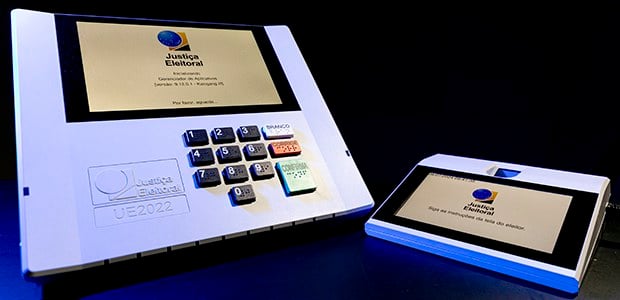
Header photograph: UE2022 electronic voting machine. Photo: Alejandro Zambrana / Secom / TSE, published in the court’s equipment guide on August 1, 2026.
