




Davis Cup World Cup of Tennis: Format and 2026 Ties
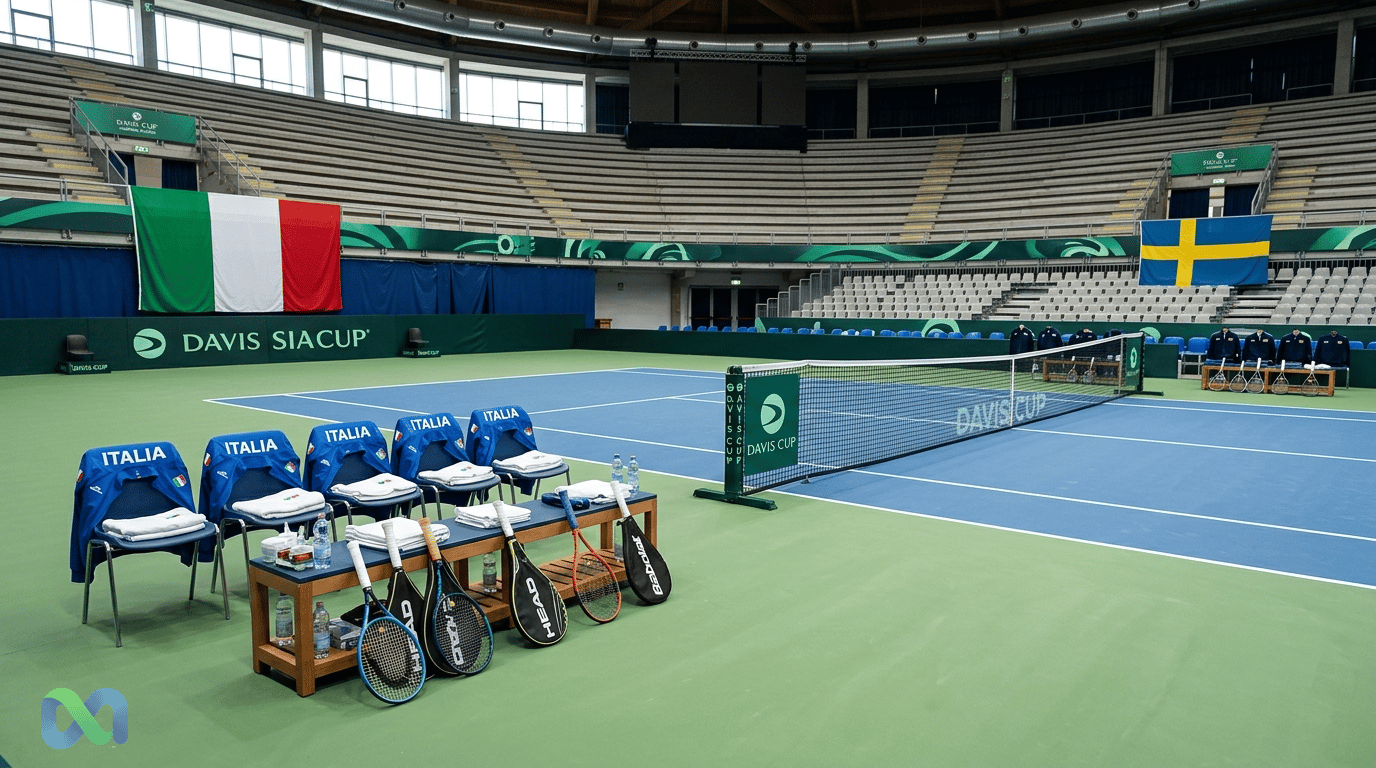
The Davis Cup World Cup of Tennis is the men's national-team competition that turns an individual sport into a country-by-country bracket. It has existed since 1900, but the 2026 cycle gives it a fresh market angle. Seven Qualifiers 2nd Round ties will decide most of the Final 8 field, and each tie creates a clean test of depth, surface fit, travel, and player availability.
That matters for prediction-market traders because Davis Cup pricing is not just a ranking exercise. A top singles player can move expectations, but the format also rewards doubles depth, home conditions, and late roster changes. The official Davis Cup hub describes the event as the World Cup of Tennis, and the next checkpoint is the road to Bologna.
This guide explains how the 2026 format works, which September ties deserve attention, and what signals should matter before the Final 8. It also separates the tennis event from the broader soccer World Cup noise that often appears around the phrase "World Cup."
What Is the World Cup of Tennis?
The Davis Cup is the men's World Cup of Tennis: a national-team event founded in 1900 and contested by countries rather than tour franchises. Players represent their nations across singles and doubles matches. The competition moves through qualifiers, lower world groups, and a final tournament that decides the champion.
That structure gives tennis something the weekly ATP calendar cannot offer. It creates a team market in a sport that usually prices individuals. It also forces traders to weigh national depth, not only the highest-ranked player on the court.
The 2026 cycle is especially useful because World Tennis is trying to lift its national-team events. The International Tennis Federation has rebranded as World Tennis, and its official Davis Cup context says 160 nations entered the 2026 competition. It also points to roughly 275 ties per year across 65 countries.
Those numbers explain the "World Cup" framing. The Davis Cup is not a single host-nation festival like FIFA's tournament, but it is global in participation. It also reaches fans through home-and-away ties before the Finals stage.
For markets, that creates a different type of signal. A regular tour match prices one player against another. A Davis Cup tie prices a full national setup across two days, several matches, and changing tactical choices.
How the 2026 Davis Cup Format Works
The Davis Cup format starts with national teams placed across levels. The elite path leads through Qualifiers and into the Final 8. Other teams compete in World Groups, where results shape promotion and relegation for the next cycle.
In the 2026 Qualifiers 2nd Round, each tie is played across two days. The tie usually includes four singles matches and one doubles match. Matches are best-of-three sets, which makes each rubber shorter than a Grand Slam match but still demanding under team pressure.
The sequence matters. Day one sets the market tone because an early upset changes the value of every remaining rubber. Day two often raises volatility because captains can alter singles choices and doubles pairings after seeing form, fatigue, and scoreboard pressure.
The road ends with the Final 8 in Bologna, Italy. DavisCup.com lists the 2026 Final 8 for 24-29 November. Italy's role as host is also part of the story because Italy has become the benchmark nation after winning the 2023, 2024, and 2025 Davis Cup titles.
The format also has an Olympic link. Davis Cup participation can matter for Olympic Tennis Event eligibility, so a player's decision to appear is not only patriotic. It can also affect future access to another major national-team stage.
That incentive is important for pricing. Some stars skip team events when the tour calendar is crowded. Others treat Davis Cup appearances as strategic because national duty, Olympic pathways, and federation relationships all matter.
The September Ties That Set the Final 8 Field
The official Davis Cup Qualifiers 2nd Round preview lists seven September ties across four continents. Each winner moves toward the Final 8, while each loser drops into the 2026 Qualifiers 1st Round path.
| Tie | Host context | Market question |
|---|---|---|
| Czechia vs USA | Czechia hosts a deep American squad | Can U. S. star power overcome an away tie and Czech depth? |
| Germany vs Croatia | Germany brings Alexander Zverev into a tricky tie | Does singles strength offset Croatia's doubles tradition? |
| Canada vs France | Canada hosts France in a high-ceiling matchup | How much do Felix Auger-Aliassime and Arthur Fils shift the balance? |
| Spain vs Denmark | Spain faces a dangerous opponent | Does home strength overcome a potential star-driven upset? |
| Argentina vs Netherlands | Argentina plays with strong home conditions | Can the Netherlands keep the tie alive through doubles and discipline? |
| Belgium vs Australia | Belgium hosts a proven Davis Cup nation | Does Australia's team depth travel well? |
| Hungary vs Austria | Regional pressure adds edge | Which side handles close sets and doubles better? |
These ties are not equal from a market perspective. Some are driven by a clear favorite. Others are sensitive to one late roster change, a surface edge, or one doubles pairing.
Czechia vs USA is the cleanest example. The United States often has deeper singles options, but Davis Cup ties do not reward depth in the same way as a season-long tour table. A road tie, local conditions, and a compact two-day format can narrow the gap.
Germany vs Croatia has a different profile. Zverev's presence gives Germany a clear top-end anchor. However, Croatia has a long Davis Cup identity and a strong doubles history, which can keep a tie live even when singles rankings point one way.
Canada vs France may be the most interesting uncertainty case. The official Davis Cup field story highlights Felix Auger-Aliassime and Arthur Fils among the names to watch. Both nations can produce high-level singles, and both can swing market sentiment quickly when lineups become firm.
The remaining ties still matter because the Final 8 bracket needs breadth. Spain, Argentina, Australia, and other traditional tennis nations bring brand value and depth. However, the market should separate national reputation from the actual roster submitted for that week.
Why the Davis Cup World Cup of Tennis Is a Market Signal
Prediction-market traders should start with availability, not rankings. Davis Cup nominations can shift late. One withdrawal may change two singles rubbers and the doubles plan. A star missing one day can alter the entire tie price.
Surface comes next. A country hosting on clay, indoor hard, or another preferred surface can pull a tie away from neutral rankings. Tennis markets often overstate name value. They can also understate surface fit when a less famous player is stronger in the chosen conditions.
Travel also matters. Davis Cup ties happen inside a global calendar. A player coming from a deep run, a long flight, or a different surface may be priced too cleanly if markets ignore the schedule.
Doubles depth is the fourth input. In many tour weeks, doubles sits outside the main market story. In Davis Cup, one doubles rubber can decide the tie. Teams with a proven pair can carry more value than their singles ranking profile suggests.
Captain choices add another layer. A captain can hold back a player, protect an injured star, or adjust matchups after day one. Therefore, pre-tie probabilities are useful but incomplete.
Italy's recent run is the benchmark. The country won the Davis Cup in 2023, 2024, and 2025, which makes it the team every challenger must be measured against. A qualifier does not only decide who reaches Bologna; it decides who has enough depth to threaten the current standard.
For Macro Markets readers, the practical checklist is simple:
- Confirm the final nominated teams before treating any price as stable.
- Check the host surface and compare it with each likely singles matchup.
- Identify whether the tie can be decided by doubles.
- Watch injury news and travel timing after the previous tour stop.
- Separate country brand from actual two-day team strength.
This is where the Davis Cup World Cup of Tennis becomes tradable analysis. The event compresses several uncertainty drivers into a short window. As a result, it can create sharper probability moves than a standard tour match.
The key is timing. A Davis Cup price can look stable when the first roster appears. However, it may move again when practice reports, doubles pairings, and day-one results confirm the real order of play. Traders who wait for confirmed context may avoid stale assumptions.
Why Davis Cup Still Matters in a Crowded Tennis Calendar
The Davis Cup still matters because it gives tennis a national-team layer that most weeks lack. Players usually build their seasons around tour ranking points, prize money, and Grand Slam preparation. Late injuries and roster changes often surface through sports news before they settle into market prices. Davis Cup asks them to manage national pressure and team duty.
Skeptics have a fair point. The tennis calendar is crowded. Some fans also struggle to follow format changes. A team event can lose force when top players skip it. It can also lose force when the Finals stage feels detached from home crowds.
However, that skepticism is exactly why the event matters for markets. Participation is uncertain, incentives differ by player, and national federations have different levels of depth. Those frictions create information gaps.
World Tennis also has a strategic reason to elevate the event. The rebrand signals that the sport wants a simpler global identity for its official competitions. Davis Cup is the clearest test because it already has history, scale, and a recognizable national-team format.
The Final 8 in Bologna gives the 2026 cycle a clear destination. Italy's home role and title streak create a strong narrative anchor. Challengers must first survive the qualifiers, then prove their depth under knockout pressure.
For traders, that means Davis Cup analysis should stay dynamic. The best pre-tie view may become stale after one roster update or one day-one result. Probabilities can change quickly, and they do not guarantee outcomes.
That is the value of treating the competition as a live market story. The format gives readers clear inputs to track before each tie. It also gives them a reason to update their view as facts change, rather than relying on country reputation alone.
FAQ
What is the World Cup of Tennis?
The Davis Cup is the men's World Cup of Tennis. It is a national-team competition founded in 1900, run through qualifying rounds and world groups, and decided by an eight-team Finals event.
How does the Davis Cup work?
Teams play country-versus-country ties. A tie usually includes singles and doubles rubbers across two days. Winners advance toward the Final 8, while losers move into lower or next-cycle qualifying paths.
When is the 2026 Davis Cup Final 8?
DavisCup.com lists the 2026 Final 8 for 24-29 November in Bologna, Italy. Schedules and team details can change, so the official Davis Cup site should be checked near the event.
How many nations have won the Davis Cup?
Official Davis Cup material says 16 nations have won the title. The United States leads the historical table with 32 titles, while Italy is the current benchmark after three straight wins from 2023 to 2025.
Why does Davis Cup participation matter for Olympic eligibility?
Davis Cup participation can help satisfy Olympic Tennis Event eligibility rules. That means some players may treat national-team appearances as part of a broader career plan, not only as a one-week team event.
The Bottom Line
The Davis Cup World Cup of Tennis matters because it turns tennis into a national-team probability puzzle. Rankings still matter, but they are only the first layer. Availability, surface, travel, doubles depth, and captain choices can all move the true balance of a tie.
The 2026 Qualifiers 2nd Round is the next major checkpoint. Seven ties will shape the Final 8 field and test whether challengers have enough depth to threaten Italy's title streak in Bologna.
For Macro Markets readers, the edge is not predicting from reputation. It is updating as team news, surfaces, and match results change the road to the Final 8.
