


Iran World Cup 2026: Will Iran Play?
Updated on May 13, 2026
Last reviewed: May 13, 2026
Interest in Iran World Cup 2026 has grown because Iran's national team has become both a football story and a geopolitical story. The central question is simple: will Iran play in the 2026 FIFA World Cup, or could the team still be kept out?
The answer today is clear. Iran has qualified for the 2026 World Cup. The public debate did not start because Iran lost its sporting place. It came from diplomatic tension, travel logistics, security concerns, visa questions, and requests to move matches that could be scheduled in the United States.
That distinction matters for the broader tournament question. One thing is a FIFA ban. Another is a football federation asking for venue changes inside a tournament already assigned to the United States, Canada, and Mexico.
This guide explains what is confirmed, what still depends on FIFA, why Mexico entered the debate, and how Iran's World Cup history shapes the story.
Iran World Cup 2026: is the team going to play?
Yes. Iran is qualified for the 2026 World Cup. That is the starting point for any Iran World Cup 2026 analysis. So far, FIFA has not confirmed any exclusion. The open issue is logistics, politics, and possible venue adjustments. It is not an automatic loss of the place Iran earned in Asian qualifying.
This difference is important for anyone searching for Iran World Cup 2026 or trying to judge the real tournament risk. Many headlines frame the issue as a crisis. However, a crisis is not the same thing as a ban.
What has been confirmed so far
Iran earned its sporting place at the 2026 World Cup. In other words, the Iran World Cup 2026 story begins with qualification, not exclusion. The team advanced through Asian qualifying and joined the list of nations that booked a place in the expanded 48-team tournament.
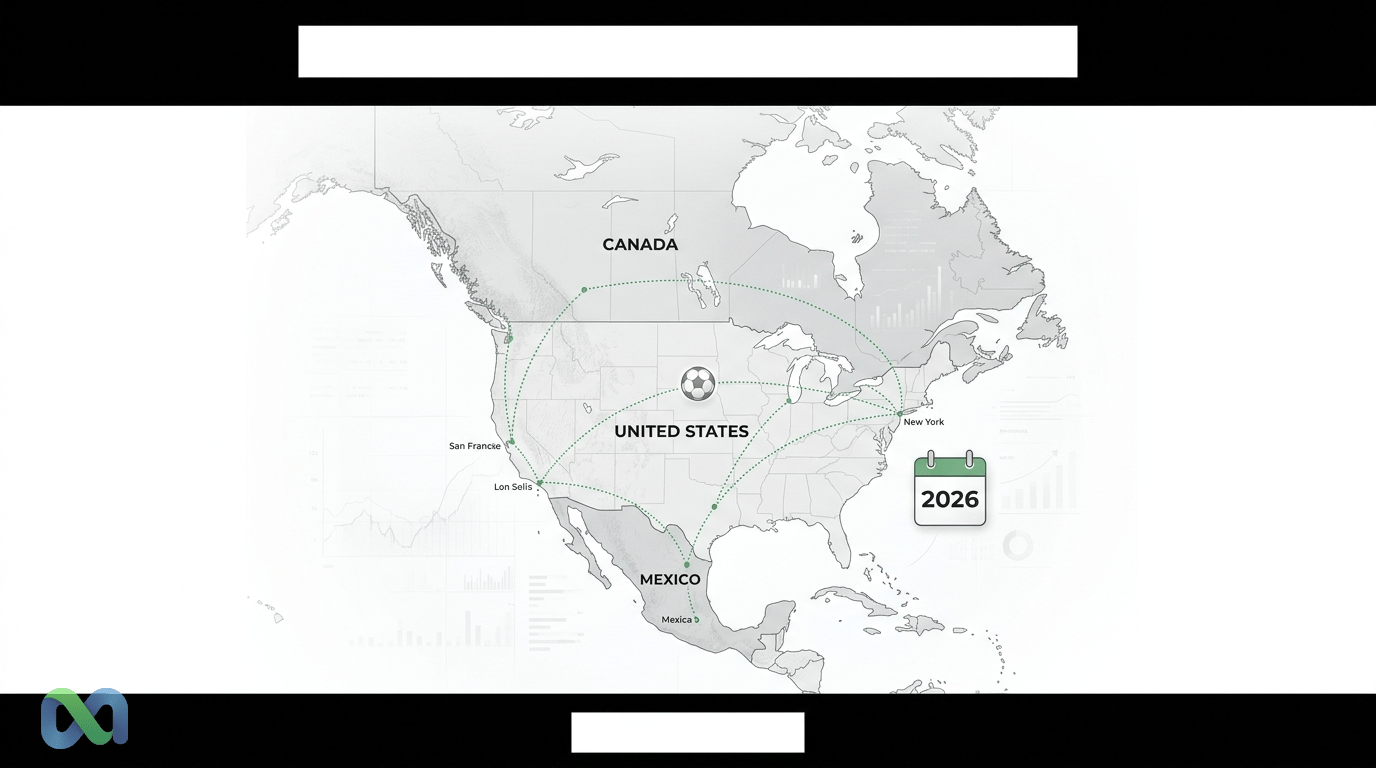
The 2026 World Cup will be hosted by three countries: the United States, Canada, and Mexico. That format adds a new layer of logistics. Each team can face matches, training bases, travel, and commercial duties across more than one country.
For Iran, the sensitive point in the Iran World Cup 2026 debate is the United States as a host country. Relations between Iran and the U. S. have a long history of diplomatic tension. In addition, visas, entry rules, security, and treatment of supporters can affect the practical operation of a national team.
According to English-language coverage and FIFA's own tournament pages, Iran remains part of the 2026 field. FIFA also listed Iran among the teams that qualified after the Asian round. That is the baseline fact.
Therefore, the core of the Iran World Cup 2026 case is this: Iran has a place, but it wants safer and clearer operating conditions for the tournament.
What still depends on FIFA
FIFA controls the official schedule, host cities, tournament rules, and final logistical decisions. A team can ask for changes, but it cannot decide alone where it will play.
In practice, FIFA must balance four factors. First, it must protect the integrity of the schedule. Second, it must consider the safety of players, staff, and fans. Third, it must respect commercial commitments. Fourth, it must preserve sporting neutrality.
If FIFA accepts adjustments, the case could become an operational change. If FIFA rejects them, Iran would need to decide how to handle any games placed in the United States.
Until a formal decision appears, the responsible Iran World Cup 2026 view is to separate fact from hypothesis. Fact: Iran is qualified. Hypothesis: some matches may or may not move. Speculation: Iran will miss the tournament for this reason, without a formal FIFA act or a decision by Iran's federation.
Why doubts around Iran World Cup 2026 emerged
The doubts around Iran World Cup 2026 emerged because the tournament mixes football, diplomacy, and political geography. The tournament is global, but a large part of it will take place in the United States. For Iran, that creates a bigger problem than usual.
In a World Cup hosted by one country, the discussion would be simpler. In 2026, there are three national hosts. That opens the door to requests for relocation between host countries.
Recent geopolitical context
Iran has faced a new cycle of regional tension in recent years. Its relationship with Israel, the role of the United States in the Middle East, sanctions, and diplomatic disputes have made international events more sensitive.
Football does not sit outside that environment. Delegations need to travel. Players need to enter the host country. Fans need tickets, documents, and safe movement around cities.
That is why the Iran World Cup 2026 question gained traction. It does not come only from the pitch. It comes from a setting where sport and politics cross.
Still, FIFA usually treats the World Cup as a global sporting tournament. The governing body tries to avoid removing qualified teams because of political tension, except in extreme cases.
The clearest recent example is Russia. Russian teams were suspended by FIFA and UEFA after the invasion of Ukraine in 2022. That precedent shows that exclusions can happen, but they require a specific institutional context.
The Iran World Cup 2026 case is different from that example. Recent reporting has focused more on match locations, travel, and guarantees than on a direct sporting punishment.
Why Mexico became part of the debate
Mexico became a natural alternative in the Iran World Cup 2026 debate because it is also a host country. If Iran were scheduled to play in the United States, moving a match to Mexico could reduce diplomatic friction.
The idea sounds simple. However, it changes many parts of the tournament machine. A World Cup schedule includes stadiums, training sites, hotels, transport, security plans, sponsors, broadcast slots, and ticket sales.
Changing one team's matches is not like moving a normal league game. It can affect opponents, fans, host cities, and contracts.
FIFA also has to avoid a difficult precedent. If one national team receives venue changes for diplomatic reasons, other teams may ask for similar treatment.
On the other hand, FIFA must keep the tournament workable. If there is a real risk for a delegation or its supporters, ignoring that risk could create a larger problem.
That is the center of the issue. FIFA is not just deciding whether it likes Iran's request. It is weighing safety, calendar pressure, politics, and institutional image.
What is FIFA's position on Iran?
FIFA's public posture in the Iran World Cup 2026 story has been to keep Iran's sporting participation in place. At the same time, the organization can still assess practical details around the tournament.
That message gives the tournament stability. The 2026 World Cup will be the largest in history, with 48 teams. A debate about removing or relocating a qualified team creates noise for the whole event.
What Gianni Infantino and officials have said
Reports in the United States said FIFA president Gianni Infantino confirmed that Iran would participate in the 2026 World Cup. The point of that message was to reduce the idea that Iran's place was under immediate threat.
That type of statement matters for the information cycle. It guides federations, sponsors, fans, and media outlets. When FIFA signals that Iran will play, the information market changes. The question moves from “will Iran be banned?” to “where, and under what conditions, will Iran play?”
Iranian officials, meanwhile, want guarantees. They want to reduce risks and avoid a situation in which athletes and supporters face unusual barriers.
The final result may still depend on negotiation. But negotiation and punishment are different things. A negotiation can adjust logistics. A punishment would remove the team from the tournament.
Are there precedents for excluding teams?
Yes, but they are rare. FIFA has excluded or suspended national teams in cases linked to war, political interference, institutional sanctions, or serious rule violations.
Russia is the strongest recent example. That exclusion came after an open war and coordinated sanctions across major sporting bodies.
There are also cases involving government interference in national federations. FIFA requires federations to operate with autonomy. If a government directly interferes, FIFA can suspend that federation.
Iran is not currently in the same type of situation. The debate around Iran World Cup 2026 is about match venues and conditions of participation.
For that reason, talk of an automatic ban is premature. The more accurate phrase right now is logistical uncertainty.
Iran's World Cup history
Iran's World Cup history helps explain why the Iran World Cup 2026 topic has attracted attention. The team is not a newcomer. It has tradition in Asia and has already played in several World Cups.
Iran usually arrives with a competitive side, a strong defensive base, and players with international experience. At the same time, it is still chasing a deeper run in the knockout rounds.
How many World Cups has Iran played in?
Iran played in the World Cups of 1978, 1998, 2006, 2014, 2018, and 2022. Qualification for 2026 extends that record and strengthens Iran's position among Asia's established teams.
Here is the simple list:
- 1978: Iran's first World Cup appearance.
- 1998: a memorable return, including a historic win over the United States.
- 2006: another appearance in a tournament hosted in Europe.
- 2014: a competitive campaign, but no knockout place.
- 2018: a strong showing in a difficult group.
- 2022: another appearance, this time in Qatar.
- 2026: a place earned for the expanded tournament.
The key point is that Iran has become a regular World Cup presence. That makes any risk around participation a high-interest story for fans and analysts.
Best campaigns and recent performance
Iran has not yet built a consistent record in the knockout stage. Even so, its recent campaigns show real competitive progress.
In 2018, Iran faced Portugal, Spain, and Morocco in a hard group. It lost narrowly to Spain, drew with Portugal, and beat Morocco. That was a respectable campaign.
In 2022, Iran beat Wales but lost to England and the United States. The match against the U. S. carried major symbolic weight because of the political rivalry between the countries.
That history explains why a possible game on U. S. soil would carry extra meaning. It would not be just another World Cup match. It would be a sporting event with an immediate diplomatic reading.
For 2026, the expanded format may help mid-tier teams. With 48 teams, more places, and a new group structure, the path to advancement could be wider than in previous editions.
How the case affects fans, the calendar, and prediction markets
The Iran World Cup 2026 case affects more than the match list. It changes how fans, media, and analysts follow the tournament.
When logistical uncertainty exists, attention moves beyond players and opponents. It also includes host cities, travel, visas, security, and institutional decisions.
Impact on Iranian and neutral fans
For Iranian supporters, the host country matters. A game in Mexico may be easier than a game in the United States, depending on entry rules and the diplomatic environment.
For neutral fans, a venue change can affect tickets and travel plans. People who buy flights early want predictability. A late change can create high costs.
FIFA also needs to protect the event experience. The World Cup depends on full stadiums, efficient security, and a reliable schedule.
That is why any decision about Iran will likely be careful. FIFA wants to avoid a larger crisis close to the tournament.
Impact on probability analysis
This case also shows why sports events can be read as information markets. A team can be qualified, yet still carry risks away from the field.
In prediction markets, that detail matters. The probability of an outcome does not depend only on technical quality. It can also reflect injuries, schedule pressure, politics, logistics, weather, and decisions by governing bodies.
For Iran World Cup 2026, the main variable is not only squad strength. It is the chance that the institutional environment changes something in Iran's path.
That is the difference between looking only at the score and looking at the full context. In the World Cup, context can move expectations before the ball is kicked.
Timeline of Iran and the 2026 World Cup case
An Iran World Cup 2026 timeline helps separate what has happened from what may still happen.
Before the recent tensions
Iran played Asian qualifying and secured a place in the 2026 World Cup. That stage was sporting. It depended on results, performance against regional rivals, and qualification standings.
Once the place was confirmed, Iran entered normal World Cup planning. That includes friendlies, player lists, training bases, and early analysis of possible opponents.
After tensions increased
As geopolitical tension rose, the topic changed. The debate started to include security, entry into U. S. territory, and the presence of Iranian supporters.
Iranian football officials then pushed for adjustments. The key request was to move games to Mexico if the schedule placed Iran in the United States.
What comes next
The next steps depend on official communication. FIFA can keep the original schedule, accept specific adjustments, or build a middle solution.
The main Iran World Cup 2026 point is to follow official sources and credible outlets. Headlines about a “ban” should be read carefully. Without a formal decision, that word can overstate the real risk.
FAQ: key questions about Iran and the World Cup
Has Iran been banned from the 2026 World Cup?
No. At this point, there is no confirmed ban on Iran at the 2026 World Cup. Iran is qualified. The public question is about logistics and possible matches in the United States.
Is Iran playing in the 2026 World Cup?
Yes. Iran qualified through Asian qualifying and is expected to play in the tournament. The current uncertainty is about where Iran may play if U. S. venues appear on its schedule.
Why could Iran play outside the United States?
The 2026 World Cup has three host countries: the United States, Mexico, and Canada. Because Mexico is also a host, Iran could ask for matches there for political and operational reasons.
Will Iran play in Mexico?
That still depends on the final schedule and any FIFA decision. Mexico became part of the debate because it could reduce tensions linked to matches in the United States.
How many times has Iran played in the World Cup?
Iran played in six World Cups before 2026: 1978, 1998, 2006, 2014, 2018, and 2022. With qualification for 2026, it reaches its seventh appearance.
Which country was banned from the World Cup recently?
The best-known recent case is Russia, which was suspended from FIFA competitions after the invasion of Ukraine. Other cases have involved sanctions, political interference, or serious rule breaches.
Could Iran vs United States happen again?
Yes. It could happen if the draw or the tournament path places the teams together. The match already happened in 1998 and 2022, and both games carried major symbolic weight.
Sources consulted
- FIFA: Iran qualify in AFC round-up
- FIFA: Qualified teams for the 2026 World Cup
- USA Today: FIFA president confirms Iran will play in 2026 World Cup
- TIME: Iran will participate in the World Cup, FIFA chief says
Conclusion: what to watch next
The Iran World Cup 2026 story should be read with precision. Iran is qualified for 2026, and there is no confirmed ban. The real question is the logistics of the matches, especially if Iran is scheduled to play in the United States.
FIFA must decide whether it keeps the original plan or accepts some kind of adjustment. Until then, the best approach is to watch official statements, the schedule, host cities, and comments from football officials.
For fans, the Iran World Cup 2026 case shows that a World Cup is not only football. It also involves politics, borders, security, and risk management.
For analysts, it is a useful reminder: in major events, probabilities change when context changes. The pitch matters. But sometimes the most important decision happens before the game begins.
