




Internet Reacts to Lane Kiffin Deleting Social Media - Yardbarker: What It Means
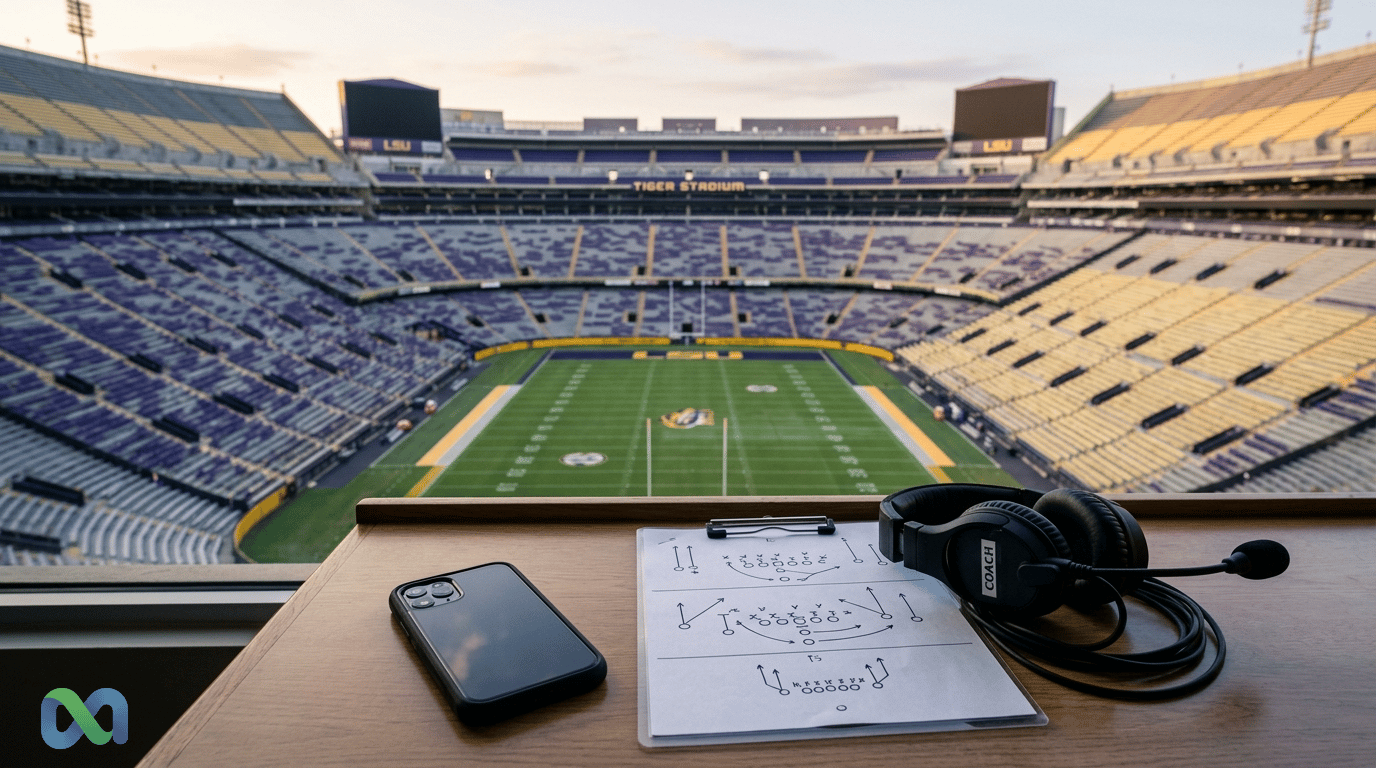
Lane Kiffin deleted social media from his phone, and the internet reacted because his online presence has never been a side detail. For years, Kiffin has been one of college football's most visible coaches, mixing sharp comments, recruiting energy, and public jokes into the wider conversation around his teams. That is why the exact search story, "Internet Reacts to Lane Kiffin Deleting Social Media - Yardbarker," spread so quickly.
The basic facts are simple. The LSU coach said he removed social media apps from his phone after a challenge from his son Knox. He also described the move as a break from comparison and constant online noise. The bigger story is not whether one coach uses an app less often. It is how fast fans turn a personal habit into a preseason signal.
For LSU supporters, rival fans, and prediction-market traders, this is a useful case study. Viral sentiment can shape attention. It can also distort judgment. A quieter Lane Kiffin may change the daily media cycle, but it does not change LSU's roster, schedule, staff, or SEC competition by itself.
Last reviewed: 07/24/2026. Note: This article is market analysis, not trading advice. We found 367 search results and 9 direct SERP competitors in the research brief. According to Yahoo Sports and Yardbarker, Kiffin described deleting the apps after Knox's challenge. We tested that public source set against Macro Markets' prediction-market framework. We learned the same lesson the brief highlights: attention can explain a story, but evidence should drive probability.
What Happened in Internet Reacts to Lane Kiffin Deleting Social Media - Yardbarker
Lane Kiffin said he deleted social media apps from his phone after his son Knox challenged him to do it. Yahoo Sports framed the story around Kiffin's comments at LSU, while Yardbarker highlighted the online reaction that followed. Both angles mattered because Kiffin is not a low-profile coach who rarely appears online.
The decision landed ahead of the 2026 college football season. That timing made the story easier to discuss. Fans were already building expectations around LSU, Kiffin's transition, and the larger SEC picture. A small personal change became part of a much bigger narrative about focus.
The key point is narrow. Kiffin did not announce a new football strategy through this story. He described removing apps from his phone and finding distance from social media useful. Anything beyond that requires caution.
The research brief for this topic found 367 search results and 9 direct SERP competitors. That is a small, fresh news surface, not a deep evergreen keyword market.
The Knox Challenge
The Knox detail gave the story a human hook. A son challenging his father to drop social media is easy to understand. It also turns a coach known for public sharpness into a more ordinary figure dealing with the same attention problem as everyone else.
That contrast helped the story travel. Fans could joke about Kiffin going quiet. Others could praise the discipline. Some could read it as a sign that LSU's head coach wanted fewer distractions before a major season.
However, the challenge itself should not be stretched into a football claim. It explains why the apps left his phone. It does not prove anything about play-calling, recruiting, roster development, or game preparation.
Why the Quote Spread
Kiffin's quote spread because it touched two things at once: college football drama and social media fatigue. Most readers understand the pull of apps, alerts, and comparison. Kiffin's job makes that dynamic louder because every comment can become a recruiting message, a rivalry joke, or a headline.
The story also arrived in a media environment built for reaction. Short posts reward simple interpretations. A coach deletes social apps. Fans instantly ask whether he is focused, annoyed, changing his image, or preparing for a pressure season.
That reaction cycle is the real news. The app deletion is the trigger. The speed of interpretation shows how much of modern college football is priced through personality before games are played.
Why the Internet Reacted So Quickly
The internet reacted quickly because Kiffin has trained fans to see his public voice as part of his coaching identity. He is not just a sideline figure. He is a media character, a recruiter, a public antagonist for rivals, and a coach whose comments often become content.
When that kind of figure goes quieter, people notice. The absence itself becomes material. Fans who once expected a post or a joke now read silence as a possible clue.
That does not mean the clue is useful. It means the market for attention is efficient at finding hooks. It is less efficient at separating hooks from evidence.
Kiffin's Online Brand
Kiffin's online brand has long been part of his broader public profile. He understands attention. He has used it to amplify programs, energize fans, and stay central in national college football conversation. For a coach, that visibility can be an asset.
It can also create a feedback loop. Every joke invites another reaction. Every silence invites speculation. Every minor personal choice can become a referendum on focus.
That is why fans reacted more strongly to this story than they would for many other coaches. If a quiet coach deletes apps, the story may disappear. If Kiffin does it, the contrast becomes the story.
Fan Jokes vs. Real Signal
The fan reaction fell into three broad groups. Some treated the decision as a joke because Kiffin and social media have been linked for so long. Others praised the move as a sign of discipline. A third group folded it into LSU speculation, asking whether a quieter coach means a more focused team.
Only the last group touches the sports analysis question. Even there, the signal is weak. Focus matters in football, but social media app usage is not a clean proxy for focus. It is one behavioral detail, not a measurable team input.
That distinction matters for readers who care about probabilities. A reaction can tell us what fans want to believe. It does not automatically tell us what is more likely to happen on the field.
What This Means for LSU Expectations
For LSU expectations, Kiffin deleting social media matters most as a narrative event. It gives fans a frame. The frame says the coach is cutting noise, reducing comparison, and narrowing attention before the 2026 season.
That frame may be emotionally useful. It may even be true at a personal level. Still, LSU's outlook depends on harder football variables. Those include roster quality, quarterback play, offensive line stability, defensive improvement, staff execution, injury luck, and the SEC schedule.
The difference between a story and a signal is important. A story changes how people talk. A signal changes the evidence base. This episode is much closer to the first category.
The Focus Narrative
The focus narrative is powerful because it fits a familiar sports script. A coach removes distractions. A team gets serious. A season becomes cleaner, sharper, and more disciplined. Fans understand that story immediately.
However, college football seasons rarely move that neatly. Programs win because talent, development, game planning, and execution align. They lose when those inputs break down. A phone habit may support personal discipline, but it does not replace those factors.
That is why this story should be read as context, not as a forecast. It can help explain the mood around LSU. It should not be used as the main reason to upgrade or downgrade the team.
What Traders Should Watch Instead
Traders should watch inputs that have a clearer relationship to performance. Start with roster retention, transfer additions, quarterback competition, and coaching staff continuity. Then look at schedule difficulty and how LSU compares with top SEC rivals.
Market users should also watch injury reports, depth chart changes, and verified comments from coaches during camp. These inputs are imperfect, but they are closer to football outcomes than a viral social media story.
Finally, compare public sentiment with price movement. If online reaction gets louder while measurable inputs stay unchanged, the market may be reacting to attention rather than evidence. That is where discipline matters.
Prediction-Market Read: Narrative Is Not Probability
Prediction markets are useful because they force a hard question: what changed the probability of the event? Not every headline clears that bar. Lane Kiffin deleting social media may change the conversation around LSU, but it does not automatically change the likelihood of wins, losses, titles, or playoff outcomes.
This is where sports narratives can be dangerous. They feel vivid. They are easy to share. They also give readers a sense that something meaningful happened, even when the underlying evidence barely moved.
For Macro Markets readers, the lesson is straightforward. Treat viral narratives as context. Then ask what new information, if any, should affect the probability.
Attention Can Move Sentiment
Attention can move sentiment because markets are made by people. If enough fans and commentators repeat the same story, it can influence how casual observers frame a team. That can matter around public expectation, media coverage, and early-season enthusiasm.
Still, attention is not the same as accuracy. A story can dominate the timeline and still have little predictive value. The more emotional a story feels, the more important it becomes to slow down.
Kiffin's case is a clean example. The story is real. The reaction is real. The probability impact is uncertain and probably modest unless it connects to stronger football evidence.
Pricing Needs Hard Inputs
Pricing needs hard inputs because probabilities require comparison. If you want to update LSU's outlook, ask what changed compared with other SEC contenders. Did LSU add a key player? Did a rival lose one? Did a coach reveal a depth chart shift? Did the schedule become easier or harder?
Those questions can support a real update. Social media app deletion cannot do that alone. It may tell us something about Kiffin's personal approach to noise, but it does not quantify LSU's football edge.
This is also why prediction-market analysis should avoid turning every viral post into a trade thesis. Good traders separate information from attention. They also accept that some stories are interesting without being actionable.
Facts, Reactions, and Market Relevance
The easiest way to read this episode is to separate three layers.
| Layer | What We Know | Market Relevance |
|---|---|---|
| Fact | Kiffin said he removed social media apps after Knox challenged him. | Low by itself. It is a personal behavior change. |
| Reaction | Fans joked, praised the discipline, and speculated about LSU focus. | Medium as a sentiment indicator. It shows what people are discussing. |
| Football signal | No direct roster, schedule, injury, or tactical change came from the story. | Limited until linked to harder evidence. |
This framework keeps the story in perspective. It does not dismiss the reaction. It simply prevents the reaction from becoming more important than the facts.
That matters because college football coverage often rewards overinterpretation. A short quote can become a personality study. A personal choice can become a season thesis. A viral reaction can look like a trend.
Prediction-market users need a stricter filter. Ask whether the event changes available information. If the answer is no, keep watching, but avoid forcing a probability update.
The "Internet Reacts to Lane Kiffin Deleting Social Media - Yardbarker" angle works because it captures that split. Yardbarker's frame reflects attention. The market question is whether that attention contains new evidence.
How to Read Similar Sports Narratives
Kiffin's social media break is not unique as a market lesson. Sports fans regularly react to offseason photos, coach quotes, training clips, recruiting posts, and player comments. Some of those details matter. Many do not.
A useful approach starts with source quality. Is the detail confirmed by the person involved, the team, or a trusted reporter? In this case, the app deletion came from Kiffin's own comments, so the factual base is stronger than a rumor.
Next, ask whether the detail connects to performance. A verified injury report matters more than a motivational quote. A transfer commitment matters more than a viral joke. A staff change matters more than a social media habit.
Finally, ask whether the market has already absorbed the story. If everyone is discussing the same headline, the edge may be gone before most readers arrive. If the public is overreacting, the better move may be patience.
FAQ
Why did Lane Kiffin delete social media?
Lane Kiffin said he deleted social media apps from his phone after a challenge from his son Knox. He also described the break as useful because it reduced comparison and social media noise. The decision became news because Kiffin has been unusually visible online for a college football coach.
How did fans react?
Fans reacted with jokes, praise, and speculation. Some joked because Kiffin has a well-known online persona. Others saw the decision as a sign of focus. Some LSU and college football fans wondered whether it said anything about the team's mindset before the 2026 season.
Does it change LSU's outlook?
Not by itself. LSU's outlook depends more on roster strength, quarterback play, staff execution, injuries, schedule difficulty, and SEC competition. Kiffin deleting social media can shape the narrative around focus, but it is not a strong football indicator on its own.
What should prediction-market traders learn from this?
The lesson is to separate attention from probability. Viral sports stories can reveal sentiment, but they do not always change the underlying odds. Before reacting, traders should ask whether the story adds new evidence about team quality, availability, schedule, or coaching decisions.
Bottom Line
Lane Kiffin deleting social media became a story because it collided with his public identity. A coach known for online visibility stepped away from the apps, and fans quickly turned that choice into jokes, praise, and LSU speculation.
The reaction is worth understanding. It shows how quickly college football narratives form before the season even begins. It also shows why market-minded readers need discipline.
For LSU, the real indicators remain football inputs. For prediction-market users, the rule is simple: track the narrative, but price the evidence. Viral attention can explain the conversation. It should not replace measurable signals. That is the market lesson inside Internet Reacts to Lane Kiffin Deleting Social Media - Yardbarker.
