




Rise of Prediction Markets: Why Legal Attention Is Now a Market Signal
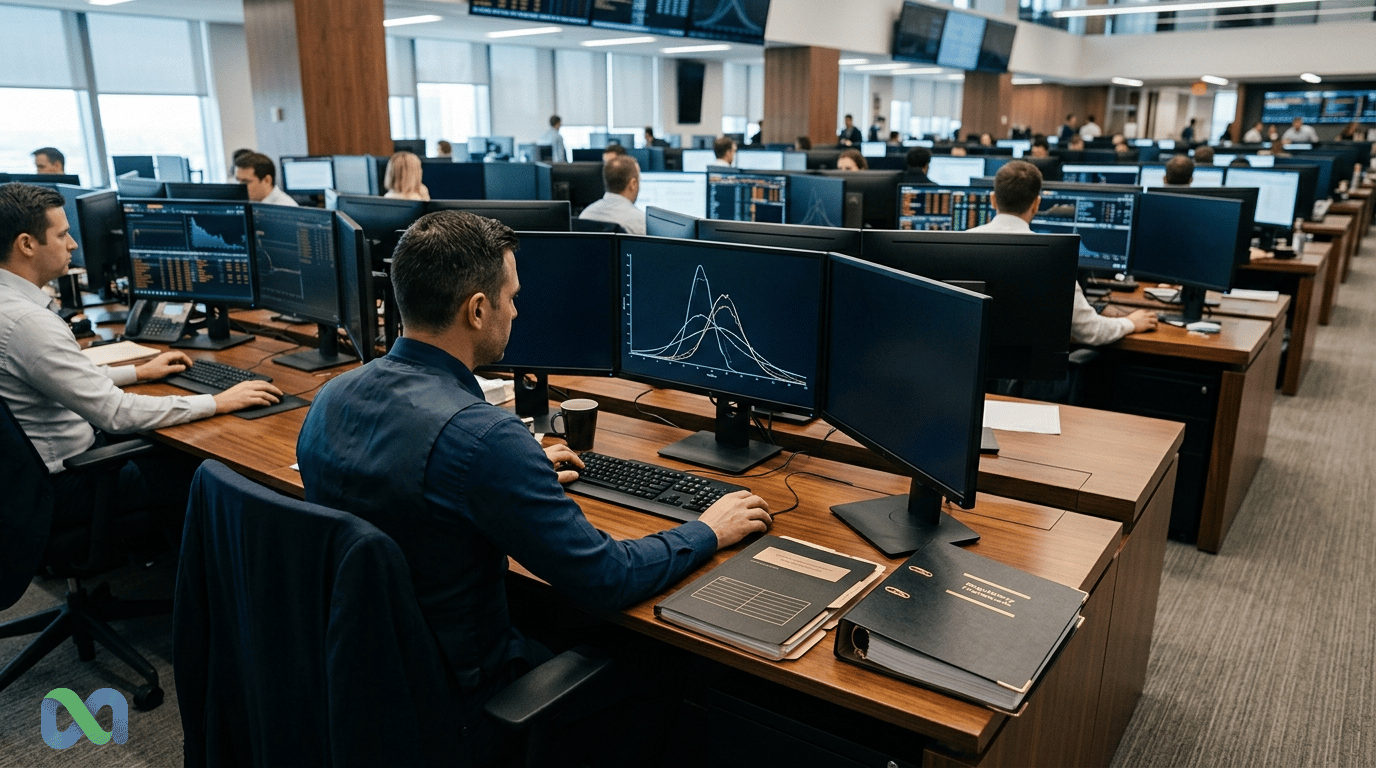
The rise of prediction markets is no longer just a story about crypto traders, election obsessives, or niche forecasting communities. It is becoming a story about market structure.
That is why the latest Latham in Focus episode matters. Latham & Watkins framed prediction markets as an emerging asset class shaped by evolving rules, not just as a novel way to bet on headlines. That distinction is important. Once serious law firms, federal regulators, exchanges, and lawmakers all focus on the same market category, the signal is clear: prediction markets are moving into the financial mainstream.
This does not mean every prediction market will survive. It does not mean every contract is useful. It also does not mean regulation will be clean or fast.
However, it does mean the market is entering a new phase. The question is no longer whether prediction markets are interesting. The question is which platforms can turn public events into tradable contracts without losing market integrity, user trust, or regulatory permission.
For Macro Markets, that is the core issue. Prediction markets can convert uncertainty into transparent probabilities. They can help users read elections, central bank decisions, policy disputes, sports outcomes, and macro events in real time. But that value only holds if the market is credible.
The rise of prediction markets is really a test of trust.
What Latham's Focus Tells Us About the Category
The Latham in Focus episode was published through JD Supra on May 19, 2026. It features Yvette Valdez, Global Co-Chair of Latham's Digital Assets & Web3 and Commodities and Derivatives Regulation & Enforcement practices. The episode explores the rise of prediction markets and the rules shaping the asset class.
That framing is useful because it cuts through a common mistake. Prediction markets are often described as a simple consumer product. A user buys "yes" or "no" on an outcome. Then the price moves. The event settles. The trader wins or loses.
That view is too narrow.
A prediction market is also a set of legal, operational, and data choices. The platform must define the event. It must choose a settlement source. It must decide who can trade. It must monitor unusual activity. It must handle disputes. It must prove that the final outcome is not arbitrary.
Those choices are not cosmetic. They determine whether the price can be trusted.
The legal attention now surrounding the market is a sign of scale. Small markets can operate as experiments. Larger markets become public infrastructure. Therefore, when users, media, and institutions cite market prices as probability signals, the rules behind those prices become more important.
That is the key message from the current cycle. Prediction markets are not only competing for volume. They are competing for legitimacy.
Why the Rise of Prediction Markets Accelerated
Several forces pushed prediction markets into the mainstream at the same time.
First, public trust in traditional forecasting remains uneven. Polls can lag. Analyst forecasts can be slow. Expert commentary can be biased or vague. A live market gives users a cleaner number. If a contract trades at 62 cents, the market is saying something specific.
Second, digital distribution made event contracts easier to understand. A yes-or-no market is simple. Users do not need to model a complex options chain or read a 100-page research note. They can see a price, a deadline, and a payout rule.
Third, political and macro volatility created demand for live probability tools. Elections, inflation data, court decisions, rate cuts, tariffs, fiscal votes, and geopolitical events all affect markets. Traders want faster ways to price those outcomes.
Fourth, crypto-native markets showed that global users wanted to trade information directly. Polymarket helped prove demand for public-event markets. Kalshi helped prove that regulated event contracts could attract mainstream attention in the United States.
Finally, media coverage created a feedback loop. As market prices appeared in articles, podcasts, and social feeds, more users learned to read probabilities as news signals.
That loop can be powerful. It can also be dangerous. If a market price becomes a public headline, then market design matters more. Thin liquidity, conflicted traders, or weak settlement rules can turn a useful signal into noise.
The rise of prediction markets is therefore not just a growth story. It is a quality-control story.
Regulation Is Becoming Part of the Product
The legal debate around prediction markets often sounds like a constraint. In practice, regulation can become part of the product.
The CFTC's February 2026 enforcement advisory made this clear. The agency said its Division of Enforcement issued guidance after cases involving misuse of nonpublic information and fraud in event contracts traded on KalshiEX, a designated contract market. The advisory pointed to conduct such as insider trading, fraud, wash trading, and manipulation.
That matters because prediction markets depend on fairness. A market can tolerate disagreement. It can tolerate volatility. It can tolerate sharp traders. It cannot tolerate a belief that insiders can freely trade against the public.
The CFTC has also described prediction markets as products traded on regulated venues when they meet the relevant framework. Its prediction markets fact sheet emphasizes market integrity, transparent market-driven prices, and guardrails against manipulation and insider trading.
This is why regulation should not be seen only as paperwork. For a serious platform, supervision, audit trails, and conduct rules are features. They make the price more credible.
The best prediction market platforms will likely compete on three layers.
The first layer is access. Can users trade events they care about?
The second layer is liquidity. Can users enter and exit positions without distorted pricing?
The third layer is integrity. Can users believe the price reflects a fair market rather than a private leak, a manipulated source, or an unresolved legal risk?
The third layer is becoming the hardest one.
The Sports Betting Fight Is a Warning
One reason prediction markets are getting legal attention is that some contracts look close to sports betting. That creates a fight over jurisdiction.
State gaming regulators see consumer wagers on sports outcomes. Prediction market operators argue that event contracts can be regulated as derivatives under federal commodity law. The conflict is not theoretical. It affects what products can list, which users can access them, and which regulator has authority.
Axios reported in May 2026 that CFTC Chair Michael Selig described prediction markets and sportsbooks as "two separate things." That distinction matters for platforms that want to be treated as financial markets rather than gambling operators.
Still, the distinction has to be earned. A prediction market cannot rely only on labels. It needs financial-market discipline.
That means clear terms. It means settlement based on independent sources. It means surveillance against manipulation. It means rules for conflicted participants. It means a user experience that explains risk without hiding behind legal language.
Sports contracts are the stress test because they are familiar, high volume, and politically sensitive. If a platform handles sports poorly, it gives critics an easy argument. If it handles sports with strong integrity controls, it strengthens the case that prediction markets can be more than betting.
The same logic applies to elections, court rulings, and central bank decisions. These markets can be useful. They can also create obvious conflict risks.
What Market Integrity Means in Practice
Market integrity sounds abstract, but the practical questions are simple.
Who knows the outcome before the public?
Who can influence the outcome?
Who controls the settlement source?
Who benefits if the market moves before the event?
These questions matter because prediction markets are tied to real-world events. In traditional financial markets, a company insider may know earnings before release. In prediction markets, the "insider" could be a campaign worker, a league employee, a content producer, a government official, a court clerk, or a person close to a settlement source.
That creates a different kind of risk. The market is not only exposed to inside information. It may also be exposed to outcome manipulation.
For example, a person close to an event could trade before a public announcement. A participant could try to influence an ambiguous source. A group could pressure a reporting authority. A thin market could move sharply on a rumor that later proves false.
Good platforms need systems for these cases.
They need position limits where conflicts are likely. They need watchlists for restricted participants. They need monitoring for sudden order flow before official releases. They need clear procedures when a settlement source changes. They need transparent dispute handling.
Most importantly, they need to act. A rule that is never enforced is not a rule. It is a marketing page.
Why This Matters for Latin America
The U. S. regulatory fight may look local, but the implications are global.
Latin America has exactly the kind of events that prediction markets can illuminate. Brazil has COPOM decisions, inflation prints, fiscal votes, Supreme Court rulings, election polls, and presidential campaigns. Mexico, Argentina, Colombia, and Chile have similar political and macro cycles.
These are not abstract events. They move currencies, equities, rates, business plans, and household expectations.
A well-designed prediction market can make those probabilities visible. It can show how traders price a rate cut before a central bank meeting. It can show how a campaign shock changes election odds. It can show when public data diverges from market expectations.
However, Latin America also has information risks. Political leaks, thin liquidity, unclear official sources, and polarized media environments can distort price signals.
That is why the rise of prediction markets in the region should not copy the weakest version of the global model. It should copy the strongest one: clear contracts, transparent resolution, local expertise, and serious conduct rules.
Macro Markets has a natural role here. A LATAM-focused platform can design markets around regional realities instead of importing generic U. S. templates. It can explain COPOM, elections, fiscal rules, and public-policy events in language local users understand.
The opportunity is not only to list more markets. It is to make the probabilities more useful.
Prediction Markets Are Data Products, Not Just Trading Venues
A strong prediction market does two things at once.
It lets users trade. It also produces a data signal.
That second function is why prediction markets matter beyond the trading crowd. Journalists can cite them. Analysts can compare them with polls. Companies can monitor them for policy risk. Investors can use them as a real-time gauge of sentiment.
But the data signal is only as good as the market behind it.
If liquidity is shallow, the signal may be fragile. If traders are conflicted, the signal may be contaminated. If settlement rules are vague, the signal may be noisy. If access is narrow, the signal may reflect a small group rather than a broad market.
This is why users should read prediction markets like market data, not like prophecy.
A 70% price is not a guarantee. It is a current estimate under current conditions. It can change after new information, large trades, or liquidity shocks.
The right question is not "is the market always right?" No market is always right.
The right question is "what does this price reveal that other sources do not?"
Sometimes the answer is speed. Sometimes it is consensus. Sometimes it is disagreement. Sometimes it is the fact that public confidence is weaker than headlines suggest.
That is useful information.
What Serious Platforms Need to Build
The next stage of prediction markets will reward platforms that invest below the surface.
They need better contract design. Each market should define the event, the settlement source, the deadline, and edge cases before trading starts.
They need better liquidity systems. Thin markets can be informative, but they are easy to misread. Platforms should show users when prices are fragile.
They need better compliance controls. This includes restricted participant policies, unusual activity monitoring, and clear escalation paths.
They need better education. Users should understand that probability prices are signals, not promises.
They need better localization. A market about a Brazilian rate decision should reflect Brazilian institutional context. A market about a U. S. court decision should not be treated the same as a market about a football match.
They also need better public communication. When a market resolves, users should know why. When a market is disputed, users should know what process applies. When a rule blocks certain traders, users should know the principle.
This is where many platforms will separate themselves.
The winner will not simply be the platform with the most contracts. It will be the platform whose odds serious users trust enough to read, cite, and trade.
The Bottom Line
The rise of prediction markets has entered its legal and institutional phase.
Latham's focus on the category is part of a broader signal. Prediction markets are attracting attention from elite law firms, federal regulators, lawmakers, exchanges, media outlets, and mainstream users. That attention raises the bar.
This is good for the category if platforms respond well. Clear rules, transparent settlement, strong market surveillance, and honest user education can make prediction markets more credible.
It is bad for platforms that treat regulation as an afterthought. Weak controls will invite enforcement, political pressure, and user distrust.
For traders and analysts, the lesson is direct. Prediction markets can be powerful probability tools. But the price is only useful when the market structure is sound.
The next phase will not be defined by hype. It will be defined by infrastructure.
That is where the real rise of prediction markets begins.
