

Trump Renaming AI Super Intelligence Problem, Why Sanders Wants to Ban It
Trump Renaming AI Super Intelligence Problem, Why Sanders Wants to Ban It
Trump declared all AI would be called "Super Intelligence" at the United Nations. Days later, Bernie Sanders introduced a bill to ban it. The clash shows a big problem with how Washington talks about the most powerful technology on earth.
This is not just a naming fight. The Trump renaming AI Super Intelligence problem shows how both sides of Congress talk past each other on AI. One side uses the word as a brand. The other uses it as a warning. They cannot both be right. And that gap will have real effects on policy, markets, and law.
Trump's AI Rebrand: How 'Artificial Intelligence' Became 'Super Intelligence'
The rename started on Truth Social. On September 19, 2026, Trump posted a poll. He asked followers to pick a new name for AI. The choices were Superior, Extreme, Supreme, or Super. "Artificial sounds weak and fake," he wrote. "American AI should sound powerful."
"Super Intelligence" won with 65% of the vote. Trump ran a second poll on X (formerly Twitter) the same day. Three days later, at the UN General Assembly on September 22, he made it official.
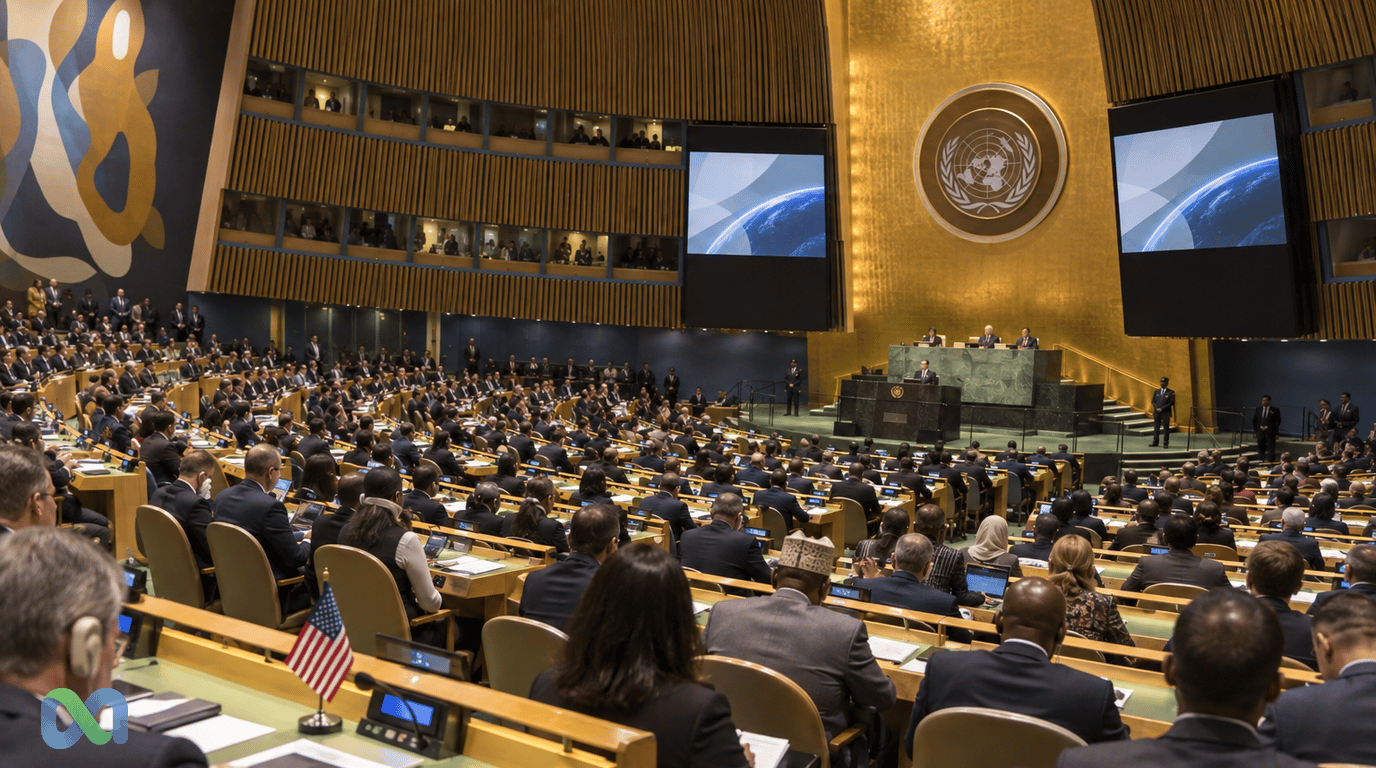
"From this moment forward," Trump said, "the United States government will call Artificial Intelligence Super Intelligence, or SI." He directed all federal agencies to update their documents right away.
What the Rename Means in Practice
The order covers all US government documents. Agencies like the Pentagon, the Department of Energy, and the IRS must now use "Super Intelligence" in official materials.
The tech industry has not followed. Google, Microsoft, OpenAI, and Apple still use "artificial intelligence" in their products. This is different from Trump's Gulf of America rename. For that one, Apple and Google updated their maps. That change was about a label on a location. This change is about a technical term with a precise scientific meaning.
That difference matters a lot.
Sanders' Ban Artificial Superintelligence Act: What It Actually Does
On September 23, one day after Trump's UN speech, Senator Bernie Sanders introduced the Ban Artificial Superintelligence Act. Rep. Greg Casar of Austin, Texas introduced a matching House bill. The timing was not a coincidence.
Sanders' press release quoted scientists who said AI is an "existential threat to humanity." The bill does four things:
- It bans the development of artificial superintelligence in the United States.
- It creates a cabinet-level Department of Artificial Intelligence to manage all AI.
- It imposes up to 20 years in prison for anyone who builds or deploys superintelligence in violation of the ban.
- It pauses advanced AI development until the government sets safety rules.
The 20-year prison sentence matches the penalty for building nuclear weapons without approval. Sanders treats superintelligence as a danger on par with nukes.
The Definition Sanders Uses
Under Sanders' bill, "artificial superintelligence" means an AI system that beats human performance across most demanding mental tasks. This definition comes from philosopher Nick Bostrom. He first used the term in 1997 and expanded it in his 2014 book Superintelligence: Paths, Dangers, Strategies.
Bostrom warned that a superintelligent AI could "overthrow the legal order of a country." Sanders' bill builds on this. It targets AI that can "acquire resources, exert influence, and resist shutdown by human agents."
This is a specific, technical meaning. Current AI tools, including the most advanced ones, do not meet this standard. GPT-5, Gemini Ultra, and Claude are powerful. However, they are not superintelligent by Bostrom's or Sanders' definitions.
The Trump Renaming AI Super Intelligence Problem: Two Totally Different Meanings
Here is where things get dangerous.
Trump used "Super Intelligence" to mean all AI. He meant powerful, impressive American technology. Sanders used the exact same words to mean an existential threat that must be banned under criminal penalty.
These are not the same thing. They are not even close.
Think about what follows. If Trump's rename takes hold, then Pentagon AI programs become "Super Intelligence programs." NSA machine learning tools become "Super Intelligence systems." IRS fraud detection software becomes "Super Intelligence."
Under Sanders' bill, any of these programs could be challenged in court. The legal arguments would be a mess. The name alone creates confusion in any regulatory fight.
The Bostrom Warning
Nick Bostrom did not mean to coin a brand. He used "superintelligence" to describe a possible danger. A machine that can improve itself rapidly could surpass human intelligence fast. Such a system would be very hard for humans to control.
Bostrom was not describing today's AI. He was warning about a possible future system. However, Trump applied "Super Intelligence" to everything AI does right now. This makes it harder to write clear rules about what to regulate and what to leave alone.
A lawmaker trying to write AI law now has to explain two things. Do they mean "AI as Trump defines it", everything, or "AI as Sanders defines it", only the most dangerous future systems? That question alone could tie up new bills for years.
Even Trump Supporters Called It 'Bizarrely Dystopian'
The mixed reaction from the right is important. Conservative commentator Matt Walsh posted on X that Trump's rename was "bizarrely dystopian." Several MAGA-aligned tech critics said "Super Intelligence" sounded like a villain's project, not an American brand.
This is unusual. Trump's past rebrands generally got support from his base. The Gulf of America name polled well. The Lake America name had less support but did not trigger sharp pushback. "Super Intelligence" drew criticism from both sides within hours of the announcement.
When a naming choice fails to land even with core supporters, it rarely lasts.
What Prediction Markets Say About AI Regulation in the US
Prediction markets are already tracking these signals. Questions related to AI regulation and the Sanders bill show clear movement since the UN speech.
The core logic is simple. Trump has a strong record of cutting tech rules. His first term rolled back FCC net neutrality. His second term has followed the same pattern. The Sanders bill will not pass under this administration.
Market odds on meaningful AI regulation before January 2029 sit below 10%.
The 2029 Timeline
Sanders himself said the bill is for a future administration. He described it as a framework for when political conditions allow. That means the bill's true market value is not in passing now. It is in shaping the next regulatory conversation.
Here is the prediction market twist. Trump's rename helps Sanders in the long run. By putting "Super Intelligence" in every federal document, Trump spread the term across government. When a Congress that supports rules reviews those documents, Sanders' bill will find a ready-made set of words already in place.
Trump's branding effort may have accidentally given Sanders' ban its best future opening.
AI Stocks and the New Risk
The market reaction to the rename was quiet at first. However, the Sanders bill added a new risk to AI-adjacent stocks that investors had not fully priced.
Companies with large federal AI contracts saw small but real increases in price swings. Investors are watching whether the rename creates friction in government buying. A contract now called a "Super Intelligence contract" raises scope and liability questions that did not exist a week ago.
Trump's Renaming Track Record: Will 'Super Intelligence' Stick?
Trump has rebranded before. Some names stuck. Others did not.
Rebrands that worked:
- Gulf of Mexico became the Gulf of America. Apple and Google updated their maps. The US government now uses it widely in official materials.
- Lake Ontario became Lake America in federal documents, though adoption outside government has been slow.
Rebrands that struggled:
- Attempts to replace "woke" with "divisive" in rule-making language never caught on.
- The push to mandate "illegal aliens" in all official messages faced court challenges.
The key factor is whether the industry adopts the term. For the Gulf of America, map software changed because a geographic label has no technical meaning. The word "gulf" just means "body of water named this." It does not carry scientific content.
"Super Intelligence" carries heavy scientific content. AI researchers and engineers need precise terms to do their jobs. If they do not adopt the rename, and right now, they are not, the US ends up with two sets of words at war. Government documents say "Super Intelligence." The actual technology is still called AI everywhere else.
That split makes writing clear rules much harder, not easier.
FAQ: Sanders, Trump, and the AI Naming War
What is the Ban Artificial Superintelligence Act?
Senator Bernie Sanders introduced this bill on September 23, 2026. It permanently bans AI that beats human performance across most mental tasks. It creates a cabinet-level Department of Artificial Intelligence and sets up to 20 years in prison for violations. Rep. Greg Casar of Austin introduced the House version.
What does Trump mean by 'Super Intelligence'?
Trump uses the term to mean all artificial intelligence. He announced at the UN on September 22, 2026, that the US government would replace "Artificial Intelligence" with "Super Intelligence" in all official documents. His reason: "artificial" sounds fake and weak. "Super" sounds powerful and American.
Can Congress ban artificial superintelligence?
Congress has the power to regulate technology in the US. However, the Sanders bill faces major hurdles. It would need to survive court fights and pass under a government that favors more tech rules. Most observers treat it as a long-term framework rather than near-term law.
How is 'Super Intelligence' different from regular AI?
Under the technical definition from Nick Bostrom, superintelligence is an AI that surpasses human thinking across most domains. Current AI does not meet this bar. Trump uses "Super Intelligence" to mean all AI. Sanders uses it to mean only the most dangerous future systems. That gap in meaning is the heart of the problem.
Who is Greg Casar and what is his role in the AI bill?
Rep. Greg Casar is a Democrat from Austin, Texas. He introduced the House version of Sanders' Senate bill to ban artificial superintelligence. Together, the two legislators are pushing for a full federal ban on the most advanced AI systems and a new government department to oversee all AI development.
Why This Word Fight Has Real Consequences
The Trump renaming AI Super Intelligence problem is not just a word fight. It creates real legal risk.
When judges, lawyers, and lawmakers must say what "Super Intelligence" means in federal documents, they will find two totally different answers. One came from a president who wanted a strong brand. One came from a senator who wants criminal jail time for building it.
That gap will shape real cases. Buying disputes. Rule fights. And eventually, new law.
What Happens When Courts Get Involved
Courts interpret the plain meaning of words in laws and contracts. When a federal contract says "Super Intelligence," a judge must decide what that means. Does it mean all AI, as Trump intended? Or does it mean only systems that exceed human performance, as Bostrom and Sanders define it?
There is no settled legal answer. The two definitions are currently at war. Until one wins, every major AI contract with the federal government carries extra legal risk.
What This Means for AI Companies
AI firms that work with the federal government face a new kind of problem. They must now work in a world where their products carry a name that also appears in a bill proposing 20 years in prison for the same class of product.
This is not a far-fetched concern. Legal teams at major AI firms have already begun reviewing federal contract language. Investors in AI defense firms are tracking the risk. The rename created costs that did not exist before September 22.
Prediction markets are already tracking these signals. AI regulation odds stay low under the current government. However, the groundwork for a much tougher policy moment is being laid right now. And it started with a word.
Track AI regulation odds and political prediction markets on Macro Markets to follow how these signals translate into probability.
Sources: Sanders. senate. gov press release on the Ban Artificial Superintelligence Act, Trump UN General Assembly speech, September 22, 2026; Wikipedia, Superintelligence: Paths, Dangers, Strategies; Gizmodo: Trump Says He's Changing Artificial Intelligence to 'Super Intelligence'