




Kane at the 2026 World Cup, is the market still buying England?
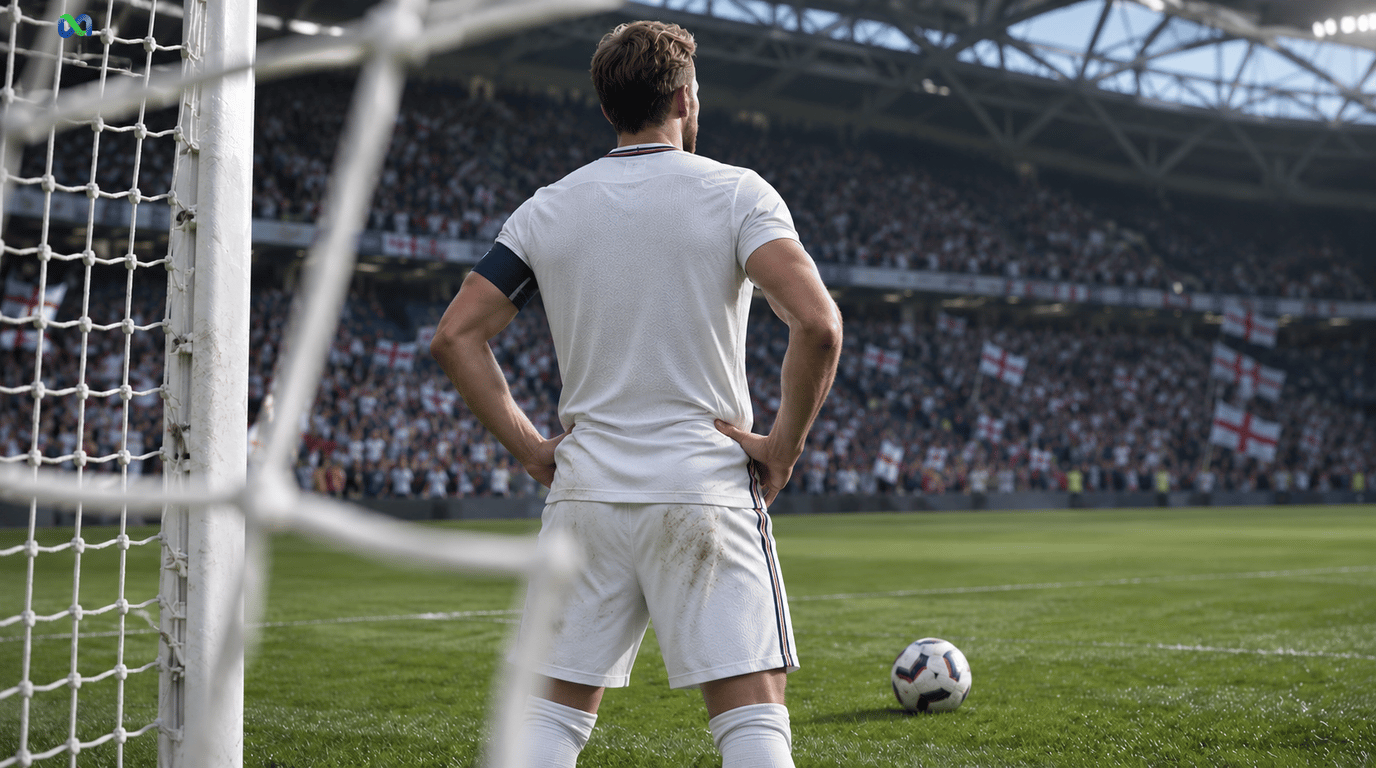
Harry Kane should arrive at the 2026 World Cup as one of England's most important names. That alone moves price. However, a prediction market does not price reputation alone. It prices current form, squad context, draw difficulty, and the real chance of turning favoritism into a title.
For anyone tracking Kane at the 2026 World Cup, the key question is not only whether he will score. The better question is whether the market still sees England's number 9 as a strong enough engine to keep the team among the most dangerous sides in the tournament.
The answer requires separating narrative from probability. Kane remains an elite finisher, he is still decisive in big matches, and he should reach the tournament as one of England's technical and emotional leaders. Even so, a World Cup rarely lets one striker carry everything alone. Fair price depends on the structure around him.
What Kane means to England in 2026
Kane gives England three things at once. First, he brings goal volume. Second, he offers reliability from the penalty spot and on set pieces. Third, he links play well enough to accelerate midfielders and wingers attacking at pace.
That matters because England usually creates highly liquid markets in major tournaments. The public reacts quickly to familiar stars. As a result, two strong performances can shorten England's price very quickly. On the other hand, one flat display can trigger a sharp correction.
From a profile standpoint, Kane offers something rare. He can decide matches inside the box, but he can also drop deeper and help build the move. Therefore, he increases England's attacking consistency, and consistency matters more than isolated flashes in prediction markets.
There is also a clear limit. If England needs Kane to finish, create, occupy center backs, and lead emotionally in every match, the team's ceiling drops. In a short tournament, overload is expensive.
Kane at the 2026 World Cup depends less on hype and more on context
The discussion around Kane at the 2026 World Cup often slides into two extremes. On one side, England is treated as permanently overrated. On the other, a talented squad is treated as the answer to everything. Neither reading is complete.
Kane is still the central piece, but the market should focus on collective context. England creates real edge when it presses well without the ball, controls midfield, and places its wingers in frequent one on one situations. If that mechanism works, Kane gets more high quality finishing volume. If it does not, he receives fewer touches in decisive zones and the team price starts to look inflated.
Age and workload also matter. By 2026, Kane should still be highly competitive, but every physical detail becomes more relevant. A striker built on timing, space reading, and decision making does not need elite explosiveness to remain decisive. Still, even a marginal drop in mobility changes how the market should price his scoring outlook and England's knockout chances.
How the market can overprice England
Markets on traditional national teams often carry a brand premium. England is one of the clearest examples. The name is powerful, the fan base is massive, and any positive signal tends to generate buying flow above what fundamentals justify.
In that environment, Kane at the 2026 World Cup becomes a narrative catalyst. A strong friendly, an opening goal, or a dominant qualifying stretch can push price too low, too quickly. At that point, the question stops being whether England is good. Instead, the real question becomes whether England is expensive.
That distinction is critical. In a prediction market, a price that is too short reduces margin for error. You can be right about the team's quality and still enter at the wrong level. Value comes from the gap between real probability and implied probability.
Kane amplifies this risk because he is easy for casual traders to buy. The average participant knows the player, links leadership to confidence, and treats attacking presence as proof of a deep run. However, a World Cup punishes simplification. A team still needs balance across defense, transition control, and squad depth.
Where value may still exist in Kane at the 2026 World Cup
If the market overprices England to win the tournament, that does not mean every Kane-related market becomes unattractive. In practice, some slices can still offer value.
One example is goalscoring markets, as long as projected minutes and England's path remain favorable. Another is group qualification or specific stage markets, where a strong collective structure can capture consistency without demanding total dominance all the way to the final.
It is also worth watching correction windows. Big national teams generate emotional volatility. If England suffers a manageable setback but keeps strong creation metrics, Kane may return to more rational prices in both individual and team markets.
What to watch before taking a position
Before taking a position on Kane at the 2026 World Cup, it helps to monitor five signals.
The first is physical condition. It is not enough for him to be available. What matters is whether he arrives with managed workload, competitive rhythm, and a strong response in high intensity matches.
The second is England's midfield structure. If England controls possession with quality and creates passes between the lines, Kane should receive the ball in cleaner zones.
The third is winger form. When the wide players create depth and pull defenders away, Kane finds more valuable spaces.
The fourth is the bracket. World Cup paths change everything, and a difficult knockout side of the draw can turn a strong team into a bad price.
The fifth is market discipline. In other words, does the current number already price in too much of the England brand. If so, the best trade may be to wait.
Is Kane worth buying for the 2026 World Cup?
It depends on price. That is the most honest and most useful answer.
Kane should remain one of the most reliable strikers in the tournament. England, because of its squad quality and depth, should open the 2026 World Cup among the market's most respected teams. But respect is not the same as value.
When the market confuses brand with probability, distortions appear. For anyone evaluating Kane at the 2026 World Cup, the edge is not in repeating the obvious narrative. It is in understanding when price already includes too much fame, and when the collective context truly supports the thesis.
If England arrives balanced, with a functional midfield, aggressive wingers, and a reliable defense, Kane may be enough to justify strong prices. If the team arrives with too much shine and not enough structure, the name will remain huge, but the value will shrink.
For a broader tournament view, read the 2026 World Cup favorites odds guide. To understand the platform angle behind tradable probabilities, see Macro Markets: the world is tradable. For baseline tournament context, FIFA's official 2026 World Cup coverage is also worth tracking.
