


CFTC Takes NY State to Court Over Prediction Markets
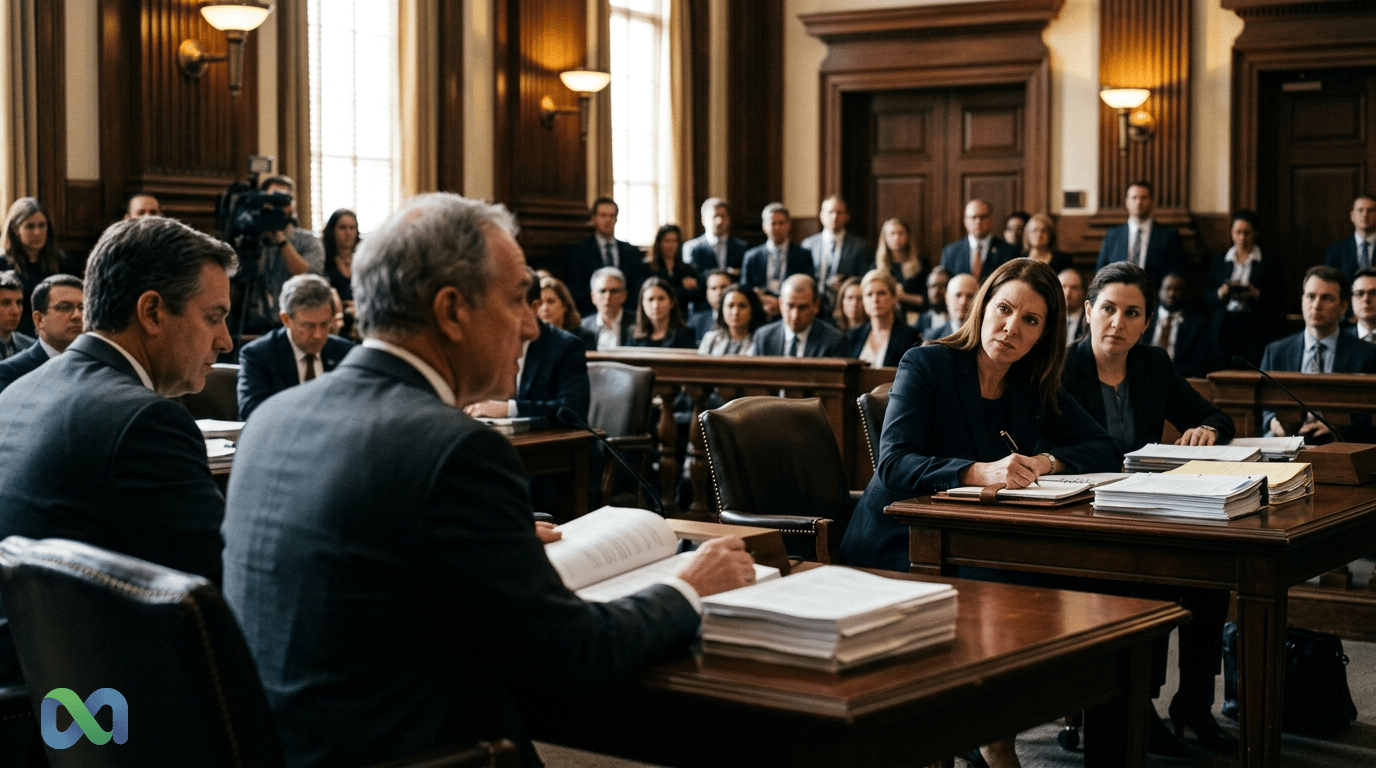
CFTC takes NY state to court over prediction markets because the agency wants a federal judge to confirm that event contracts fall under federal commodities law, not a patchwork of state gambling rules. That dispute now puts New York at the center of one of the biggest regulatory fights in U. S. prediction markets.
The case matters beyond one state. It could shape who controls access to prediction markets, how exchanges list contracts, and how traders price regulatory risk. However, most coverage so far stops at the headline and misses the bigger legal pattern.
This article explains what triggered the lawsuit, why New York disagrees, how Kalshi fits into the fight, and what the outcome could mean for traders and platforms. It is informational only, not legal or investment advice.
What happened between the CFTC and New York?
The CFTC sued New York after state authorities tried to apply gambling rules to federally regulated event contracts. In plain English, the agency argues that New York cannot step in and police contracts that fall under the federal commodities framework. That is the core reason CFTC takes NY state to court over prediction markets.
According to the CFTC's official announcement, the agency wants the court to confirm that it has exclusive jurisdiction over these products. The complaint also fits a broader pattern. Federal regulators are trying to stop states from setting separate rules for the same contracts.
New York, however, appears to take a different view. The state is treating some event contracts as products that resemble wagers on real-world outcomes. From that perspective, state gambling law still matters, even if the platform also points to federal oversight.
That difference is not a technical side issue. Instead, it goes to the center of market access. If New York can regulate or restrict these contracts on its own terms, other states may push harder to do the same.
The CFTC complaint against New York
The federal agency's argument rests on preemption. It says Congress gave the CFTC the authority to oversee commodity futures, swaps, and related event contracts. Therefore, states should not be able to impose a second regulatory layer that blocks or overrides that framework.
The CFTC is also defending its own relevance. If courts allow states to carve up the market, federally approved platforms could face a patchwork of rules. As a result, national operations would become harder and the value of federal supervision would weaken.
For exchanges, this is not just about legal theory. It is about whether a platform can offer a contract across multiple states without facing separate enforcement risk in each one.
Why New York says state gambling rules still apply
New York's position is easier to understand when viewed from the state's side. If a contract looks and behaves like a bet on an event outcome, the state may argue that consumer protection and gambling law still apply. That argument becomes stronger when the contract touches politics, sports, or headline-driven events that look familiar to betting markets.
States are also sensitive to regulatory arbitrage. They do not want firms to avoid state gambling controls simply by fitting products into a federal category. Therefore, New York is part of a wider push to test whether all prediction market contracts deserve the same treatment under federal law.
Why prediction markets sit in a legal gray zone
Prediction markets operate through event contracts. Traders buy and sell positions based on whether a future event will happen. In theory, that looks like a financial market. In practice, it can also look a lot like sports betting or election wagering.
That overlap is why the sector sits in a legal gray zone. Federal regulators focus on market structure, contract design, and exchange oversight. States focus on gambling risk, local policy, and consumer protection. Both sides can point to real concerns.
For readers new to the space, it helps to start with a simple idea. A prediction market turns future outcomes into tradable prices. If you want a broader primer on how market prices reflect expectations, Macro Markets has also explained the logic behind tradable world events in Macro Markets.
How event contracts differ from traditional sports betting
Event contracts and sports bets may look similar on the surface, but the legal framing is different. A prediction market contract is usually listed on an exchange with a structure closer to a regulated financial product. Participants trade with market prices that move as information changes.
Traditional sports betting, by contrast, usually runs through a bookmaker or sportsbook model. The operator sets lines, accepts wagers, and works under state gaming rules. That does not settle the legal dispute, but it explains why firms like Kalshi argue they belong under the CFTC rather than state gaming boards.
What federal preemption means in this case
Federal preemption means federal law can override state law in areas where Congress gave exclusive authority to a federal agency. Here, the question is whether event contracts on prediction markets fall fully inside that protected zone.
If the court agrees with the CFTC, New York may lose the power to treat those contracts as illegal gambling products when they are listed on a federally regulated venue. Conversely, if the court rejects that view, states could gain more room to challenge how prediction markets operate within their borders.
How this lawsuit fits into the broader crackdown on prediction markets
New York is not an isolated case. The current wave of disputes points to a broader escalation between federal regulators and states that want more control. Coverage from Reuters, CoinDesk, and the CFTC itself shows that New York joins a growing list of legal and political fights over event contracts.
That pattern matters because courts do not decide these cases in a vacuum. Each filing adds pressure, builds precedent, and gives other states a roadmap. Therefore, even a single injunction request can carry national consequences.
Other state lawsuits and amicus actions
The research brief highlights actions or filings tied to Massachusetts, Illinois, California, Arizona, and Wisconsin. The exact posture differs from state to state, but the message is similar. Officials in several jurisdictions want courts to accept a stronger state role in regulating or limiting prediction markets.
This is one of the biggest content gaps in competitor coverage. Many stories report one lawsuit at a time. They do not connect the dots into a wider regulatory timeline. Once those dots are connected, the picture looks less like a one-off dispute and more like a campaign to test the limits of CFTC authority.
Why Kalshi is at the center of the dispute
Kalshi is central because it has become the clearest real-world test case for regulated event contracts in the United States. When states challenge prediction markets, they are often reacting to products or categories that Kalshi helped bring into public view.
That does not mean Kalshi is the only company affected. The outcome could influence how investors, exchanges, broker partners, and crypto-linked venues think about launching similar products. It could also affect adjacent platforms that want exposure to event-driven trading without inheriting the same legal risk.
What the case could mean for traders and platforms
For traders, the biggest issue is access. If the CFTC wins, platforms may feel more confident offering event contracts across the country. If states gain more power, users could face different availability rules depending on where they live.
For platforms, the key question is compliance cost. A single federal rulebook is easier to manage than fifty different state approaches. However, if courts leave the door open to state enforcement, exchanges may need to narrow their offerings, redesign contract categories, or geo-block more aggressively.
This matters for how users interpret prices too. Prediction markets are often discussed as tools for reading collective expectations. If fewer contracts remain available, the market signal can become thinner and less useful. Readers who follow pricing logic in event markets can compare that dynamic with broader explainer coverage like Who Will Win the 2026 World Cup? Favorites and Odds.
Possible outcomes if the CFTC wins
A CFTC win would strengthen the case for exclusive federal jurisdiction over regulated prediction markets. That would help platforms argue that properly listed event contracts should not be treated as state gambling products.
It could also encourage more product expansion. Exchanges may test new categories, brokers may feel safer partnering with them, and users may see broader access. In that environment, educational explainers like 2026 World Cup Favorites: Who Will Win According to Odds and Markets show how market pricing can be presented to a mainstream audience.
Still, a CFTC win would not end every debate. Lawmakers, courts, and regulators could continue fighting over contracts tied to elections, sports, or politically sensitive topics.
Possible outcomes if states gain more control
If states gain more control, the market could fragment. Some states may allow access, others may restrict it, and platforms may respond with narrower listings. That would reduce the appeal of a national event-contract marketplace.
It could also slow adoption among mainstream financial partners. Firms do not like unclear jurisdiction. When regulation becomes uneven, product growth usually becomes slower and more expensive.
For users, that may mean fewer choices and more uncertainty. It may also push interest toward offshore or less regulated alternatives, which creates a different set of risks.
What to watch next in the prediction markets battle
The next major signals will come from court rulings, injunction requests, and how other states respond. Watch whether judges accept the CFTC's preemption theory. Also watch whether new filings expand the state coalition.
A second signal is product behavior. Exchanges may adapt before final rulings arrive. They could remove certain contract types, limit access in disputed states, or focus on less controversial categories. Additionally, readers who follow how markets translate public events into prices can compare this fight with other event-driven coverage on Macro Markets, including 2026 World Cup Favorites: Who Will Win According to Odds and Markets.
The larger point is simple. This is no longer just a dispute about one lawsuit or one platform. It is a federalism battle over whether prediction markets are mainly financial products, mainly gambling products, or something in between. The answer will shape the next phase of U. S. prediction markets.
FAQ
Why is the CFTC suing New York over prediction markets?
The CFTC says New York is trying to apply state gambling law to event contracts that fall under federal commodities regulation. Therefore, the agency wants a court to confirm that federal law preempts state interference in that area.
Does the CFTC regulate prediction markets?
Yes, the CFTC claims authority over certain event contracts listed on federally regulated venues. However, the current lawsuits test how broad that authority is when states disagree.
What does this mean for Kalshi users?
The case could affect which contracts are available, where they can be offered, and how much legal risk platforms face. In short, it could shape both access and product variety.
Conclusion
The reason the CFTC takes NY state to court over prediction markets goes beyond one headline. The agency is trying to preserve a federal framework for event contracts at the exact moment states are pushing back.
That makes the New York case an important marker for the industry. If federal jurisdiction holds, prediction markets may expand with more confidence. If states gain leverage, the market may become more fragmented and harder to scale. Either way, this legal fight will help define what prediction markets look like in the United States over the next few years.
