




Pedri at the 2026 World Cup: can the midfielder raise Spain's ceiling?
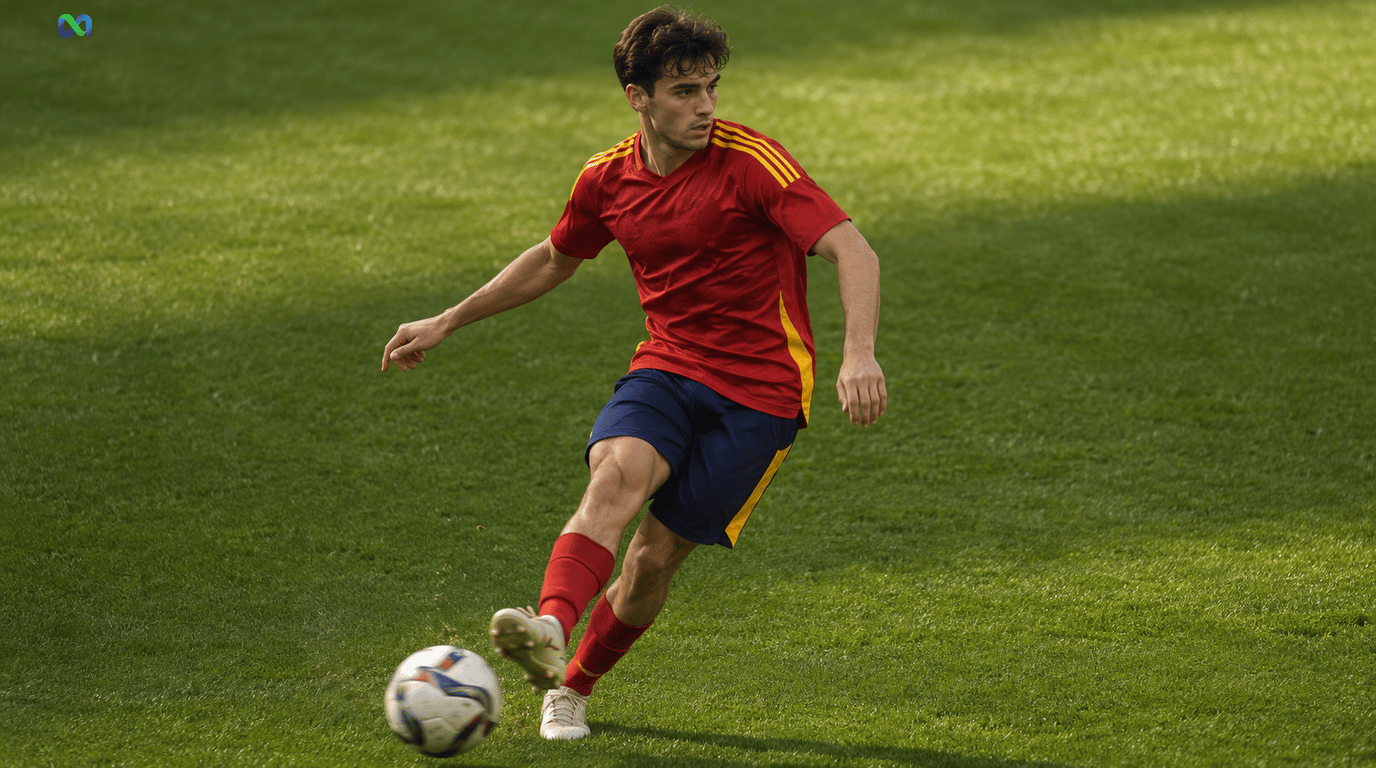
Pedri at the 2026 World Cup will be one of the key themes for anyone evaluating Spain through a market lens. That is because he is not just a gifted midfielder. He is the kind of player who changes tempo, organizes possession, and improves decision-making in the final third. In a World Cup, that profile carries real weight.
At the same time, there is a clear risk of overreaction. When a young, technical, already established player enters a tournament cycle, public discussion often pushes the price ahead of the facts. For anyone following sports prediction markets, the issue is not just whether Pedri is good. The more useful question is different. How much does he really increase the probability of a deep Spain run?
In this article, you will understand why Pedri at the 2026 World Cup could be decisive, where the limits of that projection sit, and how to separate real impact from narrative before the tournament starts.
Why Pedri at the 2026 World Cup matters so much
Few players at the 2026 World Cup offer as much structural control as Pedri. He does not stand out only because of stylish plays. His value shows up in the way the team breathes better with the ball, finds passing lanes, and escapes pressure. In national teams, that is extremely valuable.
Spain usually depends on circulation, patience, and coordination between midfield and attack. When that mechanism works, the team controls territory. When it fails, possession becomes sterile. Pedri operates exactly at that point. He is an organizer who reduces the gap between control and creation.
That is why talking about Pedri at the 2026 World Cup is less about isolated brilliance and more about collective function. That detail matters because, in prediction markets, players who improve the entire system are often underestimated or mispriced by the broader public.
What Pedri brings that is different for Spain
Pedri at the 2026 World Cup is not just a technical midfielder. He combines traits that usually hold up well in short tournaments.
Tempo control in tense matches
At the World Cup, many matches tighten up. Teams become more cautious and space shrinks. In those scenarios, having a player who knows when to slow the game, speed it up, and choose the right pass makes a huge difference. Pedri helps Spain avoid confusing possession with urgency.
Ability to connect lines
Another major strength is his ability to connect sectors of the pitch. Pedri receives under pressure, turns, and finds attackers in better positions. That kind of action does not always show up as a flashy stat, but it changes the quality of each possession. Better possessions increase the odds of creating clean chances.
Intelligence to press and recover
His impact does not stop when Spain loses the ball. Pedri also improves the immediate press after turnovers and helps the team recover territory quickly. In a short tournament, where mistakes are costly, that invisible work can decide qualification.
Awareness to vary angles and channels
Predictable national teams suffer more against organized defensive blocks. Pedri offers changes of direction, short combinations, and smart movement between the lines. That forces the opponent to adjust and can open the space Spain's wingers and forwards need.
Where the risk lies in projections about Pedri at the 2026 World Cup
Even with all of that, there is still risk in turning Pedri at the 2026 World Cup into a total solution. The World Cup does not work that way.
Physical availability remains a key variable
The first point is simple. Reaching peak level in mid-2026 depends on a long run-up. Heavy schedules, accumulated minutes, and injury history all matter. A midfielder who depends so much on mobility and fine reading of the game needs to arrive fresh.
Control alone does not guarantee penetration
Pedri can improve organization, but he cannot create an aggressive team by himself. If Spain lacks width, runs in behind, and presence in the box, the midfield may circulate well and still hurt opponents too little. That matters because the market sometimes turns process improvement into an assumed result.
Knockout rounds reward efficiency, not just dominance
In knockout football, a team can play better and still go home. Set pieces, individual mistakes, and chance conversion matter too much. Pedri raises Spain's stability, but he does not remove the variance that defines World Cups.
His name can inflate public interpretation
Once the narrative becomes, "Spain have Pedri, so they are now a top favorite," the price starts carrying emotional premium. That is common in major tournaments. The market often reprices reputation faster than it reprices true probability.
How much Pedri can really raise Spain's ceiling
This is the most important point. Pedri does not turn an average squad into an automatic champion. But he can meaningfully raise the ceiling of a team that is already competitive.
If Spain arrive at the 2026 World Cup with a stable defense, wingers who can attack space, and a complementary midfield around him, Pedri can be the piece that converts possession into concrete superiority. Instead of simply moving the ball around, the team becomes more capable of generating territorial and emotional pressure on opponents.
That effect shows up in several ways. The first is the volume of organized attacks. The second is the reduction of careless losses in dangerous zones. The third is the ability to sustain pressure without disorganizing the rest of the team. All of that increases consistency, and consistency is extremely valuable across seven decisive matches.
When a midfielder improves the environment around him, his real impact is often larger than the surface reading suggests. That is why Pedri at the 2026 World Cup deserves serious attention, but only within the right collective context.
Where the market can misprice Pedri at the 2026 World Cup
Sports markets usually make two kinds of mistakes with a player like this. Sometimes they underestimate him because he does not live on raw numbers alone. At other times, they overreact because the name is strong and the style is appealing.
Mistake 1, overstating the link between control and winning the title
Having more control in midfield does not automatically mean a better chance of lifting the trophy. To win the World Cup, a team has to survive many kinds of games. It will face low blocks, fast transitions, tense draws, and possibly extra time. Pedri helps in many of those scenarios, but not all of them.
Mistake 2, ignoring how the rest of the squad responds
Pedri's value rises when there are attackers making the right runs and fullbacks maintaining width. Without that, part of his progressive passing loses effect. The market can get this wrong if it looks at the player without looking at the fit.
Mistake 3, turning collective impact into an individual premium
It is also easy for the market to buy into narratives about star status, best player awards, or absolute protagonism, when Pedri's main effect may be structural. He can be central for Spain without dominating every headline of the tournament.
The optimistic scenario for Pedri at the 2026 World Cup
In the optimistic scenario, Pedri at the 2026 World Cup arrives healthy, with his minutes well managed, and surrounded by a more mature Spain side. In that case, he can be the axis that gives the team clarity in every phase of the tournament.
Spain would gain not only more possession, but more useful possession. That changes a lot. Instead of circulating the ball without consequences, the team would control space better, press better, and create chances with less anxiety. A midfielder like that may not appear in every highlight, but he pushes the national team to a higher competitive level.
If that happens, Pedri at the 2026 World Cup stops being just an attractive discussion point. It becomes a real pricing factor for semifinal and title markets.
The skeptical scenario for Pedri at the 2026 World Cup
In the skeptical scenario, Pedri at the 2026 World Cup becomes part of a team setup that exposes a common limit in national teams that depend too heavily on control. The side may circulate well, but still struggle to accelerate when it has to. If Spain lack depth or aggression near the box, Pedri's influence may feel smaller than expected.
There is also the possibility that public debate expects a player who decides every game, when Pedri's best work shows up across the sum of possessions rather than in one cinematic moment. That gap between expectation and role often creates poor market reading.
That is why the smartest view avoids exaggeration on both sides. Neither "Pedri solves everything" nor "Pedri is only nice-looking possession football" is a serious reading. His value is real, but it depends on how Spain turn organization into competitive damage.
How to analyze Pedri at the 2026 World Cup in prediction markets
If you are following the tournament with market logic, a few questions help clean up the analysis.
- Will Spain have enough depth to turn Pedri's control into clear chances?
- Does his physical status remain stable through the cycle?
- Does the squad around him amplify or limit his passing between the lines?
- Does Spain's current price already include too much premium for the name?
These questions reduce the risk of buying reputation alone. In international football, the distance between a brilliant player and a title-winning campaign is never small.
To broaden your view of Spain's context, it is worth revisiting our analysis of Spain at the 2026 World Cup: chances, squad, and risks. It also helps to compare this case with the debate around Lamine Yamal at the 2026 World Cup, because both examples show how individual talent can, or cannot, shift collective pricing. For a wider tournament view, read 2026 World Cup: complete guide.
Conclusion
Pedri at the 2026 World Cup matters because he can change Spain's structural quality. Few midfielders combine control, reading of the game, and the ability to connect sectors with this level of impact. In a short tournament, that can raise the competitive ceiling of a strong national team.
Even so, it is important to resist the urge to turn that value into an automatic title guarantee. Pedri's effect depends on context, health, and collective fit. For the market, the best reading is still the most disciplined one. Recognize the player's impact without paying too much for the narrative.
When control, context, and price drift apart, opportunity appears. That is where analyzing Pedri at the 2026 World Cup becomes more useful than simply repeating the hype. For official tournament context, track FIFA's 2026 World Cup coverage.
