




Prediction Market Lobbying Is Surging as Washington Tightens the Rules
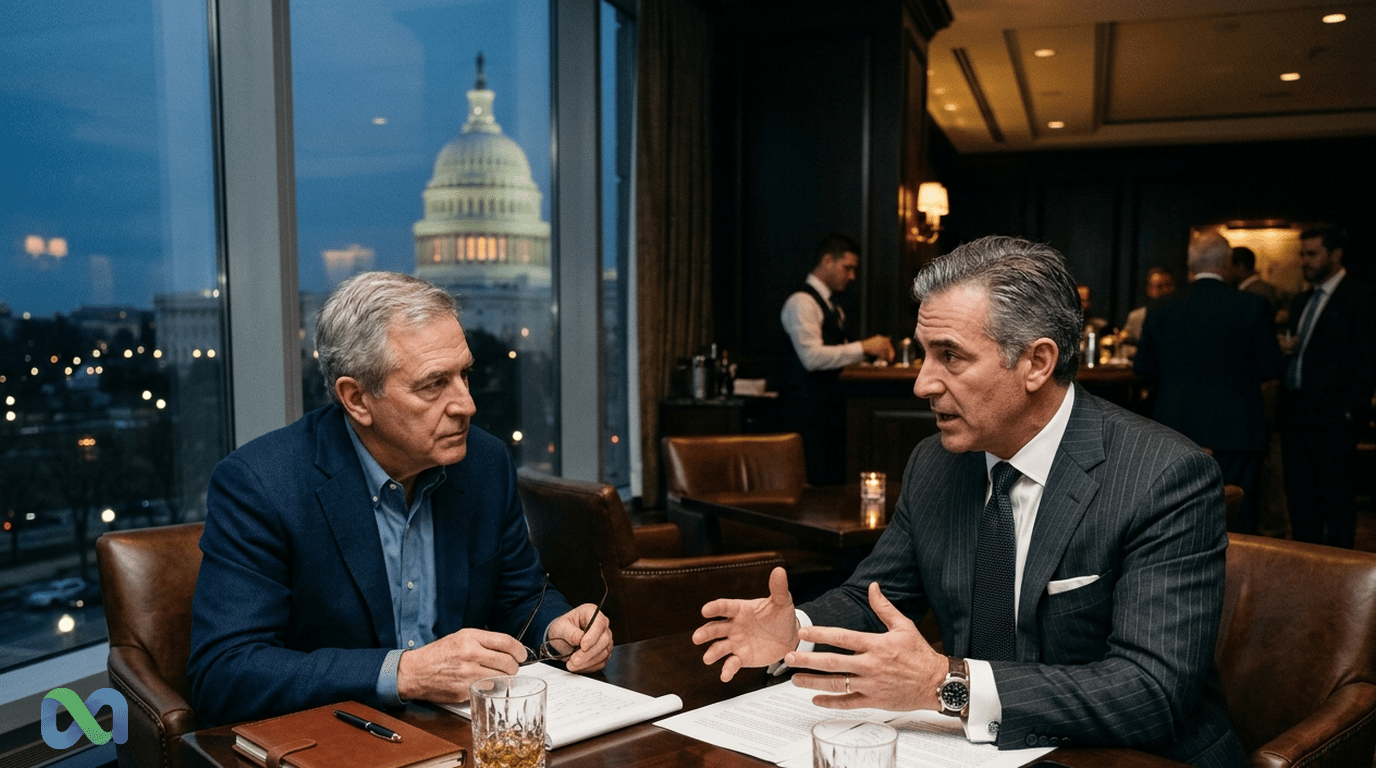
Prediction market lobbying is rising fast in Washington, and that is not happening by accident. Lawmakers and regulators are questioning political event contracts. The biggest platforms are now spending more to shape the rules before the rules shape them.
Reported lobbying outlays for prediction market firms and allied groups climbed sharply in early 2026. Some coverage points to a jump of more than 60% year over year. That surge reflects a simple reality. The fight over prediction markets regulation is no longer a niche policy dispute. It now sits at the intersection of financial innovation, gambling law, political ethics, and market structure.
For traders, operators, and policymakers, the core question is no longer whether event markets matter. The real question is how Washington will classify them. Will officials treat them mainly as financial instruments with information value, or as speculative products that create new risks around politics, access, and integrity? This article explains why prediction market lobbying is accelerating, what regulators are worried about, and why the next round of decisions could reshape the entire category.
Informational only: This article is not legal advice or investment advice. Rules can change quickly across jurisdictions and platforms.
Why Prediction Market Lobbying Surged in 2026
Prediction market firms entered 2026 with more momentum, more visibility, and more legal exposure than at any point in the modern U. S. event-contract cycle. That combination usually produces one outcome in Washington: more lobbying.
Record federal lobbying spend in Q1
The most important development is scale. Industry reporting suggests lobbying spend tied to prediction markets rose by more than 60% as regulatory pressure built in Washington. That matters because lobbying budgets usually expand when firms believe a decision window is open. In this case, the industry appears to see a narrow period in which contract design, market access, and agency jurisdiction are still up for debate.
The spending increase also signals that prediction market operators no longer see policy as a side issue. For a firm offering political or economic event contracts, regulation is the business model. A favorable classification can expand product menus, improve user confidence, and lower legal friction. An unfavorable one can shrink the addressable market overnight.
The role of Kalshi, Polymarket, and new trade groups
Much of the attention has focused on firms such as Kalshi and Polymarket, along with lobbyists, lawyers, and trade groups arguing that event markets serve a legitimate forecasting function. Their broad case is familiar. Prediction markets can aggregate dispersed information, translate uncertainty into prices, and give institutions a real-time signal about public expectations.
That pitch is powerful in Washington because it reframes speculation as information production. Instead of looking like pure wagering, the product is presented as a market-based tool for price discovery. However, that narrative has limits. Once political contracts touch elections, legislation, or sensitive policy outcomes, the informational case runs into a harder question. Who gets to trade, what information they bring, and whether private incentives can distort public life?
For readers new to the category, our explainer on how prediction markets work helps frame why platforms keep pushing the information-efficiency argument.
What Regulators and Lawmakers Are Worried About
Washington's skepticism is not just about novelty. It is about incentives. Regulators and lawmakers are asking whether these markets create forms of participation that look less like hedging or forecasting and more like a regulated path into political gambling.
Political event contracts and ethics concerns
Political contracts attract the most scrutiny because they turn elections, nominations, legislation, and public actions into tradable instruments. Critics worry this can change behavior around the events themselves, especially when traders have proximity to campaigns, policy teams, donor networks, or official institutions.
That is where ethics concerns become concrete. If a market lets participants profit from political outcomes, lawmakers may ask whether insiders, consultants, or people with privileged access can influence or anticipate key developments before the public can react. Even when that conduct does not fit classic securities-law definitions, the governance concern remains.
The issue is not only manipulation. It is also legitimacy. A market can be statistically useful and still create a public backlash if voters believe political actors have financial stakes in democratic outcomes. That reputational risk is one reason prediction markets regulation keeps pulling in voices far beyond financial regulators.
Insider trading, gambling expansion, and public-interest objections
Do prediction markets allow insider trading? In practice, the concern is strongest in contracts tied to politics, policy, and other sensitive events where connected participants may hold superior information. That does not mean every trade is improper. Still, it explains why regulators view these products differently from sports or commodity forecasts.
Public-interest critics also argue that event contracts can function as a back door to gambling expansion. If a platform can list contracts on a wide range of real-world outcomes, the line between economic hedging and entertainment speculation becomes harder to enforce. State officials tend to be especially sensitive to that risk because many state legal frameworks still separate permitted financial products from prohibited wagering.
This is why the debate is broader than one platform or one contract. It is a fight over whether prediction market legal status should depend on public value, formal product structure, or the practical behavior the market encourages. For a broader primer, see our guide to whether prediction markets are legal.
Why the CFTC Versus State Gambling Fight Matters So Much
At the heart of prediction market lobbying is a jurisdictional battle. Firms want a regulatory home that is predictable, nationally scalable, and easier to defend in court. That is why Washington matters more than ever.
Federal derivatives oversight versus state enforcement
From the industry perspective, federal oversight through a derivatives framework offers one major advantage: preemption pressure. If a product qualifies under a federal regime, firms can argue for clearer national rules instead of navigating a patchwork of state gambling laws and enforcement priorities.
That does not make the federal route easy. The CFTC still has to weigh whether event contracts serve the public interest, whether they resemble prohibited gaming, and whether political contracts create risks that exceed any forecasting benefit. Still, for platforms that want legitimacy and scale, a fight in Washington may be preferable to fifty separate fights in the states.
| Regulatory path | Main benefit for platforms | Main risk for platforms |
|---|---|---|
| CFTC-style federal oversight | National framework, stronger legitimacy, clearer compliance architecture | Tougher scrutiny on political contracts, public-interest tests, possible listing restrictions |
| State gambling treatment | Faster access in some permissive jurisdictions | Fragmented compliance, uneven enforcement, weaker institutional legitimacy |
How jurisdiction shapes growth, product design, and compliance costs
Jurisdiction is not a legal technicality. It shapes the market itself. If operators expect strict federal review, they may favor narrower contract categories, tighter listing standards, and stronger surveillance. If they face state-by-state pressure, they may limit geography, reduce political exposure, or redesign settlement terms to avoid specific triggers.
Compliance costs also change with the regulator. National financial oversight may be expensive, but it can support long-term planning. Fragmented state treatment can create lower upfront barriers in one market and higher uncertainty across the rest. Therefore, lobbying dollars are concentrating in Washington. The industry is not only trying to win a rule. It is trying to win a durable structure for future expansion.
Are Prediction Markets Actually Useful Public Information Tools?
The industry's strongest defense is that prediction markets help society process information. That claim has merit, but it deserves a more careful treatment than most daily coverage provides.
What the informed-minority research says about price discovery
Academic work cited in the current debate suggests market accuracy may come less from broad crowd wisdom and more from a relatively small informed minority. That is a subtle but important distinction. If prices mostly reflect the trades of a small number of well-informed participants, prediction markets can still be useful. However, the source of their informational value is narrower than the marketing slogan implies.
This matters for two reasons. First, it helps explain why some event markets outperform polls or pundits. A few disciplined traders with better models, stronger incentives, or deeper domain knowledge can move prices toward fairer probabilities. Second, it raises distributional questions. If most informational edge comes from a minority, then access, fairness, and potential information asymmetry become central policy concerns, not side notes.
Readers who want a broader foundation can also review our breakdown of prediction market accuracy.
Why market accuracy does not automatically resolve governance concerns
Are prediction markets actually accurate? Sometimes, yes, especially when contracts are liquid, incentives are aligned, and informed traders participate. But accuracy alone does not settle the regulatory case. A market can generate useful prices and still create problems around manipulation, unequal access, addictive behavior, or political legitimacy.
That is the core gap in much of the lobbying narrative. Firms often present accuracy as if it answers the broader governance question. Lawmakers do not have to accept that framing. They can agree that markets contain information while still deciding that some categories, especially political event contracts, require tighter limits.
In other words, the policy debate is not only about whether prediction markets work. It is about what kind of social permission should be granted to markets that work by turning contested public outcomes into tradable bets.
What This Lobbying Wave Could Mean for Traders, Platforms, and Policymakers
The next phase of prediction markets regulation will likely determine which products survive, where they can be listed, and how aggressive platforms can be in user growth. That makes the current lobbying wave more than a headline. It is a forward signal for market design.
Possible regulatory scenarios
A permissive outcome would leave room for federally supervised event contracts with clearer guardrails, stronger surveillance, and tighter product standards. In that world, large operators could gain a legitimacy advantage, and smaller entrants might struggle with compliance costs.
A restrictive outcome could narrow the list of acceptable contracts, especially around elections and sensitive policy events. That would not end prediction markets. It would, however, push the sector toward less controversial categories such as macroeconomic data, business events, or other contracts that are easier to defend as informational tools.
A mixed scenario is probably the most realistic. Washington may tolerate some event markets while drawing hard lines around contracts seen as corrosive to democratic legitimacy or too close to gambling. If that happens, lobbying will shift from broad category defense to line-drawing over individual product types.
What to watch in Congress, the CFTC, and the states
For traders, the practical watchpoints are straightforward. Track CFTC statements, no-action positions, enforcement signals, and any moves that clarify how political contracts will be treated. Watch Congress for proposals that frame prediction markets as either innovation worth preserving or a loophole worth closing. Additionally, do not ignore the states. Even when Washington dominates the conversation, state officials can still shape access and operating risk.
It is also worth watching how platforms adapt their public messaging. If firms begin emphasizing economic hedging, forecasting utility, and institutional use cases over attention-grabbing political contracts, that is a sign they understand where the pressure is building.
FAQ
Is prediction market legal?
Prediction market legal status depends on jurisdiction, contract type, and regulator classification. Some event contracts may fit within a federal derivatives framework, while others can trigger state gambling concerns or public-interest objections. Traders should always check the platform, contract category, and local rules before participating.
What are three types of lobbying?
Three common types are direct lobbying, where firms engage lawmakers or regulators; grassroots lobbying, where public pressure is mobilized; and coalition or trade-group advocacy, where multiple firms coordinate around shared policy goals. Prediction market companies can use all three as regulation intensifies.
Do prediction markets allow insider trading?
The biggest concerns arise when contracts are tied to politics or sensitive policy events and some participants may have privileged access to information. Even when existing securities rules do not apply neatly, regulators may still view those contracts as vulnerable to unfair informational advantages.
Are prediction markets actually accurate?
They can be, especially when informed traders, liquidity, and strong incentives support price discovery. But research suggests a small informed minority may drive much of that accuracy. Therefore, useful prices do not automatically eliminate concerns about fairness, governance, or market design.
The Bottom Line
Prediction market lobbying is no longer a niche story about startups seeking lighter rules. It is becoming a test case for how the United States balances financial innovation, gambling law, and political ethics.
The industry's argument is that event markets generate real information and deserve a workable federal framework. The counterargument is that useful prices do not erase the risks created when politics and profit are tightly linked. That is why the fight in Washington matters. The outcome will shape not only what traders can access, but what prediction markets are allowed to become.
If you want to stay ahead of the next turn in this debate, follow upcoming CFTC actions, congressional proposals, and state responses closely. In prediction markets, the rules are becoming part of the trade.
External reference: CFTC — regulated markets and trading organizations
Related Macro Markets reading: prediction markets, sports markets, and politics markets.
