


Wirtz at the 2026 World Cup: Is Germany Underrated?
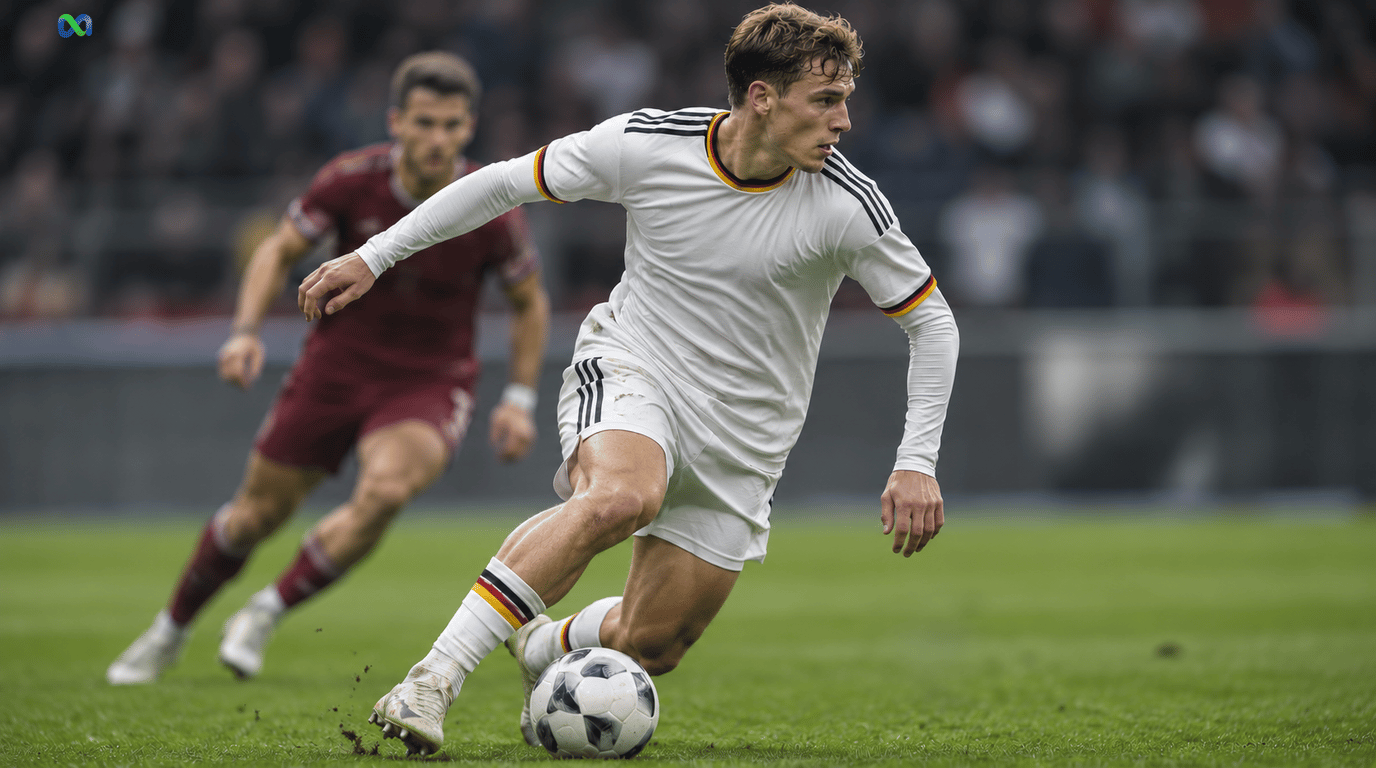
Florian Wirtz enters the 2026 World Cup cycle as one of the most decisive players in Germany's new generation. That alone would put him on the radar. But the more interesting question is not just whether he will play well. The real question is this: can Wirtz raise Germany's competitive ceiling enough to reprice the team in the market?
That is what matters for anyone who watches football through a probability lens, not just a narrative one. In prediction markets, isolated talent is not enough. What matters is how that talent changes chance creation, game control, attacking depth, and the ability to decide big matches. If Wirtz truly lifts those pillars, Germany's 2026 World Cup price may look cheap today.
At the same time, there is a clear risk of overreaction. In a World Cup cycle, sports coverage often turns an individual rise into a shortcut for collective favoritism. It does not always work that way. A star can lift a national team, but he cannot solve structural problems in balance, defensive depth, or execution under pressure on his own.
In this article, we look at what Florian Wirtz means for Germany, why his impact matters for the 2026 World Cup, and how prediction markets may react to that evolution over the cycle. For readers tracking broader tournament pricing, our guide to 2026 World Cup favorites odds offers a useful baseline for how the market is currently framing contenders.
Why Wirtz Has Become Central to Germany
Wirtz is not in this conversation because of hype alone. He has become central because he combines creativity, acceleration, and spatial awareness at a level that is rare for his age. When he receives the ball between the lines, he does not just keep possession. He breaks lines, speeds up the move, and improves the quality of the final decision. That matters a lot in short tournaments.
Germany is at a moment when this type of player carries extra value. In recent major tournaments, the team has swung between sterile possession and emotional loss of control in decisive moments. More than once, Germany lacked a player who could connect buildup and attacking aggression naturally. Wirtz offers exactly that bridge.
He also changes the way opponents have to defend. Midfields can no longer focus only on ball circulation or wide overloads. With Wirtz, there is a constant threat in the half-spaces, which forces tighter defensive distances and opens room for other attacking pieces. That kind of tactical gravity matters even before a player records a goal or assist.
The practical result is simple: Germany becomes harder to read and potentially more efficient. In a World Cup, that can be the difference between a strong group stage and a real title run.
How Wirtz Changes Germany's World Cup Ceiling
The value of Wirtz is not just stylistic. It is structural. Teams that go deep in a World Cup usually need at least one player who can solve matches when organized plans break down. That player does not need to dominate every minute, but he must create leverage in the moments when margins get thin.
Wirtz offers that profile because he combines technical quality with fast decision-making. He can create in settled possession, attack transitions, and punish defensive hesitation near the box. Those traits matter because knockout matches often become compressed, tense, and decided by very few sequences.
From a market perspective, this is where the repricing thesis starts to make sense. If Germany gains a reliable source of shot creation and unpredictability, its implied probability should rise, even if the squad is not perfect. Tournament pricing is about pathways to winning, not about being flawless.
The key is whether bettors and market participants are fully incorporating that upside. If they are still pricing Germany based on recent tournament frustration, there may be room for a mispriced view as Wirtz's influence becomes more visible.
Why the Market Still Has Reasons for Caution
It would be a mistake to treat one elite player as a full answer. Germany still has open questions that matter in a long tournament. Defensive stability, match management, and consistency against top opposition still need to hold up under pressure.
That is why the market may stay conservative for a while, even if Wirtz keeps shining at club and international level. Traders know that tournament winners need more than one attacking catalyst. They need a structure that survives bad game states, squad rotation, and high-leverage moments.
There is also the usual problem of narrative inflation. Once a player becomes the symbol of a new cycle, public discourse tends to oversimplify the case. Germany may improve because of Wirtz without suddenly becoming the best team in the field. Those are two different claims, and prediction markets tend to price that distinction better than mainstream coverage.
In other words, caution does not kill the bullish case. It simply sets the threshold. To justify a strong repricing, Germany needs more than Wirtz headlines. It needs proof that his influence translates into repeatable team-level advantages.
What Prediction Markets Could Pick Up First
Prediction markets do not wait for a final consensus. They move when enough informed participants see a meaningful change in underlying probability. That is why players like Wirtz matter before a tournament even starts. They alter expectations early, especially if their impact shows up in how a team creates chances against elite opposition.
For Germany, the market signal would likely appear in stages. First, bettors react to standout performances and visible chemistry gains. Then the bigger shift comes if Germany starts looking more resilient in high-level matches, not just more talented on paper.
That distinction is important. Markets rarely overpay for aesthetics alone. They respond more aggressively when style improvements become signs of repeatable edge. If Wirtz helps Germany become more stable in possession, more dangerous in transition, and harder to defend in settled attacks, that is where odds can move in a meaningful way.
For anyone tracking the 2026 cycle, the useful question is not whether Wirtz is world class. It is whether his presence changes Germany's title path enough to beat current expectations. That is also the broader logic behind Macro Markets' view that the world is tradable: markets become more useful when they force narratives into explicit probabilities.
Is Germany Undervalued for the 2026 World Cup?
The bullish argument is straightforward. Germany already has depth, tournament history, and enough structural quality to stay relevant. Add a player who raises chance creation and attacking clarity, and the ceiling starts to look meaningfully higher.
The bearish argument is just as clear. World Cups punish incomplete teams, and recent German failures were not caused by a lack of talent alone. If the rest of the structure does not hold, Wirtz may improve the team without transforming its actual title odds as much as the public expects.
That tension is exactly why this is a strong prediction market topic. It is not a binary question about whether Wirtz is good. It is a pricing question about how much one elite creative force can change a national team's true probability of winning the tournament.
Right now, the answer may be that Germany is still slightly underrated, especially if the market remains anchored to recent disappointments. But that edge will only last if Wirtz's influence keeps showing up in the numbers and on the pitch as the 2026 World Cup gets closer.
Final Take
Florian Wirtz gives Germany something it has badly needed: a player who can connect control, creativity, and decisive attacking actions at the highest level. That does not automatically make Germany the favorite for the 2026 World Cup. It does, however, make the team more dangerous than many casual narratives suggest.
For prediction market participants, that is where the opportunity sits. The best positions often come before the broader consensus fully updates. If Wirtz continues to increase Germany's attacking ceiling, the market may eventually reprice the team upward.
Until then, the sharper view is not blind hype or blanket skepticism. It is a measured question of whether Germany's current price fully captures what Florian Wirtz changes in a tournament setting. For official tournament context, track FIFA's 2026 World Cup coverage.
