


Spain World Cup 2026: Group, Squad and Predictions
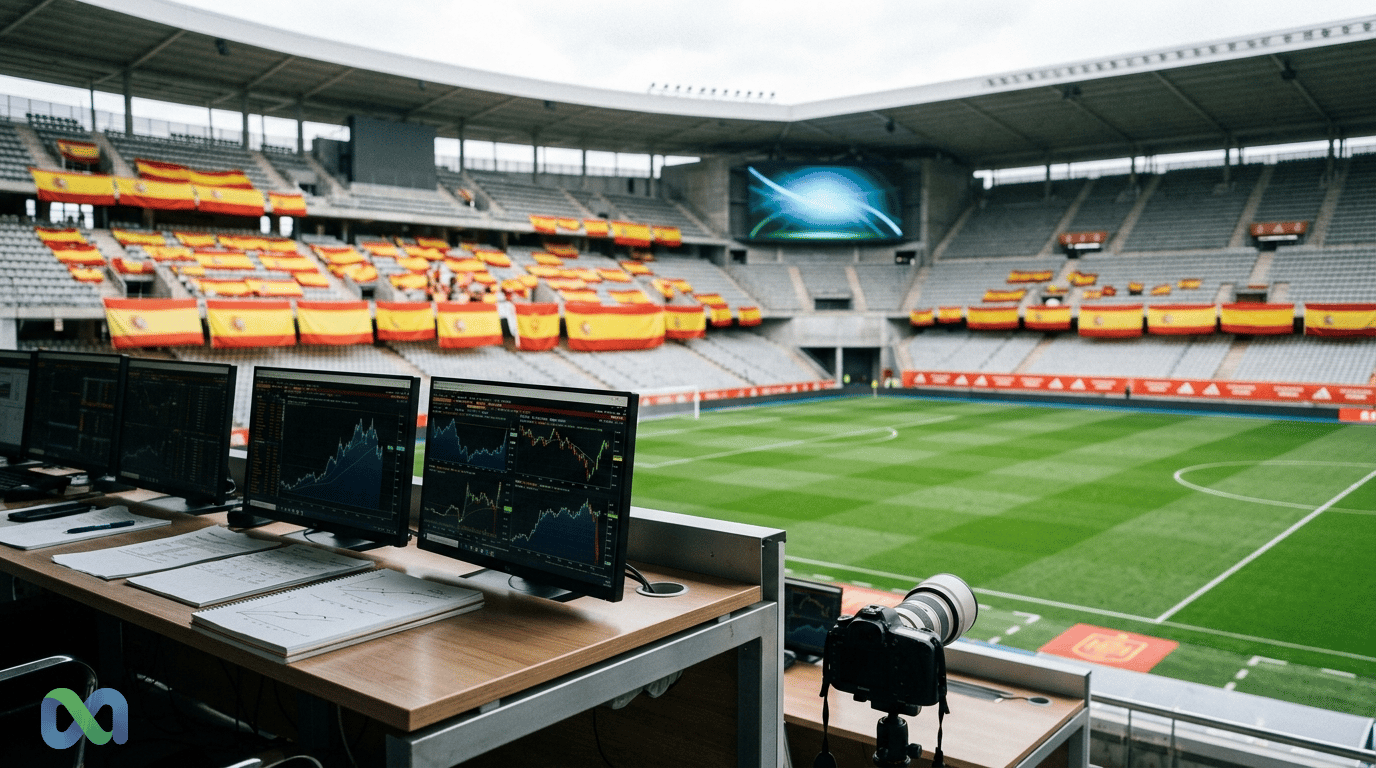
Spain World Cup 2026 arrives as one of the central stories of the tournament. The Euro-winning core, the attack led by Lamine Yamal and Nico Williams, and a technical midfield put La Roja among the favorites. At the same time, the World Cup asks a question Spain has not fully answered since 2010: can control become knockout wins?
This guide covers Spain's group, fixtures, likely squad, style, history and chances at the 2026 World Cup. The goal is to separate official facts from projection. Group information and tournament rules should be checked against official sources. Squad lists, lineups, injuries and market probabilities need updates close to kickoff.
For prediction-market users, Spain is a useful case. The team should carry strong prices before its opener, but news about Rodri, Pedri, Carvajal, Yamal or the bracket can move the market quickly. So the question is not only whether Spain is good. The better question is how much of that strength is already priced in.
Quick Summary of Spain at the 2026 World Cup
Spain World Cup 2026 starts in Group H with Uruguay, Saudi Arabia and Cape Verde. Luis de la Fuente remains the manager. His team combines possession, high pressing, aggressive wingers and a young generation that has already won at a high European level.
Quick facts:
- Team: Spain.
- Manager: Luis de la Fuente.
- Group: Group H.
- Opponents: Uruguay, Saudi Arabia and Cape Verde.
- Likely core: Unai Simón, Carvajal, Laporte, Pedri, Rodri, Nico Williams and Lamine Yamal.
- Main strength: game control with elite wing talent.
- Main risk: knockout matches, penalties and starter fitness.
Spain should open the tournament as favorite to win the group. It should also appear among the strongest title contenders. However, that view depends on three variables: the final squad, the health of the main players and the path after the group stage.
The official competition source is FIFA. Use it to verify fixtures, venues, kickoff times and final rules. For Spain's recent competitive context, UEFA helps explain the team's rise under de la Fuente.
Spain's 2026 World Cup Group
Spain is in Group H at the 2026 World Cup. The group includes a strong South American opponent, an Asian team with international experience and an African debutant that can play without pressure. That creates a favorable path, but not an automatic one.
Uruguay is the toughest opponent. It brings intensity, tradition, high-level forwards and a strong record in short tournaments. The first read on Group H should treat Spain and Uruguay as the two poles of the section.
Saudi Arabia carries an important reminder for any favorite. In 2022, it beat Argentina in the opening match. That result does not define 2026, but it shows how group games can punish slow favorites, especially early in a tournament.
Cape Verde is the highest-uncertainty opponent. Debutants can swing widely in level. Still, they can also play with freedom, a compact block and direct transitions. For Spain, that type of match demands patience and clean decisions in the final third.
Group H opponents
Initial match read:
- Spain vs Uruguay: direct duel for the top of the group. Midfield control is the key.
- Spain vs Saudi Arabia: Spain should be favored. The risks are opening-match rhythm and set pieces.
- Spain vs Cape Verde: Spain should be favored. The main issue is breaking a low block without losing control.
In market terms, winning the group is different from advancing. Spain can be strong to qualify and still have a less obvious title price. Knockout football depends on the bracket, injuries, cards, extra time and penalties.
How to project Spain's path
The path for Spain World Cup 2026 begins in Group H, but the real price appears in the crossover. First place can open a cleaner route. Second place can create a much more expensive first knockout match.
Traders should track four signals: goal difference, rest between games, defender cards and starter minutes. These details can change the probability of advancing before an elimination match even starts.
Spain 2026 World Cup Fixtures
The final calendar should be checked with FIFA because kickoff times and venues can change for operational reasons. Even so, the order of opponents already frames the analysis. Spain needs to start fast, avoid shocks and protect starters when possible.
Spain vs Uruguay
Spain vs Uruguay should be the most important group match. It can define first place and influence the entire route that follows. Spain should have more of the ball. Uruguay should be comfortable with a physical, vertical and pressing game.
If Spain wins, the market can strengthen the title thesis. If it draws, Spain remains well placed but loses some of the favorite premium. If it loses, the risk of a bad bracket rises quickly.
Spain vs Saudi Arabia
Against Saudi Arabia, Spain should have more possession and territory. The danger is overconfidence. This type of game requires fast circulation, pressure after losing the ball and attention to transitions.
For market analysis, this match is often sensitive to lineup news. If Luis de la Fuente rests starters, the win probability can fall slightly. If he uses the full first team, the market may expect clear control.
Spain vs Cape Verde
Against Cape Verde, the likely scenario is positional attack. Spain should face an opponent that protects the box and looks for counterattacks. The challenge is turning volume into goals without becoming exposed.
This match can also become a squad-management spot. If Spain has already qualified, it may rotate. If Spain enters under pressure, the market price changes because the match becomes an obligation.
Spain World Cup Squad: Likely Call-Ups
The final Spain World Cup squad for 2026 still depends on form, injuries and technical decisions. Any list before the official announcement should be treated as a projection. Still, the likely base is already clear.
Luis de la Fuente should keep the core that restored Spain as a European power. The team blends experience, such as Carvajal and Morata, with elite young players such as Lamine Yamal, Pedri, Nico Williams, Pau Cubarsí and Dean Huijsen.
Goalkeepers
Unai Simón is the most likely starter. He offers footwork, international experience and the manager's trust. David Raya and Álex Remiro can compete for squad places, depending on their club seasons.
For Spain, the goalkeeper matters beyond saves. Short buildup is part of the system. When opponents press high, Unai Simón's first decision can break lines or create risk.
Defenders
Carvajal should be monitored closely. His experience matters, but fitness will be decisive. Pedro Porro can gain space if he reaches the tournament in better rhythm.
At center back, Laporte still offers buildup quality and leadership. Pau Cubarsí and Dean Huijsen represent the future, but they can become the present if they sustain a high level. Le Normand remains a strong option as well.
At left back, Cucurella and Grimaldo give different profiles. Cucurella offers aggression and duels. Grimaldo offers passing, crossing and inside positioning.
Midfielders
Midfield is Spain's soul. Rodri, if healthy, changes the team's ceiling. He organizes the press, protects the defense and improves decision-making under pressure.
Pedri is the creative link. When fit, he speeds up possession without losing control. Fabián Ruiz, Zubimendi, Merino and Gavi can complete the unit, each with a different role.
This depth helps in a short tournament. It also creates hard choices. Spain needs to balance passing, intensity, box arrivals and protection against counterattacks.
Forwards
Lamine Yamal is the player most likely to change public perception of Spain. He creates one-on-one advantages, attracts double teams and opens space on the opposite side. Nico Williams adds pace and depth from the other wing.
At center forward, Morata remains the likely reference point. He presses, attacks the box and understands the system. Still, Spain can test alternatives if it wants more mobility.
Ferran Torres, Dani Olmo, Oyarzabal and other names can complete the list. The core point is simple: Spain has enough width, passing and creativity to attack closed defenses.
Spain's Key Players
The strength of Spain World Cup 2026 does not depend on one star. It comes from the combination of young talent, mature midfield control and fullbacks with active roles. Even so, some players carry more weight in the market price.
Lamine Yamal
Lamine Yamal can be the face of Spain in 2026. His ability to unbalance matches from the right changes tight games. He also forces opponents to double up, which creates room for Pedri and Morata.
The risk is expectation. The World Cup demands emotional control, game reading and physical durability. If Yamal arrives healthy, Spain gains a rare asset: individual creation inside a team that already controls possession.
Pedri
Pedri is the player who connects Spain's plan. He receives between the lines, turns under pressure and finds passes that speed up attacks. When Pedri is available, Spain becomes less predictable.
His central variable is fitness. Injuries and accumulated minutes should be watched before the tournament. Spain with Pedri at full rhythm has a different level of control.
Rodri
Rodri is the balance gauge. He slows the game when calm is needed and adds aggression when the team must press. He is also essential for stopping opposition transitions.
If Rodri is close to his peak, Spain can dominate major matches. If he is not, de la Fuente must compensate with structure, perhaps using Zubimendi or another holding midfielder in a more conservative role.
Nico Williams
Nico Williams offers depth, speed and courage. He attacks the fullback, forces opponents backward and creates space for low crosses. In knockout games, that type of threat is valuable.
Next to Yamal, Nico gives Spain rare width. The team no longer depends only on short central passing. That helps against opponents who pack the box with numbers.
Dean Huijsen and Pau Cubarsí
Dean Huijsen and Pau Cubarsí point toward a younger and more technical defense. Both can help build from the back. That fits Spain's style, but it also requires maturity in World Cup duels.
If one becomes a starter, the market should measure both risk and upside. Young center backs can raise buildup quality. They can also suffer against more physical and experienced forwards.
How Spain Plays Under Luis de la Fuente
Luis de la Fuente did not reinvent Spain. He adjusted the possession tradition toward a more direct game when needed. The team still wants control, but it uses wingers to accelerate and pressure the opposing defense.
The base shape tends to be a 4-3-3. Buildup starts with technical center backs. Midfield creates short triangles. The wingers receive wide, attack fullbacks and create advantages.
4-3-3, possession and pressing
Spain uses possession as a control tool, not decoration. When it moves the ball quickly, it forces opponents to run. When it loses the ball, it tries to recover within seconds.
That counterpress is vital. It prevents counterattacks and keeps opponents away from Spain's box. But if the press fails, the center backs must defend large spaces.
Spain's strengths
The first strength is midfield. Few national teams can combine Rodri, Pedri, Fabián, Zubimendi, Merino and Gavi. That base allows Spain to shift between control, intensity and box presence.
The second strength is width. Yamal and Nico Williams provide real depth. That stops opponents from compacting everything through the middle.
The third strength is confidence. Recent Spain teams have won major matches and restored status. That recent record matters in market perception.
Spain's risks
The biggest risk is the knockout stage. Elimination games punish details. One opponent shot, one card, one injury or one penalty shootout can eliminate the better team.
Another risk is health dependence. Rodri, Pedri and Yamal are high-impact players. If two of them arrive limited, the title price needs to change.
There is also an efficiency risk. Spain can dominate possession and still create too few clear chances. That problem appeared in previous cycles and cannot be ignored.
Spain's World Cup History
Spain has one World Cup title, won in 2010. That team defined an era with possession, pressing and control. Since then, however, Spain's World Cup performance has fallen below the available talent.
In 2014, Spain went out in the group stage. In 2018, it lost on penalties to Russia. In 2022, it lost on penalties to Morocco. That history creates a fair question for 2026: has the new Spain learned how to win hard games?
The 2010 title
The 2010 title still shapes expectations. Spain proved that control can win a World Cup. It also showed that a dominant midfield can survive low-scoring matches.
But 2026 will be a different tournament. Football is more physical, more vertical and more compressed. Spain must adapt its identity without losing what it does well.
Recent eliminations
The recent exits share a pattern. Spain had the ball, but it did not always have aggression. In knockout football, territory is not enough. Teams must create clean chances and defend transitions.
This point matters for prediction markets. The title price should not reflect technical quality alone. It should also reflect format, path, variance and decision-game history.
The penalty problem
Penalties are a real part of the risk. Spain went out that way in 2018 and 2022. Even with training, shootouts carry high variance. That reduces the edge of a superior team after 120 minutes.
For that reason, Spain's title probability should never be read as certainty. A team can be the best in the tournament and still lose without being beaten in open play.
Can Spain Win the 2026 World Cup?
Spain's chances of winning the 2026 World Cup depend on price, context and timing. On paper, the team is among the favorites. In the market, the correct question is sharper: is the implied probability cheap, fair or expensive?
Before the tournament, Spain should be compared with France, England, Brazil, Argentina, Germany and Portugal. Each has its own strength. Spain stands out through midfield, wingers and a settled manager.
Title probability
The title probability for Spain World Cup 2026 should be tracked with an update date. Without a live market snapshot, the responsible frame is a favorite tier, not a fixed number.
A fair price should consider five factors: available squad, bracket, recent form, group difficulty and knockout history. If the market ignores one of those points, an opportunity can appear.
Probability of winning the group
Winning Group H looks like the base case. Spain has more individual talent than its opponents and should control more matches. Still, Uruguay is strong enough to challenge for first place.
If Spain and Uruguay draw against each other, goal difference can decide the group. That increases the importance of the matches against Saudi Arabia and Cape Verde. One extra goal can change the bracket and the price.
What can move the market
Several events can move probabilities before and during the World Cup:
- Luis de la Fuente's final squad.
- Fitness of Rodri, Pedri, Yamal and Carvajal.
- Season form of Nico Williams and Morata.
- The result against Uruguay.
- Possible knockout crossover.
- Cards and suspensions for defenders.
- Injury news during the tournament.
These signals matter because prediction markets react to new information. A meaningful update may not change a fan's opinion, but it can change the price quickly.
How to use the prices
Before each Spain match, compare the market price with the tactical picture. A short favorite can still be attractive if the lineup is strong, the opponent sits deep and Spain creates high-quality chances early. A long favorite can still be expensive if the team looks tired, misses Rodri or faces a bracket that forces extra defensive risk.
The best read comes from combining news and match state. Watch confirmed starters, injury reports, expected rotations and the first 15 minutes. If Spain presses well and wins the ball close to goal, the title case improves. If possession stays slow and sterile, wait for a better entry instead of paying for reputation.
For live markets, avoid reacting to possession alone. Track shots in the box, counterpress recoveries, dangerous set pieces and substitutions. Those signals explain whether Spain is building pressure or only holding the ball.
FAQ: Spain at the 2026 World Cup
What group is Spain in at the 2026 World Cup?
Spain is in Group H at the 2026 World Cup with Uruguay, Saudi Arabia and Cape Verde. Spain should be favored to advance, but Uruguay can challenge for first place.
What is Spain's likely lineup for 2026?
Spain's likely lineup has Unai Simón; Carvajal, Laporte, Le Normand or Cubarsí, and Cucurella; Rodri, Pedri and Fabián Ruiz; Lamine Yamal, Morata and Nico Williams. The list can change with injuries and form.
Was Carvajal called up?
The final squad still needs official confirmation. Carvajal is a strong projection if he is healthy and competitive. Pedro Porro and other fullbacks can compete until the final list.
Is Spain a favorite to win the 2026 World Cup?
Spain should be among the favorites, but favoritism is not a guarantee. Squad strength, the knockout path and starter health define the real title chance.
Which players matter most for Spain?
Rodri, Pedri, Lamine Yamal and Nico Williams are the most important names. Rodri balances the team. Pedri organizes possession. Yamal and Nico create advantages from wide areas.
Conclusion
Spain World Cup 2026 combines a strong squad, a stable manager and a generation that has already proven itself in Europe. Group H offers a favorable opening path, but Uruguay prevents any automatic reading.
Spain's case is simple and difficult at the same time. On paper, the team has the midfield, wingers and control to compete for the title. In practice, it must survive the factors that damaged previous cycles: knockout matches, penalties, injuries and attacking efficiency.
To follow Spain well, do not only look at names. Track the squad announcement, starter minutes, bracket and market probabilities. That is how you separate hype from signal and understand when Spain's price has really changed.
Quick Guide to Tracking Spain
Use this section as a checklist before each match. It helps read Spain World Cup 2026 without noise.
First, check the lineup. Is Rodri playing? Does Pedri start? Is Yamal sharp? Is Nico Williams wide on the left? If yes, Spain gains structure, passing and wing threat.
Then check the opponent. Uruguay presses more. Saudi Arabia may drop its lines. Cape Verde may close the box. Each opponent requires a different read.
Also watch the early score. An early goal changes everything. Spain plays better when it can pass without rush. If the goal does not come, the match becomes tense.
Watch set pieces. The World Cup has few games. One corner changes the price. A free kick near the box changes the mood. An early card changes a duel.
Finally, check the bench. A long tournament requires depth. Dani Olmo, Ferran Torres, Merino, Zubimendi and others can change the rhythm. That matters in heat and extra time.
Positive signals
- Rodri on the field and physically sharp.
- Pedri free to receive between the lines.
- Yamal attacking the fullback one-on-one.
- Nico Williams stretching the opposite side.
- No early cards for defenders.
- Clear chances, not only possession.
- Substitutes maintaining the rhythm.
Warning signals
- Too many passes without box entries.
- Weak shots from outside the area.
- Turnovers in midfield.
- Both fullbacks too high at the same time.
- Rodri isolated against transitions.
- Pedri lacking rhythm or playing too far from goal.
- The match drifting toward penalties.
This checklist does not predict the score by itself. However, it helps separate real dominance from empty possession. Spain can have 65% of the ball and still be at risk if it creates little.
In prediction markets, that difference is vital. Good prices appear when the public sees a number but misses the context. If Spain dominates and creates, the signal is strong. If it only circulates the ball, the risk remains high for traders.
